
Pomegranates are more than just a seasonal superfruit—they’re packed with antioxidants, vitamin C, and anti-inflammatory compounds that support heart health and immunity. But extracting their juice can be messy, time-consuming, and inefficient without the right tools. While hand-squeezing or using a fork might work in a pinch, a dedicated pomegranate juice press machine ensures you extract every drop of nutrient-rich liquid with minimal effort and maximum yield.
With dozens of models on the market—from manual citrus presses adapted for pomegranates to high-powered electric juicers—it’s essential to choose one designed specifically for this dense, seed-filled fruit. The wrong machine can result in bitter-tasting juice, wasted pulp, or excessive cleanup. This guide cuts through the noise to help you find the best pomegranate juice press machines based on efficiency, durability, ease of use, and real-world performance.
Why a Dedicated Pomegranate Press Makes a Difference
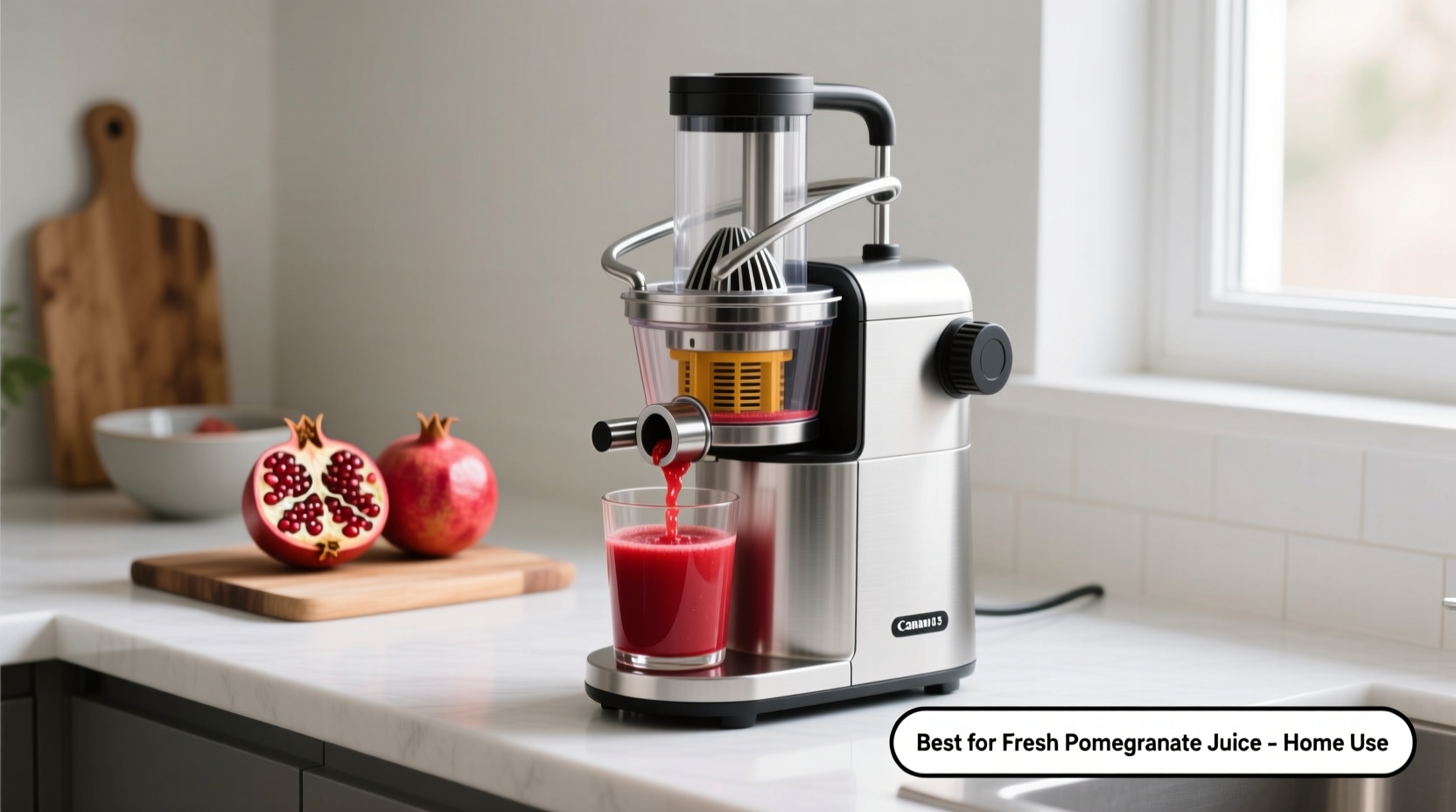
Pomegranates aren’t like oranges or lemons. Their juicy arils are encased in tough membranes and surrounded by thick, fibrous rind. Standard citrus juicers often fail to break down the structure effectively, leaving behind up to 40% of the available juice. A proper pomegranate press applies even pressure across the entire fruit or separated arils, crushing them thoroughly while separating seeds and pulp.
High-quality presses also preserve flavor and nutrients by minimizing oxidation and heat buildup—critical when you're aiming for fresh, vibrant juice. Cold-press models, especially masticating or slow juicers, excel here. They operate at lower RPMs, reducing foaming and preserving enzymes that degrade under high-speed friction.
“Juicing pomegranates efficiently requires force distribution and fine filtration. Generic juicers simply can’t replicate the targeted mechanics of a well-designed press.” — Dr. Lena Torres, Food Processing Engineer
Key Features to Look for in a Pomegranate Juice Press
Not all juicers handle pomegranates equally. To ensure optimal results, prioritize these design and functional elements:
- High Torque Motor (for electric models): Needed to crush dense arils without stalling.
- Stainless Steel Auger and Filter Screen: Resists corrosion from acidic juice and lasts longer than plastic components.
- Fine Mesh Strainer: Separates tiny seeds and membrane fragments for smooth juice.
- Large Feed Chute: Allows whole arils or halved fruits to enter without pre-cutting.
- Drip-Free Spout: Prevents mess during pouring and enables direct glass filling.
- BPA-Free Components: Ensures safety, especially if storing juice in attached containers.
- Ease of Cleaning: Removable parts that are dishwasher-safe save significant time.
Top 5 Pomegranate Juice Press Machines Compared
| Model | Type | Juice Yield | Speed (RPM) | Cleaning Ease | Price Range |
|---|---|---|---|---|---|
| Kuvings Whole Slow Juicer NE105 | Electric Masticating | High – ~85% | 43 RPM | Easy (7 parts) | $299 |
| Omega J8006HDS Nutrition Center | Slow Masticating | Very High – ~90% | 80 RPM | Moderate (requires brush) | $349 |
| Breville JE98XL Juice Fountain Plus | Centrifugal | Moderate – ~65% | 13,000 RPM | Easy | $149 |
| Garland King Pomegranate Press (Manual) | Lever-Style Manual | High – ~80% | N/A | Very Easy | $120 |
| Black+Decker JE2200B | Centrifugal | Low-Moderate – ~60% | 10,000 RPM | Easy | $69 |
The Kuvings and Omega models lead in juice extraction due to their slow, powerful augers that fully crush arils. The Garland King is ideal for off-grid use or small batches, offering commercial-grade pressing in a countertop-friendly design. Breville and Black+Decker models are budget-friendly but less efficient for fibrous fruits like pomegranates.
Step-by-Step Guide to Juicing Pomegranates at Home
Follow this proven process to maximize juice output and minimize waste:
- Prepare the Fruit: Score the pomegranate around the equator and gently pull apart. Submerge halves in a bowl of water and loosen arils with your fingers—this prevents splatter and keeps juice intact.
- Drain and Dry: Remove arils from water and pat dry lightly. Excess moisture dilutes flavor and reduces yield in some machines.
- Pre-Chill (Optional): Chill arils for 20 minutes. Cold fruit yields thicker, more aromatic juice.
- Load the Press: For masticating juicers, feed arils slowly. For manual presses, pack arils into the chamber evenly.
- Extract Juice: Run the machine or apply steady pressure. Avoid forcing too many arils at once.
- Filter Again (if needed): Use a nut milk bag for ultra-smooth juice, especially with centrifugal models.
- Store Properly: Consume within 2–3 days or freeze in ice cube trays for later use.
Real Example: From Messy Kitchen Experiment to Daily Ritual
Sarah Kim, a wellness coach in Portland, used to avoid juicing pomegranates altogether. “I’d spend 20 minutes deseeding, then end up with half a glass of juice and red-stained countertops,” she recalls. After investing in the Omega J8006HDS, her routine changed. Now, she processes two pomegranates weekly, storing juice in glass bottles for morning immunity shots. “It pays for itself in saved time and reduced grocery trips. I even add ginger and turmeric now—something I’d never do with hand-pressed juice.”
Checklist: Choosing Your Ideal Pomegranate Press
- ☐ Determine your typical batch size (daily vs. weekly)
- ☐ Decide between electric convenience and manual control
- ☐ Check for stainless steel filter and auger
- ☐ Verify ease of disassembly and cleaning
- ☐ Read customer reviews focused on pomegranate performance
- ☐ Confirm warranty and availability of replacement parts
- ☐ Consider counter space and storage needs
Frequently Asked Questions
Can I use a citrus juicer for pomegranates?
No, citrus reamers are designed for soft, pulpy fruits with high natural juice flow. Pomegranate arils require crushing force and fine filtration, which citrus juicers lack. You’ll lose over half the juice and risk damaging the machine.
Do I need to deseed pomegranates before pressing?
Yes. While some heavy-duty industrial presses can handle whole fruit, home models require separated arils. Seeds and rind can jam mechanisms and introduce bitterness. Deseding in water is the cleanest method.
How do I prevent clogging in my juicer?
Feed arils gradually, not in large clumps. Pause occasionally to let the machine clear the pulp. For masticating juicers, pairing pomegranates with apples or carrots helps push fibers through. Clean the screen mid-use if processing multiple batches.
Final Thoughts: Make Fresh Pomegranate Juice a Sustainable Habit
The best pomegranate juice press machines transform a frustrating chore into a seamless part of your healthy lifestyle. Whether you opt for the quiet precision of a masticating electric model or the tactile satisfaction of a manual press, the key is consistency and suitability to your kitchen rhythm. Prioritize build quality and specialized functionality over flashy features. When you taste that deep-red, naturally sweet juice—free from additives and full of living nutrients—you’ll know the investment was worth it.




 浙公网安备
33010002000092号
浙公网安备
33010002000092号 浙B2-20120091-4
Comments
No comments yet. Why don't you start the discussion?