
When choosing between the Fitbit Sense and the Samsung Galaxy Watch Active 2, the decision isn’t just about price—it’s about purpose. Both devices offer strong fitness tracking, smartwatch functionality, and sleek designs. But the Fitbit Sense comes at a higher price point, raising a critical question: Is the added cost justified by what you get in return? For users prioritizing health insights, stress management, and long-term wellness data, the answer may be yes. For others who want seamless integration with Android or prefer a more traditional smartwatch experience, the Galaxy Watch Active 2 might deliver better value.
This comparison dives deep into key areas—health sensors, software ecosystem, battery life, design, and real-world usability—to help you determine whether the premium Fitbit is truly worth the investment.
Health and Wellness Tracking: Where Fitbit Pulls Ahead
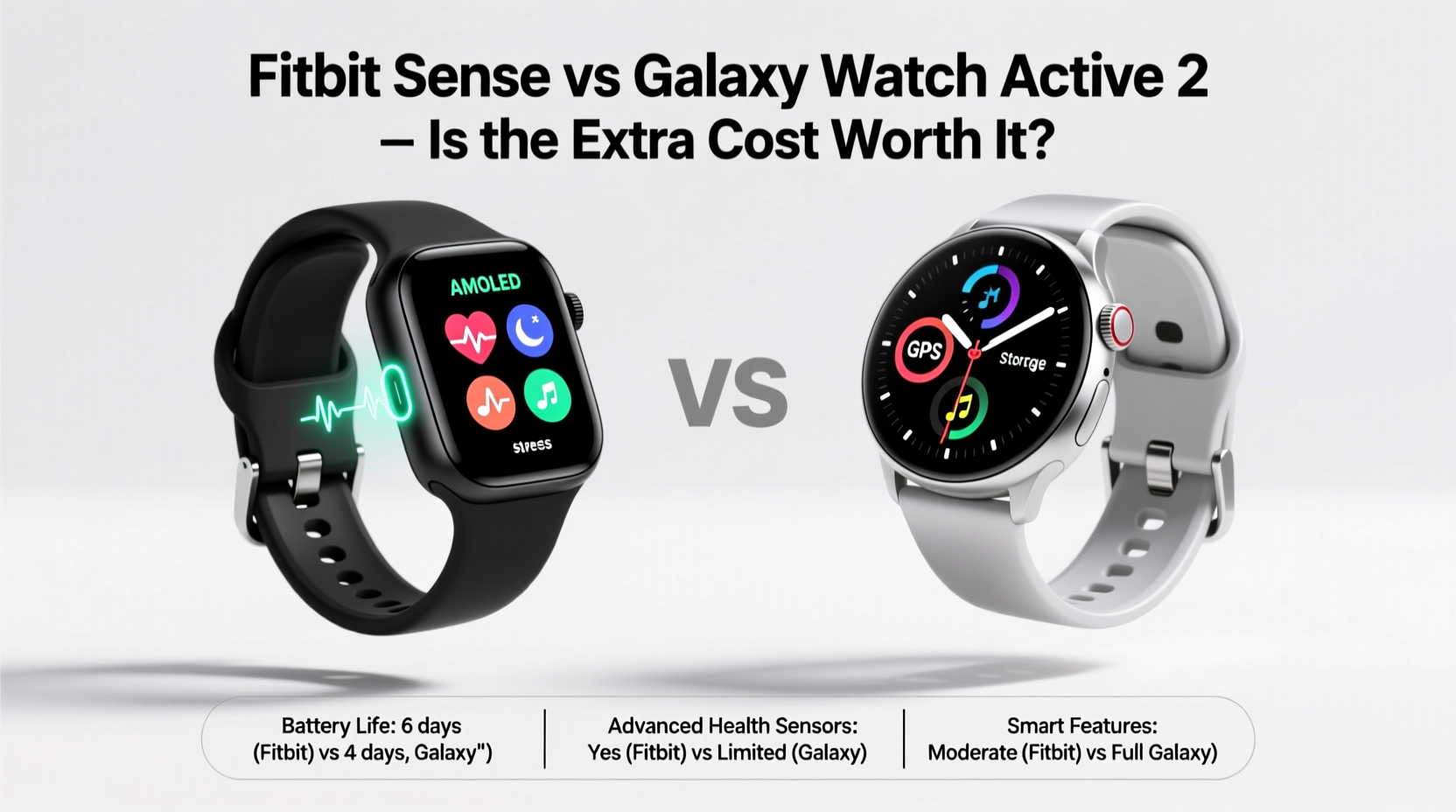
The Fitbit Sense was designed from the ground up as a health-first device. It includes advanced sensors not found on the Galaxy Watch Active 2, such as an EDA (electrodermal activity) sensor for stress tracking and skin temperature monitoring. These tools feed into Fitbit’s Daily Readiness Score and Stress Management Score, giving users actionable insights based on their body’s physiological signals.
In contrast, the Galaxy Watch Active 2 focuses more on core fitness metrics—heart rate, sleep stages, and basic workout tracking—without the same depth in holistic wellness analysis. While it does include ECG functionality (also present on the Sense), it lacks continuous stress monitoring via EDA scanning.
For individuals serious about understanding their body’s response to lifestyle factors, the Sense offers a level of granularity that the Active 2 simply doesn’t match. This makes it especially valuable for those using wearable data as part of a broader health strategy.
Smart Features and Ecosystem Compatibility
Samsung’s Tizen OS powers the Galaxy Watch Active 2, offering robust app support, voice assistant access (Bixby, limited Google Assistant), and tight integration with Android phones—especially Samsung devices. You can control music, receive notifications, reply to messages, and even make contactless payments seamlessly if you’re within the Samsung ecosystem.
The Fitbit Sense runs Fitbit OS, which is simpler and more focused. It supports notifications, apps, and contactless payments (Fitbit Pay), but the app store is far more limited. However, recent updates have improved third-party integrations, including Spotify offline playback and deeper Google services (like Google Maps and Wallet).
If your phone is an iPhone, the Fitbit Sense levels the playing field. The Active 2 works with iOS, but many features are restricted or less reliable. Fitbit offers a consistently smooth experience across both iOS and Android, making it a better cross-platform option.
“Wearables are shifting from step counters to proactive health guardians. Devices like the Fitbit Sense represent the next phase—using biometrics to guide behavior before issues arise.” — Dr. Lena Patel, Digital Health Researcher at Stanford Medicine
Battery Life and Charging Realities
Battery performance is one area where Fitbit clearly wins. The Sense delivers up to 6+ days on a single charge under typical use, and even with GPS workouts and continuous heart rate monitoring, most users report 4–5 days of life.
The Galaxy Watch Active 2, meanwhile, lasts about 2–3 days, depending on usage. Heavy smartwatch functions—like always-on display, frequent notifications, or GPS tracking—can drain it faster. This means nightly charging becomes necessary, reducing convenience.
| Feature | Fitbit Sense | Galaxy Watch Active 2 |
|---|---|---|
| Battery Life | Up to 6+ days | Up to 3 days |
| Charging Time | ~2 hours | ~1.5 hours |
| Always-On Display | Yes (configurable) | Yes |
| Water Resistance | 5 ATM + swim-proof | 5 ATM + swim-proof |
| ECG Support | Yes | Yes |
| Stress Monitoring (EDA) | Yes | No |
| SpO2 Tracking | Yes (continuous sleep tracking) | Yes (on-demand only) |
| GPS | Yes (built-in) | Yes (built-in) |
The longer battery life of the Fitbit reduces friction in daily use. Not having to hunt for a charger every other night enhances reliability, especially during travel or intense training periods.
Design, Comfort, and Long-Term Wearability
Both watches are lightweight and comfortable for all-day wear. The Galaxy Watch Active 2 has a classic circular design with rotating bezel (a standout feature for navigation), available in 40mm and 44mm sizes. Its aluminum case and interchangeable bands make it stylish enough for professional settings.
The Fitbit Sense adopts a more modern, square design similar to the Pixel Watch, with a slightly larger footprint but thinner profile. It uses a matte finish that resists smudges and feels discreet on the wrist. Some users find the Sense more comfortable for sleep tracking due to its lower profile and softer strap materials.
While aesthetics are subjective, the Active 2 leans toward fashion-forward minimalism, while the Sense prioritizes function with a clean, clinical look. Neither attracts undue attention, but the Fitbit’s interface is optimized for glanceable health stats rather than app-heavy interaction.
Real-World Example: Choosing Based on Lifestyle Needs
Consider Sarah, a 38-year-old project manager with high job stress and a family history of heart disease. She wants a watch that helps her monitor her well-being beyond steps and sleep. After trying both devices, she chose the Fitbit Sense. The daily stress score alerts her when her EDA spikes, prompting breathing exercises. The skin temperature variation log helped her detect a mild infection before symptoms appeared. Over six months, she used these insights to adjust her sleep schedule, reduce caffeine, and improve mindfulness habits.
Compare this to Mark, a 29-year-old Android user who values quick replies, music control, and cycling routes on his wrist. He prefers the tactile feedback of the Active 2’s rotating bezel and appreciates Samsung Pay integration. He doesn’t need detailed stress analytics—he just wants a capable companion to his phone. For him, the Active 2 delivers excellent value at a lower price.
These scenarios highlight a crucial truth: the “better” device depends entirely on how you plan to use it.
Step-by-Step Guide: How to Decide Which Watch Fits Your Needs
- Assess your primary goal: Are you focused on fitness, general health, stress reduction, or smart features?
- Evaluate your phone: iPhone users gain more parity with Fitbit; Android (especially Samsung) users benefit from deeper integration with Galaxy Watches.
- Test battery expectations: Can you charge every 2–3 days, or do you need multi-day endurance?
- Review health priorities: Do you want passive stress tracking, ECG, and readiness scores (Sense), or are basic vitals sufficient (Active 2)?
- Check budget: The Fitbit Sense typically costs $50–$100 more. Determine if the added health features justify the premium.
- Try them on: Wear each model for a day. Note comfort, screen brightness, and responsiveness.
- Read long-term reviews: Look for feedback on software updates, durability, and customer support.
Frequently Asked Questions
Can the Galaxy Watch Active 2 track stress like the Fitbit Sense?
No, not in the same way. The Active 2 monitors heart rate variability and can estimate stress levels through its \"Stress Tracker\" app, but it lacks the EDA sensor and guided relaxation tools built into the Fitbit Sense. Its stress detection is less proactive and detailed.
Is the Fitbit Sense waterproof enough for swimming?
Yes. The Fitbit Sense is rated 5 ATM water-resistant, meaning it can withstand depths of up to 50 meters. It automatically detects pool swims and tracks laps, duration, and stroke type. Just ensure the screen lock is enabled before entering water.
Does the Galaxy Watch Active 2 still receive software updates?
Limited. Samsung ended major OS updates for the Active 2 in 2021, though it may still receive occasional security patches. It runs Tizen 4.0, which limits compatibility with newer apps and features. In contrast, Fitbit continues to roll out meaningful health-focused updates for the Sense.
Final Verdict: Is the Extra Money Worth It?
The Fitbit Sense commands a higher price, but it delivers tangible advantages in health intelligence, battery life, and cross-platform consistency. If your priority is gaining deeper insight into your body’s responses—especially around stress, recovery, and long-term trends—the added investment pays off.
However, if you’re primarily interested in a reliable fitness tracker with solid smartwatch capabilities and you’re already invested in the Samsung ecosystem, the Galaxy Watch Active 2 remains a compelling, cost-effective choice—particularly now that it’s often available at discounted prices.




 浙公网安备
33010002000092号
浙公网安备
33010002000092号 浙B2-20120091-4
Comments
No comments yet. Why don't you start the discussion?