
The tangy bite of sour cream balanced with the subtle sharpness of onion defines one of the most iconic snack profiles in modern convenience food: Sour Cream and Onion Pringles. While often dismissed as a simple chip flavor, its formulation represents a sophisticated interplay of dairy-derived acidity, aromatic allium compounds, and engineered crispness. Understanding this flavor goes beyond mere taste—it reveals insights into food science, consumer psychology, and the art of seasoning layering. For home cooks, chefs, and snack developers alike, dissecting the components of this globally recognized flavor offers practical value in recipe development, pairing strategies, and even flavor replication using whole-food alternatives.
Definition & Overview
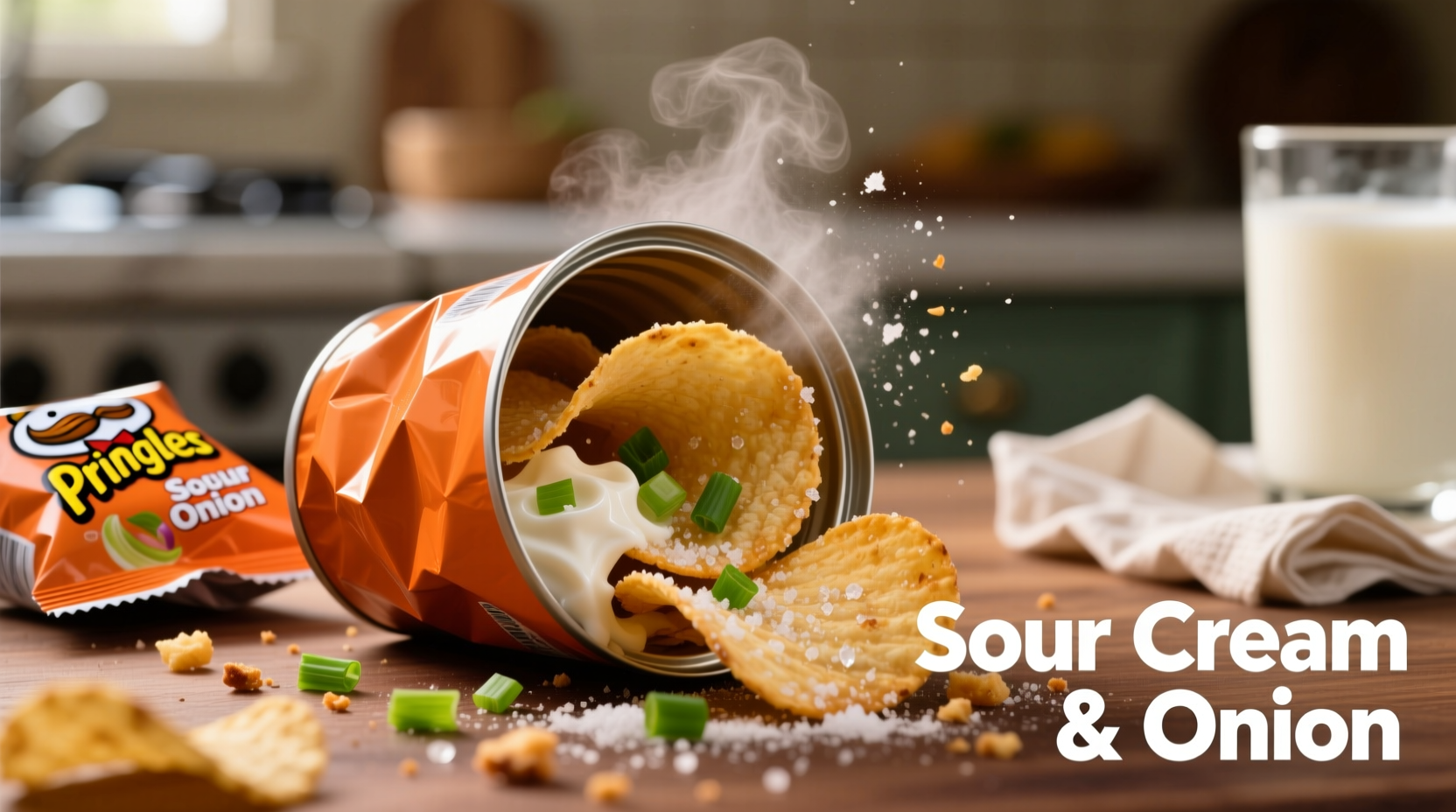
Sour Cream and Onion Pringles is a flavored potato-based snack produced by Procter & Gamble under the Pringles brand, first introduced in the 1970s. Unlike traditional kettle-cooked chips seasoned post-frying, Pringles are made from a dehydrated potato slurry formed into uniform discs, then fried and sprayed with powdered seasoning. The \"Sour Cream and Onion\" variant mimics the creamy tang of cultured dairy and the pungency of fresh or dried onions without containing actual sour cream or raw onion.
This flavor belongs to the broader category of savory snack seasonings known as “dairy-onion” profiles. It sits at the intersection of umami, acid, fat perception, and mild sweetness, creating a rounded, craveable taste experience. Its popularity stems not only from familiarity but also from its balanced sensory profile—neither overly salty nor aggressively spicy, making it accessible across age groups and palates.
Key Characteristics
| Attribute | Description |
|---|---|
| Primary Flavor Notes | Tangy (lactic acid), creamy (dairy fat mimicry), onion-like (sulfuric/allium notes), slight sweetness, background saltiness |
| Aroma Profile | Cultured dairy (reminiscent of buttermilk or soured cream), green onion, faint garlic, buttery undertones |
| Color & Form | Pale beige to light tan chips; seasoning appears as fine powder adhering uniformly to surface |
| Heat Level | None – non-spicy, suitable for sensitive palates |
| Culinary Function | Snacking, palate contrast, texture accent, base for fusion applications (e.g., taco toppers, casserole crusts) |
| Shelf Life | 12–15 months unopened; degrades faster when exposed to humidity due to hygroscopic seasoning |
| Texture Contribution | Uniform crunch, low oil residue, consistent mouthfeel due to engineered shape and frying process |
Breakdown of Flavor Components
The perceived complexity of Sour Cream and Onion Pringles arises not from natural ingredients alone but from a carefully calibrated blend of chemical compounds designed to simulate real food experiences. The flavor does not rely on fresh dairy or vegetables but instead reconstructs their essence through synthetic and natural flavorants.
- Lactic Acid: Provides the signature sour note associated with fermented dairy. In Pringles, this is achieved via direct addition rather than fermentation of milk solids.
- Dried Buttermilk & Whey: Contribute creamy mouthfeel and subtle dairy richness without moisture that would compromise shelf stability.
- Onion Powder & Garlic Powder: Deliver sulfurous, pungent top notes. These are heat-stable forms of alliums processed for even dispersion.
- Monosodium Glutamate (MSG): Enhances umami depth, rounding out the flavor and increasing salivary response, which amplifies perceived richness.
- Disodium Inosinate/Guanylate Blend: Synergistic nucleotides that boost MSG’s effect, allowing lower sodium levels while maintaining savoriness.
- Butter Flavor (Natural & Artificial): Mimics the diacetyl-rich aroma of cultured butter, reinforcing the “creamy” illusion despite minimal fat content in seasoning.
- Salt (Sodium Chloride): Acts as both flavor enhancer and preservative, critical for balancing acidity and bitterness.
- Maltodextrin: A carrier agent that binds oils and flavors into a free-flowing powder, ensuring even coating during manufacturing.
“Sour Cream and Onion isn’t about replicating a dip—it’s about triggering the brain’s memory of one. The goal is recognition, not authenticity.” — Dr. Elena Torres, Food Chemist, Institute of Sensory Innovation
Practical Usage in Cooking and Culinary Applications
While primarily marketed as a standalone snack, Sour Cream and Onion Pringles have found secondary utility in professional and home kitchens due to their stable, intense flavor profile and convenient form.
Home Cooking Applications
- Breading Substitute: Crushed Pringles make an effective crust for chicken tenders, fish fillets, or tofu. Their pre-seasoned nature eliminates the need for additional spices. Press crushed chips onto protein, spray lightly with oil, and bake at 400°F (200°C) for 18–22 minutes until golden.
- Casserole Topping: Replace traditional breadcrumbs with crushed Sour Cream and Onion Pringles in green bean casserole, scalloped potatoes, or tuna bake. Adds textural contrast and instant flavor infusion.
- Dip Enhancer: Finely ground Pringles can be stirred into sour cream or Greek yogurt to create an instant dip base. Use ¼ cup crushed per 1 cup dairy for balanced intensity.
- Salad Crunch Element: Scatter whole or lightly crushed chips over taco salads, wedge salads, or roasted vegetable bowls for a retro twist.
Professional Kitchen Uses
- Garnish for Gourmet Burgers: Stack two or three intact Pringles vertically alongside burgers featuring blue cheese or caramelized onions to echo and elevate the core flavor theme.
- Deconstructed Nacho Bar Component: Offer crushed Pringles as a playful alternative to tortilla chips in interactive dining setups.
- Infused Oil Base: Steep crushed chips in warm neutral oil (e.g., canola) for 30 minutes, strain, and use the flavored oil to drizzle over baked potatoes or popcorn.
Pro Tip: To avoid overpowering dishes, use Sour Cream and Onion Pringles as a finishing element rather than a primary ingredient. Their high sodium and artificial flavor concentration can dominate if overused.
Variants & Types
Across global markets, the core Sour Cream and Onion formula has been adapted into multiple iterations, each modifying intensity, fat content, or ingredient sourcing.
| Variant | Region/Notes | Key Differences |
|---|---|---|
| Original Sour Cream and Onion | Global standard | Balanced tang and salt; contains whey, buttermilk, MSG |
| Baked Sour Cream and Onion | North America | Lower fat (baked not fried); milder flavor due to reduced oil absorption |
| Reduced Sodium | USA, Canada | ~30% less salt; slightly more acidic to compensate for lost flavor impact |
| Salted Caramel Swirl (Limited Edition) | UK, Australia | Fusion concept—sweet-savory blend; includes sugar swirls over same base chip |
| Plant-Based / Vegan Formula | EU, select markets | Replaces dairy derivatives with yeast extract and citric acid; relies more on onion-garlic balance |
| Extra Bold / Max’d Out | USA | Double seasoning layer; significantly more intense aroma and aftertaste |
When selecting a variant for culinary use, consider the application: Original provides maximum flavor carry, while Baked versions may lack sufficient fat-soluble compounds for robust integration into cooked dishes.
Comparison with Similar Ingredients
Sour Cream and Onion Pringles are frequently confused with other onion-forward or creamy-tasting snacks and condiments. Understanding distinctions helps prevent misuse in recipes.
| Item | How It Differs from Sour Cream and Onion Pringles |
|---|---|
| French Onion Dip (Commercial) | Higher moisture, actual dairy base, stronger onion presence, no chip structure; used as spread, not crunchy element |
| Onion Salt | Pure seasoning with no sour or creamy notes; lacks lactic acid and dairy mimics; much higher sodium density |
| Chives & Sour Cream (Fresh) | Natural version with live cultures, fresh herb notes, and perishability; cooler, brighter profile vs. processed warmth of Pringles |
| BBQ Pringles | Sweet-smoky profile dominated by tomato, vinegar, and molasses notes; contains paprika, not dairy agents |
| Lightly Salted Potato Chips | No added flavor compounds; relies solely on potato and salt; lacks umami and tang dimensions |
The key differentiator remains the **layered illusion of creaminess** without physical fat—a feat achieved only through precise flavor engineering.
Practical Tips & FAQs
Can I substitute fresh sour cream and onion for this flavor?
Not directly. Fresh ingredients provide moisture and perishability incompatible with dry seasoning applications. However, you can approximate the flavor by combining equal parts dried onion, citric acid (for tartness), nutritional yeast (for umami), and a pinch of garlic powder. Add maltodextrin or cornstarch to improve dispersibility.
Is there real sour cream in Sour Cream and Onion Pringles?
No. The flavor comes from dairy derivatives like whey and buttermilk powder, which contribute lactose and proteins but not the live cultures or full-fat texture of actual sour cream.
Why do these chips taste creamier than they are?
The brain interprets certain volatile compounds—especially diacetyl and acetaldehyde—as indicators of fat content. Even in low-fat foods, these aromas trigger expectations of creaminess, a phenomenon known as flavor-fat cross-modal perception.
How should I store opened Pringles to maintain flavor?
Transfer remaining chips to an airtight container away from light and heat. Exposure to air causes oxidation of flavor compounds and moisture absorption, leading to staleness within 3–5 days. Avoid refrigeration, which introduces condensation.
Are there allergens in Sour Cream and Onion Pringles?
Yes. Contains milk and wheat (from starches). Not suitable for those with dairy allergies. Vegan versions are available in some regions but must be verified by label reading.
What dishes pair well with this flavor?
Ideal companions include:
- Cold beers (lagers, pilsners) that cut through richness
- Simple green salads with vinaigrette (contrast in texture and temperature)
- Grilled meats like chicken or pork chops (the chip’s acidity complements charred notes)
- Chilled white wines such as Sauvignon Blanc (citrus notes mirror lactic tang)
Storage Checklist:
- Keep unopened cans below 75°F (24°C)
- Reseal with original lid or transfer to sealed glass jar
- Use within one week of opening for optimal taste
- Do not store near strong-smelling foods (chips absorb odors easily)
Summary & Key Takeaways
The flavor profile of Sour Cream and Onion Pringles is a masterclass in sensory engineering. Despite lacking the namesake ingredients in whole form, it successfully evokes the creamy tang of sour cream and the aromatic bite of onions through a precise blend of acids, salts, dairy powders, and flavor enhancers. Its uniform texture and stable shelf life make it not only a popular snack but also a versatile tool in culinary experimentation—from breading agents to flavor bases.
Understanding its composition allows cooks to use it intentionally: as a time-saving shortcut, a nostalgic garnish, or a springboard for creative fusion dishes. When substituting or replicating its taste with whole foods, focus on balancing lactic acidity, umami depth, and allium pungency without relying on artificial carriers.
Ultimately, the enduring appeal of this flavor lies in its psychological resonance—its ability to recall comfort food memories with a single crisp. Whether enjoyed straight from the can or repurposed in the kitchen, Sour Cream and Onion Pringles represent the convergence of food science, cultural habit, and gastronomic ingenuity.
Next time you open a can, pause to analyze the aroma, texture, and aftertaste. Then try incorporating it into a dish where crunch and tang are welcome—you might just redefine what a potato chip can do.




 浙公网安备
33010002000092号
浙公网安备
33010002000092号 浙B2-20120091-4
Comments
No comments yet. Why don't you start the discussion?