
In the early 2010s, smartphone ownership was no longer a luxury—it had become a lifestyle necessity. By 2012, two titans dominated the market: Apple’s iPhone (then in its 4S and early 5 models) and Samsung’s Galaxy S3. The debate wasn’t just about specs; it was about ecosystems, design philosophies, and personal identity. Years later, with the benefit of hindsight, a question lingers: did people who upgraded during that era—especially those switching between platforms—actually regret their decisions?
This isn’t just nostalgia. It’s a reflection on how technological choices shape long-term satisfaction. For many, the move from feature phones to smartphones was irreversible. But the shift between iOS and Android? That came with trade-offs few anticipated.
The Battle of Ecosystems: iOS vs Android in 2012
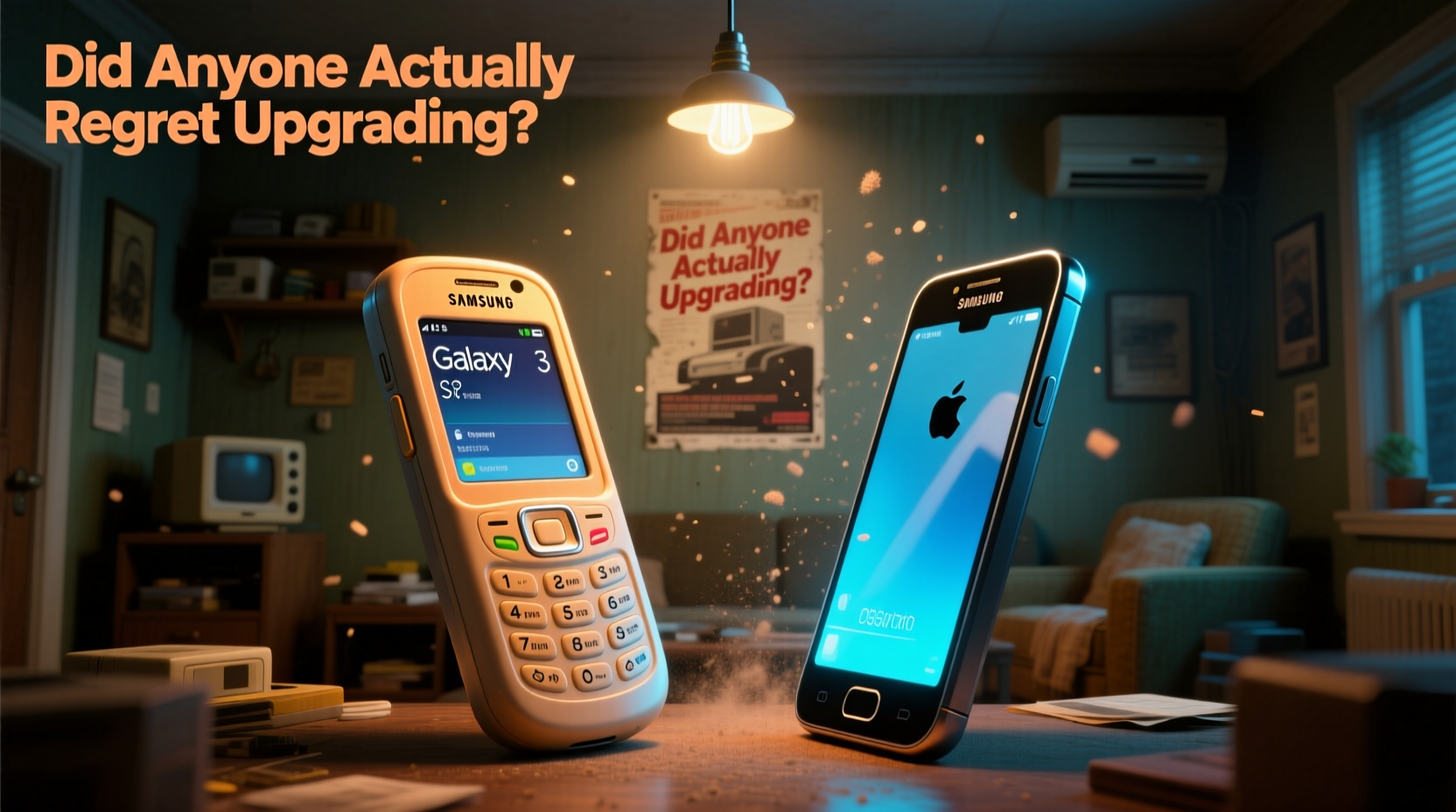
In 2012, the iPhone 4S ran iOS 5, offering a polished, tightly controlled user experience. Siri was new, iCloud was gaining traction, and the App Store had already established itself as the gold standard for mobile software. Meanwhile, the Galaxy S3 launched with Android 4.0 (Ice Cream Sandwich), bringing a more customizable, open approach. Samsung layered TouchWiz on top, adding features like S Voice, Smart Stay, and expandable storage.
The divide wasn’t just technical—it was cultural. iPhone users valued simplicity and integration. Android users prized flexibility and hardware variety. Upgrading meant committing not just to a phone, but to an ecosystem.
User Experiences: Real Stories from the Switch
Online forums from 2012–2013 are filled with users recounting their transitions. Some iPhone users switched to the Galaxy S3 for its larger screen, multitasking capabilities, and expandable storage. Others moved from Android to iOS seeking better app quality and smoother updates.
A common theme emerged: initial excitement often gave way to subtle frustrations.
“I loved the Galaxy S3’s screen and battery life, but after six months, I missed how seamless everything felt on the iPhone. Notifications were messy, apps crashed more, and updates took forever.” — Mark T., former iPhone user who switched in 2012
Conversely, some Android loyalists who tried the iPhone felt constrained.
“The iPhone 5 felt slick, but I couldn’t believe I couldn’t swap the battery or add a microSD card. After two weeks, I went back to my S3. It just made more sense for how I used my phone.” — Lena K., Android enthusiast since 2010
Comparison: Galaxy S3 vs iPhone 4S/5 – Key Differences
| Feature | Galaxy S3 | iPhone 4S / iPhone 5 |
|---|---|---|
| Display Size | 4.8 inches (HD Super AMOLED) | 3.5 inches (4S), 4.0 inches (5) |
| Storage Expandable | Yes (microSD up to 64GB) | No |
| Battery Replaceable | Yes | No |
| Customization | High (launchers, widgets, settings) | Low (limited to Apple’s UI) |
| App Quality & Updates | Variable (fragmentation issues) | Consistent (centralized control) |
| Ecosystem Integration | Mixed (dependent on OEM) | Tight (iCloud, iTunes, Mac sync) |
The Galaxy S3 offered tangible hardware advantages: bigger screen, removable battery, expandable storage. But iOS delivered reliability, consistent performance, and faster app updates. For power users, Android’s openness was liberating. For casual users, iOS’s predictability was reassuring.
Did People Regret the Upgrade?
Regret wasn’t always immediate. Many praised their new devices at first. But over time, patterns emerged.
Some iPhone switchers to the Galaxy S3 regretted the inconsistent software experience. Despite Samsung’s efforts, Android fragmentation meant delayed OS updates and uneven app optimization. Users accustomed to annual iOS updates found themselves stuck on older versions for months.
Meanwhile, Android users who moved to iPhone often missed basic functionalities: file system access, default app switching, and hardware customization. The lack of expandable storage was a frequent pain point.
“Switching to iPhone felt like trading freedom for polish. I got fewer crashes, but I lost control over how my phone worked.” — Dev R., developer and early Android adopter
Interestingly, the strongest regrets came not from hardware shortcomings, but from ecosystem lock-in. Once users invested in apps, music libraries, cloud storage, and accessories, switching back became costly and inconvenient.
Timeline: The Evolution of User Sentiment (2012–2015)
- 2012 Q3: Galaxy S3 launches to critical acclaim; sales surge. Many iPhone users consider switching due to larger screen and newer features.
- 2012 Q4: iPhone 5 releases. Apple gains back market share with taller display and Lightning connector. Some Android users test iOS.
- 2013: Fragmentation issues plague Android updates. Galaxy S3 users wait months for Android 4.3. iPhone users receive iOS 7 quickly.
- 2014: App developers prioritize iOS for monetization. Some Android switchers return to iPhone for better app support.
- 2015: Loyalty patterns solidify. Most users stay on their chosen platform, citing ecosystem investment as the main reason.
By 2015, the debate had shifted from “which is better” to “which works better for me.” The idea of regret evolved from buyer’s remorse to a recognition of trade-offs.
Expert Insight: Why Platform Choice Matters Long-Term
Dr. Alan Park, a technology adoption researcher at MIT, studied smartphone loyalty during this period. His findings highlight why regret often stems not from the device itself, but from misaligned expectations.
“People don’t regret phones—they regret mismatched values. If you value control and customization, Android satisfies. If you value seamlessness and longevity, iOS wins. The regret comes when users don’t understand their own priorities before switching.” — Dr. Alan Park, MIT Media Lab
His research showed that users who spent time evaluating their usage patterns—app preferences, media habits, connectivity needs—were far less likely to regret their upgrade.
Checklist: How to Avoid Regret When Switching Platforms
- ✅ Audit your current app usage: Are your favorite apps available and well-supported on the other platform?
- ✅ Consider ecosystem costs: Will you lose access to purchased content (music, books, movies)?
- ✅ Test file management needs: Do you rely on external storage or easy file transfer?
- ✅ Evaluate update frequency: How important is timely OS and security patching?
- ✅ Try before you commit: Use a friend’s device or rent one for a week.
- ✅ Check accessory compatibility: Headphones, smartwatches, car integration may differ.
Frequently Asked Questions
Was the Galaxy S3 better than the iPhone 4S?
In raw specs—screen size, RAM, storage flexibility—the Galaxy S3 had the edge. However, the iPhone 4S offered superior software optimization, faster app performance, and longer support. “Better” depends on whether you prioritized hardware or user experience.
Why did some Android users switch back to iPhone?
Many cited frustration with inconsistent updates, bloatware, and lower app quality. Others missed the tight integration between Apple devices. Over time, iOS also improved in areas Android pioneered, like screen size and Siri’s capabilities.
Are there long-term consequences to switching platforms frequently?
Yes. Each switch risks data loss, app incompatibility, and re-purchasing digital content. Cloud services help, but full migration is rarely seamless. Frequent switching can also lead to higher costs and reduced device resale value.
Conclusion: Lessons from the Past, Choices for the Future
Looking back, regret over upgrading from the Galaxy S3 to iPhone—or vice versa—wasn’t universal, but it wasn’t rare either. It often stemmed from underestimating the weight of ecosystem loyalty and overestimating the importance of isolated features.
The smartphone wars of 2012 taught us that technology choices aren’t just about speed or screen size. They’re about values: control vs. convenience, openness vs. polish, flexibility vs. consistency.




 浙公网安备
33010002000092号
浙公网安备
33010002000092号 浙B2-20120091-4
Comments
No comments yet. Why don't you start the discussion?