
When it comes to choosing the right suitcase, travelers often face a fundamental dilemma: Should they go with sleek, rigid hardside luggage or opt for the flexible, lightweight softside alternative? The debate centers on one critical question—does a hard shell actually offer superior protection? While marketing campaigns often portray polycarbonate shells as indestructible armor, the reality is more nuanced. Protection isn’t just about impact resistance; it’s also about flexibility, weight distribution, water resistance, and how the bag holds up over time. This article dives deep into the strengths and weaknesses of both types to help you make an informed decision based on your travel style, destination, and packing habits.
Understanding the Core Differences
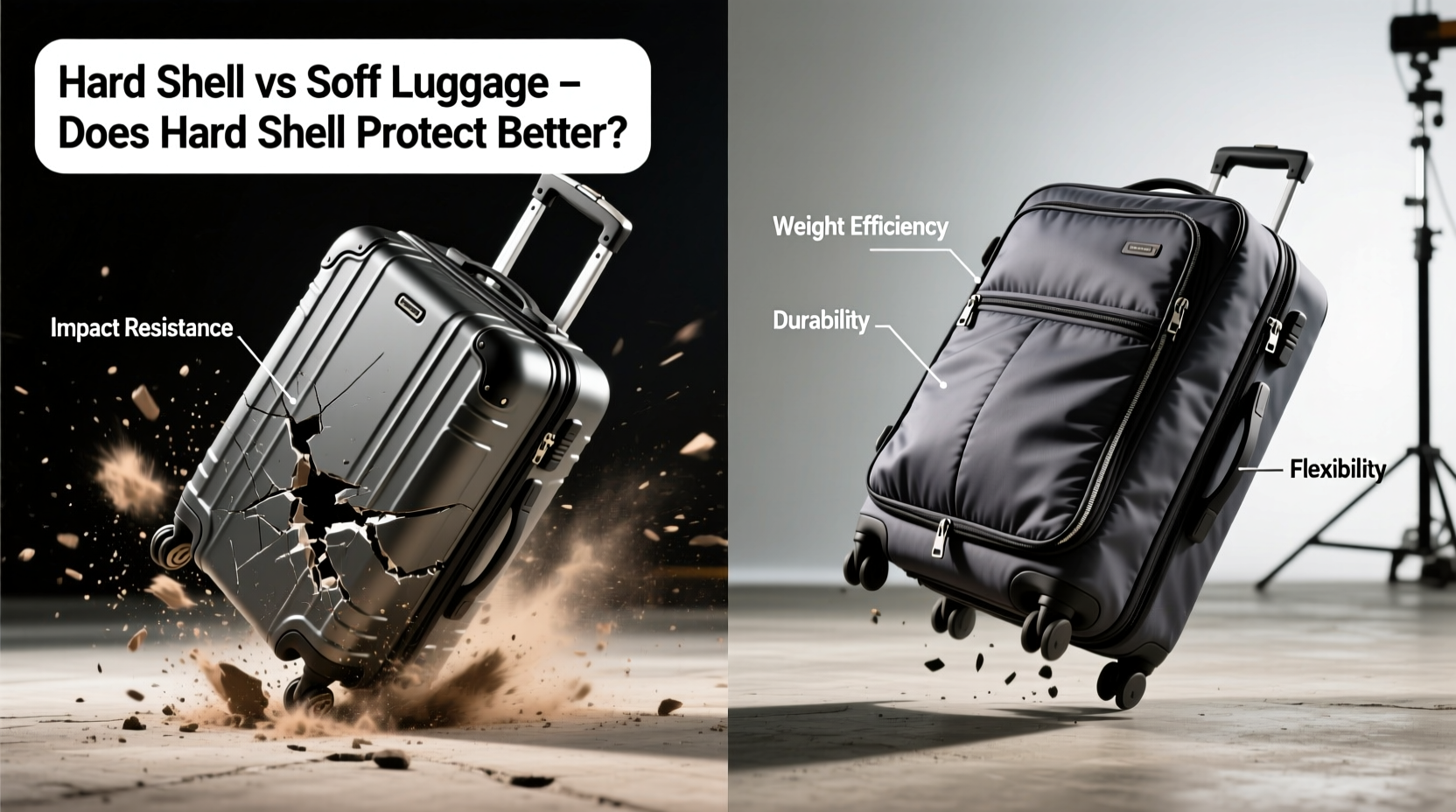
The primary distinction between hardside and softside luggage lies in construction. Hardside suitcases are typically made from polycarbonate, ABS plastic, or composite materials, forming a rigid outer shell. Softside luggage uses fabrics like ballistic nylon, polyester, or Cordura, often with internal frame support but no solid exterior.
This structural difference affects every aspect of performance—from how the bag handles drops to its ability to absorb pressure during airline stacking.
- Hardside: Rigid shell resists punctures and crushing.
- Softside: Flexible fabric allows expansion and lightens overall weight.
But rigidity doesn’t automatically mean better protection. Consider this: A hard shell might crack under extreme impact, while a soft bag could compress and rebound without damage. The context matters—urban commuting, international flights, or rugged outdoor trips each demand different features.
Protection: What Does It Really Mean?
\"Protection\" can refer to several things: safeguarding fragile items inside, resisting external damage (like scratches or dents), preventing water intrusion, and maintaining structural integrity after rough handling.
In controlled tests, hardside luggage generally performs better against compression. Airlines routinely stack bags at heights exceeding 10 feet, and a hard shell helps prevent contents from being crushed. However, when dropped on uneven surfaces—especially concrete—a brittle plastic case may fracture, particularly at stress points like corners or zippers.
Soft luggage, by contrast, absorbs shock through flexibility. High-end models feature padded linings and reinforced corners that cushion impacts. While they don’t resist punctures as well (a sharp object can pierce fabric), they’re less likely to shatter under sudden force.
“Many travelers assume hard shells are bulletproof, but I’ve seen polycarbonate cases split open from a single baggage carousel drop.” — Daniel Ruiz, Airline Ground Operations Supervisor
Comparative Breakdown: Key Factors Side-by-Side
| Feature | Hardside Luggage | Softside Luggage |
|---|---|---|
| Impact Resistance | High against compression; low against sharp drops | Moderate; absorbs shock better than hard shells |
| Weight | Heavier (5–7 lbs empty) | Lighter (3.5–5 lbs empty) |
| Expansion Capacity | Limited or none | Often expandable by 1–2 inches |
| Water Resistance | Excellent; sealed shell prevents moisture | Varies; some have water-resistant coatings |
| Durability Over Time | Scratches show easily; cracks may develop | Scuffs blend in; fabric may fray at seams |
| Security | Zippers harder to tamper with due to rigid frame | Easier to slash open unless reinforced |
Real-World Example: Two Travelers, Two Choices
Sarah, a frequent business traveler, packs light: a laptop, two outfits, and toiletries. She values speed and consistency. Her polycarbonate spinner has survived three years of transatlantic flights. Despite minor scuffing, it looks nearly new. On one occasion, her bag was crushed beneath two oversized suitcases on a connecting flight—yet nothing inside was damaged. The rigid shell held firm.
Meanwhile, James, an adventure photographer, carries lenses, drones, and hiking gear. He chose a premium softside suitcase with internal dividers and weather-resistant fabric. During a monsoon trek in Vietnam, his bag sat in pooled rainwater for hours. Thanks to a tight zipper seal and coated fabric, his electronics stayed dry. When he slipped on wet rocks and dropped the case from a height, the fabric dented but didn’t tear.
Their experiences highlight a key insight: protection depends on what you're protecting and where you're going.
When Hardside Excels—and When It Doesn’t
Hardside luggage shines in environments where compression and moisture are the main threats. If you're checking a bag on long-haul flights, traveling with delicate souvenirs, or navigating humid climates, a hard shell offers tangible benefits.
However, drawbacks emerge in active settings. Hard cases lack give, making them prone to cracking on rocky terrain or uneven loading docks. They’re also heavier, which can push you over airline weight limits before you even pack half your items. And once scratched, they rarely look pristine again.
Softside bags win in adaptability. Their lighter frames leave more allowance for packed weight. Expansion zippers accommodate last-minute purchases. Many high-end models now include lockable zippers, RF-welded seams, and scratch-resistant exteriors that close the durability gap.
Actionable Checklist: Choosing Based on Your Needs
Use this checklist to determine which type suits your travel patterns:
- ✅ Do you frequently check your luggage on long flights? → Lean toward hardside.
- ✅ Are you packing fragile or valuable items (cameras, glassware)? → Hardside provides better crush protection.
- ✅ Do you often exceed carry-on size limits? → Softside’s expansion feature may save you fees.
- ✅ Are you traveling to rainy or muddy destinations? → Look for softside with waterproof coating or hardside with sealed edges.
- ✅ Is weight a concern (e.g., budget airlines with strict limits)? → Softside is generally lighter.
- ✅ Do you value ease of repair? → Fabric tears can be patched; cracked plastic usually requires replacement.
Frequently Asked Questions
Can a hardshell suitcase survive a fall from overhead bins?
It depends. Polycarbonate shells are impact-resistant but not indestructible. A direct corner impact on concrete can cause fractures. Most modern hardside bags are designed to flex slightly, but repeated drops will compromise structural integrity.
Is soft luggage easier to break into?
Potentially, yes. Standard zippers on soft bags can be cut open with a box cutter. However, many brands now use locking zipper pulls, slash-proof mesh, and tamper-evident seals that significantly improve security.
Which type lasts longer?
Lifespan depends more on usage than material. A well-maintained soft bag used primarily as carry-on can outlast a frequently checked hardshell. That said, high-quality polycarbonate cases can endure 5–7 years of regular travel if not subjected to extreme abuse.
Final Verdict: Protection Isn’t Just About the Shell
A hard shell offers excellent resistance to crushing and moisture, making it ideal for air travel and delicate cargo. But \"protection\" isn’t solely about the exterior—it’s also about smart packing, proper handling, and choosing a bag suited to your journey. Soft luggage, with its shock-absorbing design and lighter weight, often provides more practical resilience in dynamic environments.
The best approach? Match your luggage to your travel behavior. Business travelers who check bags regularly benefit from hardside durability. Backpackers, road trippers, and those who prioritize flexibility should consider advanced softside options.




 浙公网安备
33010002000092号
浙公网安备
33010002000092号 浙B2-20120091-4
Comments
No comments yet. Why don't you start the discussion?