
For individuals trying to conceive or confirm a pregnancy, the accuracy of a home pregnancy test can feel like everything. One of the most common pieces of advice given is to take the test first thing in the morning. But why? The answer lies in human chorionic gonadotropin (hCG), the hormone that pregnancy tests detect. Understanding how hCG behaves in your body—and why its concentration peaks in the morning—can significantly improve the reliability of early results.
hCG is produced shortly after a fertilized egg implants into the uterine lining, typically around 6 to 12 days after ovulation. As levels rise, they become detectable in urine. However, not all times of day offer the same detection window. Morning urine consistently provides the best chance of catching early hCG presence. This article explores the biological mechanisms behind this phenomenon, offers practical testing strategies, and clarifies misconceptions about optimal testing conditions.
The Science Behind hCG Concentration and Urine Dilution
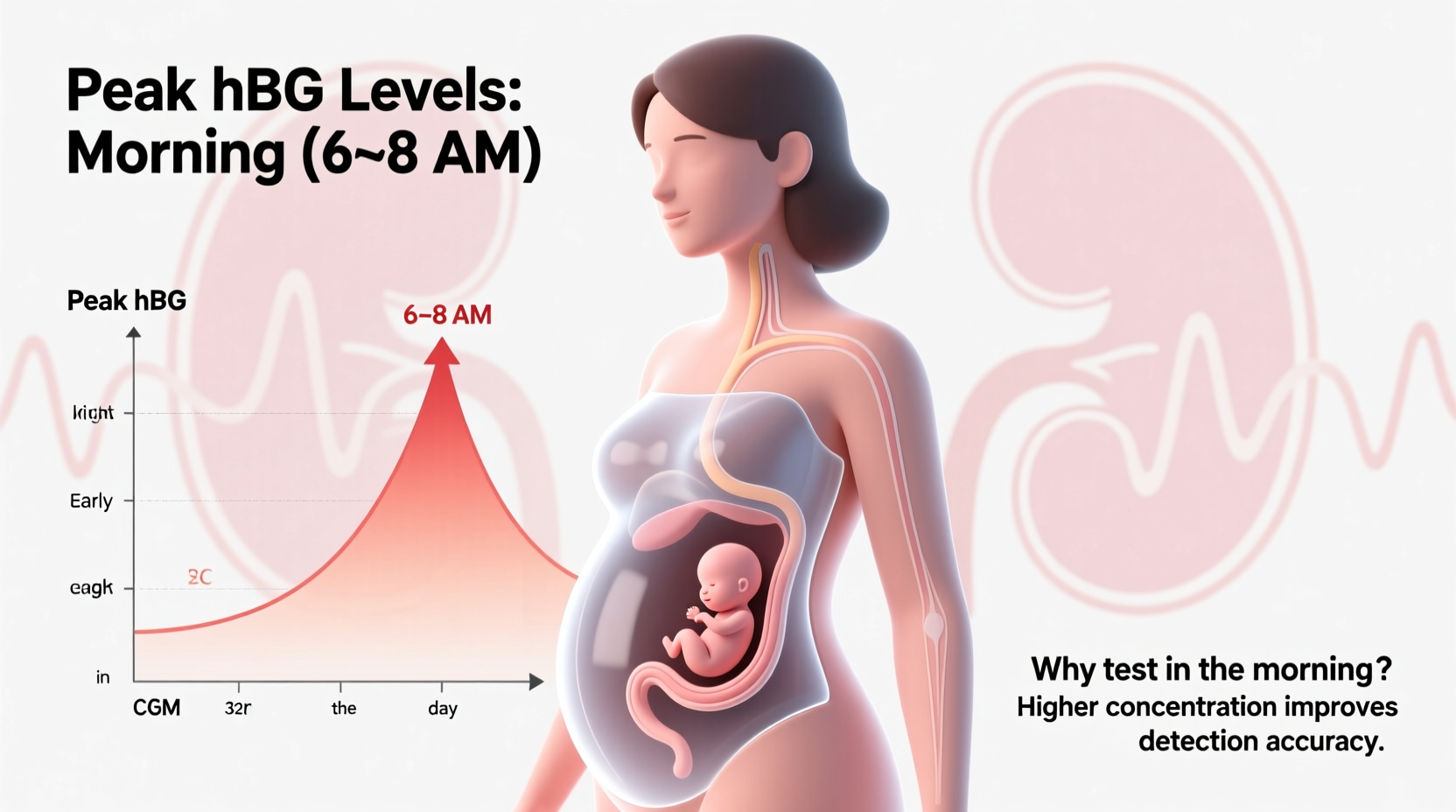
Throughout the day, your fluid intake increases—water, coffee, tea, and other beverages dilute your urine. This dilution spreads hCG molecules across a larger volume of liquid, reducing their concentration. In contrast, during sleep, you typically do not consume fluids for several hours. This fasting period allows hCG to accumulate in your bladder without being diluted.
Morning urine is therefore more concentrated, meaning it contains a higher ratio of hormones per milliliter. For early pregnancy detection, when hCG levels may be as low as 5–25 mIU/mL, even slight differences in concentration can determine whether a test shows a faint positive or a false negative.
How hCG Production and Elimination Work Overnight
hCG is continuously released by the developing placenta once implantation occurs. While production happens around the clock, your body's metabolic clearance and urinary excretion follow a circadian rhythm influenced by hydration, kidney function, and activity level.
During sleep, glomerular filtration rate (GFR) in the kidneys slightly decreases, meaning less urine is produced and filtered. This slower turnover allows hCG to remain in the bloodstream longer and concentrate in the bladder. Additionally, antidiuretic hormone (ADH) levels rise at night, promoting water reabsorption in the kidneys and further concentrating urine.
This natural physiological shift creates an ideal environment for detecting low levels of hCG. By morning, the hormone has had up to 6–8 hours to build up without being flushed out by new fluid intake.
Expert Insight on Early Detection Testing
“First-morning urine remains the gold standard for early pregnancy testing because it maximizes sensitivity. Even the most sensitive tests can miss very low hCG if the sample is too diluted.” — Dr. Laura Simmons, Reproductive Endocrinologist
Optimal Testing Window: A Step-by-Step Guide
To get the most accurate result—especially in the earliest stages of pregnancy—follow this timeline:
- Night Before Testing: Limit fluid intake after dinner, especially diuretics like caffeine and alcohol.
- Before Bed: Empty your bladder completely so that fresh, concentrated urine accumulates overnight.
- Upon Waking: Collect the first urine stream of the day directly onto the test stick or into a clean cup.
- Wait and Read: Follow the test instructions precisely. Most recommend reading results within 3–5 minutes; avoid interpreting after the specified time to prevent evaporation lines.
- If Negative but Suspected: Re-test every 48 hours using first-morning urine, as hCG typically doubles every 48–72 hours in early pregnancy.
When First-Morning Testing Isn’t Possible: Practical Alternatives
While morning testing is ideal, life doesn’t always align with perfect timing. If you can’t test in the morning, consider these adjustments to improve accuracy:
- Go at least 4–6 hours without drinking any fluids before testing.
- Avoid urinating for several hours to allow hCG to re-concentrate.
- Use a digital test with higher sensitivity (some detect down to 10 mIU/mL).
- Test again the next morning for confirmation.
Note: After the first few weeks of pregnancy, hCG levels rise rapidly—often exceeding 100 mIU/mL by week 5. At this point, testing at any time of day usually yields reliable results, even with diluted urine.
Real Example: Sarah’s Early Testing Experience
Sarah suspected she was pregnant two days before her expected period. Excited but anxious, she took a mid-afternoon test using second-stream urine after having two glasses of water. The result was negative. She waited until the next morning and tested again with first-morning urine. This time, a faint but definite positive line appeared. A blood test confirmed her hCG level was 18 mIU/mL—just above the detection threshold. Had she relied solely on the afternoon test, she might have concluded she wasn’t pregnant.
This scenario illustrates how timing and hydration can dramatically affect outcomes, particularly in the critical early detection phase.
Do’s and Don’ts of Pregnancy Testing
| Do’s | Don’ts |
|---|---|
| Use first-morning urine for early testing | Drink large amounts of water before testing |
| Wait until the recommended time to read results | Read results after the specified window (e.g., 10+ minutes) |
| Test every 48 hours if early and unsure | Assume one negative test rules out pregnancy |
| Use a test with high sensitivity (≤20 mIU/mL) | Reuse a test strip or expose it to moisture |
| Confirm with a healthcare provider after a positive | Rely solely on home tests for medical decisions |
Frequently Asked Questions
Can I test at night instead of in the morning?
You can, but only if you haven’t consumed fluids for several hours and haven’t urinated in 4–6 hours. Otherwise, the risk of a false negative increases due to dilution. First-morning urine remains the most reliable option for early detection.
What if I wake up in the middle of the night to pee—can I use that sample?
Possibly, but only if you haven’t drunk anything since going to bed and you collect the full stream. However, if you’ve been awake or hydrated, the sample may already be diluted. For consistency, it’s better to save testing for the final morning void.
Do all pregnancy tests require morning urine?
No. Once hCG levels are high enough—usually after a missed period—most tests will detect pregnancy regardless of the time of day. However, for women testing early (before a missed period), morning urine significantly improves accuracy.
Maximizing Accuracy: A Quick Checklist
- ✅ Test first thing in the morning when possible
- ✅ Limit fluids the night before
- ✅ Use a sensitive test (check package for mIU/mL detection level)
- ✅ Wait until the recommended time to read results
- ✅ Retest every 2–3 days if initial result is negative but pregnancy is suspected
- ✅ Confirm positive results with a healthcare provider
Conclusion: Start Smart, Test Right
The reason hCG levels appear highest in the morning isn't because your body produces more of the hormone at dawn—it's because your urine is most concentrated after hours without fluid intake. This simple physiological detail makes all the difference in early pregnancy detection. Whether you're tracking fertility, hoping for a positive result, or ruling out pregnancy, understanding the role of timing and hydration empowers you to make informed decisions.
By following evidence-based practices—like using first-morning urine, avoiding overhydration, and retesting strategically—you increase your chances of getting an accurate result when it matters most. Don’t let a poorly timed test lead to confusion or unnecessary stress. Test smart, trust the process, and consult a medical professional for confirmation.




 浙公网安备
33010002000092号
浙公网安备
33010002000092号 浙B2-20120091-4
Comments
No comments yet. Why don't you start the discussion?