
On golf courses and well-maintained lawns, divots—chunks of turf torn away by club impact or foot traffic—are inevitable. While minor damage may seem trivial, unaddressed divots can lead to uneven surfaces, bare patches, and long-term turf degradation. Understanding the natural recovery timeline and implementing effective repair strategies makes a significant difference in maintaining a lush, playable surface.
The time it takes for a divot to grow back depends on several factors: grass type, climate, season, soil health, and post-damage care. Without intervention, recovery can drag on for weeks or even months. With proper techniques, however, regrowth can be accelerated significantly.
Understanding Divot Formation and Turf Response
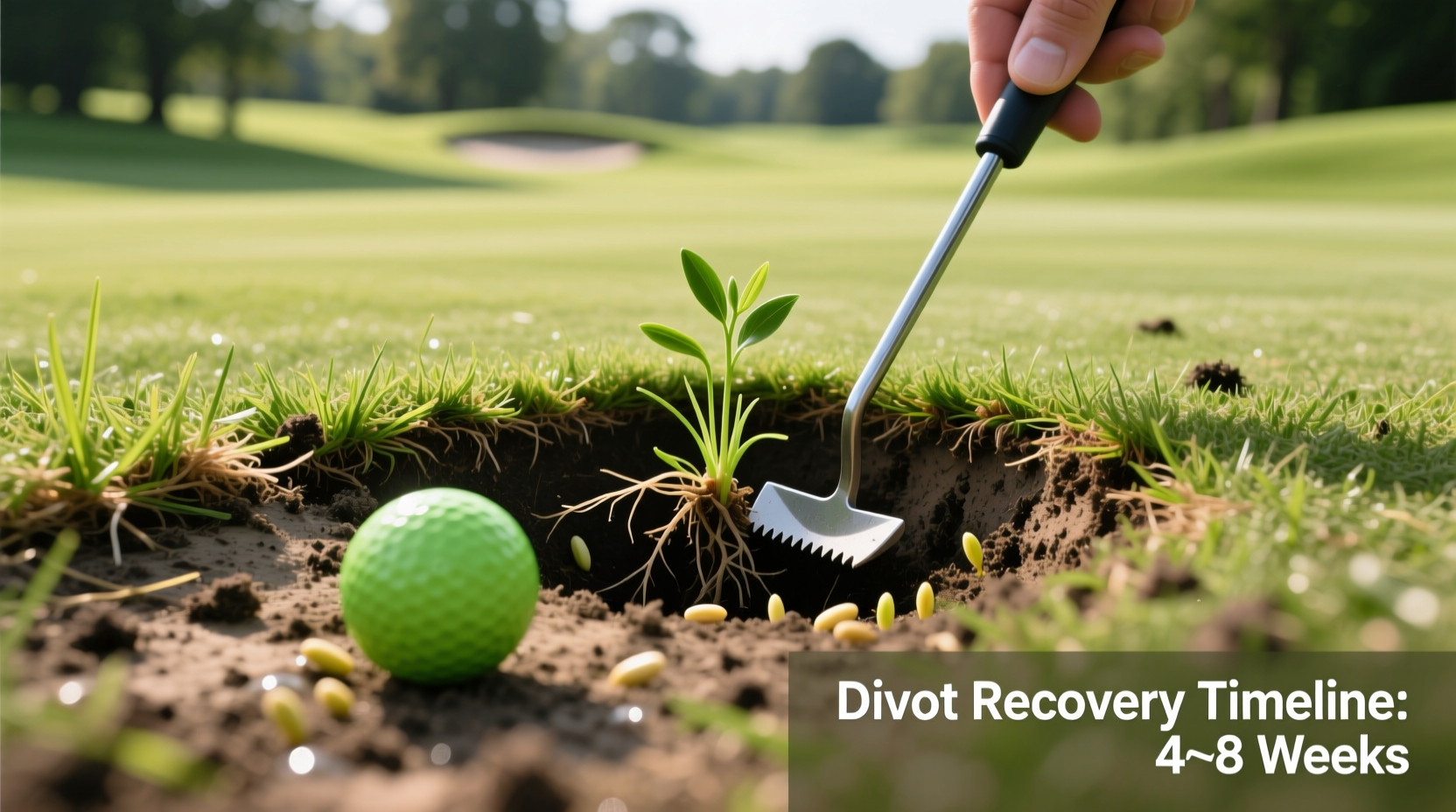
A divot forms when a golf club strikes the ground with enough force to lift a section of turf, including grass blades, thatch, and sometimes soil. This is common during iron shots where ball contact precedes ground contact. The severity of the divot depends on swing angle, club loft, turf moisture, and root strength.
Healthy turf responds to injury by activating lateral growth mechanisms. Grass species such as bentgrass, ryegrass, and bermudagrass have strong recuperative potential due to their rhizomes or stolons—underground and above-ground stems that spread horizontally and generate new shoots.
However, if the root zone is damaged or the soil becomes compacted, recovery slows. Bare soil also invites weed invasion and erosion, especially during rain or heavy foot traffic.
“Turfgrass has a remarkable ability to self-repair, but only if given the right conditions. Immediate reseating of the divot or overseeding gives nature a head start.” — Dr. Alan Pierce, Turfgrass Scientist, University of Georgia
Typical Recovery Timeframes by Grass Type
Recovery duration varies widely based on grass species. Cool-season and warm-season grasses follow different biological rhythms, which directly affect healing speed.
| Grass Type | Season Active | Divot Recovery (Natural) | Optimal Repair Window |
|---|---|---|---|
| Bentgrass | Cool season (spring/fall) | 10–21 days | Within 48 hours |
| Perennial Ryegrass | Cool season | 7–14 days | Immediate |
| Creeping Bentgrass | Cool season | 10–18 days | Same day |
| Bermudagrass | Warm season (summer) | 5–12 days | Within 24 hours |
| Zoysiagrass | Warm season | 14–30 days | As soon as possible |
| Bluegrass (Kentucky) | Cool season | 14–25 days | Within 48 hours |
Note that these times assume favorable growing conditions: adequate moisture, temperatures within the ideal range (60–75°F for cool-season, 80–95°F for warm-season), and healthy soil biology. In suboptimal conditions—such as drought, shade, or compacted soil—recovery can double or triple.
How to Speed Up Divot Recovery: A Step-by-Step Guide
Natural healing is slow. To restore playing quality and aesthetic appeal quickly, follow this structured approach:
- Reseat the divot immediately. If the turf is still intact, flip it over and press it back into place. Do not discard it. Use your foot or a tee to gently firm the edges.
- Fill gaps with topdressing mix. For incomplete divots, apply a sand-soil blend (80% sand, 20% compost) to level the area. This prevents water pooling and supports seed germination.
- Overseed bare spots. Apply a compatible grass seed at 1/4 the normal rate. Press seeds lightly into the soil using a brush or roller.
- Water consistently. Irrigate twice daily for 5–7 days after repair. Keep the top inch of soil moist but not saturated.
- Avoid traffic. Mark repaired areas if possible and refrain from walking or swinging over them for at least 5–7 days.
- Apply a starter fertilizer. Use a low-nitrogen, high-phosphorus formula (e.g., 5-10-5) to promote root development without excessive top growth.
Best Practices Checklist for Faster Healing
- ✅ Reseed or resod large divots within 24 hours
- ✅ Maintain consistent moisture for first week post-repair
- ✅ Use sharp mower blades to reduce tearing stress on recovering edges
- ✅ Aerate compacted areas monthly during growing season
- ✅ Avoid nitrogen-heavy fertilizers immediately after repair—they encourage weak, vulnerable growth
- ✅ Monitor for weeds and treat early if needed
- ✅ Mow at recommended height—never remove more than 1/3 of blade length at once
Real-World Example: Municipal Golf Course Turnaround
A municipal course in central Virginia struggled with persistent fairway damage during peak season. Despite daily play, they implemented a simple divot management protocol: staff distributed cups filled with custom divot mix (sand, compost, perennial ryegrass seed) across all tees. Players were encouraged to fill every divot.
In addition, groundskeepers performed weekly light topdressing on high-traffic zones and aerated fairways bi-monthly. Within eight weeks, visible bare spots dropped by 70%. Superintendent Mark Tolbert reported that average recovery time decreased from 28 days to just 10, improving both playability and player satisfaction scores.
\"We stopped treating divots as unavoidable damage and started seeing them as repair opportunities,\" Tolbert said. \"The key was making restoration easy and habitual.\"
Common Mistakes That Delay Recovery
Even with good intentions, many people inadvertently prolong healing. Avoid these pitfalls:
- Leaving divots unfilled: Exposed soil erodes easily and delays regrowth.
- Using pure sand: While it levels the surface, sand lacks organic matter and nutrients essential for root establishment.
- Overwatering: Saturated soil reduces oxygen availability, weakening new roots.
- Walking over repaired areas: Pressure disrupts root-to-soil contact and dislodges seeds.
- Ignoring soil pH: Most turfgrasses thrive between pH 6.0 and 7.0. Outside this range, nutrient uptake suffers.
Frequently Asked Questions
Do all divots need to be repaired?
Yes. Even small divots compromise surface integrity. On putting greens and fairways, every divot should be addressed. In rough areas, natural recovery may suffice, but filling improves uniformity and prevents weed encroachment.
Can I use regular garden soil to fill divots?
No. Garden soil is often too dense and clay-rich, leading to poor drainage and compaction. Always use a sandy loam or professional-grade topdressing mix designed for turf.
Is overseeding necessary for every divot?
Not always. If the original turf is replaced promptly and remains viable, regrowth will occur naturally. However, overseeding dramatically speeds recovery, especially in high-use areas or during transitional seasons.
Conclusion: Take Action for a Healthier Lawn or Course
Divot recovery isn’t passive—it’s a combination of timely action, smart materials, and ongoing maintenance. Whether you manage a championship golf course or a backyard lawn, the principles remain the same: act fast, use the right mix, and support regrowth with proper watering and care.
Waiting for nature to heal damage leads to prolonged imperfections and increased vulnerability. But with informed intervention, most divots can fully recover in under two weeks. Make divot repair part of your routine, educate others, and maintain a surface that looks—and plays—its best.




 浙公网安备
33010002000092号
浙公网安备
33010002000092号 浙B2-20120091-4
Comments
No comments yet. Why don't you start the discussion?