
Constipation affects millions of people worldwide, disrupting daily life and causing discomfort. When over-the-counter remedies are considered, Miralax (polyethylene glycol 3350) is one of the most commonly recommended options due to its gentle action and minimal side effects. But a frequent question remains: how long does Miralax actually take to work? Understanding the timeline, proper usage, and realistic expectations can make a significant difference in managing symptoms effectively.
Miralax works differently than stimulant laxatives. Instead of triggering intestinal contractions, it draws water into the colon to soften stool and promote easier passage. This mechanism means results aren’t immediate—but they are often more predictable and comfortable once they occur.
How Miralax Works in the Body
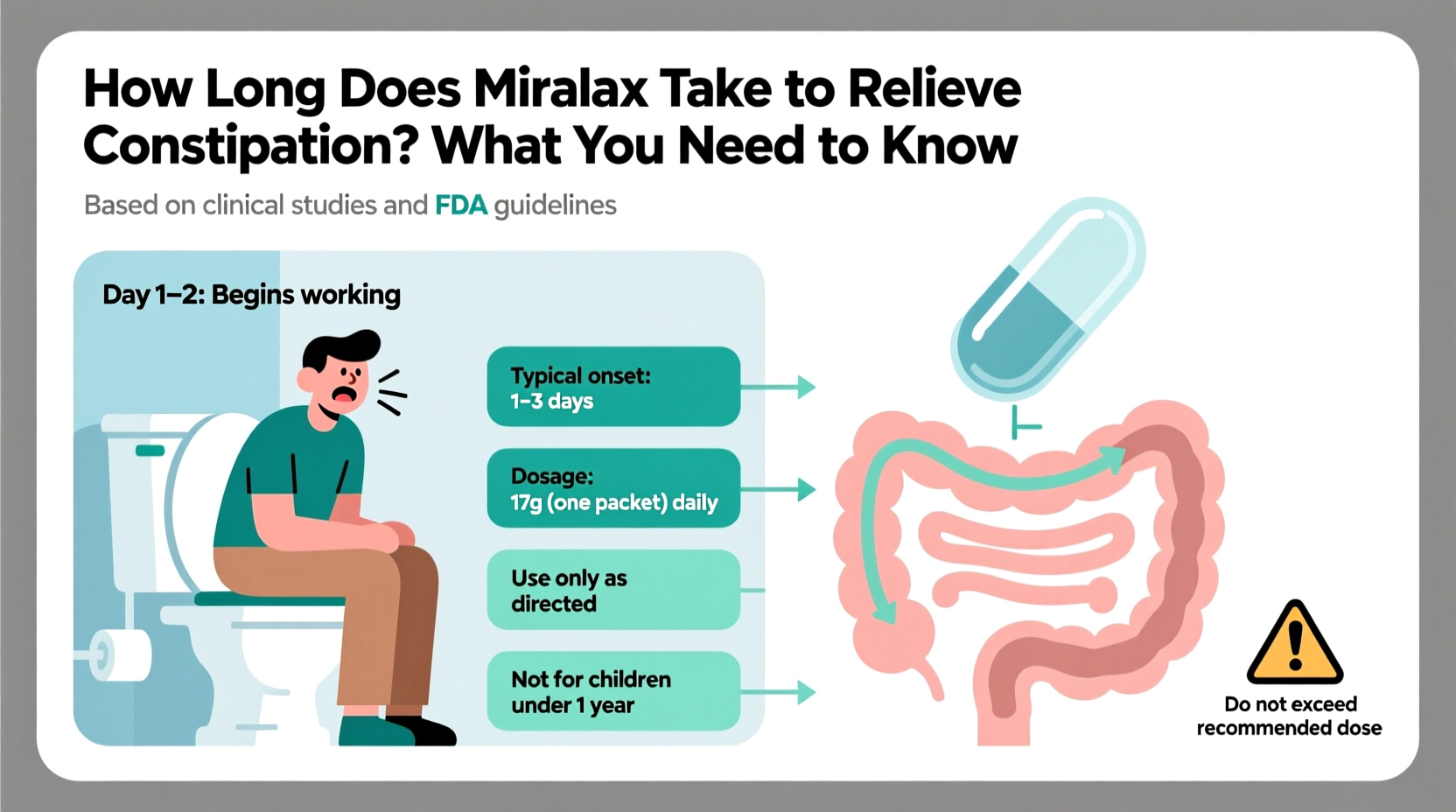
Polyethylene glycol 3350, the active ingredient in Miralax, is an osmotic laxative. It functions by retaining water in the stool, increasing its volume and softness. Because it isn't absorbed into the bloodstream, Miralax acts locally within the digestive tract, minimizing systemic side effects.
Unlike stimulant laxatives such as senna or bisacodyl—which may produce bowel movements in as little as 6–12 hours—Miralax’s effect is gradual. The process begins soon after ingestion, but visible results depend on individual bowel transit time, hydration levels, and baseline digestive health.
“Miralax is ideal for patients needing gentle, reliable relief without cramping. It’s particularly useful for chronic constipation and pre-procedure bowel prep.” — Dr. Laura Nguyen, Gastroenterologist
Typical Timeframe for Relief
Most users begin to experience relief within **1 to 3 days** of starting Miralax. However, some may notice effects as early as 24 hours, while others might require up to 4 days, especially if constipation is severe or longstanding.
The variability depends on several factors:
- Hydration status: Miralax pulls water into the colon, so adequate fluid intake is essential.
- Dietary fiber: Low-fiber diets slow digestion, delaying results.
- Bowel history: Individuals with slow transit constipation may take longer to respond.
- Consistency of use: Taking the dose daily improves effectiveness over sporadic use.
What to Expect During the First 72 Hours
Understanding the progression can reduce anxiety and improve adherence:
- Day 1: No bowel movement may occur. Stool begins absorbing water and softening internally.
- Day 2: Some users report increased gas, bloating, or mild cramping as stool moves through the colon.
- Day 3: Most people experience a soft, easy-to-pass bowel movement. Relief typically follows.
If no improvement occurs after 4 days, reassessment is warranted. Persistent constipation may require medical evaluation or adjustment in treatment strategy.
Proper Dosage and Administration Guidelines
The standard adult dose is one capful (17 grams) of Miralax powder dissolved in a full glass (8 oz) of liquid once daily. It can be taken at any time of day, though many prefer mornings to align with natural circadian rhythms of digestion.
Children should only use Miralax under medical supervision. Dosing varies by age and weight, and misuse can lead to electrolyte imbalances.
| Group | Dosage | Frequency | Notes |
|---|---|---|---|
| Adults | 1 capful (17g) | Once daily | Use for up to 2 weeks without consulting a doctor |
| Children (6–17) | Half to full capful | Once daily | Pediatrician guidance required |
| Elderly | Full capful | Once daily | Monitor hydration; higher risk of dehydration |
Do’s and Don’ts When Using Miralax
| Do’s | Don’ts |
|---|---|
| Drink plenty of fluids throughout the day | Do not exceed the recommended dose |
| Take at the same time each day | Avoid using for more than two weeks without medical advice |
| Combine with high-fiber foods like oats, apples, and beans | Don’t mix with carbonated beverages (may cause bloating) |
| Continue normal activity and light exercise | Don’t use if you have abdominal pain, nausea, or vomiting |
Realistic Expectations and Common Misconceptions
One of the most common misconceptions about Miralax is that it should work within hours. This expectation often leads to double-dosing or switching to harsher laxatives unnecessarily. In reality, osmotic laxatives like Miralax are designed for steady, gentle correction—not rapid purging.
A mini case study illustrates this point:
This scenario underscores the importance of patience and adherence to dosing instructions. Rushing the process can lead to imbalance rather than relief.
When to Seek Medical Advice
While Miralax is safe for short-term use, certain red flags warrant prompt medical attention:
- No bowel movement after 7 days of consistent use
- Severe abdominal pain or bloating
- Rectal bleeding or black, tarry stools
- Unintentional weight loss
- Recurrent constipation despite lifestyle changes
Chronic constipation may indicate underlying conditions such as irritable bowel syndrome (IBS), hypothyroidism, or pelvic floor dysfunction. Long-term reliance on laxatives without diagnosis is not advisable.
FAQ: Common Questions About Miralax
Can I take Miralax every day?
Miralax is generally safe for daily use for up to two weeks. Longer use should be supervised by a healthcare provider to avoid dependency or electrolyte disturbances, though it is less habit-forming than stimulant laxatives.
Does Miralax cause dependency?
Unlike stimulant laxatives, Miralax does not irritate the bowel lining or alter nerve function, making physical dependency unlikely. However, psychological reliance can occur if used excessively without addressing root causes like diet or mobility.
Is Miralax safe during pregnancy?
Yes, Miralax is often recommended during pregnancy, as constipation is common due to hormonal changes and pressure from the growing uterus. Always consult your OB-GYN before starting any medication, even over-the-counter ones.
Maximizing Results: A Step-by-Step Plan
To get the most out of Miralax and support long-term digestive health, follow this five-step approach:
- Start with hydration: Drink at least 6–8 glasses of water daily before taking Miralax.
- Take one dose daily: Mix powder completely in a non-carbonated beverage each morning.
- Add fiber gradually: Incorporate fruits, vegetables, and whole grains to prevent future episodes.
- Move your body: Even 15–20 minutes of walking daily stimulates bowel motility.
- Monitor response: Track bowel movements and symptoms for 3–5 days before adjusting.
Conclusion: Take Control of Your Digestive Health
Miralax is a reliable, well-tolerated option for constipation relief, typically working within 1 to 3 days when used correctly. Its gentle mechanism makes it suitable for many, including older adults and pregnant women, but success depends on consistency, hydration, and realistic expectations.
Remember, occasional constipation is normal—but recurring issues deserve attention. Use Miralax as a bridge to better habits, not a permanent fix. Combine it with dietary improvements, movement, and mindful routines to support lasting gut health.




 浙公网安备
33010002000092号
浙公网安备
33010002000092号 浙B2-20120091-4
Comments
No comments yet. Why don't you start the discussion?