
Tires are the only part of your vehicle that make direct contact with the road, making them one of the most critical components for safe driving. While tread depth is commonly checked during maintenance, many drivers overlook another crucial factor: tire age. Even if a tire looks good on the outside, its internal structure can degrade over time—regardless of use. Understanding how to determine your tire’s age isn’t just about maximizing lifespan; it’s a matter of personal and public safety.
Old tires are more prone to sudden failure, including blowouts and tread separation, especially at high speeds or under heavy loads. These failures can lead to loss of control and serious accidents. The rubber compounds in tires break down due to oxidation, UV exposure, temperature fluctuations, and chemical reactions—even when the vehicle is parked. This article will guide you through how to read tire dates, interpret their meaning, and take practical steps to ensure your tires aren't silently compromising your safety.
How to Locate and Decode the Tire Date Code
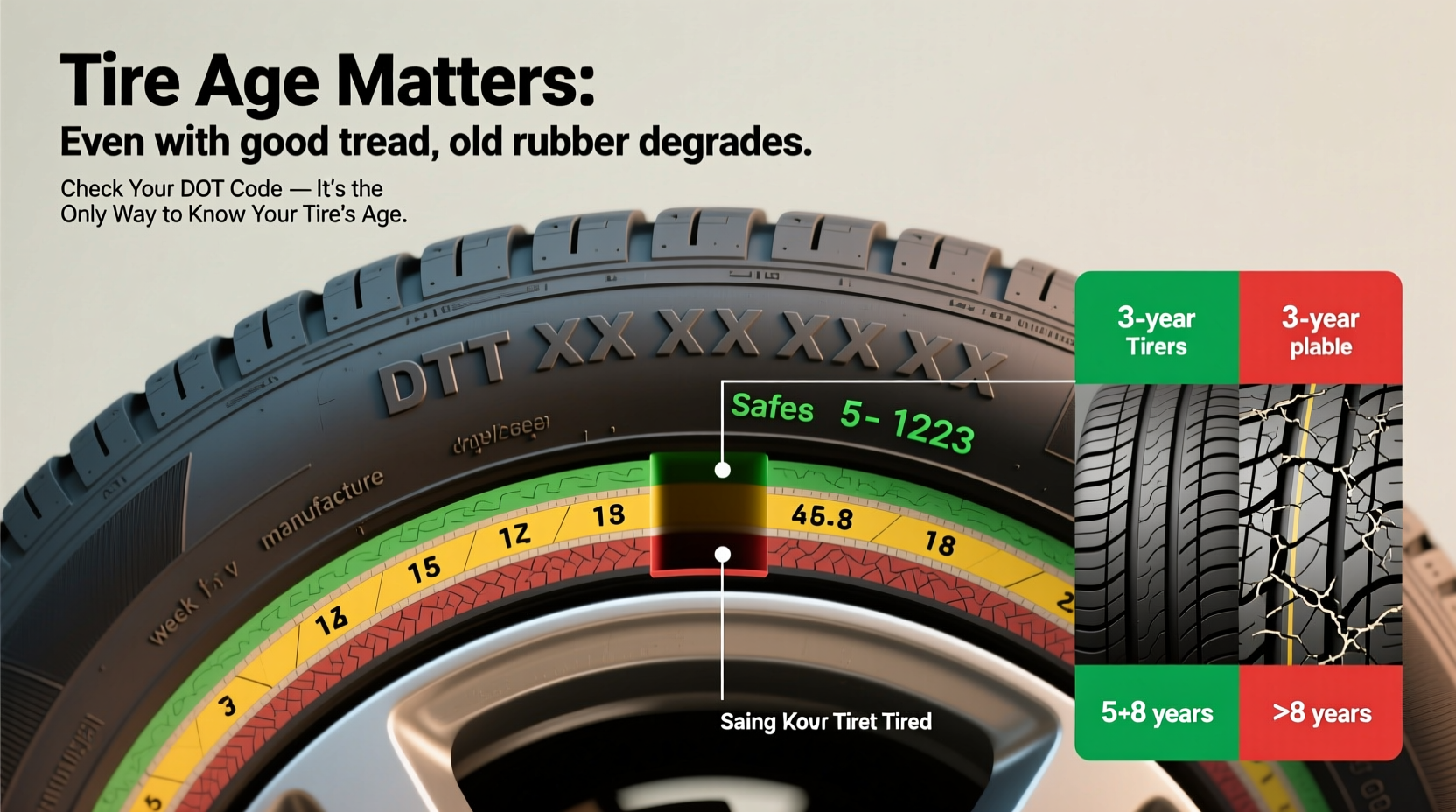
All modern passenger tires manufactured since 2000 include a standardized date code in the Department of Transportation (DOT) number stamped on the sidewall. This code tells you exactly when the tire was made, not when it was sold or installed. Knowing where to look and how to read this code is the first step toward responsible tire ownership.
The date code appears as a four-digit number located at the end of the DOT sequence. For example, a tire marked DOT XXXXXXXX3522 was manufactured in the 35th week of 2022. The first two digits represent the week of production (from 01 to 52), and the last two digits indicate the year.
Prior to the year 2000, the date code used only three digits—the first two for the week and the third for the year—but this system was phased out because of confusion around the millennium. Today’s four-digit format eliminates ambiguity.
Why Tire Age Matters More Than You Think
A tire doesn’t need to be worn down or driven extensively to become unsafe. Rubber is an organic material that deteriorates over time, even under ideal storage conditions. As oxygen and ozone interact with the tire’s polymers, the rubber hardens, loses elasticity, and develops micro-cracks—often invisible to the naked eye.
According to the National Highway Traffic Safety Administration (NHTSA), tire aging significantly increases the risk of tread separation and structural failure. In fact, NHTSA research has shown that tires older than six years exhibit measurable degradation in performance, regardless of tread depth or mileage.
“Tire aging is a silent threat. A tire might look fine, but internally, the belts can separate due to rubber breakdown.” — Dr. Gary Medalis, Tire Durability Engineer, NTSB Retired
This is particularly dangerous for spare tires, which often sit unused for years. Many drivers assume their spare is reliable in an emergency, only to discover it’s too degraded to be safely inflated or driven on.
Recommended Tire Lifespan and Replacement Guidelines
While there is no federally mandated expiration date for tires in the U.S., several automakers and safety organizations recommend replacing tires after six years from the date of manufacture, regardless of tread condition. Some suggest extending to ten years only with annual professional inspections beyond the sixth year.
Here’s a summary of key recommendations:
| Organization | Recommended Max Age | Notes |
|---|---|---|
| Ford, Toyota, Nissan | 6 years | Replace after 6 years, regardless of tread |
| Michelin, Continental | 10 years | After 6 years, inspect annually; replace by 10 |
| NHTSA | 6–10 years | Strongly advises replacement after 6 years for optimal safety |
| AAA Foundation | 6 years | Especially critical for vehicles in hot climates or stored outdoors |
Environmental factors accelerate aging. Tires exposed to high heat, sunlight, or extreme temperature swings degrade faster. Vehicles in southern states like Arizona or Florida face higher risks due to prolonged UV exposure and asphalt heat.
Step-by-Step Guide to Checking Your Tire Age
Follow this simple process to assess the age of your current tires:
- Locate the DOT Number: Find the raised tire identification code on the outer sidewall. Look for “DOT” followed by up to 12 characters.
- Identify the Date Code: Focus on the last four digits. If it’s a three-digit code, the tire was made before 2000 and should be replaced immediately.
- Determine Manufacturing Date: The first two digits are the week (e.g., 24 = 24th week), and the last two are the year (e.g., 20 = 2020).
- Calculate Age: Compare the manufacture date to today. For example, a tire made in week 18 of 2019 is over 5 years old as of 2024.
- Inspect All Tires: Repeat the process for each tire, including the spare. Don’t assume they’re all the same age.
- Record and Evaluate: Note the oldest tire. If any are six years or older, schedule a professional inspection or plan for replacement.
Real-World Example: A Preventable Blowout
In 2021, a family traveling on I-75 in Georgia experienced a sudden rear-tire blowout that caused their SUV to swerve into a barrier. Fortunately, no one was seriously injured. Upon investigation, the tire had adequate tread depth but was found to be eight years old. It had been sitting in storage for two years before installation and showed no visible signs of dry rot from the outside.
An independent tire expert later explained that prolonged indoor storage didn’t prevent internal degradation. The steel belts had begun to separate due to natural rubber aging. The driver assumed the tire was safe because it hadn’t been used much—highlighting a common misconception.
This case underscores the importance of tracking tire age from the moment of manufacture, not installation. It also illustrates why visual inspection alone is insufficient.
Checklist: Tire Age Safety Audit
- ✅ Locate the DOT number on each tire
- ✅ Identify the four-digit date code
- ✅ Calculate the tire’s age in years and months
- ✅ Check the spare tire using the same method
- ✅ Replace any tire older than six years
- ✅ Schedule annual inspections for tires between 5–6 years old
- ✅ Keep a log of tire purchase and installation dates
- ✅ Avoid buying tires that are already more than a year old
Frequently Asked Questions
Can a tire be too old even if it has full tread?
Yes. Tread depth indicates wear from use, but it doesn’t reflect the chemical aging of the rubber. A tire with full tread can still be structurally unsound after six years due to internal cracking and belt separation.
Where can I find the tire’s manufacture date if the sidewall is damaged?
If the DOT code is unreadable, contact the tire retailer or installer with the serial number or purchase records. Otherwise, assume the tire is unsafe and have it replaced.
Do spare tires have the same age limits?
Absolutely. Spare tires, especially compact “donut” spares, are subject to the same aging process. Full-size spares should be treated like regular tires. Most manufacturers recommend replacing spares after 10 years at the latest, but many experts advise doing so after 6.
Conclusion: Prioritize Safety Over Assumptions
Your tires don’t come with a visible countdown clock, but their age is a critical indicator of safety. Relying solely on tread depth or appearance leaves you vulnerable to unseen risks. By learning how to read the DOT date code and adhering to conservative replacement timelines, you protect not only yourself but everyone sharing the road with you.
Tire aging is inevitable—but accidents caused by aged tires are preventable. Take five minutes today to inspect your tires’ manufacture dates. If any are approaching or past the six-year mark, make a plan to replace them. Your future self—and your passengers—will thank you.




 浙公网安备
33010002000092号
浙公网安备
33010002000092号 浙B2-20120091-4
Comments
No comments yet. Why don't you start the discussion?