
Facebook remains one of the most powerful platforms for digital advertising, with over 2.9 billion monthly active users. Whether you're launching a new product, growing your email list, or driving traffic to your website, Facebook Ads offer precision targeting, scalable budgets, and measurable results. But without a clear strategy, even well-funded campaigns can fall flat. This guide walks through the exact steps to build effective Facebook ad campaigns that convert — from setup to optimization.
Step 1: Set Clear Campaign Objectives
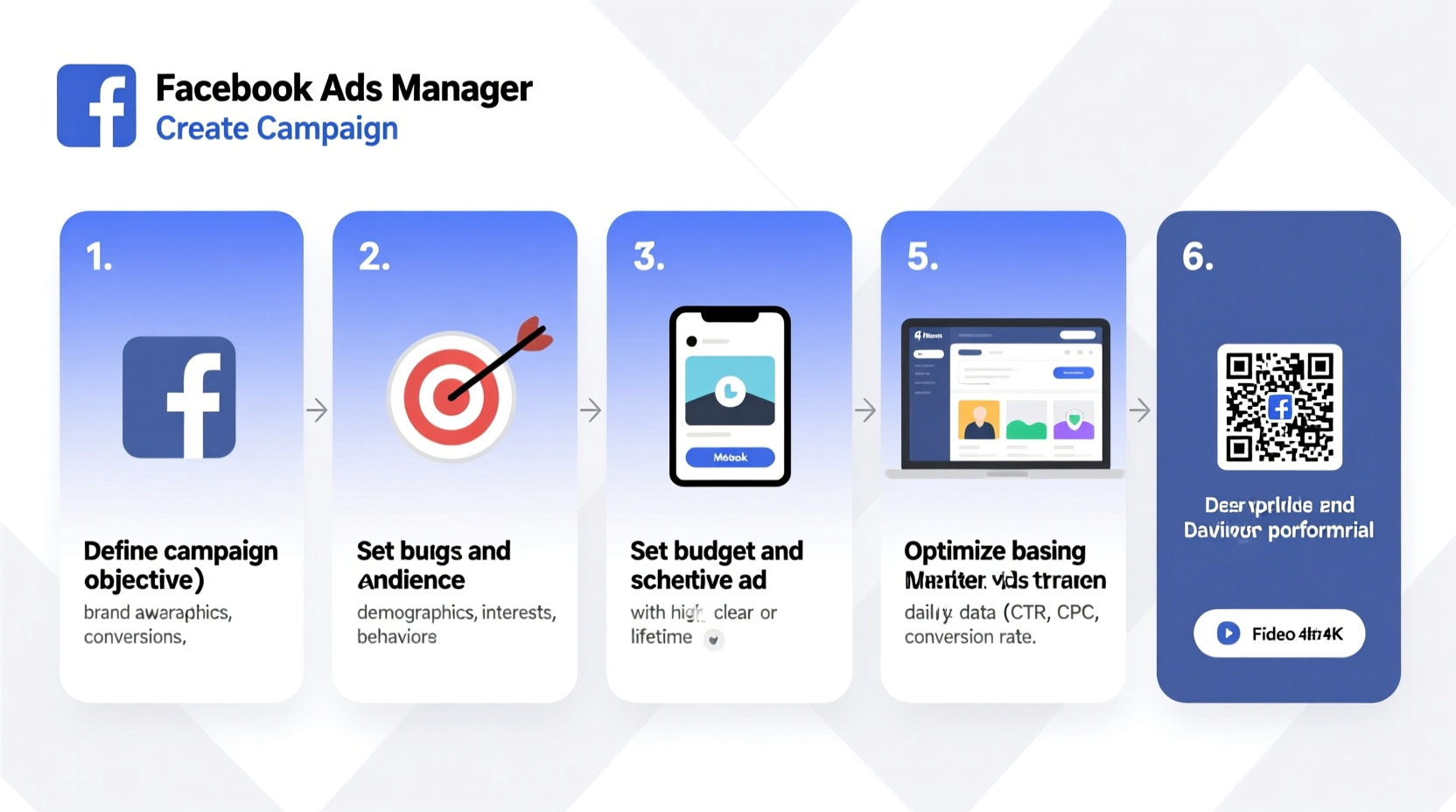
Before launching any ad, define what success looks like. Facebook’s Ad Manager offers 17 campaign objectives grouped into three categories: Awareness, Consideration, and Conversion. Choosing the right objective shapes how your ads are optimized and delivered.
- Awareness: Increase brand visibility (e.g., Brand Awareness, Reach).
- Consideration: Drive engagement, traffic, or lead generation.
- Conversion: Encourage purchases, sign-ups, or app installs.
If you’re selling a product, select “Conversions.” For building an email list, use “Leads.” Misalignment here leads to poor performance, no matter how good your creative is.
Step 2: Understand and Define Your Audience
Precise targeting separates successful campaigns from wasted spend. Facebook allows granular control over who sees your ads using demographics, interests, behaviors, and custom audiences.
Core Targeting Options
| Type | Description | Best For |
|---|---|---|
| Demographics | Age, gender, education, job title | Broad segmentation |
| Interests | Hobbies, pages liked, content engaged with | Finding lookalike behaviors |
| Behaviors | Purchase habits, device usage | Targeting buyers vs. browsers |
| Custom Audiences | Upload customer lists or track website visitors | Retargeting existing leads |
| Lookalike Audiences | Find users similar to your best customers | Scaling profitable segments |
Start narrow. A focused audience reduces competition and improves relevance scores. For example, instead of targeting “women aged 25–54 interested in fitness,” try “women 30–45 who follow yoga influencers and have purchased wellness products online.”
“We see up to 3x higher ROAS when advertisers refine their audience beyond basic demographics.” — Lena Torres, Senior Ads Strategist at Meta Partner Agency
Step 3: Craft Compelling Ad Creatives
Your audience decides whether to engage in under two seconds. That means visuals and copy must work together to capture attention, communicate value, and prompt action.
Best Practices for Creative Elements
- Use authentic imagery: Real photos of people using your product outperform stock images.
- Keep text minimal: Facebook penalizes images with more than 20% text. Use tools like Canva to check compliance.
- Lead with benefit-driven headlines: Instead of “New Running Shoes,” say “Run Farther Without Knee Pain.”
- Include subtitles: 85% of videos play without sound. Add captions directly on the video.
Test multiple variations. Run A/B tests on headlines, CTAs, and media types (image vs. video). Even small changes — like switching from “Learn More” to “Get Yours Now” — can lift CTR by 15% or more.
Step 4: Structure and Launch Your Campaign
Proper campaign structure ensures clarity, scalability, and accurate data analysis. Follow this hierarchy:
- Campaign: Defined by objective (e.g., Conversions).
- Ad Set: Contains audience, budget, schedule, and placement settings.
- Ad: Individual creatives and copy within an ad set.
Recommended Budget Allocation
- Testing Phase: $20–$50/day across 3–5 ad sets for 5–7 days.
- Scaling Phase: Double down on winning ad sets; pause underperformers.
- Budget Type: Start with daily budgets to maintain consistency.
Select automatic placements initially unless you have strong data favoring specific platforms (e.g., Instagram Stories over Feed). Let Facebook’s algorithm distribute your ads where they perform best.
Mini Case Study: EcoSkincare Launch
EcoSkincare, a new organic beauty brand, wanted to drive first-time sales. They launched a campaign with the “Conversions” objective, targeting women 28–45 interested in clean beauty and sustainable living. Using a custom audience of website visitors and a 1% lookalike of past purchasers, they tested four video ads showcasing ingredient sourcing and customer testimonials.
After six days, one ad generated a cost per purchase of $18, well below their $30 target. They paused the other three and scaled the winner, increasing daily spend to $150. Within three weeks, return on ad spend (ROAS) reached 3.2x, funding further expansion into new markets.
Step 5: Monitor, Optimize, and Scale
Launching is just the beginning. Optimization turns promising campaigns into consistent performers.
Key Metrics to Track
| Metric | What It Measures | Benchmark (Good) |
|---|---|---|
| CPC (Cost Per Click) | Average price for each link click | Under $1.00 |
| CTR (Click-Through Rate) | Percentage of viewers who clicked | 1.5%+ |
| CPL (Cost Per Lead) | Price per form submission or sign-up | Varies by industry |
| ROAS (Return on Ad Spend) | Revenue generated per dollar spent | 2.5x+ |
| Frequency | Average times each user sees your ad | Below 3.0 |
Watch frequency closely. If it exceeds 3, your audience may be seeing the same ad too often, leading to fatigue. Refresh creatives or expand the audience.
To scale successfully:
- Duplicate winning ad sets with slightly broader audiences (e.g., 2–3% lookalikes).
- Increase budget by no more than 20% every 48 hours to avoid disrupting delivery.
- Test new angles: different pain points, offers, or customer personas.
Essential Facebook Ads Checklist
Before launching, verify the following:
- ✅ Campaign objective aligns with business goal
- ✅ Audience size between 100,000–500,000 (for testing)
- ✅ Pixel or Conversions API is installed and tracking events
- ✅ Ad creative complies with text-on-image rules
- ✅ Primary text clearly states offer or benefit
- ✅ CTA button matches intent (e.g., “Shop Now,” “Sign Up”)
- ✅ Landing page loads quickly and matches ad message
- ✅ Tracking parameters (UTMs) added for analytics
FAQ
How much should I spend on Facebook ads?
Start with $10–$20 per day to gather meaningful data. There's no minimum, but very low budgets limit delivery. Focus on profitability — a $5/day ad that converts is better than a $50/day ad that doesn’t.
Why aren’t my ads converting?
Common causes include mismatched messaging (ad doesn’t reflect landing page), weak offer, or poor audience targeting. Audit your funnel: ensure your ad speaks directly to the viewer’s need and leads to a seamless experience.
Do I need a large audience to succeed?
No. Smaller, highly targeted audiences often convert better than broad ones. Quality matters more than quantity. A 150,000-person audience with high intent can outperform a 2 million-person general group.
Final Thoughts
Advertising on Facebook isn’t about luck — it’s about process. From setting precise objectives to refining creatives based on real data, every step compounds toward better results. The most successful advertisers don’t rely on guesswork; they test, measure, and iterate relentlessly.
You don’t need a big budget to start. You need clarity, consistency, and the willingness to learn from every campaign. Apply these steps methodically, stay patient during testing phases, and let performance guide your decisions.




 浙公网安备
33010002000092号
浙公网安备
33010002000092号 浙B2-20120091-4
Comments
No comments yet. Why don't you start the discussion?