
Applying fake eyelashes can elevate your makeup look from simple to stunning, but few things are more frustrating than ending up with glue smeared on your eyelid, lashes stuck together, or adhesive flaking onto your cheek. The mess often discourages even experienced makeup users from wearing falsies regularly. Yet, with the right technique, tools, and preparation, you can achieve a seamless application—without glue migrating beyond the lash band. This guide breaks down the exact steps, common pitfalls, and professional insights to help you master clean, precise lash application.
Why Glue Ends Up Where It Shouldn’t
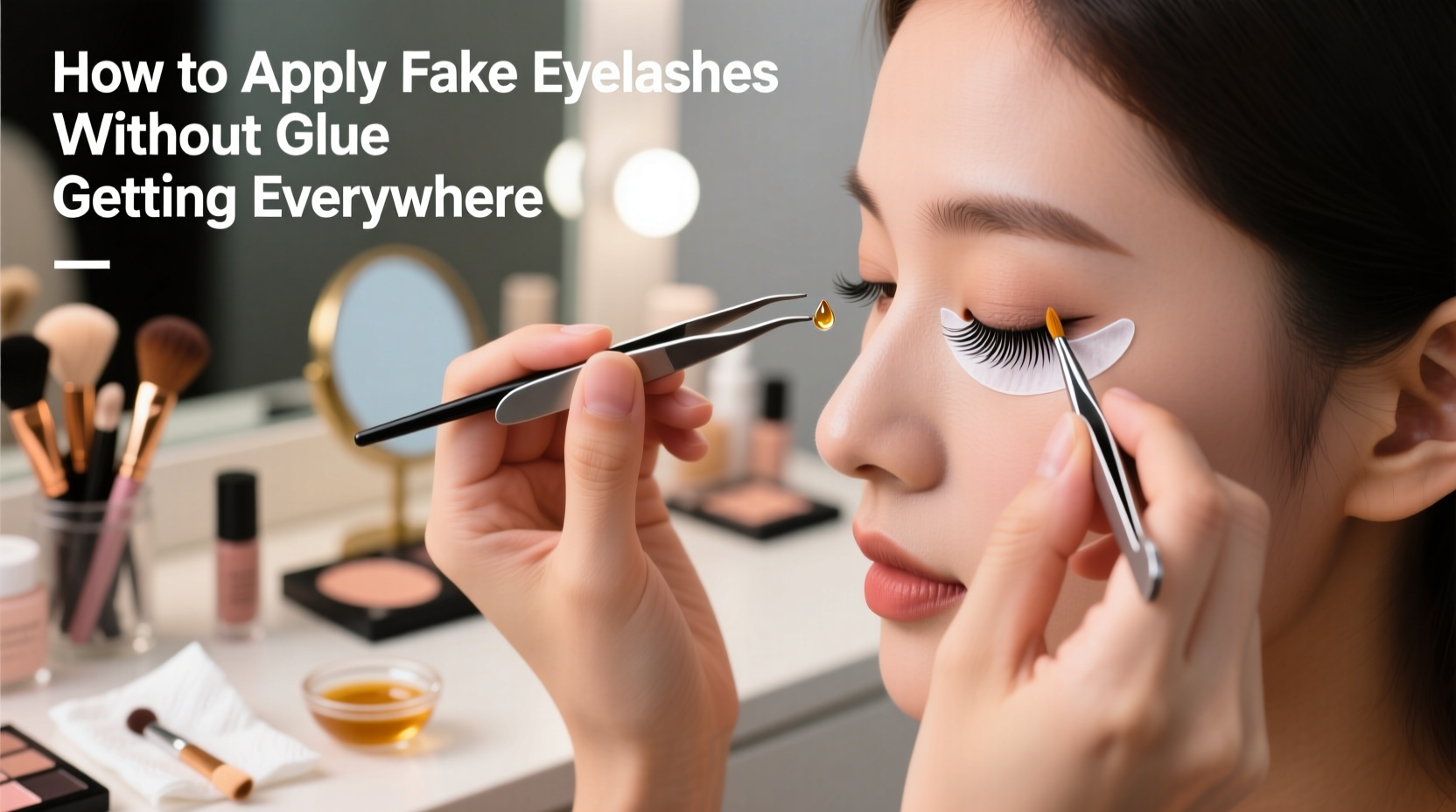
Fake eyelash glue is designed to be fast-drying and strong, which makes it effective—but also unforgiving. When applied incorrectly, excess adhesive seeps out during placement or dries in clumps, creating a messy appearance. Common causes include:
- Using too much glue on the lash band
- Not waiting for the adhesive to become tacky before applying
- Poor alignment requiring multiple adjustments
- Using old or watery glue that spreads unpredictably
- Applying lashes too close to the natural lash line, forcing glue contact with skin
Understanding these root causes is the first step toward eliminating the problem. Precision, timing, and tool selection play critical roles in maintaining control throughout the process.
The Right Tools Make All the Difference
Success begins before you even pick up the lashes. Using high-quality, appropriate tools minimizes the risk of glue mishaps. Here’s what you need:
- Tweezers or lash applicator: Fine-tipped tweezers offer better control than fingers. A magnetic applicator can reduce direct contact with glue.
- Small angled brush or toothpick: For spreading glue evenly and cleaning minor smudges before the adhesive sets.
- Lint-free applicators or cotton swabs: To gently wipe away excess glue without disturbing the lash placement.
- Oil-free makeup remover: On hand for quick corrections if needed.
- Mirror with magnification: A well-lit, zoomable mirror helps spot glue buildup early.
Investing in a dedicated lash toolkit streamlines the process and reduces fumbling, which often leads to glue spills.
Step-by-Step Guide to Clean Lash Application
Follow this sequence to apply fake eyelashes with minimal glue transfer and maximum precision.
- Prep your eyes: Remove any oils or residue with a gentle cleanser. Apply eye makeup first—eyeshadow, liner, mascara—before adding lashes. Doing so avoids disturbing the lashes later.
- Trim the lashes to fit: Hold the lash strip against your lash line to measure. Snip small sections from the outer edge if needed. A proper fit prevents gaps where glue might ooze through.
- Pre-curl natural lashes: Use an eyelash curler to lift your real lashes. This creates space between your lid and lashes, reducing the chance of glue sticking to skin.
- Apply a thin layer of glue: Squeeze a tiny drop of adhesive onto the back of your hand. Dip a toothpick or small brush into the glue and spread a very thin, even layer along the lash band. Focus especially on the center and outer corners—the areas most prone to lifting.
- Wait for tackiness: Let the glue sit for 30–45 seconds. This is crucial. Freshly applied glue is slippery; waiting allows it to become sticky enough to adhere instantly upon contact, reducing the need for repositioning.
- Position with precision: Using tweezers, place the center of the lash band on the center of your lash line first. Then adjust the inner and outer edges. Avoid pressing down hard—let the adhesive do the work.
- Seal the edges: Gently press the ends of the lash band with the tip of a cotton swab or clean spoolie. This ensures full adhesion without pushing excess glue outward.
- Clean up immediately: If glue has squeezed out, use a lint-free wipe dipped in oil-free remover to dab it away before it dries. Do not rub.
This method prioritizes control at every stage, minimizing movement and correction after initial placement—where most glue messes occur.
Do’s and Don’ts of Glue Application
| Do’s | Don’ts |
|---|---|
| Use a fresh, fine-tip glue bottle to control flow | Apply glue straight from the tube onto lashes |
| Let glue become tacky before applying | Apply lashes immediately after gluing |
| Apply makeup before lashes | Line eyes or apply shadow after placing lashes |
| Store glue upright in a cool, dry place | Leave the cap off or store in humid areas |
| Use a toothpick to remove excess glue | Use fingers to wipe away wet adhesive |
Following these guidelines helps maintain product integrity and application accuracy. Remember, once glue dries on your skin or lashes, removal becomes difficult and risks damaging your natural lashes.
Expert Insight: What Professionals Never Skip
“Most glue disasters happen because people rush the waiting phase. I always tell my clients: ‘If you wouldn’t touch honey and expect it to stick, don’t expect liquid lash glue to.’ Let it get tacky—it transforms from messy to magical.” — Lena Torres, Celebrity Makeup Artist & Lash Specialist
Torres, who has styled lashes for runway shows and editorial shoots, emphasizes patience over speed. She also recommends using a water-based glue for beginners, as it’s easier to correct and less likely to migrate compared to latex-based formulas.
Real Example: From Frustration to Flawless
Sophia, a 28-year-old marketing executive, avoided fake lashes for years after a disastrous attempt before a wedding left her with glue flakes on her cheeks and uneven lash placement. Determined to master the skill, she followed a structured routine: trimming lashes to size, using a toothpick for glue application, and waiting 40 seconds before placement. She practiced on weekends until the process felt natural. Within three weeks, she could apply lashes cleanly in under five minutes. Her breakthrough moment came when a coworker asked if she had them professionally done—proof that precision pays off.
Sophia’s experience reflects a common journey: initial frustration, followed by systematic improvement through attention to detail. Her key takeaway? “The glue isn’t the enemy—it’s how you use it.”
Choosing the Right Glue for Clean Results
Not all lash adhesives are created equal. Some are formulated specifically to minimize mess and maximize hold. Consider these options:
- Clear glue: Dries invisible, making minor smudges less noticeable. Ideal for beginners.
- Black glue: Blends with eyeliner and lash bands, offering a seamless look but harder to clean if misplaced.
- Latex-free formula: Less likely to cause irritation and often has a smoother consistency.
- Hybrid adhesives: Combine strength with flexibility, reducing flaking and peeling.
Replace your glue every 4–6 weeks, even if it’s not empty. Over time, adhesives thicken or separate, leading to inconsistent application and increased mess.
FAQ: Common Questions About Glue-Free Lash Application
Can I use magnetic lashes instead to avoid glue entirely?
Yes. Magnetic lashes attach via small magnets embedded in the liner and lash band, eliminating the need for adhesive. They’re excellent for those allergic to glue or seeking reusable options. However, they require precise alignment and may feel heavier than traditional strips.
What should I do if glue gets on my eyelid?
If the glue is still wet, gently blot it with a cotton swab dampened with oil-free makeup remover. If it’s dry, do not peel—this can remove skin or natural lashes. Wait until removal time and use a gentle oil-based cleanser to dissolve it safely.
Is there a way to make glue dry slower for more adjustment time?
Some artists add a tiny drop of saline solution to their glue to extend drying time, but this risks contamination. A safer option is to choose a “slow-set” adhesive marketed for beginners, which remains workable for up to 60 seconds.
Checklist: Clean Lash Application in 7 Steps
- ✅ Prep eyes and complete eye makeup first
- ✅ Trim lashes to fit your eye shape
- ✅ Curl natural lashes for better alignment
- ✅ Apply a thin, even layer of glue using a toothpick
- ✅ Wait 30–45 seconds for glue to become tacky
- ✅ Place center of lash first, then secure ends
- ✅ Clean up excess glue immediately with a damp swab
Print or save this checklist for quick reference until the routine becomes second nature.
Conclusion: Master the Details, Elevate Your Look
Applying fake eyelashes without glue getting everywhere isn’t about luck—it’s about discipline in technique and attention to detail. By choosing the right tools, controlling glue quantity, and respecting the drying timeline, you transform a frustrating task into a reliable part of your beauty routine. Every step, from prepping your natural lashes to cleaning up micro-smudges, contributes to a polished result. With practice, clean lash application becomes intuitive, allowing you to enjoy dramatic eyes without the mess.




 浙公网安备
33010002000092号
浙公网安备
33010002000092号 浙B2-20120091-4
Comments
No comments yet. Why don't you start the discussion?