
A well-arranged sectional sofa can transform the heart of your living space into a curated yet welcoming environment. While comfort is essential, visual harmony plays an equally important role. One of the most effective ways to elevate both style and coziness is through thoughtfully arranged throw pillows. The goal isn’t perfection—it’s intentional imperfection. An arrangement that feels lived-in, balanced, and naturally appealing requires more than randomly tossing cushions onto the couch. It calls for strategy, proportion, texture, and a bit of design instinct.
The art of arranging throw pillows lies in creating rhythm without rigidity. When done right, it appears spontaneous—like you casually draped them there moments before guests arrived. But behind that ease is a series of deliberate choices: size combinations, color layering, fabric mixing, and spatial awareness. This guide walks you through the principles and practices that interior designers use to achieve that elusive “effortless” look.
Understand Your Sectional’s Layout
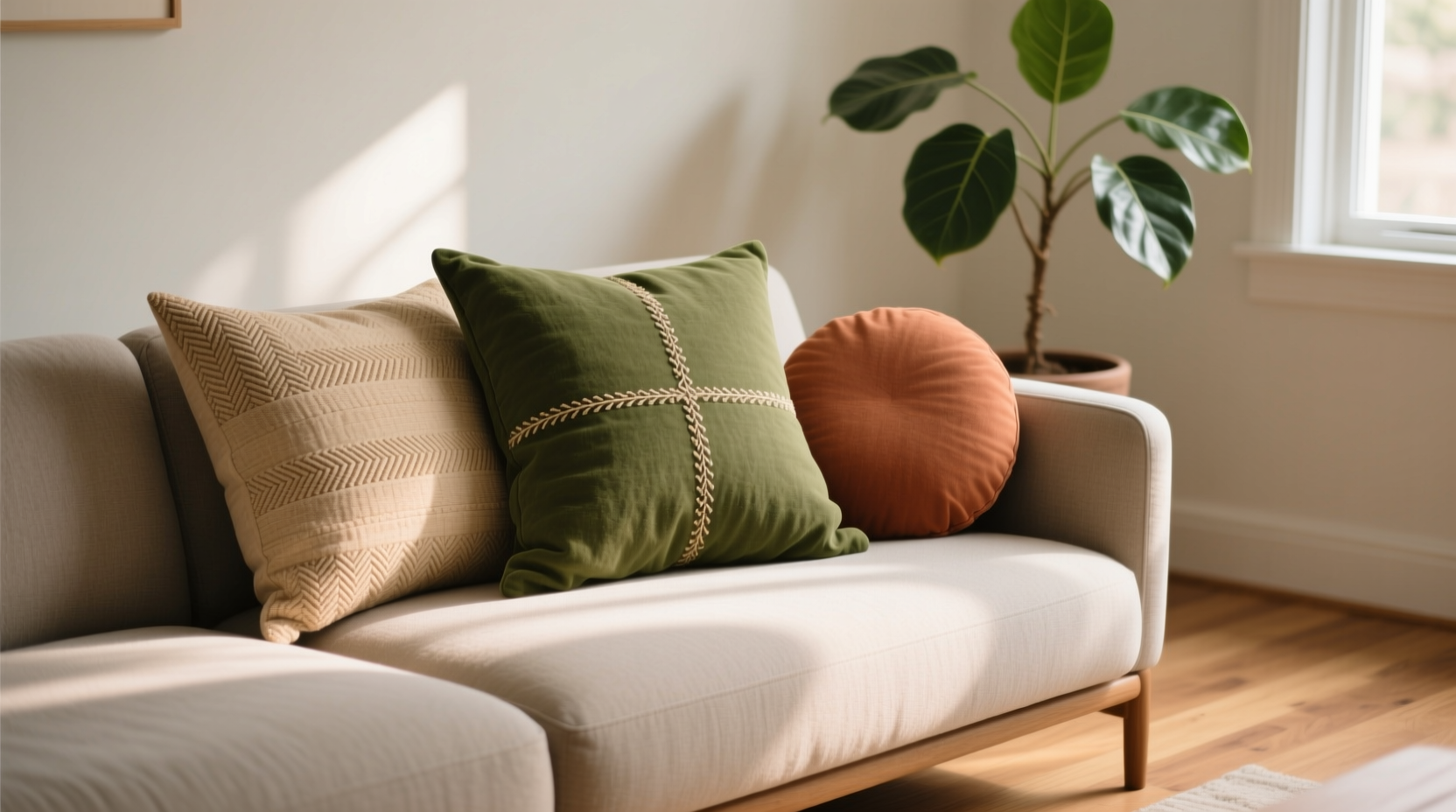
Before selecting or placing a single pillow, assess the structure of your sectional. Not all sectionals are created equal—some are L-shaped, others U-shaped, chaise-equipped, or asymmetrical. Each configuration influences how pillows should be distributed for visual balance.
Start by identifying key zones: the main seating area, corner seat (if applicable), chaise lounge, and any extended arms or ottomans. These areas may call for different treatment. For example, a deep chaise might benefit from larger bolster pillows, while upright corners suit stacked square cushions.
Proportion matters. A massive sectional can handle more pillows without looking cluttered, whereas a compact one risks appearing overwhelmed with too many. As a rule of thumb:
- Allow at least 6–8 inches between armrests and the outermost pillow.
- Leave breathing room around each pillow—overcrowding kills the effortless vibe.
- Use the depth of your sofa seat to determine pillow size; deeper seats suit larger pillows (20”–24”), shallower ones work better with 18” or smaller.
Choose the Right Mix of Sizes, Shapes, and Textures
Variety creates visual interest, but only when harmonized. The secret to a natural-looking pillow arrangement is contrast—without competition. Aim for a combination of three elements: size, shape, and texture.
Sizes: Use a tiered approach. Start with one or two large anchor pillows (20”–24”), then add medium (18”) and small (12”–16”) accents. Larger pillows provide foundation; smaller ones introduce movement and detail.
Shapes: Combine standard squares with lumbar, bolster, or round pillows. A long lumbar pillow placed horizontally along the back adds horizontal linearity, breaking up vertical stacks. Bolsters work especially well on chaise lounges or tucked into corners.
Textures: Mix materials like linen, velvet, knit, leather, or woven cotton. A nubby bouclé contrasts beautifully with smooth satin, while a chunky cable knit adds warmth. Avoid using more than three dominant textures—too much variety feels busy, not breezy.
“Effortless style comes from contrast grounded in cohesion. Think of pillows like notes in a chord—different pitches, but part of the same harmony.” — Lena Torres, Interior Stylist & Author of *Lived-In Luxe*
Follow a Strategic Placement Formula
There’s no universal formula, but proven arrangements serve as excellent starting points. Choose one based on your sectional type and personal aesthetic.
Option 1: The Layered Stack (Ideal for L-Shaped Sectionals)
- Place two large square pillows at the back corners of each seat section.
- In front of each, layer a medium square in a complementary color or pattern.
- Add a small textured pillow or lumbar in front for depth.
- On the chaise (if present), place one long lumbar pillow lengthwise.
Option 2: The Asymmetrical Cluster (Best for U-Shaped or Large Sectionals)
- Group three pillows on one side (e.g., large + medium + small), leaving the opposite side minimally dressed (one lumbar or none).
- This creates dynamic balance—unequal but visually stable.
- Works well in modern or Scandinavian-inspired spaces.
Option 3: The Rotational Edit (For Frequent Redecorators)
Keep a rotating collection of 8–10 pillows. Use only 5–6 at a time, swapping them seasonally or monthly. This mimics how real homes evolve naturally over time.
| Arrangement Type | Best For | Pillow Count | Visual Effect |
|---|---|---|---|
| Layered Stack | L-shaped, family-friendly spaces | 5–7 | Structured yet cozy |
| Asymmetrical Cluster | Open-concept, modern lofts | 3–5 | Dramatic and curated |
| Minimal Duo | Small sectionals, minimalist decor | 2–3 | Clean and uncluttered |
| Textural Trio | All types, focus on material play | 3 | Tactile and warm |
Master Color and Pattern Coordination
Color sets the mood. An effortless look doesn’t mean random colors—it means intentional restraint. Even a bold palette should feel cohesive.
Begin with a base palette derived from your rug, artwork, or curtains. Then apply the 60-30-10 rule:
- 60% Dominant Color: Found in your largest pillows or sofa fabric.
- 30% Secondary Color: Appears in medium pillows or patterns.
- 10% Accent Color: Pops in one or two small pillows or trim details.
When incorporating patterns, start with one statement piece—a geometric, floral, or tribal print—and echo one of its secondary colors in solid pillows. For example, if your patterned pillow contains navy, rust, and cream, use solid navy and cream pillows to tie it together.
Avoid matching pillows exactly. Slight variations in shade (e.g., dusty rose next to terracotta) add depth. Similarly, mixing scale in patterns—large florals with tiny checks—creates rhythm.
“Clients often want everything to ‘match.’ But real style lives in the almost-match—the near-repeat, the subtle echo. That’s what makes a room feel collected, not catalogued.” — Marcus Bell, Residential Designer
Step-by-Step Guide to Arranging Pillows Like a Pro
Follow this timeline to achieve an effortlessly styled sectional in under an hour.
🕒 Step 1: Clear and Clean (10 minutes)
Remove all existing pillows. Vacuum the sofa seams and fluff cushions if needed. This resets the canvas.
🕒 Step 2: Sort Your Pillow Collection (15 minutes)
Lay out all available pillows on the floor. Group by:
- Size
- Color
- Texture
- Pattern (solid, striped, floral, etc.)
Select 5–7 total—fewer is often better.
🕒 Step 3: Anchor with Structure (10 minutes)
Place your largest pillows at structural points—corners, ends of chaise, or backrest edges. These act as bookends.
🕒 Step 4: Build Layers (10 minutes)
Stack medium pillows slightly forward and off-center over the anchors. Tuck smaller pillows into gaps or in front for dimension.
🕒 Step 5: Add Texture and Final Touches (5 minutes)
Introduce one wild card—a tasseled pillow, faux fur square, or handwoven piece. Then step back. Adjust any pillow that feels “off” in alignment or color weight.
🕒 Step 6: Live With It (Ongoing)
Don’t obsess over symmetry. Let the arrangement evolve. Fluff daily, rotate weekly, edit seasonally.
Mini Case Study: Revamping a Family-Friendly Sectional
Jamie, a mother of two in Portland, struggled with her gray fabric sectional looking perpetually messy. “Every time the kids jumped on it, the pillows ended up on the floor,” she said. She wanted something that looked put-together but could withstand daily life.
Working with a local stylist, Jamie adopted the layered stack method using durable fabrics: performance velvet in charcoal (anchors), washable linen in oatmeal (mid-layer), and a reversible black-and-white stripe lumbar for the chaise. She limited the count to six pillows total.
The change was immediate. The layered depth made the sofa appear styled even after mild disruption. By choosing machine-washable covers, she could maintain freshness without re-styling from scratch. Within weeks, guests began commenting, “Your couch always looks magazine-ready.”
The secret? “It’s not about perfection,” Jamie realized. “It’s about having a system so that ‘good enough’ still looks great.”
Common Mistakes That Break the Effortless Illusion
Even with good intentions, small missteps can make a sofa look contrived or chaotic. Watch for these pitfalls:
- Over-matching: Using identical pillows on both sides creates rigidity. Embrace slight asymmetry.
- Ignoring scale: Tiny pillows on a large sectional disappear; oversized ones swallow small seats.
- Skipping texture: All-flat fabrics read as dull, even with perfect color.
- Forgetting function: Placing stiff decorative pillows where people lean ruins comfort and form.
- Clashing patterns: Combining multiple busy prints without a unifying color leads to visual noise.
“The most common mistake I see? People treat pillows like wall art—static and untouchable. But sofas are meant to be used. Design for real life, not just photos.” — Dana Ruiz, Home Styling Consultant
Frequently Asked Questions
How many throw pillows should I use on a sectional?
Most sectionals look best with 5–7 throw pillows. Smaller or minimalist designs may need only 2–4. The key is balance, not quantity. Leave negative space for visual rest.
Should throw pillows match the sofa exactly?
No. Matching too closely blends them in; they lose impact. Instead, choose pillows that complement the sofa—either in contrasting texture or accent color. A neutral sofa welcomes bolder pillows; a patterned one pairs best with solids pulled from its palette.
How do I keep my throw pillows from going flat?
Use high-quality inserts that are 1–2 inches larger than the cover. Feather-down blends offer resilience and softness. For low maintenance, opt for poly fiber fills labeled “premium” or “high-loft.” Replace inserts every 12–18 months.
Checklist: Achieving Effortless Throw Pillow Style
- Assess your sectional’s shape and size
- Select 3–5 pillows in varying sizes
- Include at least two different textures
- Apply the 60-30-10 color rule
- Anchor with large pillows, layer forward
- Avoid perfect symmetry
- Use durable, washable covers if needed
- Step back and evaluate from across the room
- Refresh the arrangement monthly
Conclusion: Style That Feels Natural, Not Forced
An effortlessly styled sectional isn’t the result of chance—it’s thoughtful curation disguised as spontaneity. By understanding proportion, embracing texture, and applying simple design rules, you can create a look that feels both intentional and inviting. The best arrangements don’t shout for attention; they quietly enhance the room, making it more comfortable, layered, and alive.
Your sofa should reflect how you live, not how a showroom expects you to. So mix that vintage embroidered pillow with the new linen one. Let one corner have an extra cushion. Let the dog leave a dent. True effortlessness includes imperfection.




 浙公网安备
33010002000092号
浙公网安备
33010002000092号 浙B2-20120091-4
Comments
No comments yet. Why don't you start the discussion?