
Metal Christmas trees have made a stylish comeback, blending mid-century charm with modern durability. Their sleek, reflective surfaces add elegance to any holiday display. However, their delicate finishes—often brushed nickel, chrome, or powder-coated coatings—are easily marred by clips, hooks, or careless handling. When decorating, one wrong move can leave behind scratches that detract from the tree’s polished look.
The challenge lies in attaching lightweight ornaments securely while preserving the tree’s pristine surface. Unlike traditional evergreens with forgiving branches, metal trees offer rigid limbs with limited attachment points. Many people resort to forceful clips or adhesive solutions that damage the finish over time. The good news is that with the right techniques and materials, it’s entirely possible to decorate beautifully without causing harm.
This guide explores practical, tested methods for hanging ornaments on metal trees safely. From selecting the right hangers to understanding material compatibility, you’ll learn how to protect your investment while creating a festive display that lasts for years.
Why Metal Tree Finishes Are So Vulnerable
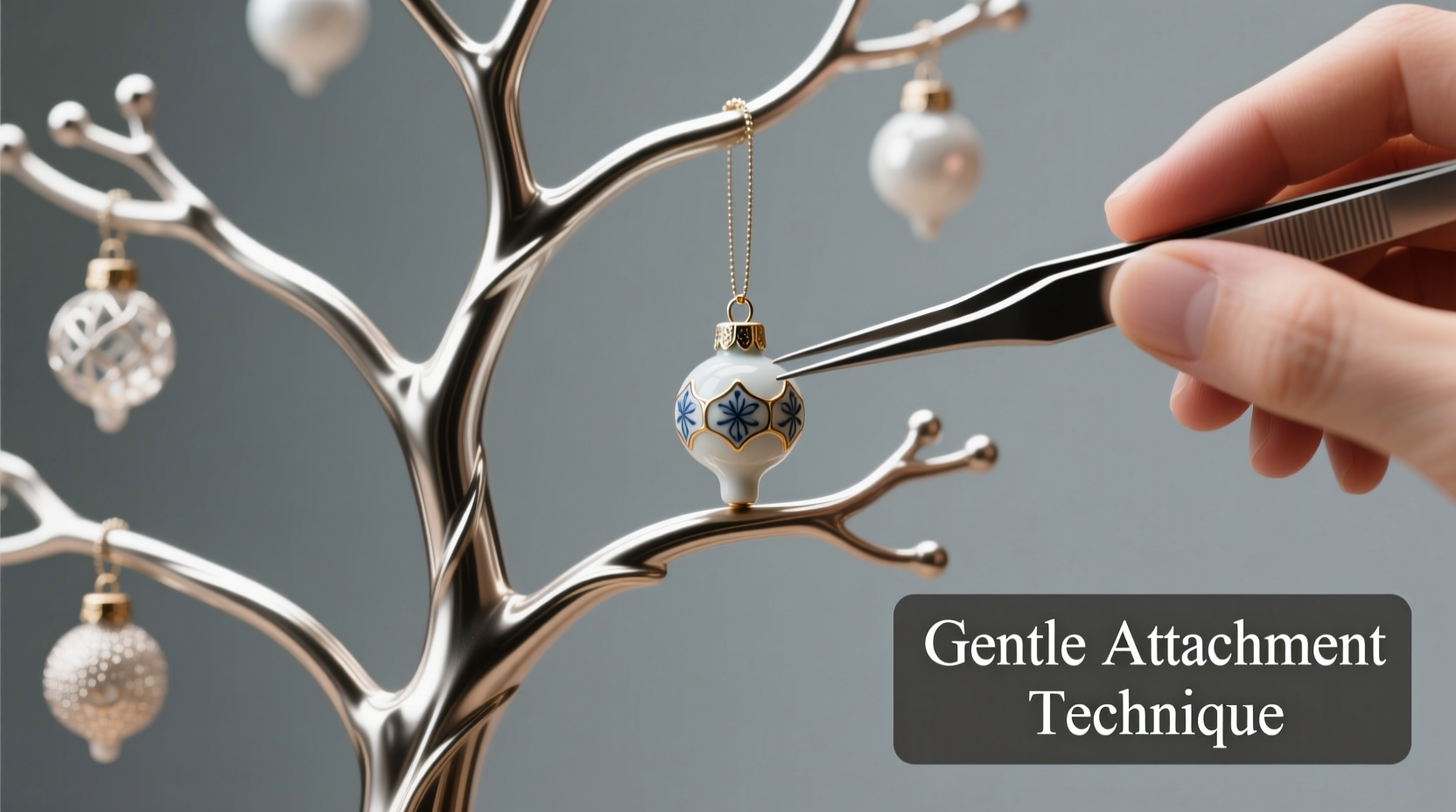
Metal trees are typically constructed from aluminum or steel rods coated with protective finishes designed to resist tarnish and corrosion. These finishes, however, are often thin and prone to micro-scratches when exposed to friction, pressure, or abrasive materials. Even minor contact with a rough ornament hook or an overly tight clip can compromise the surface integrity.
The most common types of finishes include:
- Chrome plating – Highly reflective but susceptible to chipping if scratched deeply.
- Brushed nickel – Offers a matte texture; fine scratches blend less easily due to directional grain.
- Powder coating – Durable but can peel under sharp pressure or repeated stress.
- Painted finishes – Often used on vintage models; vulnerable to flaking and fading.
Because these surfaces cannot regenerate like wood or fabric, prevention is key. Once a scratch occurs, repair options are limited and may not fully restore the original appearance.
“Metal trees are functional art pieces. Treating them with care during decoration preserves both value and visual appeal.” — Lydia Monroe, Vintage Holiday Decorator & Collector
Safe Methods for Attaching Ornaments
The goal is to suspend ornaments without direct metal-to-metal contact or pressure points. Below are five proven techniques that protect the tree’s finish while ensuring decorations stay secure.
1. Use Soft-Tipped Ornament Hangers
Traditional wire or plastic clips often dig into the finish. Instead, opt for hangers lined with soft silicone, felt, or rubber tips. These distribute pressure evenly and prevent scraping.
2. Employ Ribbon or Satin Cord Loops
Cut small lengths (6–8 inches) of satin or grosgrain ribbon and tie them around the branch where you want to hang an ornament. Loop the ornament’s hook through the ribbon instead of the metal. This creates a buffer zone and adds a decorative touch.
For heavier lightweight ornaments (up to 4 oz), double the ribbon or use folded strips for extra strength.
3. Apply Removable Adhesive Hooks Strategically
Micro-suction or gel-based adhesive hooks (like those used for bathroom accessories) adhere well to smooth metal without residue. Choose mini versions rated for light loads (under 1 lb).
Apply only to clean, dry sections of the trunk or base branches. Avoid placing them on curved or angled arms where tension could cause peeling.
4. Create Felt-Wrapped Attachment Points
Cut small rectangles of self-adhesive felt (about ½ inch wide) and wrap them around the branch at intended hanging spots. Then clip ornaments normally—the felt acts as a cushion between the clip and metal.
Replace felt pads annually to maintain effectiveness.
5. Utilize Ornament Stands or Bases
For tabletop-style metal trees or lower branches, consider using miniature ornament stands. Place delicate glass or acrylic ornaments directly into clear holders that sit on stable platforms beneath the tree. This eliminates the need for hanging altogether.
Do’s and Don’ts: A Quick Reference Table
| Do | Don’t |
|---|---|
| Use soft-lined hangers with rubber or felt padding | Use bare metal clips or uncoated wire |
| Tie ribbons or cords around branches as buffers | Pull or twist clips tightly onto limbs |
| Clean branches with a dry microfiber cloth before decorating | Use household cleaners or abrasive wipes |
| Test adhesives on a hidden area first | Apply tape or glue directly to the finish |
| Store ornaments in padded containers to avoid hook damage | Leave sharp hooks exposed in storage bins |
Step-by-Step Guide: Decorating Without Damage
- Inspect the tree: Wipe down each branch with a dry microfiber cloth to remove dust and check for existing wear.
- Sort ornaments by weight and hook type: Separate those with sharp wires, bulky loops, or fragile attachments.
- Prepare soft connectors: Cut satin ribbons, apply felt pads, or set out non-marring hangers.
- Start from the bottom up: Begin with lower branches to establish balance and avoid reaching over decorated areas.
- Attach gently: Clip or loop each ornament without forcing it into place. If resistance occurs, switch to a ribbon suspension method.
- Distribute weight evenly: Avoid clustering multiple ornaments on one arm, which increases stress on joints and finishes.
- Final inspection: Walk around the tree to ensure all decorations are secure and no clips are pressing too hard.
Real Example: Preserving a Heirloom Tree
Sarah Thompson inherited a 1962 aluminum Evergleam tree from her grandmother. The chrome finish was still bright, but after two decades in storage, she worried about damaging it during setup. Her first attempt using standard ornament clips left faint scuff marks on three branches.
Determined to protect the tree, Sarah researched alternatives and adopted a hybrid method: she wrapped each potential hanging point with narrow black satin ribbon matching the tree’s color scheme. She then used the original clips—but only on the ribbon loops, never directly on metal.
The result was a flawlessly decorated tree with zero new scratches. Over the next five holidays, she refined the system by labeling ribbon positions and storing them with the ornaments. Today, her tree remains in near-original condition, admired by family and featured in a local retro-holiday exhibit.
Essential Checklist for Scratch-Free Decorating
- Before Decorating:
- ☐ Clean all branches with a dry microfiber cloth
- ☐ Inspect ornament hooks for sharp edges or bends
- ☐ Gather soft hangers, ribbons, or adhesive hooks
- ☐ Identify high-risk zones (thin arms, visible front sections)
- During Decorating:
- ☐ Use buffer materials at every attachment point
- ☐ Avoid stacking multiple ornaments on one branch
- ☐ Handle clips gently—never force them closed
- ☐ Step back frequently to assess visual balance
- After the Season:
- ☐ Remove all ribbons, adhesives, or temporary fixtures
- ☐ Store the tree in its original case or padded sleeve
- ☐ Label and store soft hangers separately for next year
Frequently Asked Questions
Can I use fishing line to hang ornaments on a metal tree?
Yes, transparent fishing line (4–6 lb test) is excellent for suspending lightweight ornaments. Tie one end around the ornament’s hook and the other to a secure branch point using a slipknot over a ribbon or soft hanger. It’s nearly invisible and applies minimal pressure.
Are magnetic ornaments safe for metal trees?
Only if they’re specifically designed for this purpose. Standard magnets may be too strong, causing micro-scratches when sliding into position. Use low-strength decorative magnets with protective coatings, and never drag them across the surface.
What should I do if I accidentally scratch the finish?
For minor surface marks, try a metal polish formulated for the specific finish (e.g., chrome-safe cleaner). Apply sparingly with a soft cloth in a circular motion. Deep scratches usually require professional refinishing or concealment with decorative elements. Prevention is always better than repair.
Expert Insight: Long-Term Care Matters
“A well-decorated metal tree isn’t just festive—it’s a sign of respect for craftsmanship. Using simple barriers like ribbon or felt shows attention to detail and long-term thinking.” — Daniel Ruiz, Restoration Specialist, Modern Heritage Antiques
Experts agree that the longevity of a metal tree depends more on seasonal care than age. Trees from the 1950s and 60s are still in circulation because collectors treat them as heirlooms, not disposable decor. Each decoration choice contributes to cumulative wear—or protection.
Conclusion: Celebrate Thoughtfully
Decorating a metal tree doesn’t have to mean choosing between beauty and preservation. With thoughtful preparation and the right tools, you can showcase your favorite ornaments without compromising the tree’s elegant finish. Whether you own a vintage classic or a modern replica, treating it with care ensures it remains a centerpiece for future celebrations.
The small investments—felt pads, quality ribbons, soft hangers—pay off in lasting shine and structural integrity. As holiday traditions evolve, so should our methods for honoring the objects we cherish.




 浙公网安备
33010002000092号
浙公网安备
33010002000092号 浙B2-20120091-4
Comments
No comments yet. Why don't you start the discussion?