
In an age where less is often more, the minimalist Christmas tree has emerged as a refined alternative to the traditional ornament-laden evergreen. Stripped of excess tinsel, baubles, and figurines, this design approach focuses on two essential elements: light and texture. By harnessing their interplay, you can create a sophisticated holiday focal point that radiates warmth without clutter. Whether you live in a small apartment, prefer modern aesthetics, or simply want a low-maintenance seasonal decoration, building a minimalist tree with only lights and texture offers both elegance and ease.
The Philosophy Behind Minimalist Holiday Design
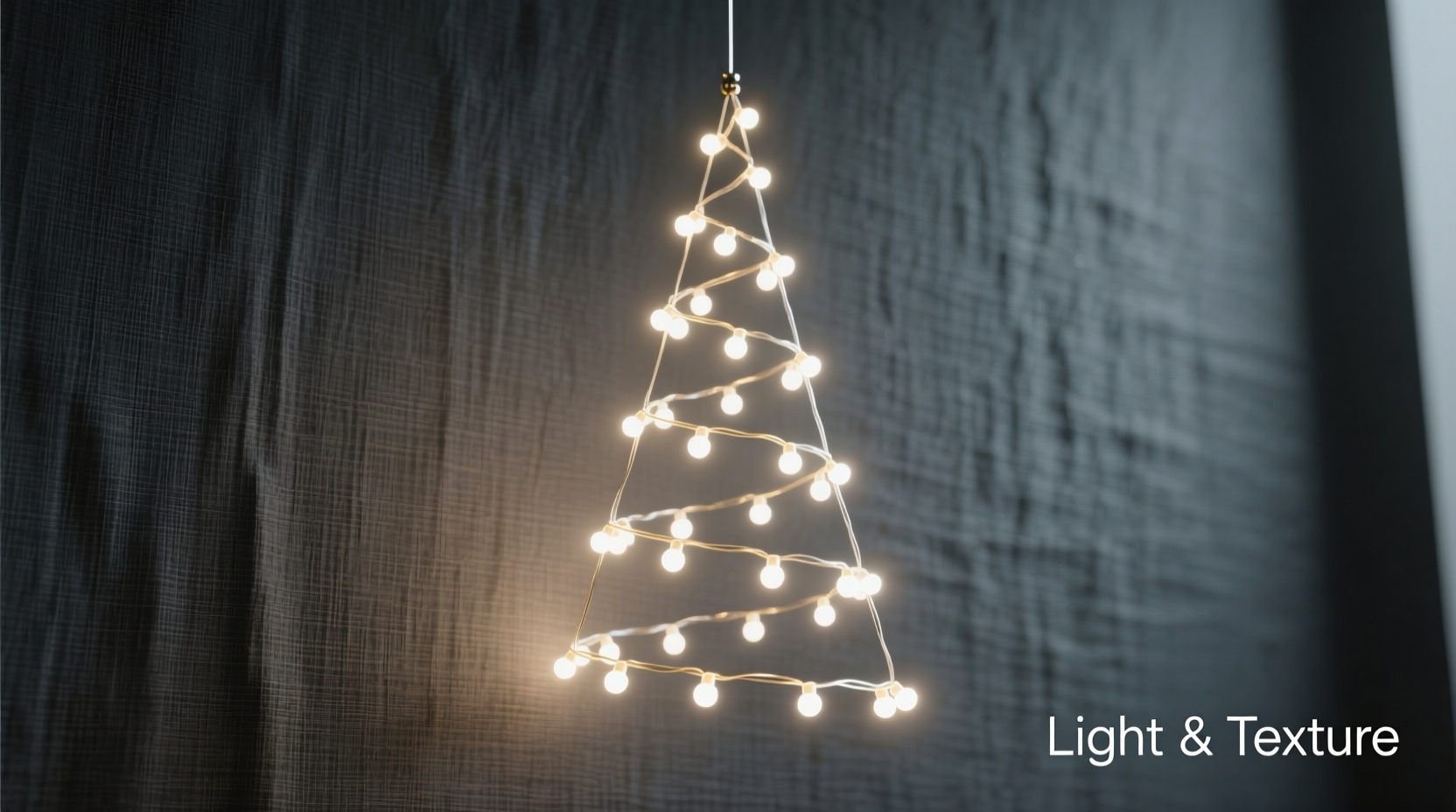
Minimalism in interior design emphasizes intentionality—every object present serves a purpose or contributes to the overall atmosphere. Applied to holiday decor, this means rejecting the notion that a Christmas tree must be “full” to be festive. Instead, focus shifts to quality over quantity, subtlety over spectacle. A minimalist tree isn’t under-decorated; it’s thoughtfully composed.
This style resonates particularly well in contemporary homes where clean lines, neutral palettes, and functional spaces dominate. The absence of colorful ornaments allows architectural form and ambient lighting to take center stage. Moreover, a simplified tree reduces post-holiday storage needs and setup time—a practical benefit that aligns with mindful living.
“Minimalism doesn’t mean deprivation. It means choosing what adds value and letting go of what doesn’t.” — Joshua Becker, author and minimalism advocate
When applied to a Christmas tree, this principle encourages us to ask: What truly creates the feeling of celebration? Often, the answer lies not in dozens of trinkets but in the soft glow of lights, the natural grain of wood, or the gentle drape of fabric. These sensory experiences evoke comfort and joy just as powerfully as any ornament.
Selecting the Right Tree Base: Form and Texture First
The foundation of your minimalist tree is its physical structure. Since you won’t be masking imperfections with layers of decorations, the choice of tree—or tree alternative—is critical. You have several options, each offering distinct textural qualities:
- Natural evergreen (real or faux): Provides organic depth and scent (if real). Look for varieties with tight, uniform branching like Fraser fir or noble fir.
- Bare branch arrangement: Use collected birch, eucalyptus, or willow branches in a sturdy vase. This creates a sculptural, gallery-like effect.
- Geometric frame: Metal or wooden frames in triangle, cone, or spiral shapes offer modern structure. Ideal for urban lofts or industrial spaces.
- Felt or fabric tree: Handmade or purchased flat silhouettes add softness and work well in children’s rooms or rental units.
Regardless of form, prioritize texture. A real tree offers needle variation and bark detail; a branch display introduces smooth bark and subtle curves; a metal frame brings cool, reflective surfaces. Each interacts uniquely with light, shaping the mood of your space.
Lighting as the Sole Decorative Element
In a minimalist tree, lights aren’t just accents—they are the decoration. The type, color, placement, and density of lighting determine the entire character of the piece. Consider these factors carefully:
Bulb Type and Finish
Choose bulbs based on the atmosphere you want to create:
- Warm white LEDs: Mimic candlelight; ideal for cozy, inviting spaces.
- Cool white LEDs: Crisp and modern; pair well with metallic frames or monochrome interiors.
- Vintage Edison-style bulbs: Larger, filament-visible bulbs add retro charm and cast dramatic shadows.
- Battery-powered fairy lights: Flexible and wire-free; perfect for non-traditional trees like wall-mounted silhouettes.
Wiring Style
The way lights are strung affects visual weight:
- Dense wrapping: Wrap lights closely around branches or frame for a glowing solid form.
- Strategic placement: Highlight specific areas—tips of branches, outer edges—to suggest shape without full coverage.
- Random draping: Allow some wires to hang loosely for an organic, spontaneous look.
Smart Lighting Options
For added control, consider smart LED strings that connect to apps or voice assistants. You can adjust brightness, schedule on/off times, or shift between warm and cool tones depending on the occasion—dim for dinner parties, brighter for gatherings.
| Light Type | Best For | Texture Interaction |
|---|---|---|
| Micro fairy lights | Felt trees, branch vases | Creates delicate sparkle against matte surfaces |
| String lights with wide spacing | Geometric frames | Highlights structure with discrete points of light |
| Rope lights (encased) | Outdoor or high-traffic areas | Soft, diffused glow; blends into contours |
| Twinkling or flicker mode | Bedrooms, reading nooks | Adds movement and intimacy |
Step-by-Step Guide: Building Your Minimalist Tree
Follow this structured process to assemble a cohesive, visually balanced minimalist Christmas tree using only lights and texture.
- Choose your tree form based on available space, aesthetic preference, and maintenance tolerance. For example, a potted Norfolk Island pine suits those who want a living plant; a welded steel cone works for permanent installations.
- Prepare the base. Ensure your stand or container is stable. For branch arrangements, use floral foam or pebbles to secure stems upright.
- Assess light requirements. Measure the height and circumference. As a rule of thumb, use approximately 100 lights per foot of tree height if aiming for dense illumination.
- Begin wiring from the base upward. Attach lights starting at the trunk or central pole, spiraling outward and upward. Use twist ties or clear clips to secure wires to branches—avoid staples or nails that damage materials.
- Layer textures intentionally. If using a real tree, let bare lower branches show bark texture. On a frame, leave gaps between light clusters to emphasize negative space.
- Test and adjust. Turn off room lights and evaluate the glow. Add strands where shadows appear too harsh or dim.
- Set a timer or smart schedule to automate daily operation, enhancing convenience and energy efficiency.
“Light defines space. In minimalist design, it becomes the primary material—shaping emotion through presence and absence.” — Clara Nguyen, Interior Architect
Real Example: A Brooklyn Loft Transformation
In a converted warehouse loft in Brooklyn, designer Mara Lin faced a challenge: decorate for Christmas without disrupting the open-concept, monochrome aesthetic. The client disliked traditional trees, calling them “visual noise.”
Lin’s solution was a 7-foot freestanding black iron wireframe in the shape of a slender cone, mounted on a reclaimed oak base. She wrapped it with 500 warm white micro LED lights, spaced evenly to trace the silhouette without filling it in. At night, the tree appeared as a floating column of light against white brick walls.
To enhance texture, she placed a hand-thrown ceramic bowl beneath it, filled with raw amethyst geodes. Their jagged purple forms caught reflections from the lights, adding subtle contrast. No ornaments, no garland—just light, form, and mineral texture.
Guests consistently commented on the tree’s tranquility. One said, “It feels like winter moonlight made solid.” The installation remained through January, proving that minimalist holiday decor can endure beyond a single season’s trend.
Common Pitfalls and How to Avoid Them
Even with a simple concept, execution matters. Here are frequent missteps and solutions:
- Over-lighting: Too many bulbs erase texture. Stick to one or two light strands unless layering different types for effect.
- Ignoring scale: A tiny tree in a large room gets lost. Match your tree size to the space—ideally, it should occupy about 20–30% of the vertical field of view.
- Poor wire management: Visible tangled cords break the illusion. Use cord concealers, route wires behind furniture, or choose battery-powered options.
- Wrong color temperature: Cool white in a warm-toned room can feel clinical. Always test lights in context.
Checklist: Building Your Minimalist Tree Successfully
- ☐ Select tree form (natural, branch, frame, fabric)
- ☐ Confirm stability of base or stand
- ☐ Choose light type and color temperature
- ☐ Calculate number of light strands needed
- ☐ Gather tools: twist ties, clips, ladder (if tall)
- ☐ Test all lights before installation
- ☐ Plan light path (spiral, clustered, draped)
- ☐ Schedule daily on/off times via timer or app
Frequently Asked Questions
Can I make a minimalist tree pet-safe?
Absolutely. Opt for shatterproof LED lights and a non-toxic base. Avoid real candles or fragile materials. A wall-mounted silhouette or ceiling-hung branch cluster keeps everything out of reach while maintaining visual impact.
How do I store the tree and lights after the holidays?
For reusable frames or stands, disassemble if possible and store flat. Wrap lights carefully around a cardboard spool to prevent tangling. Label components by room or year for easy retrieval. Felt or fabric trees can be folded and stored in breathable cotton bags.
Is it possible to make the tree kid-friendly without adding ornaments?
Yes. Involve children in the lighting process—let them help drape wires or press lights into place. You can also add tactile interest with safe textures: wrap part of the base in soft wool felt or include a nearby basket with knitted holiday shapes they can touch and rearrange.
Conclusion: Embrace Simplicity, Elevate the Season
A minimalist Christmas tree built with only lights and texture is more than a decoration—it’s a statement of clarity and calm in a busy world. It proves that festivity doesn’t require accumulation. Instead, it thrives on attention: to light, to form, to the quiet moments when a room glows with restrained beauty.
By focusing on just two elements, you gain precision and intention. Every decision—from bulb warmth to branch angle—carries meaning. The result is not emptiness, but presence. A tree that doesn’t shout, but whispers joy.




 浙公网安备
33010002000092号
浙公网安备
33010002000092号 浙B2-20120091-4
Comments
No comments yet. Why don't you start the discussion?