
Selecting an iPhone case isn’t just about style or convenience—it’s a critical decision that impacts your device’s longevity. With smartphones becoming increasingly expensive, protecting them from drops is more important than ever. While Apple designs iPhones to withstand everyday use, few can survive repeated falls from waist or pocket height without assistance. The right case can mean the difference between a minor bounce and a shattered screen or cracked back glass.
But not all cases are created equal. Marketing claims like “military-grade protection” or “ultra-durable” often lack context. To truly understand which case offers maximum drop protection, you need to evaluate materials, design, independent test results, and real-world performance.
Understanding Drop Protection Standards
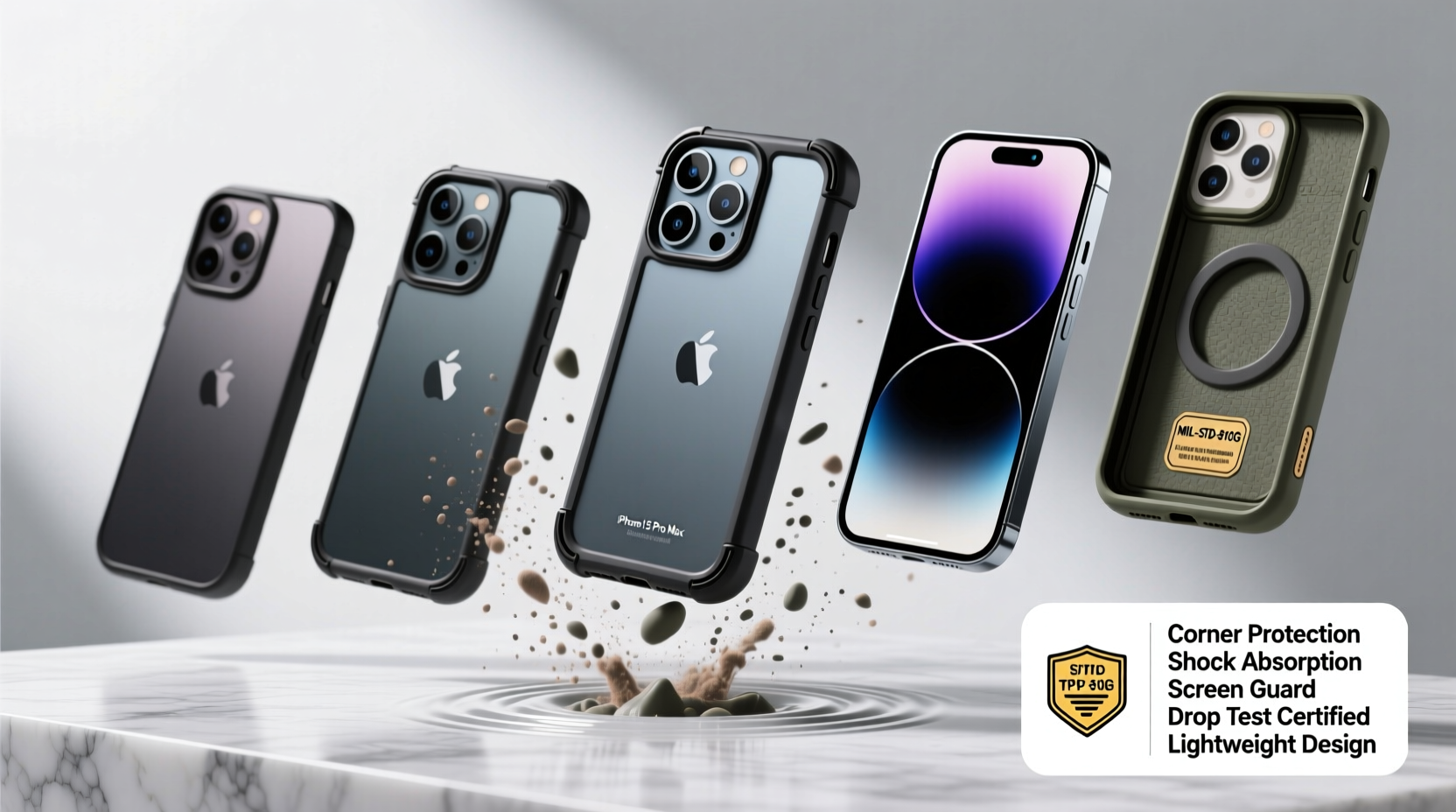
The term \"drop protection\" is frequently used in product descriptions, but it rarely comes with specifics. To make informed decisions, consumers should understand the standards used to measure impact resistance.
The most commonly referenced benchmark is MIL-STD-810G, a U.S. military standard originally designed for equipment durability. While not developed for consumer phone cases, many manufacturers cite compliance with this standard—particularly Method 516.6 (transit drop test). This test involves dropping a device onto concrete from heights of up to 1.2 meters (about 4 feet) from multiple angles.
“MIL-STD certification doesn’t guarantee survival from every fall, but it does indicate a baseline level of ruggedness when properly tested.” — Dr. Linda Cho, Materials Engineer at Mobile Durability Labs
However, passing MIL-STD doesn’t always reflect real-world conditions. Many third-party labs now conduct more rigorous tests, simulating drops from 6 to 10 feet—heights common when slipping a phone out of a pocket or off a table.
Key Features of High-Performance Protective Cases
Maximum drop protection requires more than thick rubber. Effective cases integrate several engineering principles to absorb and disperse impact energy.
- Multi-layer construction: Most top-tier protective cases use a dual-material design—soft inner TPU (thermoplastic polyurethane) cushions the phone, while a rigid outer polycarbonate shell resists deformation.
- Elevated bezels: A slightly raised edge around the screen and camera lens prevents direct contact with surfaces during face-down drops.
- Closed ports and sealed buttons: Dust and water resistance are secondary benefits, but sealed openings also reinforce structural integrity.
- Corner reinforcement: Since most drops land on corners, some premium cases include air-cushioning zones or hexagonal shock channels specifically engineered to compress on impact.
Brands like OtterBox Defender, UAG Plasma, and Spigen Tough Armor have refined these features through iterative design and extensive field testing.
Material Comparison Table
| Material | Impact Resistance | Durability | Weight | Best For |
|---|---|---|---|---|
| TPU (Soft Rubber) | Moderate to High | Good (may yellow over time) | Light | Daily use with moderate drop risk |
| Polycarbonate (Hard Plastic) | High (rigid) | Excellent | Medium | Slim protection with scratch resistance |
| Hybrid (TPU + PC) | Very High | Excellent | Medium to Heavy | Maximum drop protection |
| Silicone | Low to Moderate | Fair (prone to tearing) | Light | Style-focused users; minimal drop safety |
Real-World Testing: A Case Study
In 2023, a tech reviewer conducted a controlled experiment comparing five popular iPhone 14 Pro cases. Each was subjected to 20 drops from a height of 6 feet onto concrete, rotated across all edges, corners, and faces.
The results revealed significant differences:
- The thinnest silicone case failed after just three drops, resulting in a cracked rear glass.
- A mid-range TPU case survived eight drops before the screen cracked on a corner impact.
- The OtterBox Defender and UAG Monarch both protected the phone through all 20 drops with only minor scuffing.
Interestingly, one budget hybrid case claimed “360° protection” but failed at drop 10 due to seam separation—a reminder that build quality matters as much as material.
“We expected the pricier models to win, but what really made the difference was internal geometry—how the case manages force dispersion.” — Reviewer Jason Reed, TechShield Weekly
Step-by-Step Guide to Choosing Your Ideal Case
Follow this process to ensure you select a case that genuinely maximizes drop protection:
- Determine your risk environment: Do you work in construction? Are you a parent who carries your phone in a diaper bag? High-risk environments demand rugged cases.
- Check independent lab certifications: Visit manufacturer websites and look for downloadable test reports. Avoid vague claims like “tested to military standards” without proof.
- Verify compatibility: Ensure the case fits your exact iPhone model. Even a 0.5mm gap can compromise shock absorption.
- Assess port access and usability: Overly bulky cases can make charging difficult or muffle speaker sound. Balance protection with functionality.
- Read long-term user reviews: Look for feedback after 3–6 months of use. Some cases degrade quickly or develop loose buttons.
- Consider added features: If you frequently use your phone outdoors, consider cases with built-in screen protectors, lanyard loops, or kickstands.
Drop Protection Checklist
Before purchasing, confirm your chosen case meets these criteria:
- ✅ Independently verified drop test data (minimum 6-foot drops)
- ✅ Raised edges for screen and camera protection
- ✅ Multi-layer construction (TPU + polycarbonate preferred)
- ✅ Positive long-term user reviews (12+ months)
- ✅ Precise cutouts for speakers, ports, and buttons
- ✅ Compatibility with MagSafe accessories if needed
- ✅ No visible seams or weak joints in product images
Frequently Asked Questions
Do I still need a screen protector if my case has raised edges?
Yes. While raised bezels help, they aren’t foolproof. Uneven surfaces or angled drops can still cause screen contact. Pair your case with a tempered glass screen protector for complete front-side defense.
Can waterproof cases improve drop protection?
Often, yes. Waterproof cases are typically fully sealed and constructed with thicker, more resilient materials. However, they tend to be bulkier and may interfere with wireless charging unless specifically designed otherwise.
How often should I replace my iPhone case?
Inspect your case every 6–8 months. Signs it’s time to replace include cracking, fading, loss of elasticity in TPU layers, or loose button covers. Degraded materials reduce shock absorption significantly.
Final Recommendations
For maximum drop protection, prioritize cases that combine proven engineering with transparent testing. The OtterBox Defender Series remains a gold standard for extreme durability, though its bulk may not suit everyone. Alternatives like the Spigen Rugged Armor or UAG Plasma offer strong protection with a slightly slimmer profile.
If you're active outdoors, consider specialized options like Lifeproof FRĒ, which combines waterproofing with high-impact resistance. For those seeking balance, the Apple FineWoven case with MagSafe-compatible bumper add-ons provides moderate protection with premium aesthetics.
“The best case is the one you’ll actually use consistently. There’s no point in owning a tank-like case if you leave it at home because it’s too heavy.” — Sarah Lin, Consumer Tech Analyst
Take Action Today
Your iPhone is a significant investment. Don’t wait until after a drop to realize your case wasn’t up to the task. Evaluate your lifestyle, review credible test data, and choose a case designed to survive real-world accidents. A few extra dollars spent now could save you hundreds in repair costs later. Protect your device like it powers your life—because it probably does.




 浙公网安备
33010002000092号
浙公网安备
33010002000092号 浙B2-20120091-4
Comments
No comments yet. Why don't you start the discussion?