
Selecting a leisure watch isn’t just about matching your outfit or following trends. The right timepiece should complement your lifestyle, withstand daily demands, and reflect your personal taste. Whether you're hiking a mountain trail, attending a weekend barbecue, or enjoying a quiet coffee downtown, your watch plays both a functional and expressive role. With countless styles, materials, and features available, making the best choice requires thoughtful consideration. This guide breaks down the key factors to help you find a leisure watch that fits seamlessly into your life—no matter where it takes you.
Understand Your Lifestyle Needs
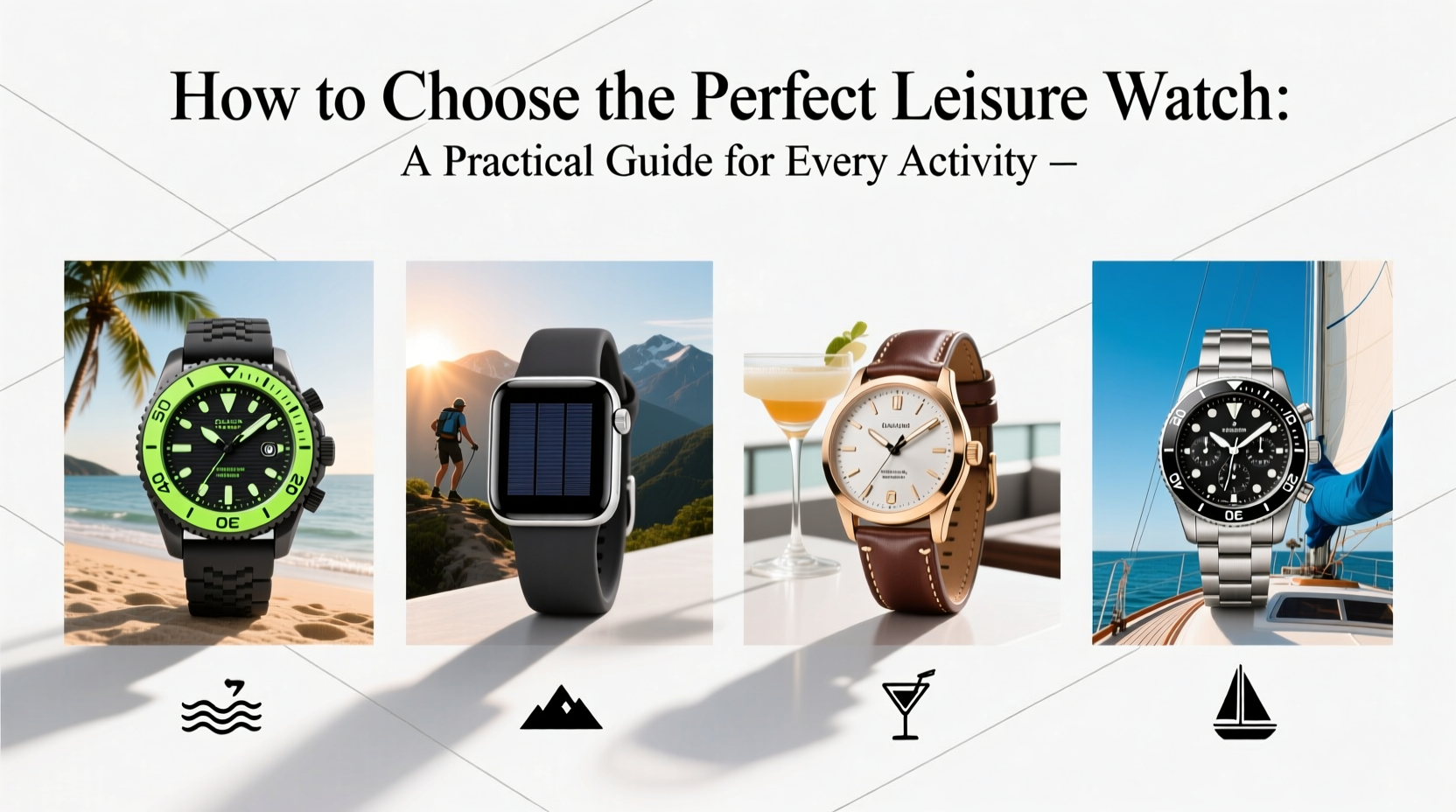
The first step in choosing a leisure watch is evaluating how you spend your free time. Watches designed for outdoor adventures differ significantly from those suited for urban outings or casual evenings. A hiker needs water resistance and durability; someone who frequents rooftop bars may prioritize slim design and subtle elegance.
Ask yourself: What activities dominate my weekends? Do I often get caught in the rain? Am I near water frequently? Will this watch be exposed to dust, sand, or impact? Answering these questions helps narrow down technical requirements before aesthetics even come into play.
Key Features by Activity Type
Different leisure pursuits demand different watch capabilities. Here’s a breakdown of what matters most depending on your typical weekend agenda.
| Activity | Critical Features | Recommended Watch Types |
|---|---|---|
| Hiking & Backpacking | Water resistance (100m+), durable strap (silicone/rubber), compass or GPS function, luminous hands | Digital sports watches, rugged field watches |
| Beach & Water Sports | Swim-proof (200m WR), corrosion-resistant case (stainless steel/titanium), secure clasp | Dive watches, swim trackers |
| City Exploration & Casual Outings | Slim profile, scratch-resistant crystal (sapphire preferred), leather or mesh band | Minimalist dress watches, hybrid smartwatches |
| Cycling & Fitness | Lightweight build, stopwatch function, heart rate monitoring (optional) | Fitness trackers, chronograph models |
| Social Events & Dining | Elegant finish (polished metal, ceramic), understated dial, comfort over long wear | Classic analog watches, luxury microbrands |
“Many people buy watches based solely on appearance, but the best ones serve their purpose first and look good second.” — Daniel Reyes, Horology Consultant at Urban Time Co.
Material Matters: Durability Meets Design
The materials used in a watch affect not only its longevity but also its weight, comfort, and maintenance needs. Common choices include:
- Stainless Steel: Resistant to scratches and corrosion, ideal for dive and field watches. Heavier than alternatives but ages well.
- Titanium: Lightweight and hypoallergenic, often found in premium sport watches. More expensive but highly durable.
- Silicone/Rubber: Flexible, water-friendly, and great for active use. Easy to clean and comfortable during extended wear.
- Leather: Offers warmth and sophistication. Best for dry environments; avoid prolonged moisture exposure.
- NATO Straps: Nylon bands known for reliability and breathability. Popular among adventurers due to their quick-drying nature and secure fit.
Consider climate too. In humid regions, metal bracelets can feel clammy, while leather may degrade faster. In arid zones, rubber straps might stiffen over time. Choose materials that align with your environment as much as your aesthetic.
Step-by-Step Guide to Selecting Your Ideal Watch
Follow this five-step process to ensure you make a confident, informed decision:
- Define Primary Use: List your top three leisure activities. Is one dominant? That should guide your feature priorities.
- Set a Realistic Budget: Determine how much you’re willing to invest. Entry-level options ($100–$300) offer solid value; mid-tier ($300–$800) brings better craftsmanship.
- Measure Your Wrist: Most watches range from 38mm to 44mm. Larger cases suit wrists over 7 inches; smaller wrists balance better with sub-40mm designs.
- Test Wearability: If buying online, read reviews focused on comfort. Look for mentions of \"lug-to-lug\" distance and case thickness.
- Verify Core Specs: Confirm water resistance rating (not just \"splash-proof\"), crystal type, and battery life if digital.
Mini Case Study: Alex’s Weekend Warrior Dilemma
Alex, a graphic designer from Portland, loved kayaking on Saturdays and grabbing craft beers downtown on Sundays. His old dress watch didn’t survive a capsized kayak, and his fitness tracker felt out of place at dinner. He wanted one reliable leisure watch that could handle both worlds.
After research, he chose a 42mm stainless steel dive-style watch with 200m water resistance, a sapphire crystal, and a silicone strap. It looked sharp enough with rolled-up denim and a blazer, yet endured river splashes and trail hikes. By prioritizing versatility and core durability, Alex reduced clutter and gained confidence in his accessory choice.
Checklist: Before You Buy
Use this checklist to evaluate any leisure watch before purchase:
- ✅ Does it match my most common weekend activities?
- ✅ Is the water resistance rated in meters (e.g., 100m)?
- ✅ Is the strap material appropriate for sweat, water, or formal settings?
- ✅ Can I read the dial easily in sunlight or low light?
- ✅ Is the lug width standard (for future strap swaps)?
- ✅ Does it fall within my budget without sacrificing critical features?
- ✅ Have I checked user reviews for long-term reliability?
Frequently Asked Questions
Can I wear a leather-strapped watch for outdoor activities?
It’s possible for light use, such as walking or picnics, but avoid heavy sweating or wet conditions. Leather absorbs moisture and can crack or stain. For anything more intense, opt for rubber, nylon, or metal.
What’s the difference between water-resistant and waterproof?
No watch is truly \"waterproof.\" Manufacturers use \"water-resistant\" with specific depth ratings. For example, 50m means safe for swimming, not diving. Always follow ISO standards rather than marketing terms.
Are smartwatches suitable as leisure watches?
Yes—especially hybrid models that blend analog looks with fitness tracking. They excel for active lifestyles but require charging. If you prefer zero maintenance, go analog. If data tracking adds value, a smartwatch may be worth the trade-off.
Final Thoughts: Style Follows Function
The perfect leisure watch doesn’t shout for attention—it quietly supports your rhythm. It survives unexpected rainstorms, stays legible under forest shade, and transitions smoothly into evening plans without feeling out of place. When function and form are balanced, your watch becomes more than an accessory; it becomes part of your routine.
Take the time to assess your real-world needs, test options when possible, and invest in quality where it counts. A well-chosen leisure watch won’t just tell time—it’ll keep pace with your life.




 浙公网安备
33010002000092号
浙公网安备
33010002000092号 浙B2-20120091-4
Comments
No comments yet. Why don't you start the discussion?