
Selecting the ideal backpack for college is more than a fashion decision—it's an investment in daily comfort, academic efficiency, and long-term health. Students carry textbooks, laptops, notebooks, water bottles, and personal items across campus every day, often for hours at a time. A poorly chosen backpack can lead to shoulder strain, back pain, and premature wear. The key lies in balancing three critical factors: size, weight, and durability. These elements determine not only how much you can carry but also how comfortably and safely you do so.
A well-chosen backpack supports your posture, protects your gear, and lasts through semesters of rigorous use. With countless styles, materials, and price points available, it’s easy to make a decision based on appearance alone. However, focusing on practical metrics ensures your backpack serves you reliably from freshman orientation to graduation.
Understanding Backpack Size: Matching Capacity to Your Needs
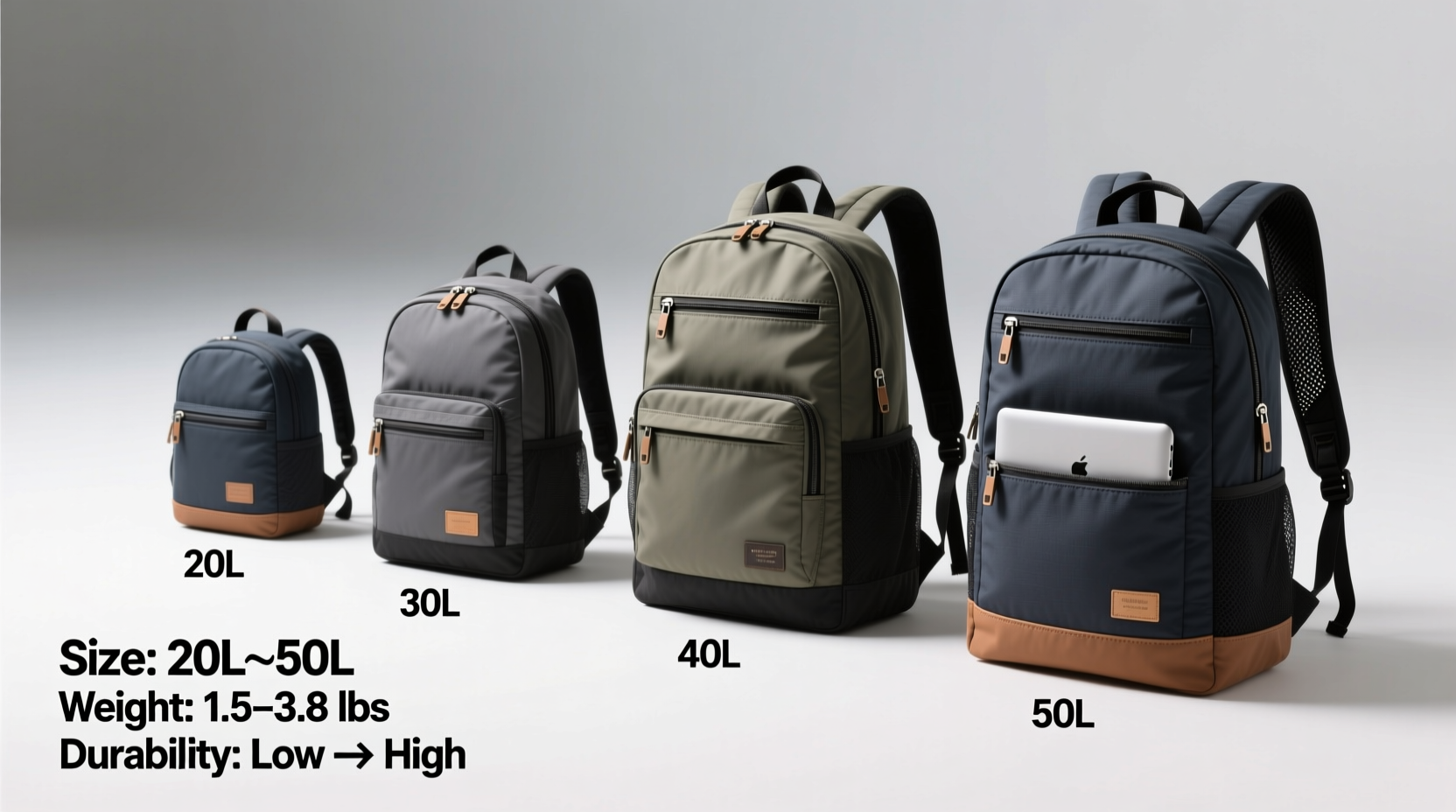
The size of a college backpack is typically measured in liters, indicating its total storage volume. Most student backpacks range from 20 to 35 liters. Choosing the right capacity depends on your class load, commute habits, and personal organization style.
A smaller pack (20–25L) suits students with minimal gear—light textbook loads, one laptop, and basic supplies. It's compact, easier to maneuver in crowded hallways, and less likely to be overpacked. On the other hand, a larger backpack (28–35L) is better for those carrying multiple textbooks, lab equipment, or extracurricular items like gym clothes or art supplies.
Consider your daily routine. If you attend back-to-back classes across campus and don’t have access to a locker, a mid-to-large capacity bag ensures you can carry everything without multiple trips back to your dorm. However, oversized packs can become heavy and unwieldy if not filled thoughtfully.
Recommended Size by Academic Profile
| Student Type | Typical Load | Recommended Size (Liters) |
|---|---|---|
| Light Load (e.g., humanities major) | Laptop, notebook, pen case, small book | 20–25L |
| Moderate Load (e.g., business or social sciences) | Laptop, 2–3 textbooks, binder, water bottle | 25–30L |
| Heavy Load (e.g., engineering, pre-med) | Laptop, large textbooks, calculator, lab notebook, accessories | 30–35L |
Weight Distribution and Comfort: More Than Just Straps
Even a durable, appropriately sized backpack can cause discomfort if it doesn’t distribute weight effectively. Poorly designed bags concentrate pressure on the shoulders, leading to muscle fatigue and long-term postural issues. Ergonomic design is essential.
Look for padded, contoured shoulder straps that fit snugly without digging into the skin. Adjustable straps allow customization based on torso length and clothing layers. For heavier loads, a backpack with a chest strap or hip belt transfers weight away from the shoulders and onto the stronger core and pelvic regions.
The back panel should also be padded and breathable. Mesh-backed designs improve airflow, reducing sweat buildup during long walks between buildings. Some high-end models include a suspended mesh system that creates a gap between the bag and your back, enhancing ventilation.
Internal organization plays a role in weight distribution too. Compartmentalization prevents items from shifting during movement, which helps maintain balance. A dedicated laptop sleeve, front organizer pocket, and side water bottle holders keep essentials secure and evenly distributed.
“Backpacks with load-lifting frames and hip support reduce spinal compression by up to 30% compared to standard models.” — Dr. Alan Reyes, Physical Therapist & Ergonomics Consultant
Durability: Materials and Construction That Last
College life is tough on gear. Backpacks endure rain, pavement drops, packed lockers, and constant zipping and unzipping. Durability hinges on both material quality and construction techniques.
Nylon variants like ballistic nylon and Cordura are top choices for their resistance to abrasion and tearing. Polyester is common in budget models but tends to degrade faster under stress. Look for denier ratings—higher numbers (e.g., 600D–1680D) indicate thicker, more resilient fabric.
Zippers matter more than many realize. YKK zippers are industry-standard for reliability. Examine stitching: double or triple-stitched seams along stress points (like strap attachments) signal superior craftsmanship. Reinforced bottom panels protect against wear when placing the bag on floors or sidewalks.
Water resistance is another durability factor. While fully waterproof backpacks are rare, many feature water-resistant coatings or include a built-in rain cover. This protection preserves both the bag and its contents during unexpected downpours.
Material Comparison: Pros and Cons
| Material | Pros | Cons |
|---|---|---|
| Ballistic Nylon | Extremely durable, tear-resistant, long lifespan | Heavier, higher cost |
| Cordura Nylon | Lightweight yet strong, abrasion-resistant | Moderate price, may require care |
| Polyester | Affordable, widely available, decent water resistance | Less durable, prone to fraying over time |
| Leather (blends) | Stylish, ages well, structurally strong | Expensive, requires maintenance, heavier |
Real-World Example: How One Student Avoided Back Pain
Jessica, a sophomore biology major, started her first year with a sleek, minimalist backpack she bought online for its appearance. Within six weeks, she developed persistent shoulder soreness and noticed the stitching near one strap was unraveling. Her daily load included two heavy textbooks, a 15-inch laptop, a lab coat, and a water bottle—exceeding 20 pounds.
After visiting the campus health center, a physical therapist recommended switching to a backpack with better weight distribution. She chose a 32-liter model made from 900D polyester with padded shoulder straps, a sternum strap, and a ventilated back panel. The new bag had dedicated compartments that kept her books upright and centered, reducing sway. After the switch, her discomfort diminished within days, and the bag showed no signs of wear after nine months of use.
Her experience underscores that aesthetics should not override function—especially when carrying heavy loads daily.
Step-by-Step Guide to Selecting Your College Backpack
Choosing the right backpack doesn’t need to be overwhelming. Follow this structured approach to make a confident, informed decision.
- Assess your typical load. List the items you carry daily: number of books, laptop size, accessories. Weigh them together to estimate total load.
- Determine ideal size. Based on your load, select a capacity between 20–35L. Err on the side of slightly larger if you lack storage access.
- Evaluate weight distribution features. Prioritize adjustable padded straps, a breathable back panel, and consider hip or chest straps for loads over 15 lbs.
- Inspect material and build quality. Choose high-denier nylon or reinforced polyester. Check zippers, seams, and bottom reinforcement.
- Test it in person if possible. Wear the backpack with weight inside (use books or water bottles). Walk around for several minutes to assess comfort and balance.
- Confirm organizational needs. Ensure there’s a secure laptop compartment, enough pockets, and easy-access areas for keys or transit cards.
- Set a realistic budget. Quality backpacks range from $60–$150. Investing more upfront often saves money long-term by avoiding replacements.
Essential Backpack Selection Checklist
- ✅ Fits your laptop securely (check internal dimensions)
- ✅ Capacity matches your daily load (20–35L)
- ✅ Padded, adjustable shoulder straps with ventilation
- ✅ Chest or hip stabilization strap (recommended for heavy loads)
- ✅ Made from durable material (e.g., 600D+ nylon or Cordura)
- ✅ Strong zippers (preferably YKK) and reinforced stitching
- ✅ Water-resistant exterior or includes rain cover
- ✅ Multiple compartments for balanced weight distribution
- ✅ Weight of the empty backpack is under 3 lbs
- ✅ Tested with real load for comfort and stability
Frequently Asked Questions
How heavy should my college backpack be?
Your loaded backpack should not exceed 10–15% of your body weight. For a 150-pound student, that means keeping the total weight under 15–22 pounds. Overloading increases the risk of musculoskeletal strain and long-term back issues.
Can a lightweight backpack still be durable?
Yes. Advances in textile technology allow for lightweight yet highly durable materials like ripstop nylon and Dyneema fabrics. These offer excellent strength-to-weight ratios, making them ideal for students who want resilience without bulk.
Is it worth spending more on a premium backpack?
For most students, yes. A $120 backpack that lasts four years costs less per year than replacing two $50 bags that fail after 12–18 months. Premium models also tend to have better ergonomics, protecting your long-term physical health.
Final Thoughts: Make a Choice That Supports Your Journey
Your college backpack is more than a container—it’s a daily companion through lectures, libraries, and late-night study sessions. Choosing based on size, weight, and durability isn’t just about convenience; it’s about respecting your body’s limits and ensuring your gear keeps pace with your ambitions.
Take the time to evaluate your needs realistically. Try before you buy. Don’t let trends dictate your decision when function determines your comfort and performance. A thoughtful choice today pays off in reduced strain, fewer replacements, and uninterrupted focus on what matters most: your education.




 浙公网安备
33010002000092号
浙公网安备
33010002000092号 浙B2-20120091-4
Comments
No comments yet. Why don't you start the discussion?