
Every holiday season, families pull out their artificial Christmas trees with excitement—only to find them coated in a layer of dust from months of storage. While it’s tempting to shake off the grime or use a damp cloth, improper cleaning can crush delicate branches, fade colors, or leave behind moisture that invites mold. Cleaning an artificial tree requires care, patience, and the right technique to preserve its appearance and longevity. With the proper approach, you can restore your tree’s festive glow without harming its structure.
Dust doesn’t just dull the look of your tree—it can trigger allergies, reduce fire resistance (especially on older models), and degrade plastic over time. The good news is that with household tools and mindful handling, you can remove dust effectively while protecting even the most fragile tips. This guide covers proven, gentle methods backed by home care experts and real-world testing.
Why Dust Builds Up—and Why It Matters
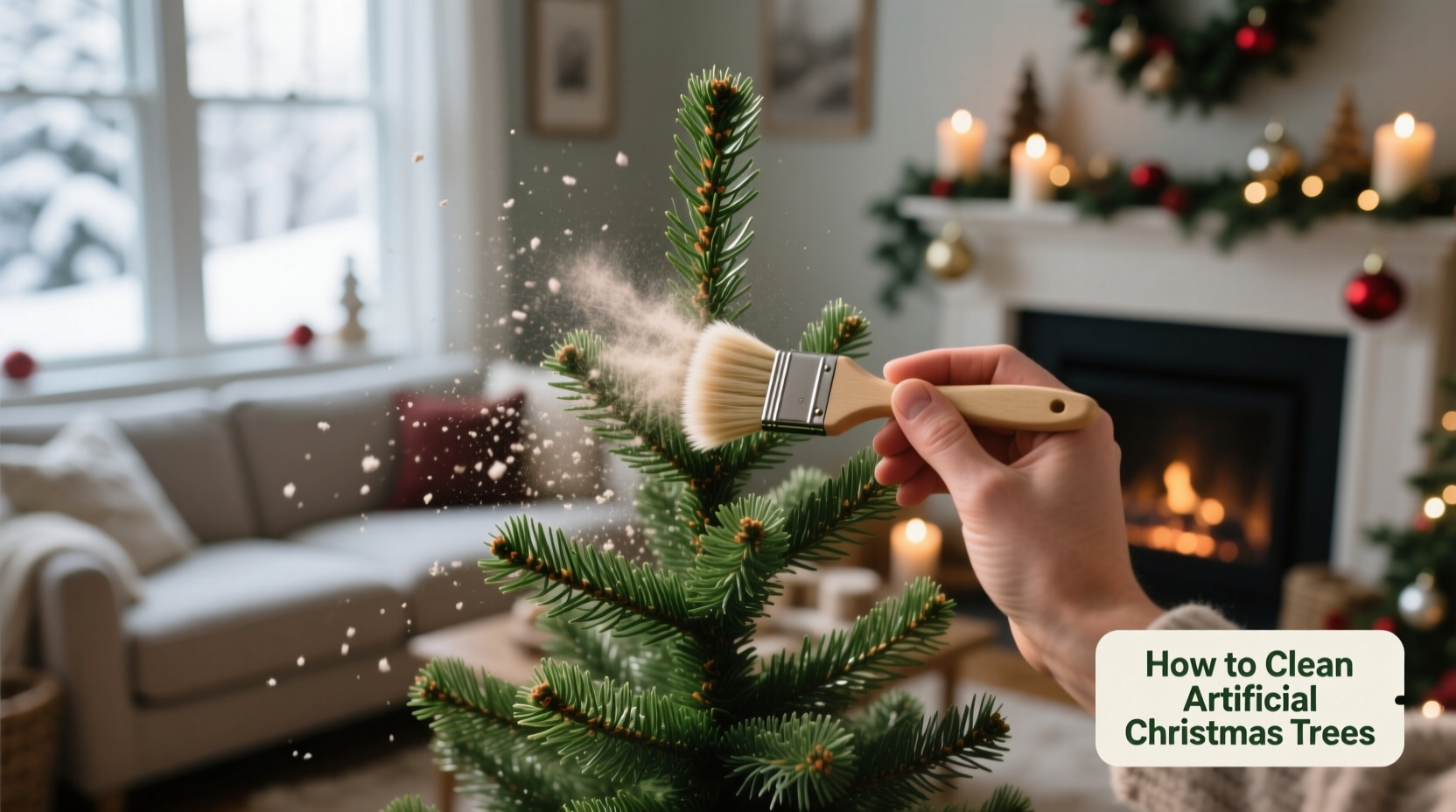
Artificial trees spend up to 11 months stored in cardboard boxes, plastic bags, or garages. Even in climate-controlled spaces, microscopic particles settle into the branches. Dust contains allergens like pet dander, pollen, and mold spores. When the tree goes up and air circulates around it, these contaminants become airborne.
Beyond health concerns, accumulated dust accelerates wear. Plastic needles become brittle when exposed to dry particulates over time. Oils from fingerprints during assembly can also attract more dirt and degrade PVC coatings. A neglected tree may lose its luster within just a few seasons.
“Dust isn’t just cosmetic—it’s corrosive over time. Regular, gentle cleaning extends an artificial tree’s life by five years or more.” — Dr. Lydia Chen, Indoor Environmental Scientist
Cleaning before display ensures your tree looks vibrant and performs safely throughout the holidays. More importantly, doing it correctly prevents irreversible damage to branch tips, which are often molded from thin, flexible plastics that bend easily under pressure.
Essential Tools for Safe Cleaning
Before starting, gather supplies that minimize contact and avoid moisture. The goal is to lift dust without crushing or bending branches. Avoid anything abrasive, wet, or high-pressure.
- Handheld vacuum with brush attachment: Low-suction mode prevents yanking tips out of sockets.
- Microfiber cloths: Soft, lint-free, and non-abrasive for spot cleaning.
- Compressed air (optional): Useful for tight clusters; hold cans upright to avoid propellant spray.
- Lint roller: Effective for short-range tip cleaning, especially near ornaments.
- Cotton swabs: For precision work around hinges and trunk joints.
- Plastic bag or sheet (for shaking method): Keeps debris contained.
Avoid paper towels, sponges, water-based cleaners, hairdryers on blow settings, or shop vacs. These either scratch surfaces or generate static that attracts more dust later.
Step-by-Step: How to Clean Without Damage
Cleaning should happen before assembling the tree, ideally in a garage, basement, or outdoor space. Follow this sequence to protect every branch.
- Unbox in a clean area: Lay down a tarp or old sheet to catch falling debris. Work section by section—start with the top third, then middle, then base.
- Shake gently in a bag (optional): Place each branch section inside a large trash bag and shake firmly for 10–15 seconds. This removes loose particles without spreading dust into the air.
- Vacuum with care: Use the handheld vacuum on lowest setting. Attach the soft brush nozzle and move slowly from trunk outward, mimicking the direction of needle growth. Do not pull or twist the nozzle—let suction do the work.
- Use compressed air (if needed): For dense foliage, short bursts from 6–8 inches away dislodge hidden dust. Tilt sections downward so debris falls away from cleaned areas.
- Spot-clean stubborn spots: Dip a microfiber corner in distilled water, wring completely, and lightly dab (do not rub) stained areas. Dry immediately with a second cloth.
- Roll with a lint roller: After vacuuming, run a fresh lint roller over outer tips to catch residual particles missed by suction.
- Inspect and reassemble: Once all sections are clean, inspect for loose wires or broken stakes before setting up.
Allow at least two hours for the entire process on a full-size tree. Rushing increases the risk of snagging or bending branches.
Do’s and Don’ts: Protecting Delicate Tips
The difference between a preserved tree and a damaged one often comes down to small choices. Refer to this table to avoid common mistakes.
| Do | Don’t |
|---|---|
| Work from the trunk outward to follow natural branch flow | Pull or tug on individual tips |
| Use low-suction settings on vacuums | Use high-powered shop vacs or blowers |
| Store cleaned sections on a flat surface | Stack branches haphazardly |
| Wipe hands before handling to reduce oil transfer | Touch tips with dirty or greasy fingers |
| Clean annually before decorating | Wait until after setup to address dust |
Real Example: A Five-Year Tree Revival
Sarah M., a homeowner in Portland, Oregon, noticed her pre-lit 7-foot tree looked dull by year four. The tips were bent inward, and lights flickered due to dust buildup on connectors. Instead of replacing it, she followed a slow cleaning method using only a handheld vacuum and microfiber cloths.
She worked over two weekends, cleaning one-third of the tree per session. She avoided water entirely and used cotton swabs to clear debris from light sockets. After cleaning, the tree regained its original shape and brightness. “It looked better than it had in years,” she said. “And now I clean it every November without fail.”
Her tree is now in its eighth season and still a centerpiece of family celebrations—a testament to consistent, gentle maintenance.
How to Store Your Tree to Minimize Future Dust
Cleaning is only half the battle. Improper storage leads to rapid recontamination. Follow these guidelines to keep your tree pristine between uses.
- Use a dedicated tree storage bag: Look for padded, vertical bags with zippers and handles. Avoid cardboard boxes, which absorb moisture and collapse under weight.
- Disassemble carefully: Fold branches in the reverse order of assembly—this reduces strain on joints.
- Let it dry completely: If any moisture was used during cleaning, allow 24 hours of air drying before packing.
- Add silica gel packs: Place 2–3 desiccant packets inside the storage bag to control humidity and prevent mold.
- Store upright in a dry place: Basements and garages are acceptable if temperature-stable. Avoid attics with extreme heat fluctuations.
“Proper storage is as important as cleaning. A well-packed tree stays cleaner and lasts longer.” — Marcus Tran, Home Organization Specialist
For trees with built-in stands, detach the base and wrap it separately. Cover electrical plugs with socks or caps to keep dust out of socket ends.
Frequently Asked Questions
Can I wash my artificial tree with water?
No. Submerging or spraying water on an artificial tree risks warping plastic tips, damaging internal wiring in pre-lit models, and promoting mold growth in storage. If spot cleaning is necessary, use a barely damp microfiber cloth and dry immediately.
Is compressed air safe for artificial trees?
Yes, when used correctly. Hold the can upright and use short bursts from at least 6 inches away. Tilting the can may release cold liquid propellant, which can crack plastic. Test on a small area first.
How often should I clean my artificial Christmas tree?
At minimum, clean once per year before setup. If stored in a dusty environment (e.g., unfinished garage), consider light vacuuming mid-storage cycle. Trees in climate-controlled closets may need less frequent attention.
Expert Checklist: Dust-Free Tree Routine
Follow this checklist annually to maintain your tree’s condition:
- ☐ Unpack tree in a contained area (garage, driveway, or over a tarp)
- ☐ Shake each section in a trash bag to loosen debris
- ☐ Vacuum with soft brush attachment on low suction
- ☐ Use compressed air for tight clusters (optional)
- ☐ Spot-clean with dry or slightly damp microfiber cloth
- ☐ Roll outer tips with a lint roller
- ☐ Inspect lights and connections for safety
- ☐ Allow full drying before reassembly
- ☐ Store in a padded, labeled bag in a dry, cool location
- ☐ Add silica gel packs to storage container
Conclusion: Care Today, Beauty Tomorrow
An artificial Christmas tree is a long-term investment in holiday joy. With minimal effort each year, you can keep it looking fresh, safe, and radiant for over a decade. The key lies in treating it with respect—not just during display, but in cleaning and storage. By avoiding aggressive tools, minimizing moisture, and handling branches gently, you preserve both form and function.
Your tree deserves more than a quick shake or last-minute wipe-down. Give it the care it needs to shine season after season. Start this year’s tradition early: unpack, clean thoughtfully, and store wisely. The result won’t just be a brighter tree—it’ll be a healthier home and lasting memories.




 浙公网安备
33010002000092号
浙公网安备
33010002000092号 浙B2-20120091-4
Comments
No comments yet. Why don't you start the discussion?