
White canvas shoes are timeless—versatile, breathable, and effortlessly stylish. But their pristine appearance comes with a price: they stain easily and can develop an unsightly yellow tint after cleaning if not handled properly. Many people unknowingly use household products or drying techniques that trigger oxidation or chemical reactions, turning their once-bright sneakers dull and discolored. The good news? With the right approach, you can restore and maintain your white canvas footwear without compromising the fabric’s integrity.
This guide covers proven, fabric-safe techniques to deep-clean your white canvas shoes while preventing yellowing. From ingredient selection to post-wash care, every step matters when preserving that crisp, store-bought whiteness.
Why Do White Canvas Shoes Turn Yellow After Cleaning?
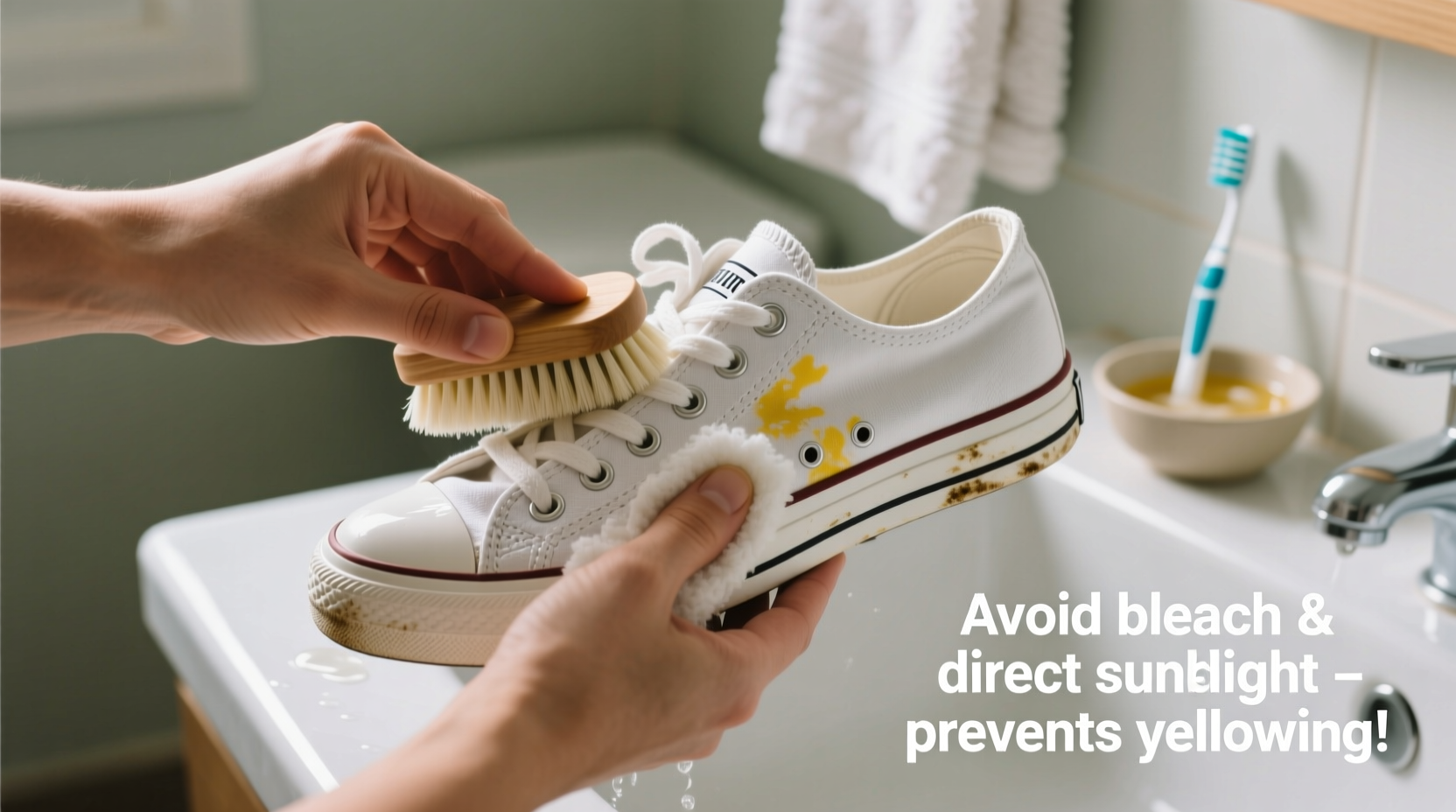
Understanding what causes yellowing is key to preventing it. Several factors contribute to discoloration, often mistaken for incomplete cleaning:
- Oxidation from sunlight: Drying shoes in direct sunlight triggers photochemical reactions in the fabric and residual detergent, leading to yellow stains.
- Residual soap buildup: Leftover detergent can oxidize over time, especially when exposed to heat or UV light.
- Chlorine bleach exposure: Even diluted bleach breaks down cotton fibers and causes permanent yellowing on natural fabrics like canvas.
- Sweat and skin oils: These transfer from socks and feet, creating acidic residues that react with cleaning agents.
- Poor rinsing: Incomplete removal of cleaning solutions leaves behind compounds that darken as they dry.
“Yellowing isn’t always dirt—it’s often a sign of improper drying or harsh product use. Prevention starts before you even touch the shoe.” — Lydia Tran, Textile Restoration Specialist
Safe Cleaning Methods That Prevent Yellowing
The foundation of non-yellowing cleaning lies in gentle ingredients and controlled drying. Avoid anything with chlorine, high alkalinity, or optical brighteners unless specifically formulated for white canvas.
Method 1: Baking Soda + Hydrogen Peroxide Paste (Best for Spot Stains)
This combination lifts surface grime without bleaching or fiber damage. Hydrogen peroxide acts as a mild oxygen-based whitener, while baking soda gently abrades stains.
- Mix one tablespoon of baking soda with two tablespoons of hydrogen peroxide (3%) to form a thick paste.
- Using an old toothbrush, apply the paste directly to stained areas—avoid soaking the entire shoe.
- Let sit for 20–30 minutes in a shaded area (never in sunlight).
- Rinse thoroughly with cold water until no residue remains.
- Blot dry with a microfiber towel and air-dry indoors at room temperature.
Method 2: Mild Dish Soap + Cold Water Soak (Full Shoe Refresh)
For overall dinginess without heavy staining, a gentle soak preserves color and avoids chemical stress.
- Fill a basin with cold water and add one teaspoon of dye-free, bleach-free dish soap (e.g., Seventh Generation or Dawn Original).
- Submerge only the canvas portion—keep rubber soles minimally wet to avoid glue degradation.
- Soak for 15 minutes, then scrub lightly with a soft brush.
- Rinse under cold running water until suds disappear.
- Press out excess water with a towel; do not wring.
Method 3: Vinegar + Baking Soda Rinse (Odor & Residue Removal)
Use this method monthly to remove invisible residues that attract yellowing over time.
- After regular washing, mix half a cup of white vinegar with one quart of cold water.
- Add one tablespoon of baking soda—it will fizz, neutralizing trapped acids.
- Dip shoes briefly or pour over surfaces, then rinse immediately.
- This step helps dissolve detergent remnants and deodorizes linings.
Drying Techniques That Prevent Discoloration
Drying is where most cleaning efforts fail. Over 70% of yellowing cases occur post-wash due to poor airflow management or UV exposure.
| Drying Method | Yellowing Risk | Recommended? |
|---|---|---|
| Direct sunlight | Very High | No |
| Near a heater or vent | High | No |
| Indoor air-drying (shade) | Low | Yes |
| Fan-assisted drying (room temp) | Minimal | Yes |
| Tumble drying | Extreme | No |
To speed up drying safely:
- Stuff shoes with white paper towels or bamboo charcoal inserts to absorb moisture and maintain shape.
- Place in a well-ventilated room away from windows.
- Use a ceiling or standing fan set on low—do not blow directly onto fabric.
- Avoid colored paper; ink can transfer during damp stages.
“Even five minutes in afternoon sun can initiate yellowing. Patience pays off when drying whites.” — Marcus Reed, Footwear Conservation Technician
Preventative Care Checklist
Keeping white canvas shoes clean starts before they get dirty. Regular maintenance reduces the need for aggressive cleaning later.
- Wipe down canvas with a damp microfiber cloth after wear.
- Inspect soles and toe caps for early scuffing.
- Rotate between multiple pairs to reduce sweat accumulation.
- Apply a fabric protector spray designed for canvas (fluoropolymer-based, not silicone).
- Store in breathable cotton bags—not plastic bins.
- Keep away from humid areas like bathrooms or basements.
Real Example: Recovering Yellowed Shoes
Jamie, a college student in Portland, washed her favorite white canvas sneakers in warm water with regular laundry detergent, then left them on a sunny porch railing to dry. Within hours, faint yellow streaks appeared along the sides. By the next day, the entire upper had taken on a tea-colored hue.
She tried scrubbing with bleach wipes, worsening the discoloration. After consulting a local cobbler, she learned that both the detergent and UV exposure caused irreversible fiber degradation.
Following professional advice, Jamie repeated the cleaning using a hydrogen peroxide and baking soda paste, rinsed thoroughly, and dried the shoes indoors over three days. Though the worst stains remained, the unaffected areas regained brightness. She now rotates two pairs seasonally and never dries footwear in direct light.
Her experience underscores a critical point: once fibers are compromised by yellowing reactions, full restoration is rarely possible. Prevention is far more effective than correction.
What Not to Do: Common Mistakes
Avoid these widespread habits that lead to yellowing—even if they seem logical:
- Using laundry bleach: Destroys cellulose in cotton canvas, leaving brittle, yellowed patches.
- Putting shoes in the washing machine: Agitation damages stitching, and residual heat cycles promote oxidation.
- Applying toothpaste: Despite viral trends, toothpaste contains abrasives and surfactants not meant for fabric.
- Drying near radiators: Heat accelerates chemical breakdown, darkening any remaining residue.
- Using colored cloths during cleaning: Dye transfer can mimic yellowing and become permanent.
| Do | Don’t |
|---|---|
| Use cold water and pH-neutral cleaners | Use hot water or all-purpose sprays |
| Dry indoors at room temperature | Place near heaters or in cars |
| Test solutions on inconspicuous spots | Assume “natural” means “safe” |
| Hand-scrub with soft-bristle brushes | Scrub aggressively with steel wool or pads |
Frequently Asked Questions
Can I use OxiClean on white canvas shoes?
OxiClean contains sodium percarbonate, which releases hydrogen peroxide when mixed with water. While less harsh than chlorine bleach, it still poses a yellowing risk if overused or not rinsed completely. Use only in cold water, limit soak time to 15 minutes, and follow with a vinegar rinse to neutralize residues. Not recommended for shoes worn frequently or already showing signs of wear.
Why did my shoes turn yellow even though I didn’t use bleach?
Yellowing often results from environmental exposure rather than cleaning agents alone. Sweat, ozone in urban air, iron in tap water, and prolonged storage in lit closets can all cause gradual discoloration. Even body oils transferred via hands during tying laces can create localized yellow spots over time.
How often should I clean white canvas shoes?
Light surface cleaning every 7–10 days extends time between deep cleans. A full cleaning is needed every 4–6 weeks depending on usage. Daily wear in urban environments may require biweekly attention. Over-cleaning weakens fibers, so balance hygiene with preservation.
Final Tips for Long-Term Whiteness
Maintaining truly white canvas shoes requires consistency and awareness of environmental factors. Consider these final recommendations:
- Invest in removable insoles to reduce internal moisture and odor.
- Replace laces regularly—yellowed laces make entire shoes look dingy.
- Use a UV-blocking window film if storing near daylight-exposed shelves.
- Label storage boxes clearly: “White Canvas – Keep Dry & Dark.”
Conclusion: Preserve Brightness Through Smarter Habits
Clean white canvas shoes don’t have to come at the cost of yellowed fabric. By replacing aggressive methods with thoughtful, science-backed practices, you protect both appearance and longevity. The secret lies not in stronger cleaners, but in gentler processes—cold water, careful rinsing, and patient indoor drying.
Your shoes reflect your effort. Treat them with consistent care, avoid common pitfalls, and enjoy a brighter, longer-lasting wardrobe staple. Start today: pull out those slightly yellowed sneakers, grab a soft brush and some hydrogen peroxide, and give them the refresh they deserve—safely, effectively, and without compromise.




 浙公网安备
33010002000092号
浙公网安备
33010002000092号 浙B2-20120091-4
Comments
No comments yet. Why don't you start the discussion?