
A good night’s sleep doesn’t begin the moment you lie down—it starts with the environment you’ve built around your bed. The bedroom is more than just a place to rest; it’s a sanctuary for recovery, mental clarity, and emotional balance. Yet, many people overlook how profoundly design and lighting influence sleep quality. Cluttered spaces, harsh lighting, and chaotic color schemes can subtly disrupt circadian rhythms and keep the mind alert when it should be winding down. By intentionally shaping your bedroom into a calming retreat, you can significantly improve both the speed and depth of your sleep.
This guide explores practical, science-backed strategies to transform your bedroom into a haven of tranquility. From choosing soothing colors to optimizing light exposure throughout the day and night, each element plays a role in signaling safety and relaxation to your nervous system. Whether you’re redesigning from scratch or making subtle upgrades, these insights will help you build a space that supports deep, restorative sleep—night after night.
The Role of Design in Sleep Quality
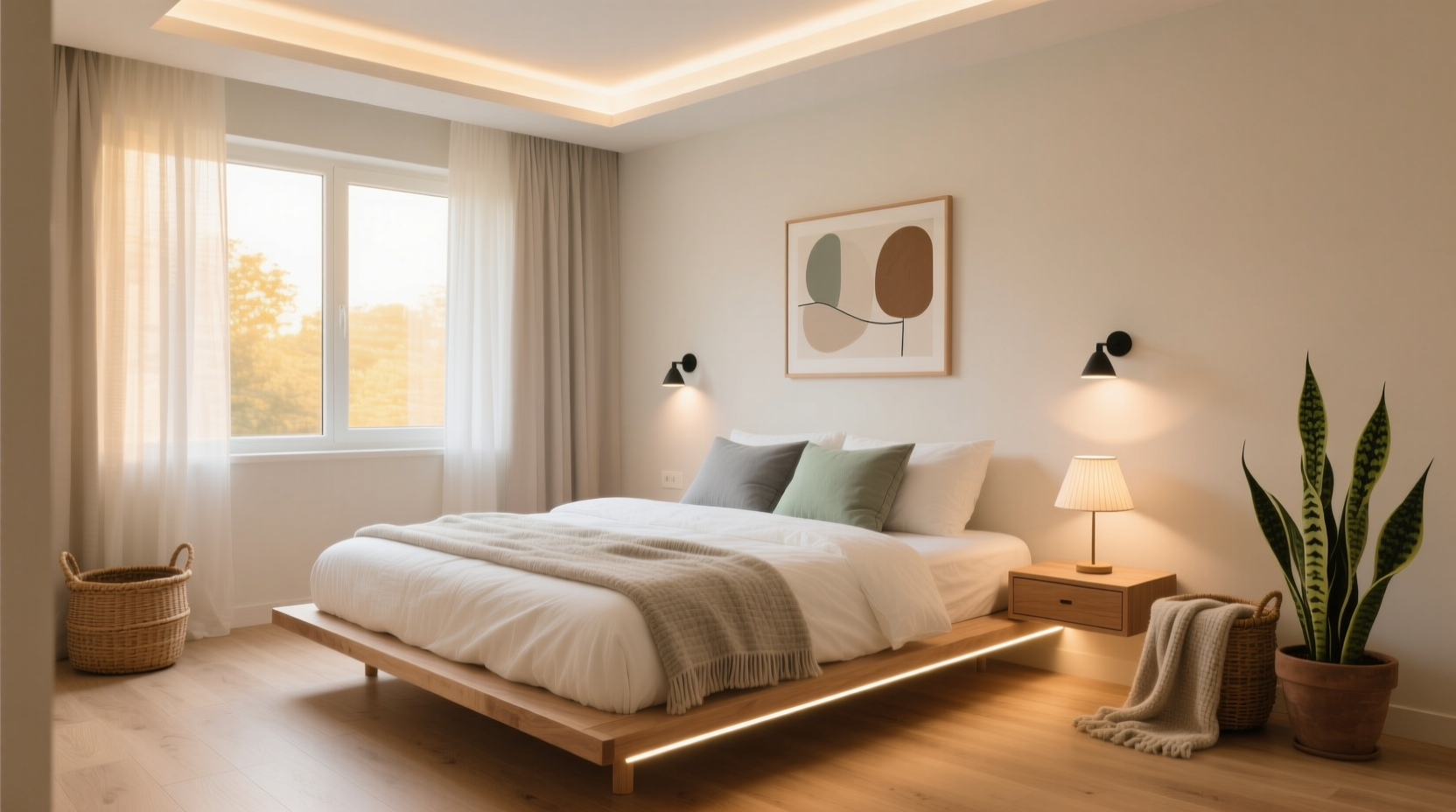
Interior design isn’t just about aesthetics—it directly affects mood, stress levels, and physiological responses. In the context of sleep, a well-designed bedroom minimizes sensory overload and promotes a sense of order and peace. Research from the National Sleep Foundation indicates that individuals who describe their bedrooms as “comfortable” and “pleasing” report significantly better sleep quality than those who don’t.
Start by evaluating clutter. Visual chaos increases cortisol levels, the hormone associated with stress. A study published in the journal *Personality and Social Psychology Bulletin* found that people in disorganized environments experienced higher levels of fatigue and lower motivation to maintain healthy routines. To counter this, adopt a minimalist mindset: keep only essential items within sight, use concealed storage, and avoid placing work-related materials in the bedroom.
Furniture layout also matters. Position your bed so it’s not directly aligned with the door—a concept rooted in Feng Shui but supported by psychological principles. When your bed faces the entrance, your subconscious remains vigilant, anticipating movement. Instead, place the bed against a solid wall with clear sightlines to the door, creating a sense of security and control.
Color Psychology: Choosing Calming Hues
Color has a measurable impact on heart rate, breathing, and brain activity. Cool tones like soft blues, muted greens, and warm grays are consistently linked to relaxation. According to a 2020 study by Travelodge, participants sleeping in blue-toned rooms averaged 7 hours and 52 minutes of sleep per night—the highest among all tested colors.
Here’s a breakdown of effective bedroom color choices:
| Color | Psychological Effect | Best For |
|---|---|---|
| Soft Blue | Lowers heart rate and blood pressure | All bedroom types |
| Earthy Green | Evokes nature and balance | Rooms with natural light |
| Warm Gray | Neutral and grounding | Modern or industrial decor |
| Lavender (light) | Reduces anxiety and improves sleep onset | Guest rooms or meditation spaces |
| Cream/Beige | Creates warmth without stimulation | North-facing rooms with less light |
Avoid bright reds, oranges, and stark whites, which can increase alertness and make it harder to relax. If you prefer neutral walls, add calming accents through bedding, curtains, or artwork in soothing tones.
Lighting: The Hidden Sleep Regulator
Light is the most powerful external cue for regulating circadian rhythms. Exposure to natural daylight during the morning helps synchronize your internal clock, while minimizing artificial light at night preserves melatonin production—the hormone responsible for sleep onset.
Design your lighting strategy in layers: ambient, task, and accent. During the day, maximize natural light by using sheer curtains or blinds that allow sunlight to flood the room. Open them immediately upon waking to signal wakefulness to your brain.
In the evening, shift to low-level, warm lighting. Choose bulbs with a color temperature below 2700K—these emit a soft amber glow similar to candlelight. Avoid overhead ceiling lights; instead, use floor lamps, wall sconces, or bedside reading lights placed below eye level to reduce glare and visual stimulation.
“Even small amounts of blue-enriched light in the evening can delay melatonin release by up to 90 minutes.” — Dr. Megan Hoof, Circadian Neuroscientist, University of California
Smart Lighting Upgrades
Consider installing dimmer switches or smart bulbs that automatically adjust color temperature throughout the day. Systems like Philips Hue or LIFX can be programmed to deliver cool white light in the morning and transition to warm hues by sunset. Some even sync with sunrise and sunset times based on your location.
If smart tech isn’t an option, establish a manual routine: replace standard bulbs in bedside lamps with warm-white LEDs and turn off screens at least one hour before bed. Use a salt lamp or candle-style bulb for final wind-down lighting—it creates a gentle ambiance that encourages stillness.
Step-by-Step Guide to Transform Your Bedroom
Creating a calming bedroom doesn’t require a full renovation. Follow this timeline to implement changes gradually and sustainably:
- Week 1: Declutter and Clean
Remove non-essential items, including electronics, paperwork, and workout gear. Deep clean surfaces, wash linens, and vacuum carpets. A fresh start sets the tone for intentional design. - Week 2: Assess Lighting
Replace any cool-white bulbs with warm-toned ones (below 2700K). Install dimmers if possible. Test different lamp placements to achieve soft, layered illumination. - Week 3: Optimize Color Scheme
Paint walls in a calming hue or introduce new textiles—duvet covers, throw pillows, curtains—in restful colors. Stick to a maximum of three complementary tones to maintain visual harmony. - Week 4: Enhance Comfort
Invest in high-quality bedding—natural fibers like cotton, linen, or bamboo regulate temperature better than synthetics. Add a weighted blanket if anxiety disrupts sleep. - Ongoing: Maintain Sleep Hygiene
Keep the room reserved for sleep and intimacy only. No work, eating, or screen binging. Reinforce the mental association between the space and rest.
Real-Life Example: Sarah’s Sleep Transformation
Sarah, a 38-year-old project manager from Portland, struggled with insomnia for years. Her bedroom had a TV mounted across from the bed, bright white LED lights, and a desk cluttered with notebooks and chargers. Despite trying supplements and meditation, she often lay awake past midnight.
Over four weeks, she applied the steps above: removed the TV, repainted her walls in a soft sage green, replaced bulbs with dimmable warm LEDs, and cleared her desk into a closed cabinet. She added blackout curtains to block streetlights and introduced a single table lamp with a fabric shade for evening reading.
Within two weeks, Sarah noticed she felt drowsier by 10 p.m. After a month, her average sleep duration increased from 5.5 to 7 hours. “It feels like my room finally tells my brain it’s safe to shut down,” she said. “I don’t even miss the TV.”
Essential Checklist for a Calming Bedroom
- ✅ Remove all electronic screens (TV, computer, excessive phones)
- ✅ Use warm-colored lighting (below 2700K) with dimming capability
- ✅ Choose calming wall colors: soft blue, gray-green, warm gray, or lavender
- ✅ Maximize natural light during daytime hours
- ✅ Install blackout curtains or shades for complete darkness at night
- ✅ Keep the space clutter-free with hidden storage solutions
- ✅ Position the bed against a solid wall with a clear view of the door
- ✅ Use breathable, natural-fiber bedding (cotton, linen, TENCEL™)
- ✅ Introduce quiet textures: wool rugs, knitted throws, linen drapes
- ✅ Eliminate work-related items and activities from the room
Frequently Asked Questions
Can I still have a reading light in a calming bedroom?
Absolutely—but choose wisely. Use a warm-toned, low-lumen LED lamp positioned beside or behind you, not shining directly into your eyes. Limit reading time to 20–30 minutes before turning it off completely. This maintains the wind-down signal without overstimulation.
Is total darkness necessary for good sleep?
Near-total darkness is ideal. Even small light leaks from chargers, clocks, or windows can interfere with melatonin production. Use blackout curtains and cover or remove glowing electronics. If you need a nightlight, opt for a red-hued one, as red light has the least impact on circadian rhythms.
What if I live in a noisy apartment?
Sound matters as much as light. Use a white noise machine, fan, or app to mask disruptive sounds. Heavy curtains and rugs also help absorb sound. Consider earplugs designed for sleep if external noise is unavoidable.
Final Thoughts: Design for Rest, Not Just Style
A calming bedroom isn’t about achieving perfection in decor—it’s about designing for function, comfort, and biological alignment. Every choice, from the shade of paint to the placement of a lamp, either supports or undermines your ability to fall and stay asleep. When your environment consistently signals safety and stillness, your body responds by releasing tension, slowing respiration, and preparing for deep restoration.
You don’t need a luxury budget or professional designer to make meaningful changes. Start small: swap a bulb, clear a surface, adjust your bed position. Each step brings you closer to a space that doesn’t just look peaceful—but actively fosters it.




 浙公网安备
33010002000092号
浙公网安备
33010002000092号 浙B2-20120091-4
Comments
No comments yet. Why don't you start the discussion?