
Video games are more than entertainment—they’re immersive worlds rich with lore, iconography, color palettes, emotional resonance, and visual motifs. When those worlds collide with the warmth and ritual of holiday decorating, something magical happens: your Christmas tree becomes a tribute, a conversation starter, and a deeply personal expression of identity. Unlike generic red-and-green schemes or mass-produced ornaments, a game-inspired tree tells a story—whether it’s the melancholy grandeur of *Shadow of the Colossus*, the pixel-perfect joy of *Stardew Valley*, or the neon-drenched cyberpunk energy of *Cyberpunk 2077*. This isn’t about slapping a Mario mushroom on a bauble and calling it done. It’s about thoughtful translation: honoring the spirit, aesthetics, and emotional core of the game while embracing the traditions and tactile joy of tree decorating.
1. Choose Your Game—and Define Its “Holiday Essence”
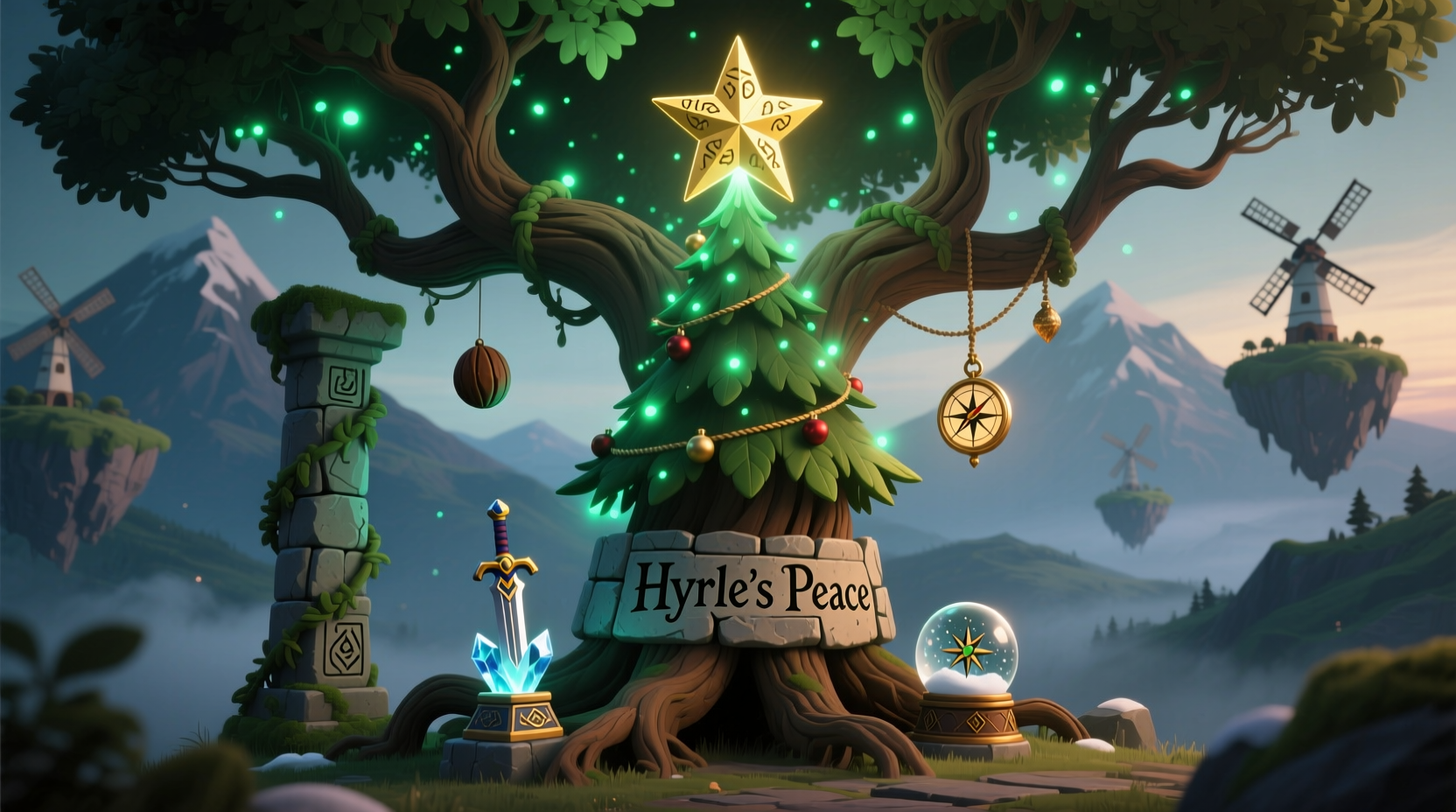
Selecting the right game is foundational. Not every title lends itself equally to festive reinterpretation. Prioritize games with strong visual identity, memorable symbols, evocative environments, or emotional themes that align with holiday values—nostalgia, hope, community, resilience, wonder, or quiet reflection. Avoid titles whose core tone clashes irreconcilably with seasonal warmth (e.g., *This War of Mine*’s unrelenting bleakness), unless you’re intentionally crafting a poignant, subversive statement piece.
Once chosen, move beyond surface-level recognition. Ask: What feeling does this game evoke during its most resonant moments? Is it the quiet awe of standing beneath Hyrule Castle at twilight (*Breath of the Wild*)? The cozy satisfaction of placing the final crop in your barn (*Stardew Valley*)? The defiant optimism of rebuilding after collapse (*Fallout: New Vegas*)? That emotional anchor becomes your design compass. A *Journey* tree isn’t about sand dunes—it’s about light, ascent, silence, and shared connection. A *Celeste* tree isn’t just pink—it’s about perseverance, vulnerability, and hard-won peace.
2. Deconstruct the Visual Language: Color, Symbol, Texture
A successful theme relies on translating game-specific visual grammar into physical, three-dimensional elements. Break it down systematically:
- Color Palette: Extract 3–5 dominant, emotionally resonant colors—not just from UI or character sprites, but from key environments. For *Red Dead Redemption 2*, think dusty rose (sunrise over Ambarino), deep forest green (Grizzlies), weathered saddle brown, and gold-tinged amber (candlelight in the camp). Avoid pure RGB screen colors; seek matte, natural, or aged equivalents (e.g., “Zelda green” is olive or sage, not electric lime).
- Core Symbols & Icons: Identify 2–4 non-copyright-infringing, instantly recognizable motifs. These should be abstractable: the Triforce is geometric; the *Minecraft* creeper face is a minimalist grid; the *Animal Crossing* leaf pattern is organic and repeatable. Prioritize shapes that scale well as ornaments (stars, circles, ovals) and avoid complex, tiny details impossible to render at 3 inches.
- Texture & Material Language: Consider how the game *feels*. Is it sleek and synthetic (*NieR: Automata*)? Use brushed metal, mirrored acrylic, and smooth resin. Is it hand-stitched and rustic (*Spirit Island*)? Opt for burlap ribbons, unfinished wood slices, and wool felt. Texture creates subconscious authenticity far more than literal imagery ever could.
This deconstruction phase prevents kitsch. A *Dark Souls* tree using only black, purple, and ash-gray with rough-hewn iron ornaments and cracked ceramic “ember” baubles feels tonally faithful. Slapping a glowing Estus Flask replica beside glittery tinsel breaks the spell.
3. Build Your Ornament Strategy: Sourcing, Making, and Curating
Your ornament collection must balance authenticity, accessibility, and cohesion. Aim for a 60/30/10 split: 60% custom or modified pieces reflecting your game’s essence, 30% carefully selected existing items that match the palette/symbolism, and 10% classic holiday elements (e.g., simple white lights, natural pinecones) to ground the theme and provide visual breathing room.
| Type | How to Source/Create | Pro Tips |
|---|---|---|
| Custom Handmade | Laser-cut wood/metal ornaments (Triforce, Vault Boy silhouette); hand-painted ceramic baubles (Hyrule crest, Mushroom Kingdom hills); embroidery hoops with stitched game scenes | Start small—make 3–5 key ornaments first. Use SVG files from fan art sites (check licensing!) as templates. Seal painted surfaces with matte varnish to prevent chipping. |
| Modified Existing | Paint plain glass balls with acrylics; dye natural materials (pinecones with tea stain for \"aged parchment\"); wrap standard ornaments in washi tape matching your palette; add clay charms to pre-made baubles | Test paints/dyes on scrap material first. Matte finishes almost always read more authentically than glossy ones for game themes. |
| Curated Pre-Made | Etsy searches using terms like “geometric gold ornament,” “matte forest green bauble,” “minimalist mountain ornament”; thrift stores for vintage glass in your palette; craft stores for bulk ribbon, beads, and filler | Avoid licensed merchandise unless it’s subtle (e.g., a single, tasteful *Pokémon* Poké Ball ornament among many abstract pieces). Focus on shape and color, not branding. |
4. Step-by-Step Tree Assembly Timeline
Building the tree is where theory becomes tangible. Follow this sequence for maximum impact and minimal frustration:
- Week 3 Before Christmas: Finalize palette and core symbols. Sketch a simple mood board (digital or paper). Order specialty supplies (laser-cut parts, custom paint). Begin making 2–3 signature ornaments.
- Week 2 Before Christmas: Complete all handmade ornaments. Dye/paint/modify existing items. Assemble ribbon garlands using your palette’s secondary colors. Test light string color (warm white is safest; cool white works for sci-fi; amber for warm fantasy).
- Week 1 Before Christmas (Tree Day):
- Fluff and shape your tree (real or high-quality artificial) thoroughly.
- Hang lights FIRST—wrap evenly from base to tip, ensuring no dark spots. This is your foundation layer.
- Hang largest ornaments (6–8 inches) at branch tips and deep within the tree’s interior for depth.
- Add medium ornaments (3–5 inches) next, clustering 3–5 per major branch section.
- Place smallest ornaments (1–2 inches) and filler (pinecones, dried oranges, fabric scraps) last, filling gaps and adding texture.
- Secure ribbon garlands loosely, letting them drape naturally—not tightly wound.
- Final 48 Hours: Add your “hero” ornament—the single most meaningful piece (e.g., a hand-carved Link figure, a ceramic Eevee holding a holly sprig)—at eye level on a prominent branch. Step back. Adjust spacing. Remove anything that visually shouts “generic.”
This timeline builds intentionality. Rushing leads to cluttered, chaotic trees. Each step layers meaning: lights establish atmosphere, large ornaments define structure, mediums add rhythm, and small pieces deliver detail and soul.
5. Real-World Example: The “Stardew Valley Harvest Tree”
Maya Chen, a graphic designer and lifelong *Stardew Valley* player in Portland, Oregon, transformed her 7-foot Fraser fir into a beloved neighborhood highlight. She didn’t use any official *Stardew* merch. Instead, she focused on the game’s core ethos: growth, seasons, quiet labor, and handmade warmth.
Her process began with palette extraction: the soft greens of spring grass, the golden-yellow of ripe wheat, the dusty rose of summer flowers, and the deep indigo of night sky stars. She laser-cut 12 wooden ornaments shaped like crops (carrot, parsnip, sunflower) and painted them with water-based, matte acrylics. She dyed 20 pinecones in varying shades of gold and rust using turmeric and paprika solutions. For texture, she wove narrow strips of burlap and linen into loose loops for garlands. Her “hero” ornament was a small, hand-thrown ceramic jar filled with dried lavender and tied with twine—a nod to the game’s foraging and preservation mechanics.
The result wasn’t a museum exhibit; it was inviting. Neighbors recognized the aesthetic immediately but felt drawn in by its tactile, earthy authenticity. “People don’t say, ‘Oh, it’s *Stardew*!’ first,” Maya notes. “They say, ‘It smells like summer fields and feels so peaceful.’ That’s when I knew I’d captured the heart, not just the logo.”
“Game-themed decor succeeds when it evokes the *feeling* of being inside that world—not when it replicates screenshots. The best trees are emotional translations, not visual copies.” — Dr. Lena Torres, Cultural Anthropologist & Author of *Playful Rituals: Video Games and Everyday Life*
6. Common Pitfalls & How to Avoid Them
Even with the best intentions, thematic trees can falter. Here’s how to sidestep frequent missteps:
- Pitfall: Overloading with Literal Characters. Solution: Limit character-based ornaments to 1–2 subtle pieces (e.g., a silhouette, a stylized emblem). Let environment and symbol carry the weight.
- Pitfall: Ignoring Scale & Proportion. Solution: Measure your tree’s height and branch density. Large, dense trees need larger ornaments (4+ inches) and fewer total pieces. Small, sparse trees thrive with clusters of tiny, delicate items.
- Pitfall: Forgetting Lighting as Narrative. Solution: Warm white lights suggest hearth and home (*Skyrim*’s Riverwood); cool blue/white suggests tech or ice (*Iceborne*’s Hoarfrost Reach); multi-color twinkling mimics bioluminescence (*Abzû*). Lights set the emotional temperature.
- Pitfall: Sacrificing Cohesion for “One More Thing.” Solution: Before adding any new ornament, ask: “Does this reinforce my core palette, symbol, or texture?” If it’s a “maybe,” it’s a “no.” Edit ruthlessly.
7. FAQ
Can I do this with a real tree—or is artificial better?
Both work beautifully. Real trees offer unmatched texture and scent—ideal for nature-heavy themes (*The Legend of Zelda: Breath of the Wild*, *Spirit Island*). Their irregular branches add organic charm. Artificial trees provide consistent shape and durability for heavier custom ornaments. Whichever you choose, ensure it’s well-fluffed to create depth for layered ornament placement.
What if my favorite game has a dark or violent theme?
Reframe, don’t reject. Focus on resilience, rebirth, or quiet beauty within that world. A *Bloodborne* tree might use deep burgundy, charcoal gray, and antique gold, with ornate, gothic-inspired ornaments (crescent moons, stained-glass patterns, brass gears) and soft, diffused lighting—evoking the game’s tragic grandeur and candlelit cathedrals, not its horror. It’s about honoring the world’s complexity, not its surface violence.
How do I explain the theme to guests who aren’t gamers?
Lead with feeling, not fandom. “This tree is inspired by a world where kindness rebuilds communities after hardship” (*Fallout: New Vegas*) or “It captures the quiet magic of watching stars rise over vast, peaceful landscapes” (*Journey*). The visual language will resonate even without game knowledge. Authenticity invites curiosity, not confusion.
Conclusion
Your Christmas tree is one of the few spaces left in modern life where we invest time, care, and narrative intention into creating beauty for pure human connection. When that beauty is rooted in a world that shaped your imagination, your empathy, or your sense of wonder, it becomes profoundly personal. A *Cyberpunk 2077* tree with neon-accented circuit-board ornaments and holographic tinsel isn’t just decoration—it’s a celebration of human ingenuity persisting in chaos. A *Animal Crossing* tree draped in hand-sewn leaf garlands and pastel pom-poms embodies gentle, everyday joy. The technical steps matter—palette, symbol, texture, assembly—but they serve a deeper purpose: transforming nostalgia into presence, pixels into poetry, and gameplay into grace.
Don’t wait for perfection. Start with one color, one symbol, one handmade ornament. Let your tree grow alongside your understanding of what that game truly means to you. The most powerful themed trees aren’t flawless replicas; they’re heartfelt interpretations, built branch by branch, memory by memory. Light your lights. Hang your first ornament. Tell your story.




 浙公网安备
33010002000092号
浙公网安备
33010002000092号 浙B2-20120091-4
Comments
No comments yet. Why don't you start the discussion?