
Wearing a face mask has become a routine part of daily life for many, whether for health protection, workplace requirements, or personal safety. But for the millions who wear prescription or reading glasses, one persistent annoyance remains: foggy lenses. The moment you put on a mask, warm breath escapes upward, hits the cooler surface of your lenses, condenses, and clouds your vision. It’s not just inconvenient—it can be dangerous when driving, working with tools, or navigating crowded spaces.
The good news is that fogging isn’t inevitable. With a better understanding of why it happens and a few practical adjustments, you can keep your glasses clear while staying protected. This guide breaks down the science behind lens fogging, explores proven prevention methods, and offers real-world strategies that work—from simple DIY fixes to long-term solutions.
Why Glasses Fog Up When Wearing a Mask
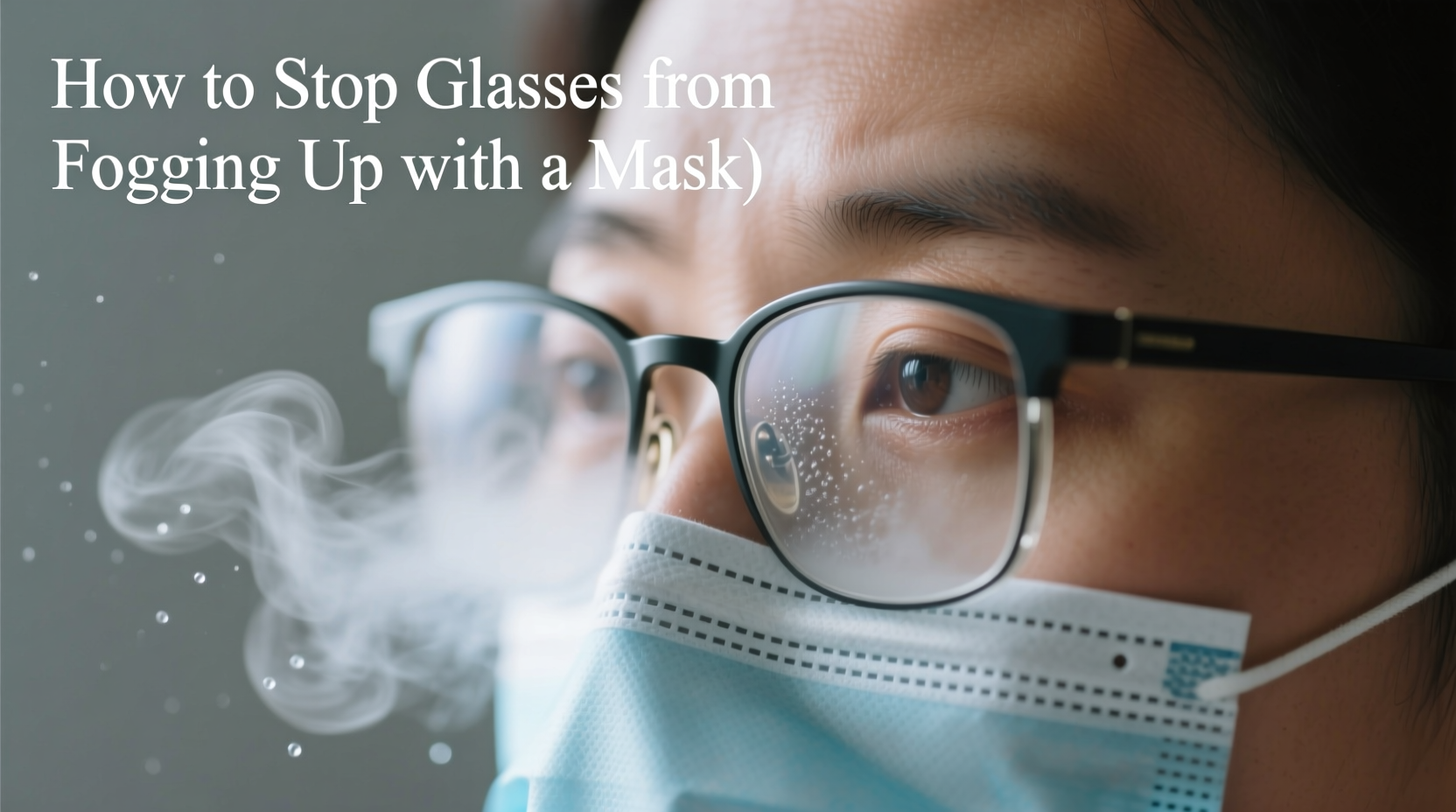
Fogging occurs due to a basic principle of physics: when warm, moist air meets a cooler surface, it condenses into tiny water droplets. Your breath is warm and humid. When you wear a mask that doesn’t seal tightly around the nose and upper cheeks, that exhaled air rises and flows directly onto your glasses’ lenses. Since the lenses are typically cooler than your breath (especially in air-conditioned rooms or outdoors), condensation forms instantly.
This issue is exacerbated by:
- Poor mask fit – Gaps at the top allow breath to escape upward.
- Material choice – Some masks lack a nose wire or use fabrics that don’t conform well.
- Physical activity – Increased breathing rate produces more moisture.
- Cold environments – Larger temperature differences between breath and lenses increase fogging risk.
Understanding this mechanism is key to choosing the right solution. Simply wiping your glasses repeatedly isn’t sustainable—it damages coatings over time and interrupts your day. Instead, focus on redirecting breath downward and minimizing moisture contact with the lenses.
Effective Methods to Prevent Glasses Fogging
Not all solutions are created equal. Some rely on chemistry, others on mechanics or materials. The most effective approach often combines multiple strategies tailored to your lifestyle.
1. Ensure a Proper Mask Fit
The foundation of any anti-fog strategy is a well-fitted mask. If air escapes through the top, no amount of lens treatment will fully solve the problem.
- Choose masks with a flexible nose wire that can be molded to the bridge of your nose.
- Adjust the ear loops or ties so the mask hugs your face snugly without gaps.
- Consider masks with adjustable straps or those designed specifically for eyeglass wearers.
For cloth masks, sewing in a pipe cleaner or twist tie along the top edge can improve the seal. Medical-grade surgical masks often come with built-in nose wires—bend them carefully to contour your facial structure.
2. Use the \"Tissue Trick\"
A surprisingly effective, low-cost method involves placing a folded tissue inside the top of your mask, just beneath the nose wire.
- Fold a single-ply tissue into a strip about 1 inch wide.
- Insert it along the inner top edge of the mask, centered over your nose.
- Press the nose wire down firmly to trap the tissue in place.
The tissue absorbs moisture before it reaches your lenses, while also helping the mask press more tightly against your skin. Replace the tissue daily or when damp.
3. Apply Anti-Fog Products
Anti-fog sprays and wipes create a thin hydrophilic layer on the lens surface that prevents water droplets from clustering. They’re commonly used by swimmers, divers, and athletes.
Look for products labeled safe for coated lenses. Popular options include:
- Defog-it wipes
- Zeiss Anti-Fog Spray
- Optix 55 Lens Cleaner with anti-fog properties
Apply according to instructions—usually a light spray or wipe, followed by buffing with a microfiber cloth. Reapplication may be needed every few hours during extended mask use.
4. Try the Soap Method
A household alternative is using a small amount of liquid dish soap. It works by reducing surface tension, spreading moisture into a transparent film rather than foggy droplets.
- Wash and dry your glasses thoroughly.
- Apply a drop of mild dish soap (like Dawn) to each lens.
- Gently rub it across the surface with your fingertip.
- Rinse lightly under water or wipe with a damp cloth—do not fully rinse off.
- Dry with a clean microfiber cloth.
The residue left behind acts as a temporary anti-fog coating. Effectiveness lasts several hours and varies by soap type and lens material.
“Even a small gap at the nose bridge can redirect 20–30% of exhaled air toward the lenses. Sealing that gap is the first line of defense.” — Dr. Lena Torres, Respiratory Biomechanics Researcher, University of Colorado
Step-by-Step Guide to Fog-Free Vision
Follow this daily routine to minimize fogging and maintain lens clarity:
- Start with clean lenses. Wash glasses with lukewarm water and mild soap. Dry with a lint-free cloth.
- Apply an anti-fog treatment. Use a commercial spray or the soap method described above.
- Prepare your mask. Insert a folded tissue if using the tissue trick. Ensure the nose wire is straight and functional.
- Put on the mask first. Position it securely over your nose and mouth.
- Mold the nose wire. Use both hands to press the wire firmly along the bridge of your nose, creating a tight seal.
- Add your glasses second. Place them over the mask’s top edge, pressing the arms gently so they help hold the mask in place.
- Test for leaks. Breathe out forcefully. If you feel air on your forehead or lenses, readjust the nose wire.
- Carry a microfiber cloth. For touch-ups throughout the day, especially after eating or drinking.
This sequence ensures maximum seal and minimal breath leakage. It may take a few tries to perfect, but consistency leads to reliable results.
Do’s and Don’ts: What Works (and What Doesn’t)
| Do’s | Don’ts |
|---|---|
| Do mold the nose wire to your face shape | Don’t skip adjusting the mask after putting on glasses |
| Do use anti-fog sprays designed for optical lenses | Don’t use hand sanitizer or alcohol wipes on lenses—they can damage coatings |
| Do wash reusable masks regularly to maintain elasticity and fit | Don’t use petroleum-based products like Vaseline on the nose bridge—they can degrade silicone nose wires and stain fabric |
| Do consider masks with ear savers or toggles for better fit control | Don’t assume all “anti-fog” claims on masks are effective—test them yourself |
Real-World Example: A Nurse’s Solution
Sarah M., an emergency room nurse in Seattle, wears her glasses 12 hours a day under an N95 respirator. Early in the pandemic, she struggled with constant fogging, which made charting patient data and reading monitors difficult.
After trying several methods, she developed a system that works reliably:
- She uses a surgical mask underneath her N95 for added filtration and better fit.
- She applies a drop of baby shampoo (a gentle surfactant) to her lenses each morning, rinses lightly, and dries with a microfiber cloth.
- Before each shift, she tapes the top edges of her N95 to her skin using medical tape, ensuring zero upward airflow.
“It took some trial and error,” she says, “but now I go entire shifts without a single fog-up. The tape feels weird at first, but it’s worth it for clear vision when I need it most.”
While taping may not suit everyone, Sarah’s experience highlights the importance of combining sealing, treatment, and persistence.
Checklist: Keep Your Glasses Fog-Free
Use this quick-reference checklist each morning or before entering high-risk or high-visibility situations:
- ✅ Clean glasses with mild soap and water
- ✅ Apply anti-fog treatment (soap, spray, or wipe)
- ✅ Choose a mask with a malleable nose wire
- ✅ Insert a folded tissue inside the mask top (optional)
- ✅ Put on the mask first, then glasses
- ✅ Mold the nose wire tightly over the bridge of your nose
- ✅ Test for air leaks by exhaling sharply
- ✅ Carry a microfiber cloth for midday touch-ups
- ✅ Wash reusable masks after each use
- ✅ Replace disposable masks when damp or damaged
Frequently Asked Questions
Can I use toothpaste to prevent fogging?
No. While toothpaste is sometimes suggested as a DIY cleaner, it’s abrasive and can scratch lenses, especially those with anti-reflective or scratch-resistant coatings. Stick to lens-safe methods like diluted dish soap or commercial anti-fog products.
Why do my glasses fog up only when I wear a mask, but not in cold weather?
In cold weather, your breath disperses into the open air. With a mask, the airflow is concentrated and directed—often upward if the seal is poor. The mask traps and channels warm air, increasing the chance it will hit your lenses. A proper seal redirects that air downward, where it exits through the mask’s front or sides.
Are there masks specifically designed to prevent fogging?
Yes. Several brands now market “anti-fog” or “eyewear-friendly” masks with enhanced nose seals, double layers at the top, or internal barriers to block upward airflow. Examples include the ClearMask Pro and FogKleer. While often more expensive, they can be worthwhile for frequent mask wearers.
Final Thoughts and Action Steps
Foggy glasses with a mask don’t have to be a daily frustration. The solution lies not in one magic fix, but in a combination of proper fit, smart materials, and consistent habits. Whether you’re a healthcare worker, teacher, commuter, or simply someone who values clear vision, taking a few extra seconds to adjust your mask and treat your lenses can make a dramatic difference.
Start today: clean your glasses, check your mask’s nose wire, and try one of the methods outlined here. Experiment to find what works best for your face shape, glasses frame, and routine. Small changes lead to lasting clarity.




 浙公网安备
33010002000092号
浙公网安备
33010002000092号 浙B2-20120091-4
Comments
No comments yet. Why don't you start the discussion?