
Clutter accumulates quietly. A sweater worn once, jeans that no longer fit, forgotten accessories—before you know it, your closet becomes a source of stress rather than convenience. The KonMari method, developed by organizing consultant Marie Kondo, offers a transformative approach to tidying: keep only what sparks joy. This isn’t just about folding clothes neatly—it’s about redefining your relationship with your belongings. And yes, you can complete the entire process in under a weekend with focused effort and the right strategy.
Understanding the KonMari Philosophy
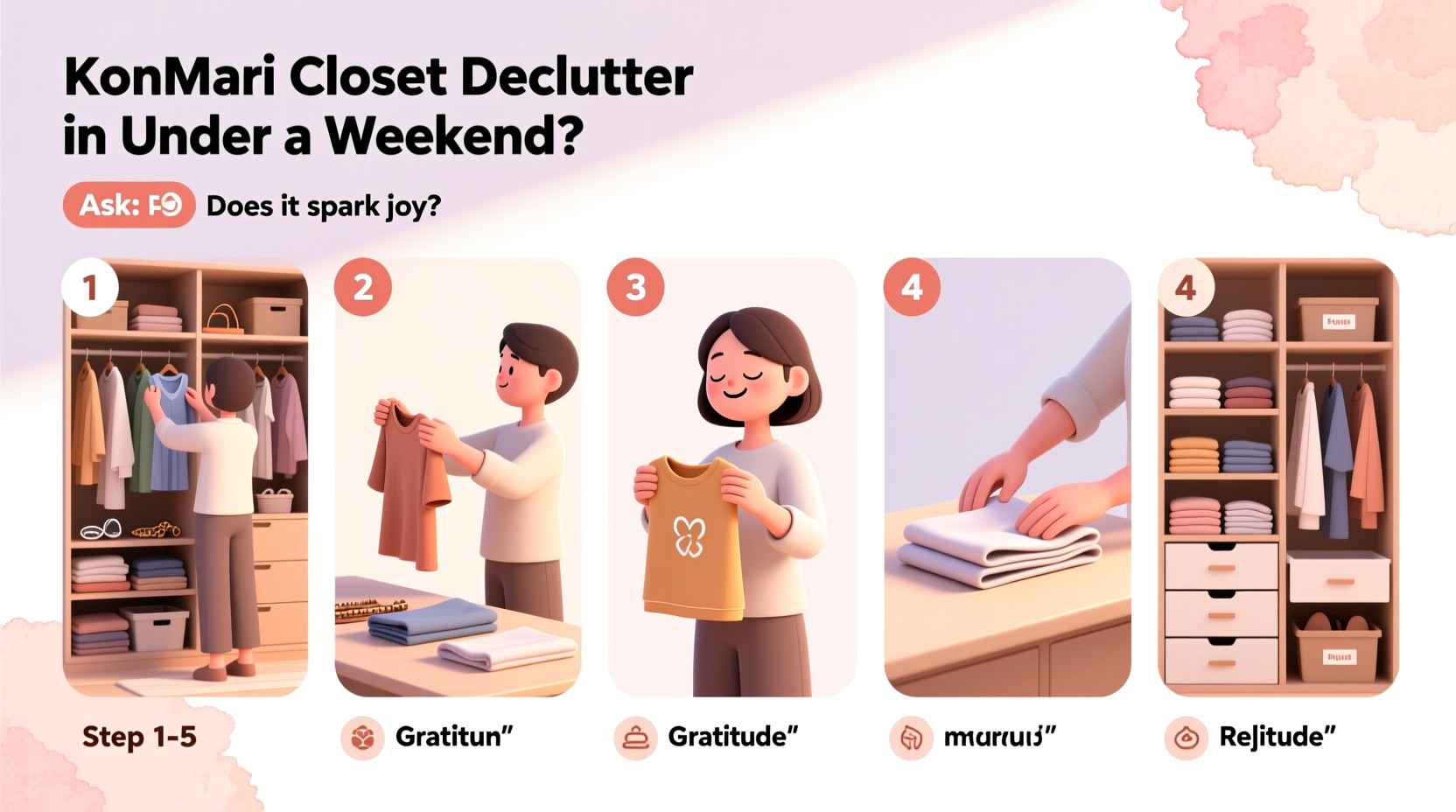
Marie Kondo’s method is rooted in mindfulness and intentionality. Unlike traditional decluttering, which often follows a room-by-room or category-by-category linear path, KonMari emphasizes completing each category in one dedicated session. For clothing, this means gathering every piece from every corner of your home—bedroom, laundry room, guest closet—and sorting them all at once.
The core principle? Hold each item and ask: “Does this spark joy?” If it doesn’t, thank it for its service and let it go. This simple question shifts your mindset from guilt (“I spent money on this”) to gratitude and clarity. It’s not about discarding everything; it’s about curating a wardrobe that reflects who you are now—not who you were five years ago.
“The objective of cleaning is not just to clean, but to feel happiness living within your space.” — Marie Kondo, *The Life-Changing Magic of Tidying Up*
Step-by-Step Weekend Plan
Completing your closet declutter in under a weekend requires structure. Follow this two-day timeline to stay on track without burnout.
Saturday: Gather and Sort
- Clear a large space – Use your bed or a clear floor area. Remove everything from your closet, drawers, and storage bins.
- Categorize items – Group clothes into types: tops, bottoms, dresses, outerwear, undergarments, sleepwear, accessories.
- Hold each item – Pick up one piece at a time. Ask yourself: Does this bring me joy? Does it fit? Is it practical for my current lifestyle?
- Create three piles: Keep, Donate, Discard. Be decisive. If you haven’t worn it in over a year and it doesn’t spark joy, release it.
- Handle sentimental items last – Save uniforms, gifts, or keepsakes for the end. They require extra emotional energy.
Sunday: Fold, Store, and Sustain
- Fold using the KonMari fold – Items stand vertically in drawers, visible at a glance. This prevents rummaging and preserves fabric.
- Organize by category and color – Arrange clothes in your closet by type (e.g., blouses, then shirts), then by color within each group. The visual harmony reinforces order.
- Store thoughtfully – Use drawer dividers, shelf organizers, and matching hangers for consistency.
- Dispose responsibly – Drop off donations the same day. Recycle damaged textiles if possible.
- Reflect and celebrate – Take a photo of your finished closet. Acknowledge the mental clarity you’ve gained.
KonMari Folding Technique: Why It Works
The way you store clothes impacts how often you wear them. Traditional stacking buries items at the bottom. The KonMari fold turns garments into compact rectangles that stand upright like files in a drawer. You see everything at once, reducing the chance of forgotten pieces.
To master the fold:
- Lay the garment flat.
- Fold one side toward the center, then the other, creating a narrow rectangle.
- Divide the length into thirds, folding the bottom up, then the top down.
- Stand it vertically in your drawer.
This method works best for t-shirts, sweaters, pajamas, and casual pants. Delicate fabrics may still benefit from hanging, but even silk blouses can be folded carefully using tissue paper support.
Do’s and Don’ts of KonMari Decluttering
| Do’s | Don’ts |
|---|---|
| Complete the entire clothing category in one session | Jump between categories (e.g., clothes today, books tomorrow) |
| Touch each item and assess it individually | Sort by size, season, or color alone without evaluating joy |
| Thank items before letting them go | Feel guilty about discarding gifts or expensive purchases |
| Store folded clothes vertically in drawers | Overstuff drawers or closets—even if organized |
| Use uniform hangers for a clean look | Hang items that could be folded (e.g., cotton t-shirts) |
One common mistake is attempting to “save” an item because it was expensive. Cost does not equal value if the item no longer serves you. Similarly, holding onto clothes “for someday” creates false hope. If you’re not wearing it now, it’s unlikely you’ll wear it later unless your lifestyle changes significantly.
A Real-Life Example: Sarah’s Closet Transformation
Sarah, a 34-year-old graphic designer from Portland, had avoided her closet for years. It was crammed with work attire from a job she’d left, workout gear she never used, and dresses from a phase when she dressed more formally. She committed to the KonMari method over a single weekend.
On Saturday, she pulled out 87 clothing items. As she held each one, she paused. A black blazer reminded her of long commutes and stress—no joy. A sequined dress from a wedding brought back memories but hadn’t been worn in four years—she thanked it and set it aside. By evening, her “keep” pile was less than half the original.
On Sunday, she folded her favorite knit sweaters and arranged them by color. She hung her three go-to blouses on matching wooden hangers. The change wasn’t just physical. “I felt lighter,” she said. “Getting dressed became easier. I wasn’t fighting with my closet anymore.” Within a week, she noticed she was more confident in her choices because every piece truly reflected her current self.
Essential Checklist: Your KonMari Weekend Roadmap
- ☐ Clear your schedule for two full days
- ☐ Remove all clothes from closets, drawers, and storage
- ☐ Sort into categories: tops, bottoms, dresses, outerwear, etc.
- ☐ Hold each item and ask: “Does this spark joy?”
- ☐ Create separate piles: Keep, Donate, Discard
- ☐ Fold clothes using the KonMari method
- ☐ Organize kept items vertically in drawers by type and color
- ☐ Hang only structured or delicate garments
- ☐ Label storage bins if needed
- ☐ Schedule donation drop-off for Sunday afternoon
- ☐ Take a “before” and “after” photo
- ☐ Celebrate your accomplishment
Frequently Asked Questions
What if I love the idea but don’t have two full days?
You can split the process into focused blocks. Dedicate 3–4 hours on Saturday to gathering and sorting. Use Sunday evening or Monday night to fold and organize. The key is not to interrupt the sorting phase—once you start assessing items, finish the category.
Should I do my partner’s closet too?
No. The KonMari method is deeply personal. Only you can decide what sparks joy for you. Encourage your partner to try it, but respect their pace. Doing it for someone else undermines the emotional benefits.
What about seasonal clothing I don’t use year-round?
Store off-season items out of the way, but include them in your initial sort. Even winter coats should be evaluated. If you dread wearing yours, consider replacing it with one that brings joy. Rotate stored items twice a year during seasonal transitions.
Sustaining a Joy-Sparking Closet
Decluttering is not a one-time fix. Maintenance is essential. Adopt these habits to preserve your progress:
- One In, One Out Rule: When you buy something new, remove an old item. This prevents clutter creep.
- Monthly Check-Ins: Spend 15 minutes each month reviewing your closet. Remove anything unworn or unloved.
- Mindful Shopping: Before purchasing, ask: “Will this spark joy every time I wear it?” Avoid impulse buys based on sales or trends.
- Gratitude Practice: Thank your clothes daily. Acknowledging their role fosters appreciation and care.
Over time, your closet becomes a reflection of your authentic self—a curated collection of pieces that support your life, not complicate it.
“Keep only those things that speak to your heart. Your environment will become a true reflection of your inner state.” — Marie Kondo
Final Thoughts: Start Small, Think Big
Decluttering your closet using the KonMari method in under a weekend is not just about creating more space. It’s about reclaiming time, reducing anxiety, and aligning your surroundings with your values. The physical act of folding a shirt mindfully can become a moment of presence. Letting go of a dress that no longer fits can be an act of self-acceptance.
You don’t need perfection. You need intention. Begin with your closet, and you may find the clarity spills into other areas—your kitchen, your workspace, your relationships. Organization isn’t about control; it’s about freedom.




 浙公网安备
33010002000092号
浙公网安备
33010002000092号 浙B2-20120091-4
Comments
No comments yet. Why don't you start the discussion?