
A blender is one of the most frequently used appliances in modern kitchens. Whether you're making smoothies, soups, sauces, or nut butters, its blades work hard to pulverize ingredients into smooth consistency. But with regular use comes residue buildup—especially in hard-to-reach areas near the blade assembly and sealing ring. Many people assume that a thorough cleaning requires full disassembly, which can be intimidating or even risky if done incorrectly. The good news: you don’t need to take your blender apart to achieve a deep clean. With the right techniques, you can maintain hygiene, eliminate odors, and extend the life of your appliance—all without touching a screwdriver.
The Importance of Regular Deep Cleaning
Even if you rinse your blender after each use, microscopic food particles and oils can accumulate over time. These residues create breeding grounds for bacteria and mold, especially in moist environments. A neglected blender may also develop lingering smells—like old banana or garlic—that transfer to fresh blends. Beyond hygiene, built-up gunk around the blade base can affect performance, reducing efficiency and potentially damaging the motor due to imbalance or resistance.
Regular deep cleaning ensures consistent blending power, prevents cross-contamination between recipes, and keeps your kitchen smelling fresh. Most importantly, avoiding disassembly reduces the risk of damaging seals, misaligning components, or voiding warranties on high-end models like Vitamix or Blendtec.
Step-by-Step Guide to Deep Cleaning Without Disassembly
Cleaning your blender thoroughly without taking it apart involves a combination of mechanical action (blending), chemical breakdown (using natural cleaners), and targeted rinsing. Follow this sequence for optimal results:
- Immediate Post-Use Rinse: After every use, fill the pitcher halfway with warm water and run the blender on low for 10–15 seconds. This removes loose debris before it dries and hardens.
- Dry Wipe Exterior: Use a damp cloth to wipe down the outside of the jar, lid, and spout. Pay attention to crevices where liquid might seep in during use.
- Prepare Cleaning Solution: Choose one of the following mixtures based on your needs:
- 1 cup warm water + 1 tablespoon white vinegar + 1 drop dish soap
- 1 cup warm water + 1 tablespoon baking soda
- Equal parts water and lemon juice (for odor removal)
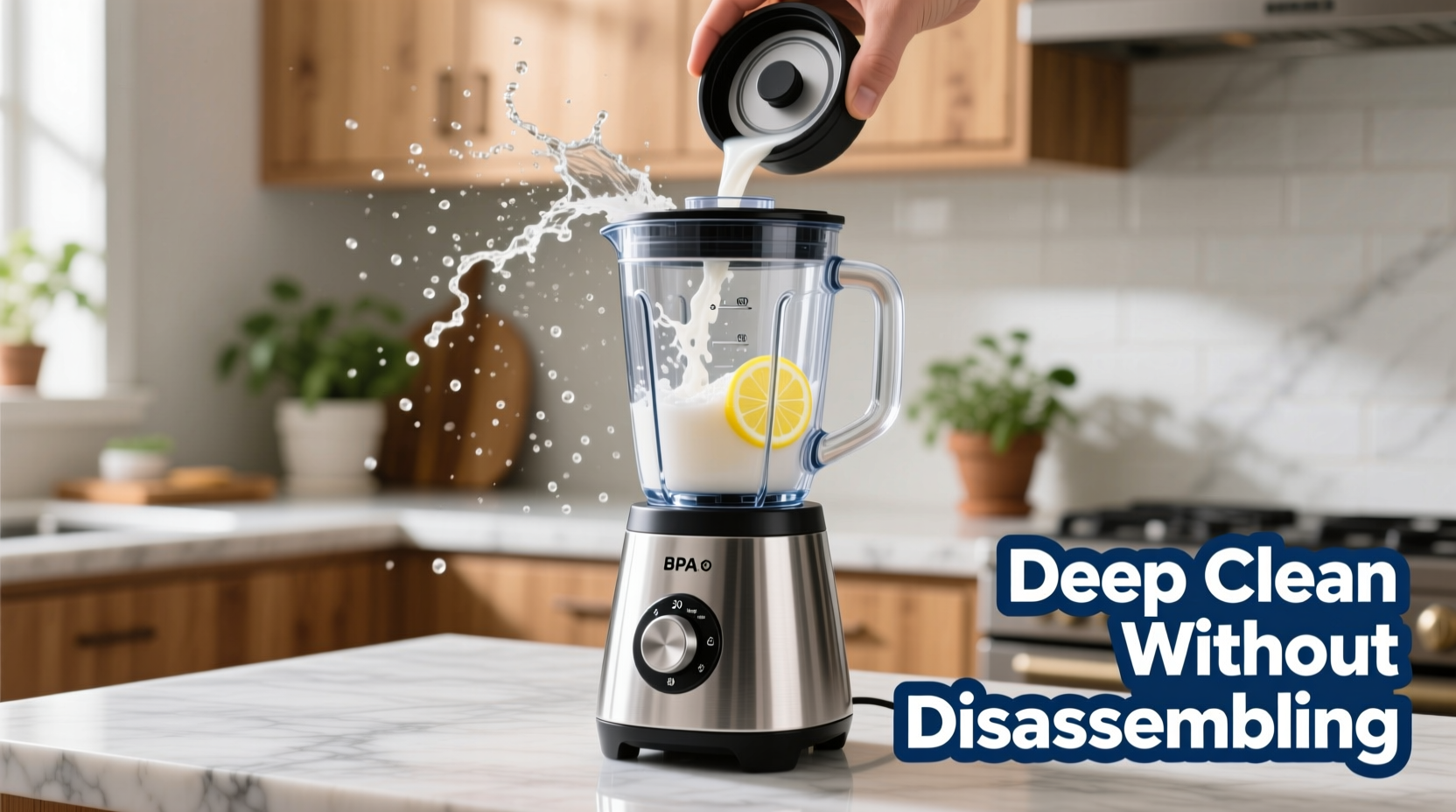
- Blend the Cleaner: Pour the solution into the blender jar up to the max fill line. Run the blender on high for 30–60 seconds. The spinning blades will agitate the mixture, scrubbing the interior surfaces and forcing liquid through tiny gaps near the blade assembly.
- Let It Soak: Allow the solution to sit in the jar for 5–10 minutes. This gives acids (vinegar, lemon) or alkaline agents (baking soda) time to break down stubborn residues.
- Final Rinse Cycle: Discard the used solution and refill with clean water. Blend again for 20 seconds to flush out loosened grime and residual cleaner.
- Air Dry Completely: Invert the jar on a drying rack or towel, ensuring moisture drains from the bottom seal. Do not reassemble or store until fully dry to prevent mildew.
This method effectively cleans the entire internal surface, including areas beneath the blade guard that are inaccessible without disassembly. For heavily soiled blenders, repeat the process twice.
Best Natural Cleaning Agents Compared
Not all cleaning solutions work equally well for every type of residue. Below is a comparison of common household ingredients used for non-disassembly blender cleaning:
| Cleaning Agent | Best For | How It Works | Limitations |
|---|---|---|---|
| White Vinegar + Water | Mineral deposits, mild odors, general sanitation | Acidic properties dissolve lime scale and kill bacteria | Strong smell; not ideal for daily use |
| Baking Soda + Water | Grease, oil buildup, stuck-on food | Mild abrasiveness lifts residue without scratching | Less effective against mold or mineral stains |
| Lemon Juice + Warm Water | Freshening, removing fruit/vegetable odors | Natural citric acid cuts grease and deodorizes | May leave slight stickiness if not rinsed well |
| Dish Soap (small amount) | Protein-based residues (nuts, yogurt, eggs) | Surfactants emulsify fats and lift organic matter | Can create excess suds; must be thoroughly rinsed |
For best results, combine methods. For example, use baking soda first to loosen grime, then follow with vinegar for disinfection. Avoid mixing vinegar and bleach under any circumstances, as this produces toxic fumes.
Common Mistakes That Reduce Blender Lifespan
Improper cleaning habits can do more harm than good—even when trying to maintain hygiene. Here are frequent errors users make when attempting to deep clean without disassembly:
- Using boiling water on plastic jars: High heat can warp polycarbonate containers, leading to cracks or leaks.
- Overfilling with abrasive mixtures: Adding too much baking soda or salt can act like sandpaper on the blade edges, dulling them over time.
- Ignoring the lid and vent cap: These parts often trap liquids and odors. They should be removed and hand-washed separately.
- Running an empty blender: Some try to \"clean\" by running the motor dry, which causes unnecessary wear on bearings and motors.
- Storing while damp: Moisture trapped under the blade assembly promotes mold growth and rubber seal degradation.
“Most blender failures I’ve seen stem from long-term moisture exposure and improper cleaning—not mechanical wear.” — Daniel Park, Appliance Repair Technician with 15 years of experience
Real Example: Reviving a Neglected Blender
Sarah, a busy mother of two, used her blender nearly every morning for green smoothies. Over six months, she only rinsed it quickly after use, assuming that was sufficient. Eventually, her blends started tasting sour, and a grayish film appeared near the blade base. She considered replacing the $200 machine—until a friend suggested a vinegar-and-baking-soda deep clean.
Sarah filled the jar with warm water, added one tablespoon of baking soda, and blended for 30 seconds. She let it sit for 10 minutes, then poured in a quarter cup of white vinegar. As the fizzing reaction occurred, she noticed dark particles swirling upward—residue that had been trapped for months. After two rinse cycles and air drying overnight, the blender looked and smelled like new. It’s now part of her routine to perform this cleaning once a week.
This case illustrates how simple chemistry and consistent maintenance can restore performance without costly repairs or replacements.
When You Might Still Need to Disassemble
While non-disassembly cleaning works for routine maintenance, there are situations where partial disassembly is unavoidable:
- Visible mold under the blade assembly
- Leaking from the base during operation
- Persistent odor despite repeated cleanings
- Blade wobbling or grinding noise
In these cases, consult your user manual for safe disassembly instructions. Most manufacturers provide guidance on removing the blade assembly for deeper access. However, doing this monthly or unnecessarily increases the risk of O-ring damage or improper resealing, which leads to leaks. Reserve disassembly for emergencies, not routine care.
Weekly Maintenance Checklist
Stay ahead of grime with this quick-reference checklist. Print it or save it on your phone for easy tracking:
- ✅ Rinse immediately after each use
- ✅ Wipe exterior and lid with damp cloth
- ✅ Once per week: deep clean with vinegar or baking soda solution
- ✅ Inspect lid seal and vent cap for residue
- ✅ Allow jar to air dry completely before storing
- ✅ Monthly: check for cloudiness or scratches in the jar (replace if damaged)
FAQ: Common Questions About Blender Hygiene
Can I put my blender jar in the dishwasher?
Most modern blender jars and lids are dishwasher-safe, especially those made of glass or high-grade plastic. However, frequent dishwashing can degrade rubber seals and discolor plastic over time. If using a dishwasher, place the jar upright on the top rack and avoid harsh detergents. Hand washing with mild soap remains the gentlest option for long-term care.
Why does my blender still smell bad after cleaning?
Odors often persist because the sealing ring (the rubber gasket beneath the blade) has absorbed strong-smelling foods like onions, fish, or turmeric. Even if you don’t disassemble, soaking the entire base in a vinegar-water solution for 15 minutes can help draw out trapped odors. Alternatively, blend a mixture of water and lemon peels for natural deodorizing.
Is it safe to use bleach to sanitize my blender?
Diluted bleach (1 teaspoon per quart of water) can be used occasionally for sanitization, particularly if someone in the household is immunocompromised. Blend the solution for 30 seconds, let sit for 5 minutes, then rinse *extensively* with clean water. Never mix bleach with vinegar or ammonia—it creates dangerous chlorine gas. Reserve bleach for rare deep sanitizations, not regular cleaning.
Conclusion: Keep It Clean, Keep It Running
Your blender doesn’t need to be taken apart to stay spotless. With smart routines and natural cleaning agents, you can maintain peak performance and hygiene safely and efficiently. The key is consistency: treating your blender well after each use prevents the need for drastic interventions later. By incorporating a simple weekly deep-clean cycle, you protect your investment, ensure better-tasting blends, and reduce waste from premature replacement.




 浙公网安备
33010002000092号
浙公网安备
33010002000092号 浙B2-20120091-4
Comments
No comments yet. Why don't you start the discussion?