
Selecting the correct candlestick size isn't just about aesthetics—it's crucial for safety, performance, and longevity. A mismatch between candle and holder can lead to uneven burning, wax spillage, or even fire hazards. Whether you're using taper candles at dinner, pillar candles in your living room, or votives on a windowsill, understanding how to pair them properly with their holders ensures both beauty and function. This guide breaks down the key factors that influence ideal candlestick sizing across common candle types.
Understanding Candle Types and Their Base Requirements
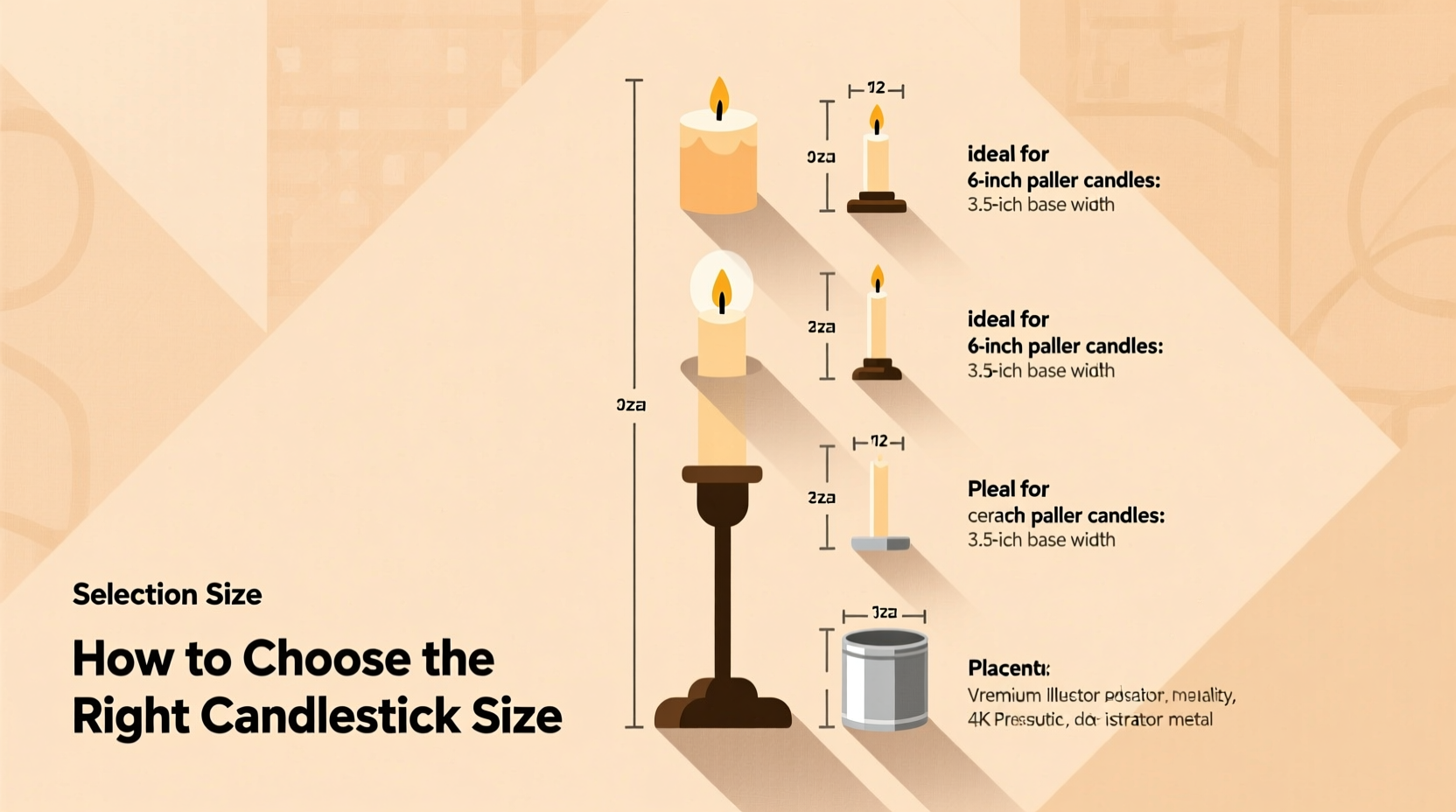
Candles come in distinct shapes and sizes, each designed for specific uses and holders. The most common types include tapers, pillars, votives, tea lights, and container candles. Each has unique dimensional needs when it comes to fitting securely into a candlestick or holder.
- Taper candles: Long, slender, and conical; require snug-fitting candlesticks with tapered sockets.
- Pillar candles: Thick, cylindrical, self-supporting; need flat, stable surfaces or wide-based holders.
- Votive candles: Small cylinders meant to be burned inside glass cups; require votive holders that match height and diameter.
- Tea lights: Tiny disc-shaped candles; fit into small metal or ceramic cups with tight clearance.
- Container candles: Already housed in jars or tins; typically don’t need additional holders unless for display.
The wrong fit compromises not only appearance but also combustion efficiency. For example, a taper candle wobbling in too-wide a socket may drip excessively or extinguish prematurely.
Matching Candle Diameter to Holder Fit
Diameter is the primary factor in determining whether a candle will stay upright and centered. Too loose, and the candle risks tipping; too tight, and insertion becomes difficult or damages the wax.
Standard taper candles are typically ⅞ inch (22 mm) at the base, though sizes range from ¾ inch to 1¼ inches. Pillar candles vary widely—from 2 inches to over 6 inches in diameter. Votives are usually 1½ to 2 inches wide.
| Candle Type | Average Diameter | Holder Socket Size Needed | Common Fit Issues |
|---|---|---|---|
| Taper | ¾” – 1¼” | Slightly smaller than candle base | Loose fit causes leaning; tight fit cracks wax |
| Pillar | 2” – 6” | No socket—flat, heat-resistant surface | Too narrow base leads to tipping |
| Votive | 1½” – 2” | Matches exact diameter | Gap allows wax pooling; oversized melts glass |
| Tea Light | 1½” diameter, ½” height | Flush-fit metal or ceramic cup | Lifts when too loose; hard to remove if tight |
When in doubt, choose adjustable or universal holders with insert rings or silicone grips that accommodate slight variations in size.
Step-by-Step Guide to Sizing Your Candlestick Correctly
- Measure the candle’s base diameter using a ruler or caliper. Do this at the widest point near the bottom.
- Check the candle type—determine if it requires a socketed holder (taper), open dish (pillar), or enclosed cup (votive/tea light).
- Verify the holder’s internal dimensions. For sockets, ensure the opening is slightly smaller than the candle base for friction grip.
- Assess height proportion. Taller tapers look best in taller holders (6+ inches), while short stubs suit low-profile bases.
- Test stability. Insert the candle gently. It should stand straight without wobbling or requiring force.
- Consider burn time and melt pool. Wider pillars generate larger melt pools—ensure surrounding area is clear of flammable materials.
- Evaluate material compatibility. Metal holders conduct heat; glass can crack under thermal stress if improperly sized.
Real-World Example: A Dinner Party Gone Wrong
Sarah hosted a formal dinner and purchased elegant silver candlesticks for her dining table. She selected beautiful 12-inch taper candles advertised as “standard size.” However, upon inserting them, she noticed they rocked loosely in the sockets. Midway through dessert, one candle tipped over, spilling hot wax onto the linen tablecloth and causing a small scorch mark.
After investigating, Sarah discovered that while most tapers are ⅞ inch, some budget brands produce slightly thinner bases (about 13/16 inch). Her antique-style candlesticks had worn sockets that no longer gripped modern standards tightly. The incident could have been avoided by testing the fit beforehand or using foil shims.
This scenario highlights why visual matching isn’t enough—precise measurement prevents accidents and maintains elegance.
Expert Insight on Safety and Design Balance
“Many people focus solely on how a candle looks in a holder, but stability and heat dispersion are equally important. A well-fitted candlestick controls the flame’s position, reduces flicker, and minimizes dripping—all contributing to safer, cleaner burns.” — Marcus Reed, Master Candle Artisan & Home Safety Consultant
Do’s and Don’ts Checklist
✅ Do:
- Always measure your candle before buying a holder.
- Choose holders made from non-flammable materials like brass, ceramic, or tempered glass.
- Use votive-specific containers designed to withstand prolonged heat exposure.
- Center the candle perfectly to promote even burning.
- Inspect older candlesticks for wear—sockets can widen over time.
❌ Don’t:
- Force a candle into a too-small socket—this can split the wax or wick.
- Leave taper candles unattended if they feel loose.
- Place wide pillar candles on narrow trays—they can tip during melting.
- Reuse tea light cups beyond their intended lifespan—metal deforms with heat cycles.
- Ignore manufacturer recommendations on maximum candle size for multi-candle holders.
Frequently Asked Questions
Can I use a pillar candle in a taper holder?
No. Taper holders are designed for long, narrow candles with pointed bases. Pillar candles are much wider and heavier, making them unstable and unsafe in taper fittings. Use a flat, sturdy platform instead.
What happens if a votive candle is too small for its holder?
An undersized votive will shift during burning, potentially exposing the flame to the side of the glass. This creates uneven heating, increasing the risk of cracking. Always match the candle diameter precisely to the holder.
How do I know if my candlestick is the right height?
A good rule is to have the candle extend at least 1–2 inches above the holder’s rim. This provides clearance for airflow and makes lighting easier. For centerpieces, keep flames below eye level to avoid glare.
Final Thoughts: Precision Meets Purpose
Choosing the right candlestick size goes beyond decoration—it’s an exercise in balance, safety, and intentionality. From intimate dinners to ceremonial events, the quiet glow of a well-placed candle enhances mood and atmosphere. But only when paired correctly does it perform reliably and safely.
By measuring carefully, understanding candle types, and respecting material limits, you create setups that are both beautiful and functional. Whether you’re arranging a simple tea light display or setting a formal table with tall tapers, attention to detail transforms ordinary moments into memorable ones.




 浙公网安备
33010002000092号
浙公网安备
33010002000092号 浙B2-20120091-4
Comments
No comments yet. Why don't you start the discussion?