
Navigating life’s challenges—whether due to aging, disability, mental health concerns, or sudden crises—can be overwhelming. For many adults, the support of a licensed social worker is not just helpful but essential. Social workers provide emotional, logistical, and advocacy-based assistance across healthcare, housing, employment, and family systems. Yet, despite their critical role, many individuals don’t know how to locate or access these professionals. This guide demystifies the process, offering clear steps, resources, and insights to help you or a loved one connect with qualified adult social services.
Understanding the Role of Adult Social Workers
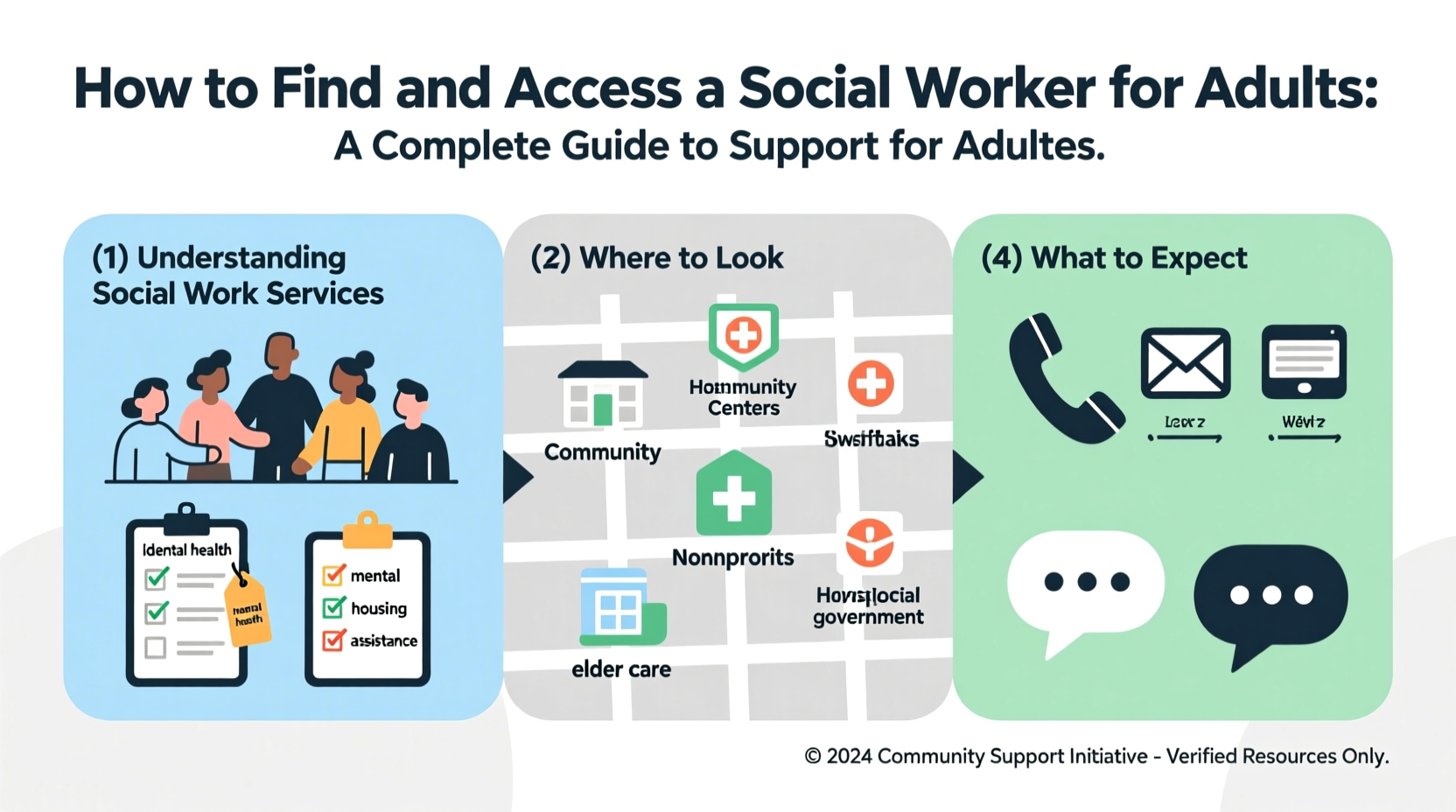
Social workers specialize in helping individuals overcome personal, social, and systemic barriers. In adult services, they assist people dealing with chronic illness, financial hardship, domestic issues, addiction, elder care, and more. Their roles vary based on setting:
- Clinical social workers provide therapy and mental health counseling.
- Case managers coordinate care plans, benefits, and referrals.
- Medical social workers operate in hospitals and clinics, supporting patients through diagnosis and treatment.
- Aging or geriatric social workers focus on older adults, helping with long-term care planning and senior resource access.
These professionals are trained to assess needs holistically and connect clients with appropriate services—often acting as both advocates and navigators in complex systems.
“Social workers are often the bridge between crisis and stability. They don’t just offer advice—they open doors.” — Dr. Lena Torres, Director of Community Behavioral Health, New York
Step-by-Step Guide to Finding a Social Worker
Accessing a social worker doesn’t require a medical referral in most cases, but knowing where to start improves your chances of timely support. Follow this sequence to identify and engage the right professional:
- Determine your primary need: Are you seeking mental health counseling, help with housing, elder care coordination, or financial aid? Clarifying your goal narrows your search.
- Contact local health or human services departments: County or city agencies often employ social workers or can refer you to community programs.
- Reach out to healthcare providers: Hospitals, clinics, and rehabilitation centers typically have embedded social work teams. Ask your doctor or nurse for a consultation.
- Use national directories: Websites like the National Association of Social Workers (NASW) or Psychology Today allow filtering by specialty, location, and insurance.
- Call 211 or visit 211.org: This free, confidential service connects callers to local resources, including social work support, across the U.S.
- Engage nonprofit organizations: Groups like United Way, Catholic Charities, or Jewish Family Services offer social work services regardless of religious affiliation.
- Verify credentials and availability: Confirm licensure (LCSW, LMSW, etc.) and whether the social worker accepts your insurance or offers sliding-scale fees.
Where to Access Social Work Services: A Comparison
| Setting | Services Provided | How to Access | Cost Considerations |
|---|---|---|---|
| Hospitals & Clinics | Crisis intervention, discharge planning, mental health support | Ask your care team; available during admission or outpatient visits | Typically covered by hospital services or insurance |
| County Human Services | Benefits enrollment, child protection, elder abuse response | Visit local office or call county hotline | Free for eligible residents |
| Private Practice | Therapy, life coaching, family mediation | Search online directories or get referrals from doctors | Varies; may accept insurance or offer sliding scale |
| Nonprofit Agencies | Housing help, food access, caregiver support | Walk-in, phone, or website intake | Mostly free or low-cost |
| Veterans Affairs (VA) | Mental health, disability claims, homelessness prevention | Register at VA.gov or visit a VA medical center | Free for enrolled veterans |
Real Example: Connecting an Elderly Client to Support
Maria, a 78-year-old widow in Ohio, began experiencing memory lapses and difficulty managing her medications. Her daughter, concerned about her safety, didn’t know where to turn. She called 211 and was connected to a local Area Agency on Aging. Within two days, a geriatric social worker conducted a home assessment. The social worker arranged for a meal delivery program, scheduled Maria for a cognitive evaluation, and helped enroll her in Medicaid Waiver services for in-home aides. Over time, the social worker also facilitated a transition to assisted living when Maria’s needs increased. Without that initial connection, Maria might have faced preventable hospitalization or isolation.
This case illustrates how a single point of contact—a trained social worker—can coordinate multiple services and significantly improve quality of life.
Checklist: How to Prepare for Your First Social Work Appointment
Maximize the effectiveness of your meeting by being prepared. Use this checklist before your first session:
- ✅ Gather key documents: ID, insurance cards, medical records, legal forms (e.g., power of attorney).
- ✅ List your top three concerns (e.g., loneliness, mobility issues, financial stress).
- ✅ Note any medications or ongoing treatments.
- ✅ Bring contact information for doctors, family members, or caregivers involved in your care.
- ✅ Write down questions, such as “What programs am I eligible for?” or “Can you help me apply for SNAP?”
Frequently Asked Questions
Do I need a diagnosis to see a social worker?
No. You do not need a medical or psychological diagnosis to access most social work services. Whether you're dealing with grief, job loss, caregiving stress, or housing insecurity, social workers are trained to help regardless of clinical labels.
Are social work services confidential?
Yes, licensed social workers are bound by ethical and legal confidentiality rules, similar to therapists and doctors. Information is only shared with your consent or in cases involving imminent harm or suspected abuse.
Can a social worker help me get government benefits?
Absolutely. Many social workers specialize in benefits navigation, assisting clients with applications for Medicaid, Social Security Disability (SSDI), Supplemental Nutrition Assistance Program (SNAP), housing vouchers, and more. They can guide you through paperwork, deadlines, and appeals.
Overcoming Common Barriers to Access
Despite available resources, some adults face obstacles in reaching social work support. These include lack of awareness, transportation issues, language differences, stigma, or fear of losing independence. To overcome these:
- Utilize telehealth options—many social workers now offer remote consultations.
- Request interpreters through agencies or hospitals; it’s a legal right.
- Reframe seeking help as a sign of strength, not weakness.
- Ask for accompaniment—friends, family, or patient advocates can join appointments.
Additionally, rural residents may have fewer local providers. In such cases, contacting state-level departments of health and human services can yield regional outreach programs or mobile units.
Conclusion: Take the First Step Toward Support
Finding a social worker shouldn’t feel like solving a puzzle. With the right information, you can access compassionate, expert support tailored to your life circumstances. Whether you’re managing a health condition, supporting an aging parent, or facing economic hardship, social workers exist to lighten the load. Start today—call 211, talk to a clinic staff member, or search a trusted directory. One conversation can lead to a network of care, dignity, and renewed stability.




 浙公网安备
33010002000092号
浙公网安备
33010002000092号 浙B2-20120091-4
Comments
No comments yet. Why don't you start the discussion?