
Folding a fitted sheet has long been considered one of the great domestic challenges. Unlike flat sheets or towels, fitted sheets come with elastic edges and deep pockets designed to grip mattress corners—features that make them notoriously difficult to fold neatly. The result? Crumpled linens stuffed into drawers, wasted closet space, and a sense of defeat every time laundry day rolls around.
But it doesn’t have to be this way. With the right technique, anyone can fold a fitted sheet into a compact, tidy rectangle that stacks neatly alongside the rest of your bedding. This guide breaks down the process into clear, manageable steps, shares expert insights, and includes practical tips to transform your linen closet from chaotic to curated.
The Problem with Fitted Sheets
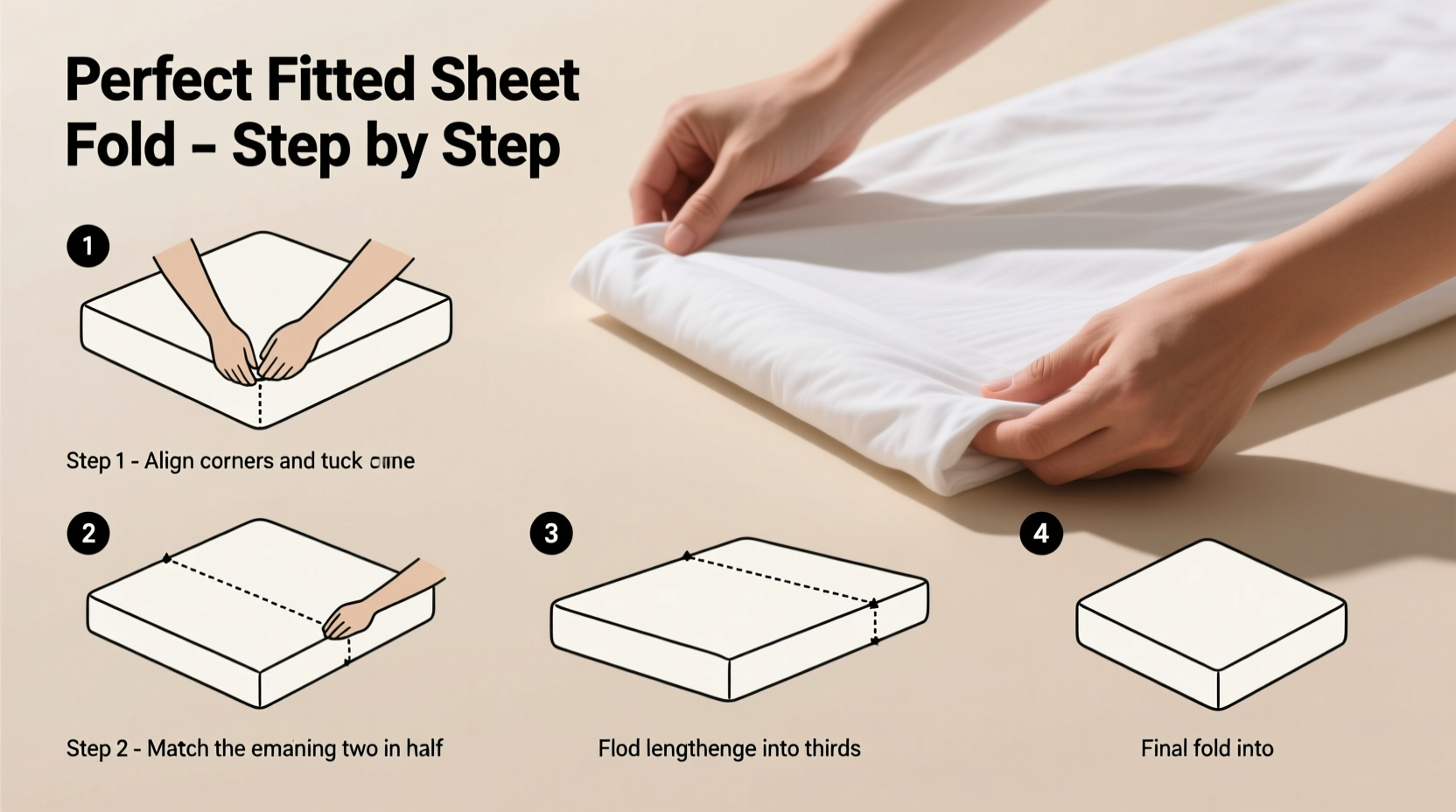
Fitted sheets resist neat folding because of their shape. The elasticized corners create three-dimensional structure, which collapses into a messy heap when folded haphazardly. Most people either ball them up or attempt a rough fold, leading to:
- Wrinkled linens that require ironing before use
- Inefficient use of storage space
- Damaged elasticity from constant tugging and twisting
- Discouragement from maintaining an organized linen closet
The solution lies not in avoiding the task but in mastering a reliable method. Once learned, the proper folding technique takes less than two minutes and becomes second nature with practice.
Step-by-Step Guide to Folding a Fitted Sheet Perfectly
The key to success is working with the corners systematically and keeping the fabric aligned at each stage. Follow these steps carefully for consistent results.
- Hold the sheet inside out – Start by turning the fitted sheet so the elastic edges face outward. This makes it easier to align the corners without catching on seams or tags.
- Identify the top two corners – Take the sheet in both hands, grasping one corner in each hand. These should be adjacent corners along the same short edge (typically the head of the bed). Tuck your hands inside the corners, bringing thumbs and fingers through the openings as if putting on mittens.
- Join the first two corners – With both corners on your hands, flip one wrist over so the two corners are now nested together, right sides touching. Pinch them between your fingers to keep them secured.
- Locate the bottom two corners – Turn the sheet around and locate the remaining two corners at the foot end. Again, insert one hand into each corner.
- Bring all four corners together – While holding the bottom corners, bring them up and over the top corners you’ve already pinned together. Nest all four corners in one hand, ensuring the right sides of the fabric remain facing inward. At this point, the sheet should resemble a loose bundle with all elastic edges contained.
- Turn the sheet right side out – Carefully flip the entire bundle so the printed or smooth side of the sheet is now visible. Hold the bundle in one hand and gently pull the fabric over the corners, like pulling a sock off inside out. You’ll now see a rectangular shape forming.
- Lay flat and smooth – Place the sheet on a clean, flat surface such as a bed or table. Smooth out any wrinkles with your palms, ensuring the edges are straight and the fabric is evenly distributed.
- Fold lengthwise – Fold one long edge toward the center, about a third of the way across. Repeat with the opposite edge, creating a long rectangle. If the sheet is oversized, you may need to fold it again at this stage.
- Fold crosswise into a square – Starting from one short end, fold the sheet in thirds or quarters, depending on your desired size. Aim for a compact, uniform shape that matches your other linens.
- Store immediately – Slide the folded sheet into your linen closet or drawer. For best results, store it with its matching flat sheet and pillowcases to keep sets together.
Common Mistakes to Avoid
Even with instructions, many people fall into familiar traps that prevent a clean fold. Being aware of these pitfalls increases your chances of success.
| Mistake | Why It’s a Problem | Better Approach |
|---|---|---|
| Folding while still damp | Leads to mildew, odors, and permanent creases | Ensure complete dryness before folding |
| Skipping the inside-out step | Corners twist and misalign, causing bulk | Always start with elastic side out |
| Rushing the smoothing phase | Wrinkles become embedded, affecting final shape | Take time to lay flat and press out folds |
| Not matching sheet sets | Leaves you hunting for pairs during changeovers | Store fitted, flat, and pillowcases together |
| Folding too loosely | Results in bulky, unstable bundles | Aim for tight, crisp folds for longevity |
Expert Insight: Why Proper Folding Matters
It's easy to dismiss sheet folding as a trivial chore, but textile care specialists emphasize its long-term impact.
“Proper folding isn’t just about appearance—it preserves fabric integrity. Neatly folded sheets experience less abrasion, maintain elasticity longer, and resist pilling. Think of it as preventive maintenance for your bedding.” — Dr. Lydia Chen, Textile Preservation Consultant, Home Fabric Institute
Dr. Chen notes that repeated crumpling causes micro-tears in cotton fibers and weakens elastic stitching over time. By contrast, consistent, careful folding extends the usable life of high-thread-count linens by up to 40%, especially for premium materials like Egyptian cotton or sateen weaves.
Real-Life Example: From Chaos to Calm
Sarah M., a mother of three in Portland, Oregon, used to stuff her linen closet with balled-up sheets. “I’d spend ten minutes every Sunday trying to match sets,” she recalls. “Half the time, I’d give up and just buy new ones.”
After watching a tutorial based on this method, she practiced twice and got it right on the third try. “Now I teach my kids how to do it. We even have a ‘sheet folding night’ after laundry. Our closet looks like a boutique display—and I haven’t lost a single set since.”
Her linen storage improved so much that she repurposed the extra space for seasonal blankets and guest towels. “It’s amazing how one small habit changed everything.”
Checklist: Perfect Fitted Sheet Folding Routine
Use this checklist every time you fold a fitted sheet to ensure consistency:
- ✅ Dry the sheet completely on low heat
- ✅ Lay it on a flat surface (bed or table)
- ✅ Turn elastic edges outward
- ✅ Match top two corners using hand-inside method
- ✅ Secure top corners, then locate bottom two
- ✅ Bring all four corners together in one hand
- ✅ Flip right side out smoothly
- ✅ Flatten and remove wrinkles with hands
- ✅ Fold lengthwise into a narrow strip
- ✅ Fold crosswise into a compact rectangle
- ✅ Store with matching flat sheet and pillowcases
Frequently Asked Questions
Can I fold a fitted sheet without turning it inside out?
You can, but it’s significantly harder. Turning the sheet inside out gives you better control over the corners and reduces twisting. Skipping this step often leads to lopsided folds and trapped air pockets.
What if my sheet is extra deep or has thick elastic?
Deep-pocket sheets follow the same principle. The only difference is that you may need to adjust your grip slightly deeper into the corner. Use both hands to compress the elastic before folding to reduce bulk. Some users find rubber gloves helpful for gripping stubborn corners.
How should I store folded fitted sheets for long-term?
Store in a cool, dry place away from direct sunlight. Avoid plastic bins, which trap moisture; instead, use breathable cotton storage bags or open shelves. Cedar blocks nearby help deter moths without drying out natural fibers.
Mastering the Habit for Lasting Results
The ability to fold a fitted sheet perfectly isn’t a magical talent—it’s a learnable skill. Like tying a tie or packing a suitcase efficiently, it requires initial focus but soon becomes automatic. The benefits compound over time: less clutter, preserved fabric quality, and a sense of order in your home.
Don’t expect perfection on the first try. Many people need three to five attempts to internalize the muscle memory. Keep practicing. Consider posting the steps on your laundry room wall or saving this guide on your phone for quick reference.
Once mastered, this technique can be taught to family members, roommates, or even young children. It’s a small act of household mastery that ripples outward, improving daily routines and reducing friction in one of life’s recurring tasks.
“The most satisfying folds aren’t just about neatness—they’re about intention. When you care for your belongings deliberately, you elevate everyday living.” — Marcus Reed, Author of *The Art of Domestic Order*
Final Thoughts and Call to Action
Folding a fitted sheet perfectly isn’t about achieving Instagram-worthy linen closets (though that’s a nice bonus). It’s about taking control of the little things that add up to a more functional, peaceful home. Every time you fold with precision, you invest in longevity, efficiency, and personal satisfaction.
Pick up your next clean fitted sheet and try the method today. Practice once, then again. Share the technique with someone who’s struggled with it for years. You might just change their laundry experience forever.




 浙公网安备
33010002000092号
浙公网安备
33010002000092号 浙B2-20120091-4
Comments
No comments yet. Why don't you start the discussion?