
Displaying delicate porcelain ornaments is an art form in itself. These pieces—often heirlooms or carefully collected treasures—demand presentation that honors their craftsmanship without distracting from their beauty. Yet one persistent challenge remains: how to suspend them securely while avoiding the visual clutter of hooks, strings, or unsightly shadows on walls. Traditional hanging methods often compromise aesthetics with visible fasteners or cast long shadows under indoor lighting, detracting from the elegance of the piece.
The solution lies not in hiding flaws, but in rethinking how we interact with space, light, and mounting systems. With thoughtful technique and modern materials, it’s entirely possible to achieve a \"floating\" effect—where the ornament appears to hover effortlessly, supported by nothing at all. This guide explores practical, tested strategies for hanging porcelain décor invisibly, preserving both safety and visual purity.
Selecting the Right Mounting Method
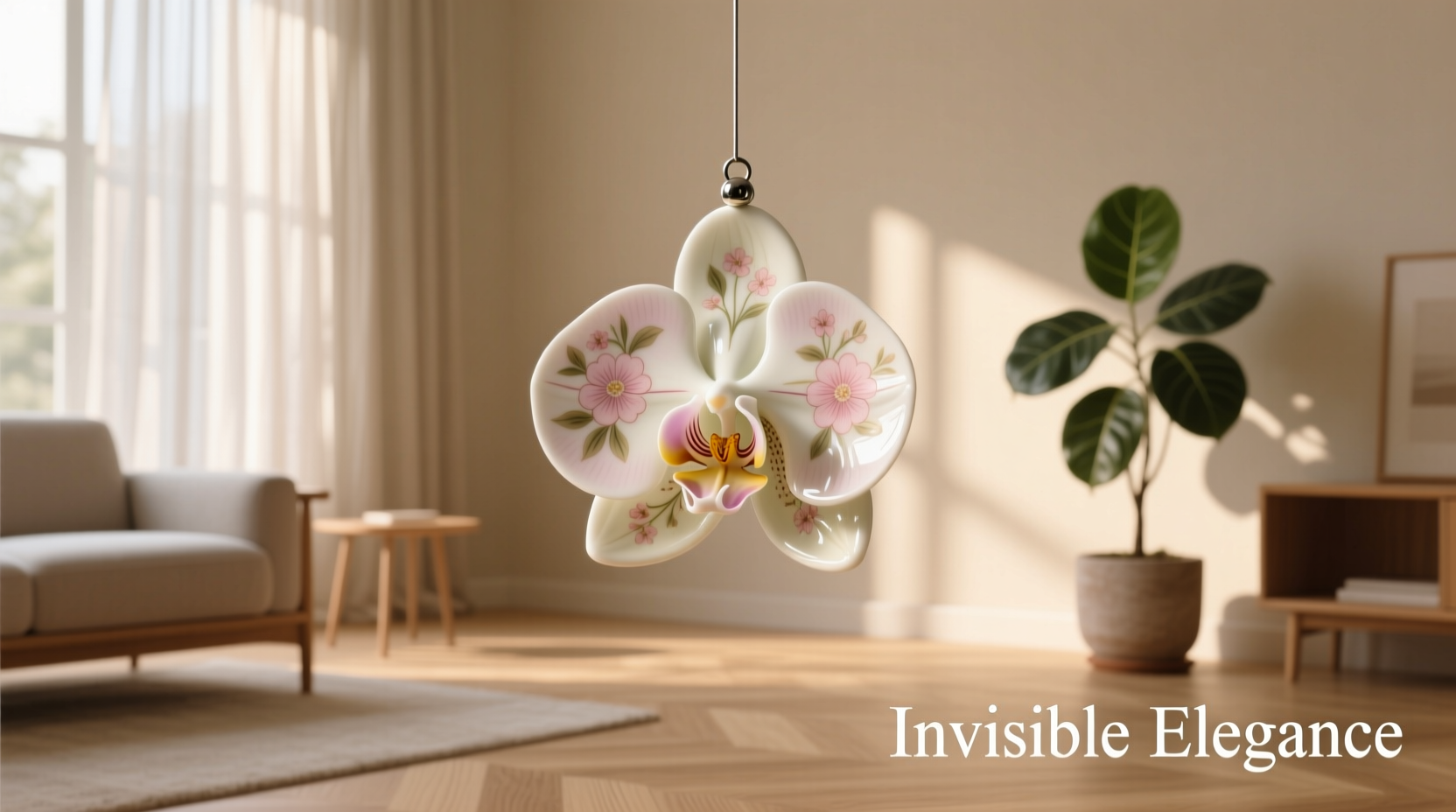
Not all porcelain ornaments are created equal. Some come with built-in loops or hanging points; others are solid and require external support. The first step is assessing whether your piece has any existing structural features suitable for discreet mounting.
If there's a small hole, loop, or recessed area—common in vintage Christmas ornaments or hand-painted figurines—you can use ultra-thin monofilament line (fishing wire) anchored through a nearly invisible wall point. For solid-backed items like plaques or flat-backed statuettes, consider adhesive-based solutions or magnetic suspension if the surface allows.
The goal is to transfer weight away from fragile edges and distribute it across stable zones. Never rely solely on glue applied to thin protrusions unless reinforced mechanically.
Invisible Hanging Techniques That Work
Several advanced methods allow for near-invisible suspension. Each has ideal applications depending on ornament size, weight, and display environment.
1. Monofilament Suspension with Recessed Anchors
Clear fishing line (preferably 8–12 lb test) is virtually undetectable under most indoor lighting. Thread it through a pre-existing hole or loop in the ornament. On the wall side, attach the line to a small brass eye screw set into a stud or secured with a wall anchor. Position the anchor slightly above eye level so the line runs diagonally upward out of direct sightline.
To eliminate shadow interference, ensure lighting comes from multiple angles—avoid single-source spotlights directly behind the ornament. Use diffused ambient light instead.
2. Magnetic Floating Systems
For heavier porcelain items such as decorative plates or busts, rare-earth magnets offer a bold yet invisible solution. Attach one magnet to the back of the ornament using acid-free, removable adhesive putty (like Museum Wax or Blu Tack), and pair it with a matching magnet mounted flush to the wall. When aligned, they create a secure hold without screws piercing the front surface.
This method works best when the wall is made of ferromagnetic material or when a steel plate is embedded behind drywall. Alternatively, use double-sided magnetic hangers designed for glass or tile installations.
“Magnetic mounting has revolutionized how museums handle fragile ceramics. What was once reserved for galleries is now accessible to homeowners.” — Dr. Lena Petrov, Conservator at the National Decorative Arts Institute
3. Transparent Acrylic Brackets
Specially molded acrylic shelves or L-brackets can be painted to match wall color or left clear for minimal visibility. Place these beneath low-center-of-gravity ornaments like cup-and-saucer displays or seated figurines. Because they bear weight from below rather than suspending from above, no overhead string is needed.
Ensure brackets are rated for the item’s weight and secured into wall studs. Even transparent supports must be structurally sound.
Step-by-Step Guide: Installing a Shadow-Free Porcelain Ornament
Follow this sequence to mount a typical hanging porcelain ornament—such as a bell, angel, or snowflake—without visible hardware or shadows.
- Evaluate the ornament: Check for holes, loops, or flat surfaces. Confirm total weight does not exceed 8 ounces (225 grams) for lightweight methods.
- Choose mounting location: Pick a wall section with balanced lighting. Avoid placing directly opposite windows or track lights that will cast sharp shadows.
- Install wall anchor discreetly: Drill a pilot hole just above the desired height. Insert a plastic anchor and screw in a tiny brass hook or eyelet. Paint the exposed portion to blend with the wall if necessary.
- Cut and thread monofilament: Use clear 10-lb test fishing line. Cut 6 inches longer than needed. Knot one end through the ornament’s loop or hole, reinforcing with a drop of reversible conservation adhesive (e.g., Paraloid B-72).
- Attach and adjust: Tie the other end to the wall hook. Gently lift the ornament into position. Adjust line length until it hangs perfectly level.
- Test stability: Lightly nudge the piece to simulate air currents. If it swings excessively, shorten the line or add a secondary stabilizing thread at a slight angle.
- Control lighting: Install indirect LED strips above or beside the display zone. Use warm-white bulbs (2700K–3000K) to reduce contrast and soften potential shadows.
Do’s and Don’ts: Best Practices Summary
| Do | Don’t |
|---|---|
| Use UV-stable monofilament to prevent yellowing over time | Use cotton thread or yarn—they stretch, fray, and show easily |
| Anchor into wall studs or use proper drywall toggles | Rely on adhesive hooks alone for anything over 4 oz |
| Check mounts seasonally for wear or loosening | Leave ornaments near vents, radiators, or humidifiers |
| Use museum-grade adhesives for temporary bonding | Apply superglue or hot glue directly to porcelain |
| Diffuse light sources to minimize shadows | Illuminate from directly behind the ornament |
Real Example: A Collector’s Solution for a Heirloom Figurine
Martha K., a collector from Vermont, inherited a 19th-century Sèvres-style porcelain shepherdess figurine standing 10 inches tall. It had no hanging mechanism, only a flat base and delicate raised details. She wanted to display it on her living room wall without traditional shelving.
Her solution combined two methods: she attached a small neodymium disc magnet to the back using archival wax, then mounted a matching magnet on a painted steel plate fixed securely to a stud. The steel plate was covered with wallpaper matching the wall texture, rendering it invisible. From any viewing angle, the figurine appeared to float freely. She installed soft LED cove lighting above the display, eliminating harsh shadows.
Two years later, the mount remains secure, and the piece has become a conversation starter—precisely because guests ask, “How is it staying up?”
Checklist: Preparing Your Space for Invisible Display
- ☐ Measure the ornament’s dimensions and weight accurately
- ☐ Identify suitable wall type (drywall, plaster, tile, etc.)
- ☐ Locate studs or plan for toggle anchors
- ☐ Choose appropriate mounting method based on structure and design
- ☐ Gather tools: level, drill, fishing line/magnets/brackets, anchor kit
- ☐ Assess room lighting and adjust fixtures if needed
- ☐ Perform final inspection after installation for balance and safety
Frequently Asked Questions
Can I hang porcelain ornaments on drywall without seeing the hardware?
Yes, provided you use proper anchoring. Standard drywall cannot support weight on its own, but with toggle bolts or snap toggles, you can securely mount anchors that remain nearly invisible once covered or positioned strategically. Pair this with clear monofilament or magnetic systems to keep everything out of sight.
Will fishing line damage my porcelain over time?
High-quality monofilament won’t degrade porcelain, but friction or constant tension on a sharp edge might cause micro-abrasions. Always pad contact points with a tiny piece of silicone tubing or wrap the line around a soft loop if available. Avoid tying knots directly against fragile surfaces.
Are there temperature or humidity concerns with these methods?
Absolutely. Porcelain expands and contracts slightly with temperature shifts, and high humidity can weaken certain adhesives. Avoid bathrooms or kitchens unless climate-controlled. Museum wax performs well in stable environments but should be checked annually. Never install near exterior doors or heating units.
Final Considerations for Long-Term Display
Invisibility should never come at the cost of safety. While the desire for a clean, minimalist look is understandable, compromising structural integrity risks irreplaceable loss. Always prioritize secure attachment—even if it means accepting a barely perceptible thread.
Consider consulting a professional picture-hanging service for high-value items. Many offer museum-level mounting using techniques adapted from gallery standards, including tension cables, hidden cleats, and custom cradles—all engineered to vanish visually while providing maximum protection.
Also remember that perception plays a role. In well-lit, thoughtfully composed spaces, minor hardware becomes irrelevant. The human eye focuses on form and color first. A skillfully arranged display draws attention to the artistry of the porcelain, not the means of suspension.
Conclusion
Hanging delicate porcelain ornaments without visible hooks or string shadows is not magic—it’s meticulous planning paired with the right materials. Whether you choose monofilament lines, magnetic levitation, or custom brackets, the key is balancing aesthetics with engineering precision. By understanding your space, your ornament, and the physics of display, you can achieve that elusive floating effect where craftsmanship takes center stage and mounting vanishes from view.




 浙公网安备
33010002000092号
浙公网安备
33010002000092号 浙B2-20120091-4
Comments
No comments yet. Why don't you start the discussion?