
Every year, thousands of homeowners invest time and care into crafting beautiful outdoor holiday displays—wreaths on doors, garlands along railings, and intricate light patterns across lawns and walkways. Yet one persistent challenge undermines both aesthetics and safety: exposed extension cords and light strings running across driveways, patios, and entry paths. These cords create visual clutter, trip hazards, and potential points of moisture intrusion or physical damage. Worse, improper concealment can violate electrical codes, void warranties, or lead to overheating—especially when cords are bundled, covered with non-ventilated materials, or run under heavy foot or vehicle traffic.
Hiding cords isn’t about camouflage alone; it’s about integrating function, safety, and durability into your display design. The most effective solutions don’t just mask wires—they protect them, manage heat dissipation, allow for seasonal reuse, and withstand weather, wear, and footfall without compromising visibility or accessibility. This guide distills field-tested practices used by professional lighting installers, municipal holiday coordinators, and experienced DIY decorators. Every recommendation meets UL 817 (cord set) and NEC Article 400 standards—and prioritizes what matters most: keeping people safe while preserving the magic of the season.
Why “Just Taping It Down” Is Riskier Than You Think
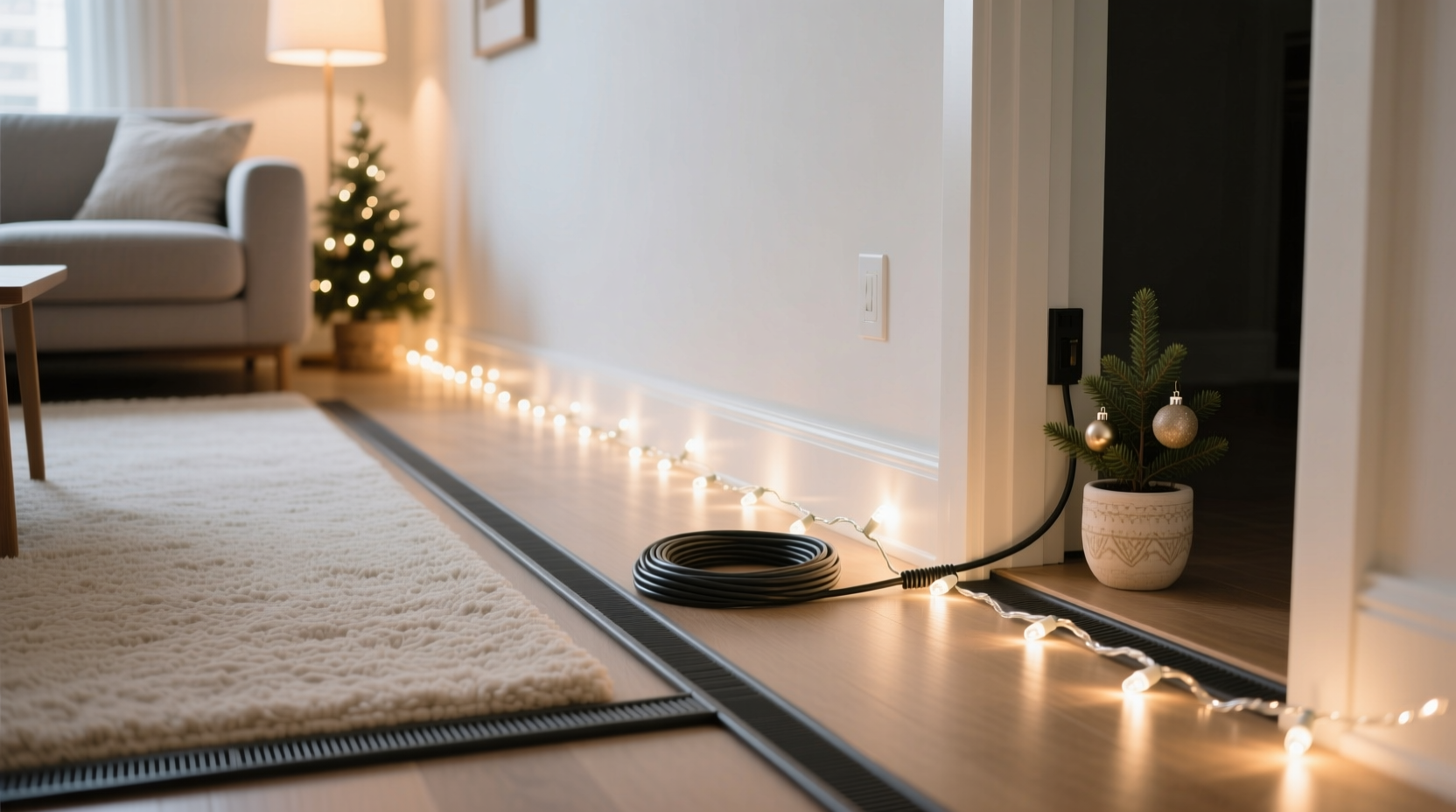
Many homeowners resort to duct tape, masking tape, or even staples to secure and flatten cords against pavement or grass. While this appears quick and tidy, it introduces three critical risks:
- Thermal buildup: Tape traps heat generated by current flow—especially with older incandescent lights or overloaded circuits. Temperatures inside taped bundles can exceed 60°C (140°F), degrading insulation over time and increasing fire risk.
- Moisture entrapment: Adhesives lose grip in rain or frost, causing cords to lift and pool water underneath. That moisture accelerates corrosion at plug connections and invites mold growth in porous substrates like mulch or wood chips.
- Tripping and abrasion: Tape peels unevenly, creating raised edges that catch shoes and pet paws. Repeated foot traffic wears through tape backing, exposing bare cord jackets to gravel, salt, and UV exposure—leading to cracks and exposed conductors within weeks.
According to the Electrical Safety Foundation International (ESFI), over 3,000 home fires annually are linked to decorative lighting—nearly 40% involve improper cord placement or damage during installation. As licensed electrician and holiday lighting consultant Marcus Bell explains:
“Cords aren’t meant to be permanent fixtures on walkways. If you wouldn’t leave a power strip on your porch floor year-round, don’t treat a 50-foot extension cord as disposable decor. Every hidden cord must remain accessible, ventilated, and mechanically protected.” — Marcus Bell, Founder of LuminaSafe Lighting Co., 18 years’ residential & commercial holiday installations
Five Proven Cord-Hiding Methods—Ranked by Safety, Durability, and Ease
The following methods are evaluated using three criteria: electrical safety compliance, seasonal reusability, and installation time per 25 linear feet. All assume standard 16 AWG or 14 AWG outdoor-rated extension cords (UL-listed, SJTW or SJOOW jacket), not indoor lamp cord.
| Method | Safety Rating (1–5) | Reusability | Time to Install (25 ft) | Best For |
|---|---|---|---|---|
| Heavy-duty rubber cord covers (with built-in channels) | 5 | Excellent (5+ seasons) | 12–18 minutes | Driveways, high-traffic walkways, commercial properties |
| Buried PVC conduit (shallow trench, 2–3 in depth) | 5 | Exceptional (10+ years) | 90–120 minutes | Permanent displays, front-yard borders, pathways with frequent foot traffic |
| Decorative landscape edging with integrated cord channel | 4.5 | Very Good (4–6 seasons) | 25–35 minutes | Gravel paths, garden beds, low-traffic patios |
| Camouflage with natural mulch + rigid PVC tubing (cut lengthwise) | 4 | Fair (2–3 seasons) | 40–55 minutes | Wooded yards, shaded porches, rustic-themed displays |
| Adhesive-backed cord raceway (indoor/outdoor rated) | 3.5 | Poor (1 season, max) | 8–12 minutes | Temporary indoor-to-outdoor transitions, rental properties, balconies |
Notably absent: garden hoses, PVC pipes filled with sand, zip-tied bundles under rugs, or DIY “cord tunnels” made from cut pool noodles. These lack UL certification, restrict airflow, and fail under freeze-thaw cycles or UV exposure. Stick to purpose-built, listed products—or verified construction-grade alternatives.
Step-by-Step: Installing Rubber Cord Covers for Maximum Protection
Rubber cord covers—also called “safety ramp covers” or “traffic-rated cord protectors”—are the gold standard for temporary, high-visibility areas. Made from vulcanized rubber or thermoplastic elastomer (TPE), they feature molded internal channels, non-slip treads, and reinforced ends to prevent lifting. Here’s how to install them correctly:
- Measure and plan the route: Use chalk or spray paint to mark the exact path where cords will run. Avoid sharp bends—maintain a minimum 4-inch radius at turns to prevent kinking and internal wire stress.
- Test cord load first: Plug in all connected lights *before* covering. Use a clamp meter or outlet tester to confirm voltage drop stays under 3% (e.g., ≤3.6V on a 120V circuit). If drop exceeds this, reduce load or upgrade to 14 AWG cord.
- Position and align: Lay the cover flat, ensuring the center seam runs parallel to foot traffic. Place end caps first—these anchor the unit and prevent tripping at entry/exit points. Do not overlap covers; gaps between units create snag hazards.
- Secure with ground stakes (not nails): Use galvanized steel U-stakes (6 inches long) driven at 45° angles into soil at each end and midpoint. Nails corrode, loosen, and puncture cord jackets.
- Final inspection: Walk the full length wearing smooth-soled shoes. There should be zero detectable flex, lift, or “give” under pressure. Test with a stroller or wheelchair if applicable.
Real-World Example: The Maple Street Neighborhood Display
In Portland, Oregon, the Maple Street Homeowners Association coordinates an annual neighborhood light tour attracting over 1,200 visitors. In 2021, they reported five near-miss tripping incidents and two damaged cords due to improvised concealment—mostly duct tape and buried garden hoses. For 2022, they partnered with a local electrical contractor to implement a standardized system: 14 AWG SJTW cords routed through 2-inch Schedule 40 PVC conduit, buried 3 inches deep along paved sidewalks and curbs. Conduit ends were fitted with waterproof LB fittings and GFCI-protected outlets mounted in weatherproof boxes.
The result? Zero incidents across 47 homes over six weeks. Maintenance time dropped 60% because crews no longer needed to replace torn tape or reposition slipped hoses daily. Most importantly, the city’s building department confirmed full compliance with Oregon Electrical Specialty Code (OESC) 520.42 for temporary festive wiring. As association president Lena Ruiz observed: “We stopped thinking of cords as ‘something to hide’ and started treating them like infrastructure—because that’s exactly what they are.”
Do’s and Don’ts: A Critical Safety Checklist
Before installing any cord-hiding solution, verify each item below. Checkmarks indicate mandatory compliance—not suggestions.
- ✅ Use only outdoor-rated cords (look for “SJTW”, “SJOOW”, or “W” suffix on jacket; avoid “SPT-1” or “SVT”).
- ✅ Never exceed 80% of cord’s rated amperage (e.g., max 12A on a 15A-rated cord).
- ✅ Install GFCI protection at the first outlet—either via GFCI breaker or receptacle. Test monthly.
- ✅ Maintain 12-inch vertical clearance above ground for any cord segment crossing grass or mulch (prevents rodent chewing and moisture wicking).
- ✅ Label every cord end with waterproof tape: “Front Porch – 2024”, “Garage Outlet – 15A”, etc.
- ❌ Don’t bury cords directly in soil—even with tape or plastic wrap. Soil acidity and moisture degrade insulation rapidly.
- ❌ Don’t run cords under carpets, rugs, or artificial turf. Trapped heat + static friction = fire hazard.
- ❌ Don’t use indoor-rated raceways outdoors—even if labeled “weather resistant.” They lack UV stabilizers and crack within weeks.
- ❌ Don’t splice cords in the field. Replace damaged sections entirely; never use wire nuts or tape repairs outside junction boxes.
- ❌ Don’t ignore manufacturer spacing guidelines. For example, some rubber cord covers specify “max 2 cords per 2-inch channel” to ensure airflow.
FAQ: Addressing Common Concerns
Can I use PVC pipe instead of expensive cord covers?
Yes—but only if installed correctly. Use Schedule 40 PVC (not plumbing DWV pipe), bury it 2–3 inches deep, and slope it slightly (¼ inch per foot) to shed water. Cap both ends with waterproof conduit bodies and seal joints with PVC cement. Never force cords into undersized pipe; fill ratio must stay under 40% to allow heat dissipation. This method works best for straight runs—not tight corners or high-traffic zones.
What’s the safest way to cross a driveway?
A driveway-rated rubber cord cover is the only UL-listed solution for vehicular crossings. Look for models rated for 10,000+ lbs (Class I or II duty). Install perpendicular to traffic flow, stake all four corners, and inspect weekly for cracking or shifting. Do not use bricks, wood blocks, or stacked pavers—they shift, crack tires, and provide zero electrical protection.
How do I hide cords on a deck or patio without drilling?
Use adhesive-backed aluminum cord raceways rated for outdoor use (e.g., Wiremold® Outdoor Series). Clean the surface with isopropyl alcohol first, apply firm pressure for 60 seconds per section, and avoid placing over expansion joints. Pair with color-matched caulk to seal edges against moisture. Limit runs to 15 feet per section and never cover more than two 16 AWG cords per channel.
Conclusion: Safety Is the First Decoration
Beautiful holiday lighting begins with intention—not improvisation. When you take the time to conceal cords thoughtfully, you’re not just tidying up a detail; you’re honoring the people who’ll walk past your home—the children chasing snowflakes, elders carrying groceries, delivery drivers with full hands, and neighbors pausing to smile at your cheer. Each properly secured cord is a quiet act of care. Each ventilated channel, each grounded connection, each inspected stake says: *This joy is shared, and everyone’s safety matters.*
You don’t need a contractor’s license or a warehouse budget to get it right. Start small: replace one taped cord this weekend with a $25 rubber cover. Measure your walkway, buy the right gauge cord, and test GFCI operation before hanging a single bulb. Then share what worked. Post your setup in community forums. Tag your HOA. Ask your local hardware store which cord covers their electricians recommend. Because the best traditions aren’t just lit—they’re built to last, built to protect, and built together.




 浙公网安备
33010002000092号
浙公网安备
33010002000092号 浙B2-20120091-4
Comments
No comments yet. Why don't you start the discussion?