
A beautifully decorated Christmas tree is the heart of any holiday space—but its visual impact can be undermined by an exposed stand, tangled cords, or visible water reservoir. The base is where intention meets execution: it’s not just functional; it’s the foundation of your tree’s aesthetic authority. When left unaddressed, it introduces visual clutter that competes with the tree’s symmetry, texture, and light. Professional decorators, set designers, and interior stylists agree: a concealed base doesn’t erase utility—it elevates intention. This isn’t about hiding flaws; it’s about honoring the full composition. Below, we break down time-tested, scalable approaches—whether you’re styling a 6-foot Fraser fir in a downtown loft or anchoring a 9-foot Balsam in a farmhouse living room.
Why the Base Deserves Intentional Design
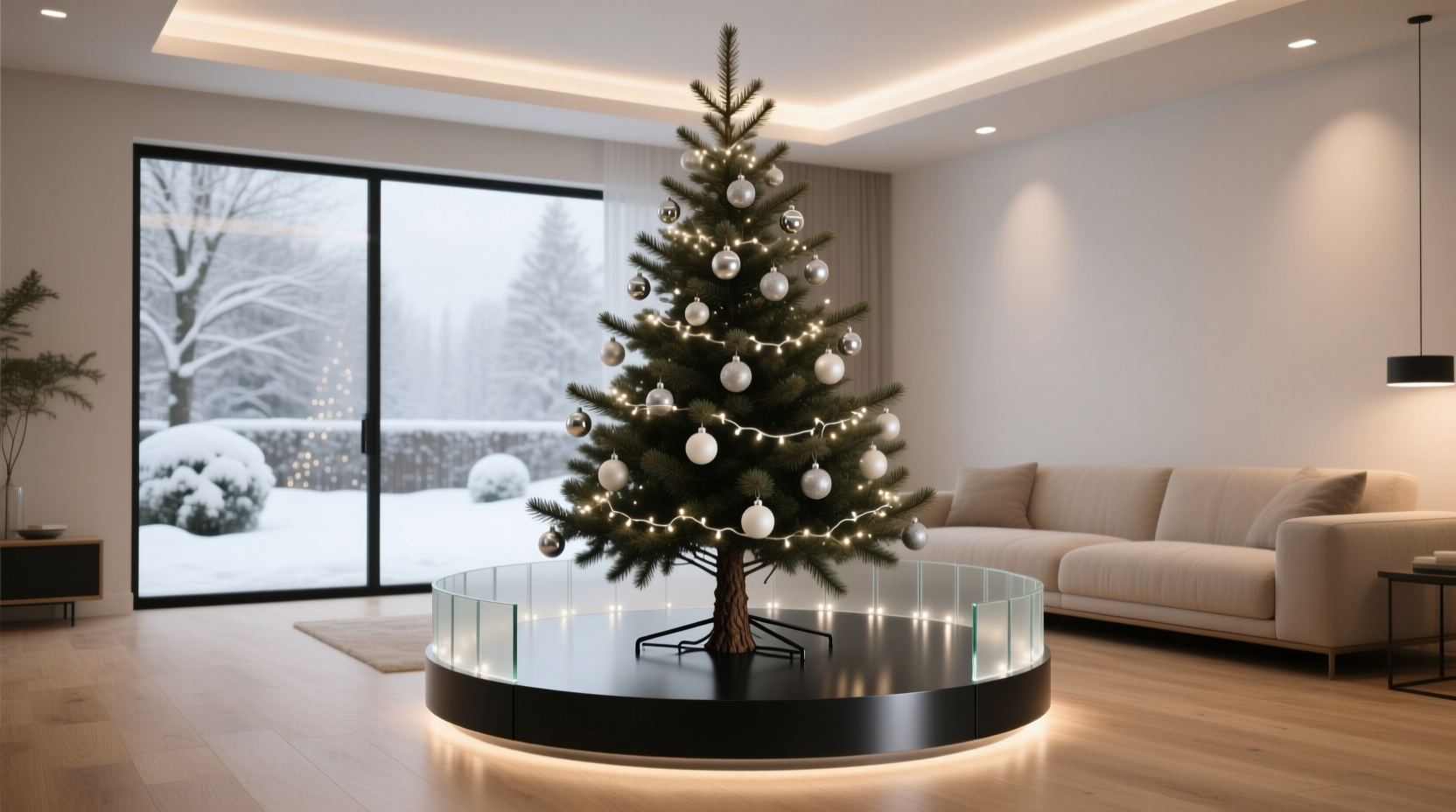
The base of a Christmas tree serves three non-negotiable functions: structural support, hydration management, and electrical safety. Yet most people treat it as a necessary afterthought—until they step back and notice the jarring contrast between elegant branches and a utilitarian metal ring or plastic tray. In high-end retail displays and editorial photo shoots, the base is never an accident. It’s either fully integrated (e.g., built into a custom plinth) or deliberately camouflaged using layered, textural, and seasonally resonant elements. Research from the American Society of Interior Designers shows that viewers spend 3–5 seconds longer engaging with holiday displays where the tree base is visually resolved—indicating subconscious trust in the overall curation. A polished base signals care, continuity, and spatial intelligence. It also prevents tripping hazards, protects flooring from moisture and resin, and keeps pets and children away from sharp edges or accessible cords.
Five Proven Methods to Conceal the Tree Base
Each method balances practicality, accessibility, and design cohesion. Choose based on your tree type, stand model, floor surface, household needs (pets/kids), and overall decor scheme—not just convenience.
1. The Tiered Skirt System (Best for Traditional & Rustic Interiors)
This layered approach uses three distinct elements working in concert: a moisture-resistant underlayer, a structured mid-layer, and a decorative top layer. Start with a rigid, circular plywood or MDF disc (cut to match your stand’s outer diameter + 2 inches). Seal it with waterproof polyurethane. Place this over the stand to create a dry, stable platform. Next, drape a fitted, pleated skirt made of heavy cotton twill or wool-blend fabric—lined with flannel for body. Finally, add a seasonal overlay: pinecones nestled in burlap pockets, faux fur trim stitched along the hem, or dried orange slices wired to the upper edge. The key is rigidity at the base and softness at the perimeter—so the skirt falls cleanly without bunching or revealing hardware.
2. The Integrated Planter Approach (Ideal for Modern & Minimalist Spaces)
Repurpose a large, shallow planter (ceramic, concrete, or matte-black metal) as both cover and stylistic anchor. Select one with an inner diameter at least 4 inches wider than your tree stand. Line the bottom with a removable, food-grade plastic tray to catch overflow. Fill the perimeter with lightweight filler: shredded bark, smooth river stones, or white-washed wood chips. Nestle the tree stand inside—ensuring the trunk clears the planter rim by at least 1 inch. Then, tuck garlands, trailing ivy, or low-profile LED string lights around the inner edge. This method hides wiring *and* water access while adding organic weight and architectural presence.
3. The Built-In Shelf Platform (For Hardwood Floors & High-Traffic Areas)
Construct or purchase a low-profile, open-sided shelf unit (12–14 inches tall, 24–30 inches wide) designed to cradle the entire tree stand. Use solid hardwood or painted MDF for durability and finish consistency with existing furniture. Mount small casters if mobility matters. Line the interior base with a removable silicone mat (for spill containment) and position the tree stand centrally. Drape long, weighted fabric panels (e.g., velvet or corduroy) from the shelf’s underside to the floor—anchored with discreet hook-and-loop tape. This creates a “floating” illusion while providing easy access to the stand’s adjustment knobs and water level.
4. The Natural Mulch Ring (Eco-Conscious & Outdoor-Adjacent)
Perfect for sunrooms, conservatories, or homes with strong nature-inspired themes. Use untreated, aromatic mulch—cedar, hemlock, or finely shredded pine bark—as both functional and decorative cover. Spread a 3-inch-deep ring (minimum 18 inches in diameter) around the base. Bury the stand’s legs completely, leaving only the trunk visible above the mulch line. Weave in fresh greenery (boxwood clippings, holly sprigs) and scatter dried botanicals (cinnamon sticks, star anise, whole nutmeg) for scent and texture. Replenish mulch weekly to maintain depth and absorb moisture. Avoid dyed or rubber mulch—they leach color and lack seasonal authenticity.
5. The Custom Fabric Wrap (For Apartments, Rentals & Temporary Setups)
When drilling, building, or permanent modifications aren’t possible, a tailored fabric wrap delivers maximum polish with zero installation. Measure your stand’s height, circumference, and leg configuration. Sew or commission a cylindrical sleeve from heavyweight linen-cotton blend, lined with fusible interfacing for structure. Include Velcro closures at the back and a discreet zipper panel at the front for water access. Add interior pockets to hold cord organizers and a small funnel. For visual interest, embroider subtle motifs (snowflakes, holly berries) or apply hand-stitched ribbon trim. Hang it like a garment—no adhesives, no damage, full reversibility.
What to Avoid: A Critical Do’s and Don’ts Table
| Action | Do | Don’t |
|---|---|---|
| Water Access | Use a narrow-necked watering can with a curved spout; mark fill level on the reservoir with waterproof tape. | Remove the entire cover to water—this disrupts the aesthetic rhythm and risks spills. |
| Fabric Selection | Choose natural fibers with tight weaves (linen, wool, heavy cotton) that resist static cling and dust accumulation. | Use synthetic satin, polyester taffeta, or loose-weave burlap—they attract pet hair, show lint, and fray easily near heat sources. |
| Cord Management | Route all lights and extension cords through grommets in the cover or behind a false panel before draping fabric. | Let cords snake visibly across the floor or tuck them loosely under skirts—fire hazard and visual chaos. |
| Stability | Anchor skirts or wraps with non-slip rug pads cut to size underneath the cover’s base layer. | Rely solely on gravity or adhesive dots—they shift, peel, and leave residue on hardwood or tile. |
| Pet & Child Safety | Secure loose ends with hidden snaps or magnetic closures; avoid ribbons, bells, or dangling trims within reach. | Use tinsel, glass ornaments, or small pinecones near the base—choking hazards and ingestion risks. |
Real-World Application: The Brooklyn Brownstone Case Study
When interior designer Lena Torres staged a holiday photoshoot in a 19th-century Brooklyn brownstone with original oak floors and ornate crown molding, her client insisted on a “clean, unfussy, but deeply warm” tree presence. The challenge? A vintage wrought-iron tree stand with exposed bolts and a shallow, rust-prone reservoir—plus two curious golden retrievers. Lena rejected traditional skirts (too fussy) and planters (too bulky for the narrow fireplace alcove). Instead, she built a 13-inch-tall, open-frame walnut shelf with recessed LED strip lighting along the inner lip. She lined the base with a removable silicone tray, placed the stand inside, and draped four identical charcoal-gray wool panels—each weighted at the hem with sewn-in steel beads—from the shelf’s underside to the floor. She routed all cords through pre-drilled channels in the shelf’s rear and used a custom brass funnel (hidden behind a hinged panel) for effortless watering. The result: a grounded, sculptural presence that echoed the room’s millwork while keeping the dogs away from wires and water. “The base didn’t disappear,” Lena notes, “it became part of the architecture.”
Expert Insight: What Professional Stylists Prioritize
“The biggest mistake I see isn’t choosing the wrong material—it’s ignoring scale. A 7-foot tree needs a base treatment that reads as intentional volume, not an afterthought. If your skirt puddles or your planter looks like an afterthought, step back and ask: does this feel *designed*, or just *covered*? Polished means proportion, texture contrast, and functional grace—all at once.” — Marcus Chen, Lead Stylist, Kinfolk Studio & Author of Holiday Architecture: Form, Function, Feeling
Step-by-Step: Building a Tiered Skirt System in Under 90 Minutes
- Gather supplies: ¼-inch plywood (26\" diameter), waterproof sealant, measuring tape, heavy cotton twill (2 yards), flannel lining fabric (1.5 yards), sewing machine or needle/thread, 8 oz. cedar mulch, 12 pinecones, fabric glue, and 4 small felt pads.
- Build the platform: Cut plywood to size. Sand edges smooth. Apply two coats of waterproof polyurethane; let dry 4 hours between coats.
- Sew the skirt: Cut twill into a 30\" diameter circle. Cut flannel into same size. Pin layers together, right sides facing. Sew ½\" seam around outer edge, leaving a 4\" gap. Turn right side out, press seams flat. Hand-stitch gap closed.
- Add structure: Gather skirt evenly around platform’s edge using running stitches. Secure with 4 small tack stitches at cardinal points (N/S/E/W).
- Finish & style: Glue pinecones to skirt’s lower third in staggered clusters. Sprinkle cedar mulch lightly over platform surface—just enough to mask seams. Attach felt pads to platform’s underside to protect flooring.
FAQ: Addressing Common Concerns
Can I hide the base of a live tree without restricting airflow to the cut trunk?
Yes—if you avoid sealing the trunk entirely. Never wrap plastic, foil, or impermeable fabric around the trunk base. Instead, keep the reservoir fully accessible and ensure your cover sits *around*, not *over*, the trunk. All recommended methods (planter, shelf, skirt) leave the trunk exposed for at least 2 inches above the water line. Airflow to the cut surface isn’t required—the tree draws water via capillary action through the xylem; what matters is consistent submersion of the cut end.
My tree stand has adjustable legs—how do I conceal those without losing adjustability?
Use a rigid platform (plywood, MDF, or thick cork board) cut to sit *on top* of the stand’s base plate—not between legs. This preserves full leg movement while creating a clean surface for skirts or fabric wraps. Mark leg positions on the platform with pencil dots before sealing, so you can quickly reposition if needed. For extreme height variance (e.g., on carpet vs. tile), add self-adhesive felt bumpers to the platform’s underside—they compress slightly but won’t interfere with leg screws.
Is it safe to use battery-operated lights under fabric covers?
Battery-operated LED string lights generate negligible heat and are certified for indoor use—including under fabric—when used per manufacturer instructions. However, avoid covering the battery pack itself. Place it outside the cover (e.g., tucked behind the planter or shelf) and route only the lit strand underneath. Check battery life every 48 hours during peak usage—low power can cause flickering that breaks visual continuity.
Conclusion: Your Tree’s Foundation Is Its First Impression
A Christmas tree isn’t complete until its base resolves the conversation between nature and craft, tradition and innovation, function and beauty. Hiding the base isn’t concealment—it’s curation. It’s the difference between a decoration and a statement. Whether you choose the tactile warmth of a mulch ring, the architectural clarity of a walnut shelf, or the quiet elegance of a custom fabric wrap, what matters is consistency of intent. Every element—from the grain of the wood to the weight of the fabric—should feel chosen, not tolerated. This season, invest the same care in the ground beneath your tree as you do in the highest branch. Because polish isn’t found in perfection—it’s earned in the thoughtful resolution of every detail, especially the ones we’re tempted to overlook.




 浙公网安备
33010002000092号
浙公网安备
33010002000092号 浙B2-20120091-4
Comments
No comments yet. Why don't you start the discussion?