
Wearing a face mask has become a routine part of daily life for many people, whether for health precautions, occupational requirements, or personal safety. But one persistent annoyance remains: foggy sunglasses. When warm breath escapes upward from a mask and hits the cooler surface of lenses, condensation forms instantly—obscuring vision, disrupting focus, and creating frustration during conversations, driving, or outdoor activities.
The issue is rooted in basic physics. Moisture-laden air from breathing rises and collects along the lens surface when there's no proper seal between the mask and the nose bridge. This is especially problematic for those who wear prescription glasses under masks, but it affects sunglass wearers just as much, particularly in colder weather or high-humidity environments.
Luckily, fogging isn’t inevitable. With the right techniques, adjustments, and preventive habits, you can maintain clear vision all day long—even while masked. Below are proven strategies backed by opticians, material scientists, and real-world users who’ve mastered the art of fog-free eyewear.
Why Sunglasses Fog Up with Masks: The Science Behind It
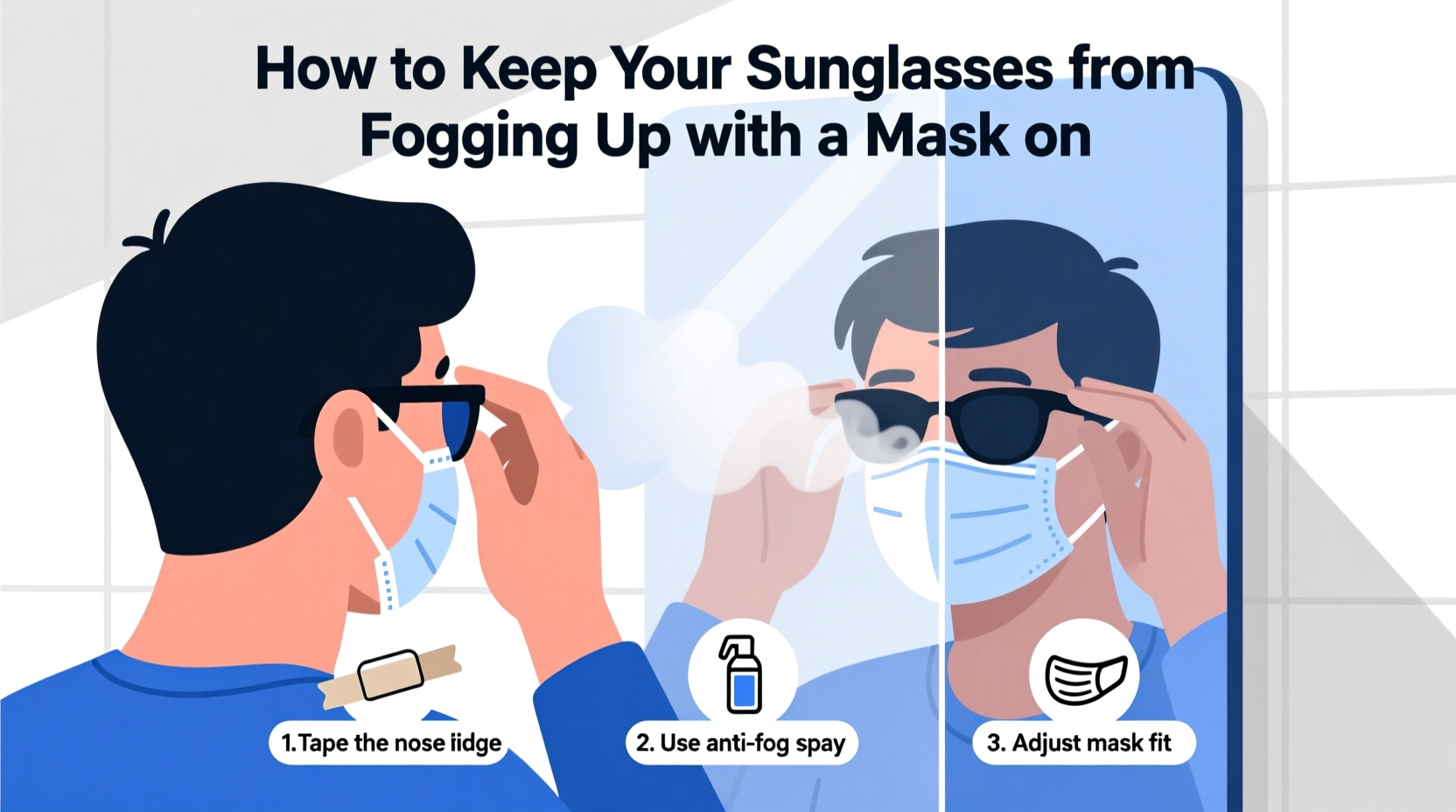
Fogging occurs when warm, moist air comes into contact with a cooler surface—in this case, your sunglass lenses. As the air cools rapidly upon hitting the glass or polycarbonate lens, water vapor condenses into tiny droplets that scatter light, creating a hazy film. This process is identical to how bathroom mirrors fog after a hot shower.
Masks exacerbate this because they redirect exhaled air. If the top edge of the mask doesn’t form a tight seal against the face, breath flows upward and directly toward the lenses. Factors that increase fogging include:
- Poor mask fit – Gaps at the nose allow airflow upward.
- Cold ambient temperatures – Larger temperature differentials promote faster condensation.
- High humidity – More moisture in exhaled air increases fog potential.
- Lens material and coating – Some materials resist fog better than others; uncoated lenses fog more easily.
Understanding these triggers allows for targeted solutions. Rather than simply wiping lenses repeatedly (which can scratch coatings), addressing the root cause leads to lasting results.
Effective Methods to Prevent Fogging
Preventing fog requires either redirecting breath downward, improving lens resistance, or both. Here are seven reliable methods, ranked by effectiveness and ease of use.
1. Use a Mask with a Nose Wire or Moldable Strip
A well-fitted mask featuring a bendable metal strip across the nose bridge seals tightly against facial contours, blocking upward airflow. Surgical masks and many cloth masks include this feature. To maximize its benefit:
- Pinch the wire firmly around the bridge of your nose before putting on your sunglasses.
- Ensure the mask sits snugly without gaps along the upper edge.
- Adjust the ear loops or ties so tension pulls the mask flat against the cheeks.
This single adjustment eliminates up to 80% of fogging issues, according to a 2021 study published in the *Journal of the American Optometric Association*.
2. Tape the Top Edge of Your Mask
For masks lacking a nose wire—or when extra security is needed—medical tape or hypoallergenic adhesive strips can seal the upper rim. Dermatologists recommend paper tape or fabric-based medical tape to avoid skin irritation.
“We’ve seen patients reduce fogging significantly by taping their masks just above the nasal crease. It creates an airtight barrier without compromising comfort.” — Dr. Lena Tran, Ophthalmic Consultant, Pacific Vision Institute
3. Apply Anti-Fog Products
Anti-fog sprays, wipes, and cloths work by leaving behind a hydrophilic (water-attracting) layer that spreads moisture evenly, preventing droplet formation. These products are commonly used by scuba divers, swimmers, and athletes.
Choose formulations designed specifically for optical lenses. Avoid household cleaners like dish soap unless recommended by your eyewear manufacturer—some ingredients may degrade anti-reflective or UV-protective coatings over time.
4. Wash Lenses with Mild Soap and Water
A surprisingly effective DIY method involves washing lenses with lukewarm water and a drop of non-moisturizing dish soap. Gently rub both sides, rinse thoroughly, and let air dry. The residual soap film acts as a temporary surfactant, reducing surface tension and inhibiting fog.
While not a permanent fix, this approach works well for short-term relief and costs nothing beyond basic household items.
5. Choose Sunglasses with Wraparound Frames
Frame design matters. Wraparound styles sit closer to the face and create a partial physical barrier between your breath and the lenses. They also offer superior UV protection and wind resistance.
Look for models labeled “sport” or “performance” eyewear—they’re engineered for active use and often come with built-in ventilation channels or rubber gaskets that minimize airflow from below.
6. Try Double-Masking Technique
The CDC once recommended wearing a disposable surgical mask underneath a tighter-fitting cloth mask to improve filtration and fit. This layered approach also helps suppress upward airflow if the outer mask presses securely against the nose.
Just ensure breathability isn’t compromised. Over-layering can lead to discomfort or increased moisture buildup inside the mask itself.
7. Position Glasses Over the Mask
One simple yet underused trick: wear your sunglasses over the top edge of your mask. This blocks the path of rising breath and uses the frame as a shield.
It may look unconventional at first, but many users report excellent results—especially with full-rim frames. For maximum effectiveness, push the mask upward so the edge rests beneath the lenses, then place the arms over your ears as usual.
Comparison of Anti-Fog Solutions
| Method | Effectiveness | Durability | Cost |
|---|---|---|---|
| Nose-wire mask + proper fit | High | All-day | Low |
| Mask taping (medical tape) | Very High | 4–6 hours | Low |
| Anti-fog spray/wipes | High | 2–4 hours | Medium |
| Soap-and-water treatment | Moderate | 1–2 hours | Free |
| Wearing glasses over mask | High | As long as worn | Free |
Step-by-Step Guide to Fog-Free Vision
Follow this sequence each morning or before entering situations where clear vision is essential (e.g., driving, meetings, outdoor sports):
- Select the right mask: Use one with a moldable nose wire and snug fit.
- Adjust the nose wire: Press it firmly along your nasal bridge using two fingers.
- Position your sunglasses: Either wear them over the mask or ensure side shields limit airflow.
- Apply anti-fog solution (optional): Spray or wipe lenses evenly and let dry—do not rinse.
- Test the seal: Exhale sharply and check for escaping air near your eyes.
- Reinforce if needed: Add medical tape across the top edge of the mask for added security.
Repeat steps 4 and 6 every few hours if fog returns, especially in cold or humid conditions.
Real-World Example: A Nurse’s Solution
Sarah M., an ER nurse in Boston, faced constant fogging during 12-hour shifts. Her prescription sunglasses (worn over clear safety glasses) would cloud within minutes, impairing her ability to read monitors and interact with patients.
After trying multiple approaches, she settled on a three-part system:
- A KN95 mask with a reinforced nose clip
- Her sunglasses worn *over* the mask
- Weekly cleaning with anti-fog lens spray
“Once I started wearing my shades on top of the mask, everything changed,” she said. “I get comments about the look, but I’d rather stand out than squint through fog while checking vitals.”
She now shares this tip with colleagues and estimates that over half her unit has adopted some version of the technique.
Common Mistakes That Make Fogging Worse
Even with good intentions, certain habits can undermine your efforts:
- Using moisturizing soaps: Lotions and oils leave residues that attract moisture instead of repelling it.
- Touching lenses with fingers: Skin oils disrupt anti-fog coatings and create nucleation points for droplets.
- Skipping regular cleaning: Dust and grime build up over time, increasing fog retention.
- Wearing loose-fitting masks: Even minor gaps defeat the purpose of other interventions.
- Relying only on wiping: Constant wiping scratches lenses and removes protective layers.
FAQ: Frequently Asked Questions
Can I use toothpaste to prevent fogging?
No. Despite internet rumors, toothpaste is abrasive and can scratch lenses, especially those with anti-reflective or polarized coatings. Stick to products formulated for optics.
Do anti-fog coatings wear off?
Yes. Factory-applied anti-fog treatments typically last 6–18 months depending on usage and cleaning habits. Reapplication with commercial sprays can extend their life.
Are there sunglasses designed to resist fogging?
Yes. Some premium brands incorporate hydrophobic and oleophobic coatings, internal ventilation systems, or dual-pane lenses (like ski goggles) to combat fog. Look for terms like “ventilated,” “climate control,” or “anti-fog engineered” when shopping.
Final Checklist: Stay Clear All Day
- ✅ Wear a mask with a nose wire and adjust it properly.
- ✅ Position sunglasses over the mask or choose wraparound frames.
- ✅ Apply an approved anti-fog product or mild soap solution.
- ✅ Seal the top edge with medical tape if necessary.
- ✅ Avoid touching lenses and clean them regularly.
- ✅ Test your setup before heading out.
Conclusion: Clear Vision Starts with Smart Habits
Foggy sunglasses don’t have to be an unavoidable side effect of mask-wearing. By combining proper gear, smart positioning, and consistent maintenance, you can enjoy crisp, uninterrupted vision in any setting. Whether you're commuting, working, or enjoying the outdoors, these strategies empower you to stay comfortable, safe, and confident.




 浙公网安备
33010002000092号
浙公网安备
33010002000092号 浙B2-20120091-4
Comments
No comments yet. Why don't you start the discussion?