
There’s a quiet magic in the way light dances through tinsel on a Christmas tree—how tiny silver strands catch and scatter glimmers like stardust. But achieving that effect isn’t just about draping shiny strips and hoping for the best. When done poorly, tinsel can obscure your lights, create visual clutter, or even become a tangled hazard. The key? Strategic layering: placing Christmas lights beneath tinsel so they illuminate from within, creating depth, warmth, and that coveted “glow-from-within” effect.
This method transforms an ordinary tree into a radiant centerpiece. More importantly, it prevents the common pitfalls—matted tinsel, uneven lighting, and post-holiday frustration during takedown. With the right materials, sequence, and attention to detail, you can enjoy dazzling sparkle without the mess.
Why Layer Lights Under Tinsel?
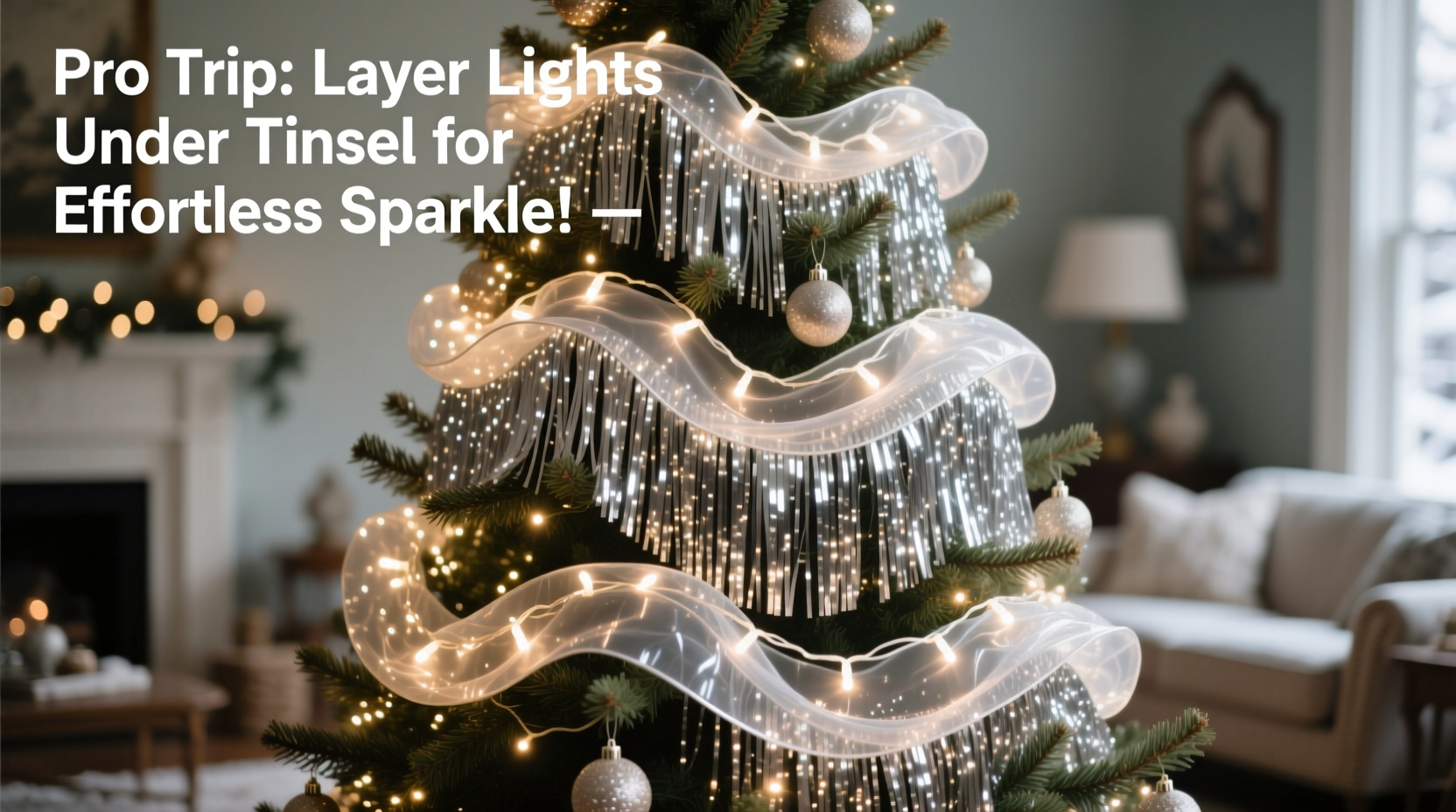
Tinsel doesn’t emit light—it reflects it. If you hang tinsel first and then wrap lights over it, the bulbs get partially hidden, and the reflective quality of the tinsel is diminished. Worse, the weight of the tinsel can press down on light strands, causing gaps or hot spots. By reversing the order—installing lights first, then draping tinsel over them—you allow each filament to catch and amplify the glow, creating a shimmering cascade.
Interior designers and professional decorators have used this technique for decades. As lighting specialist Marcus Bell explains:
“Tinsel works best as a translucent veil, not a curtain. When you layer it over well-placed lights, you’re not just adding shine—you’re sculpting light.” — Marcus Bell, Holiday Lighting Designer, New York
The layered approach also protects the integrity of both elements. Lights stay evenly spaced and accessible for troubleshooting, while tinsel flows more naturally, reducing clumping and static buildup.
Step-by-Step Guide: Layering Lights Under Tinsel
Follow this sequence to ensure a balanced, sparkling display that lasts all season—and comes down easily in January.
- Start with a fluffed tree: Whether real or artificial, make sure all branches are fully extended and shaped. Pay extra attention to inner layers—these will carry the light foundation.
- Select the right lights: Use warm white or soft white LED string lights with a high bulb count (at least 100 bulbs per foot for smaller trees, 300+ for larger ones). Avoid multicolored sets if you want a classic, elegant glow.
- Begin at the base and work inward: Plug in your first strand and start wrapping from the trunk outward. Spiral around the tree in vertical columns, moving from bottom to top. Keep spacing consistent—about 4–6 inches between passes.
- Weave lights deep into branches: Don’t just drape lights over the surface. Gently tuck strands into the interior structure so light emanates from within the tree, not just its outer shell.
- Test before proceeding: Once all lights are installed, plug them in and walk around the tree. Look for dark zones or overly bright clusters. Adjust as needed.
- Let lights dry (if using a real tree): Fresh pine releases moisture. Wait 24 hours after lighting to add tinsel to prevent drooping or sticking.
- Choose quality tinsel: Opt for modern PVC or mylar tinsel (not vintage lead-based versions). Cut into 12–18 inch strands. Pre-cut packs are fine, but hand-cutting allows better control.
- Drape tinsel in small bunches: Take 3–5 strands at a time and gently place them over lit areas, letting them fall naturally across branches. Focus on upper and mid-levels where light interaction is most visible.
- Avoid overloading: Less is more. Over-tinseling blocks light and creates visual noise. Aim for even distribution rather than density.
- Final inspection: Turn off room lights and evaluate the glow. Adjust tinsel placement to highlight shadowed areas or soften glare.
Do’s and Don’ts: Tinsel and Light Pairing
Mistakes in layering often come down to timing, quantity, or material choice. This table outlines the critical dos and don’ts for a flawless finish.
| Do | Don’t |
|---|---|
| Use warm white LEDs for a cozy, natural glow | Use cool white or colored lights—they clash with tinsel’s silver/gold tones |
| Install lights before any heavy ornaments or garlands | Add tinsel before lights—it buries the source of illumination |
| Cut tinsel into uniform lengths for consistency | Use pre-strung tinsel garlands—they tend to mat and block light |
| Distribute tinsel evenly from top to bottom | Clump tinsel only on outer branches—it creates glare and shadows |
| Store tinsel in tissue paper between seasons to prevent tangling | Re-use brittle or tarnished tinsel—it won’t reflect properly |
Checklist: Perfect Light-and-Tinsel Tree Setup
Use this checklist as a quick-reference guide before and during decoration.
- ☐ Tree is fully fluffed and stable
- ☐ Lights are tested and working
- ☐ Enough light strands for full coverage (rule of thumb: 100 bulbs per foot of tree height)
- ☐ Tinsel is pre-cut into 12–18 inch strands
- ☐ No heavy ornaments installed yet
- ☐ Work area is well-lit and uncluttered
- ☐ Gloves and scissors are on hand
- ☐ Extension cords are rated for indoor use and safely positioned
- ☐ Final glow test scheduled after tinsel application
- ☐ Storage plan ready for post-holiday packing
Real Example: A Brooklyn Brownstone Tree Transformation
Sophie M., a homeowner in Brooklyn, had struggled for years with her 7-foot artificial tree. “Every year, I’d throw tinsel on first, then lights, and end up with a flat, glittery blob,” she said. “The lights were either buried or blinking through gaps like prison bars.”
In 2023, she reversed the process. She spent an hour weaving 400 warm white LED bulbs deep into the branches, focusing on inner volume. After testing, she applied tinsel in small handfuls, stepping back every few minutes to assess the effect. The result was dramatic: light filtered upward through the tinsel, creating a halo effect visible from the street. Her neighbors stopped to admire it, and her children said it looked “like a fairy tale.”
Even more telling? Takedown took half the time. Because the tinsel wasn’t entangled with wires, she removed it in minutes and stored it cleanly for next year.
Frequently Asked Questions
Can I use this method on a pre-lit artificial tree?
Yes, but with caution. Most pre-lit trees have lights mounted on the exterior branches, which makes true “under-layering” difficult. However, you can still enhance the effect by draping tinsel lightly over the lit areas, avoiding thick clumps. Consider adding a secondary string of micro-lights tucked deeper into the tree for added dimension.
How much tinsel is too much?
If you can no longer see individual light points or the tree’s shape is obscured, you’ve used too much. A good rule: stand six feet away. If the tree looks like a solid mass of silver, remove some tinsel. Aim for 3–5 strands per major branch group.
Is tinsel safe with LED lights?
Modern tinsel made from PVC or mylar is non-conductive and safe to use with all standard indoor lights, including LEDs. Avoid using metallic or vintage tinsel near any electrical components, as older formulations may pose fire or conductivity risks.
Expert Tips for Longevity and Reuse
Part of avoiding mess is planning for the end of the season. Tinsel, especially, has a reputation for being hard to store. But with proper care, a single batch can last 5–10 years.
After removal, gently shake tinsel over a trash can to remove dust and needle debris. Do not wash—moisture causes warping. Instead, wipe strands with a dry microfiber cloth. Wrap loosely in tissue paper and store in a breathable cotton bag or cardboard box. Never use plastic bins, which trap moisture and encourage brittleness.
Lights should be coiled carefully—not wrapped around your hand, which stresses the wires. Use twist ties or reusable Velcro straps to keep them neat. Label each strand with its location (e.g., “tree main,” “mantle accent”) to speed up next year’s setup.
“The best holiday displays aren’t built in a day—they’re refined over years. Smart storage is what turns seasonal chaos into lasting tradition.” — Lena Pruitt, Home Stylist & Seasonal Decor Consultant
Conclusion: Shine Bright, Stay Organized
Layering Christmas lights under tinsel isn’t just a decorative trick—it’s a thoughtful approach to lighting design that honors both beauty and practicality. When light emerges from beneath shimmering strands, it creates depth, warmth, and a sense of enchantment that surface-level decoration can’t match.
More than that, this method reduces stress. There’s no frantic untangling in December, no pulling apart fused wires and foil in January. Everything has its place, its purpose, and its moment to shine.
This holiday season, take the extra time to install your lights first, weave them thoughtfully, and let tinsel play its supporting role—enhancing, not overpowering. Your future self, standing in a dark living room amid the quiet glow, will thank you.




 浙公网安备
33010002000092号
浙公网安备
33010002000092号 浙B2-20120091-4
Comments
No comments yet. Why don't you start the discussion?