
A capsule wardrobe is not just a minimalist trend—it’s a strategic approach to dressing that prioritizes versatility, quality, and intentionality. When built exclusively with neutral tones, it becomes even more powerful. Neutrals like beige, gray, cream, charcoal, navy, camel, and black form a cohesive color foundation that allows every piece to mix and match seamlessly. The result? A streamlined closet that reduces decision fatigue, saves money, and always looks polished.
This guide walks you through the principles, planning, and execution of creating a functional, elegant capsule wardrobe using only neutral colors. Whether you're simplifying your style, preparing for a move, or embracing slow fashion, this method delivers lasting value.
Why Choose Only Neutral Tones?
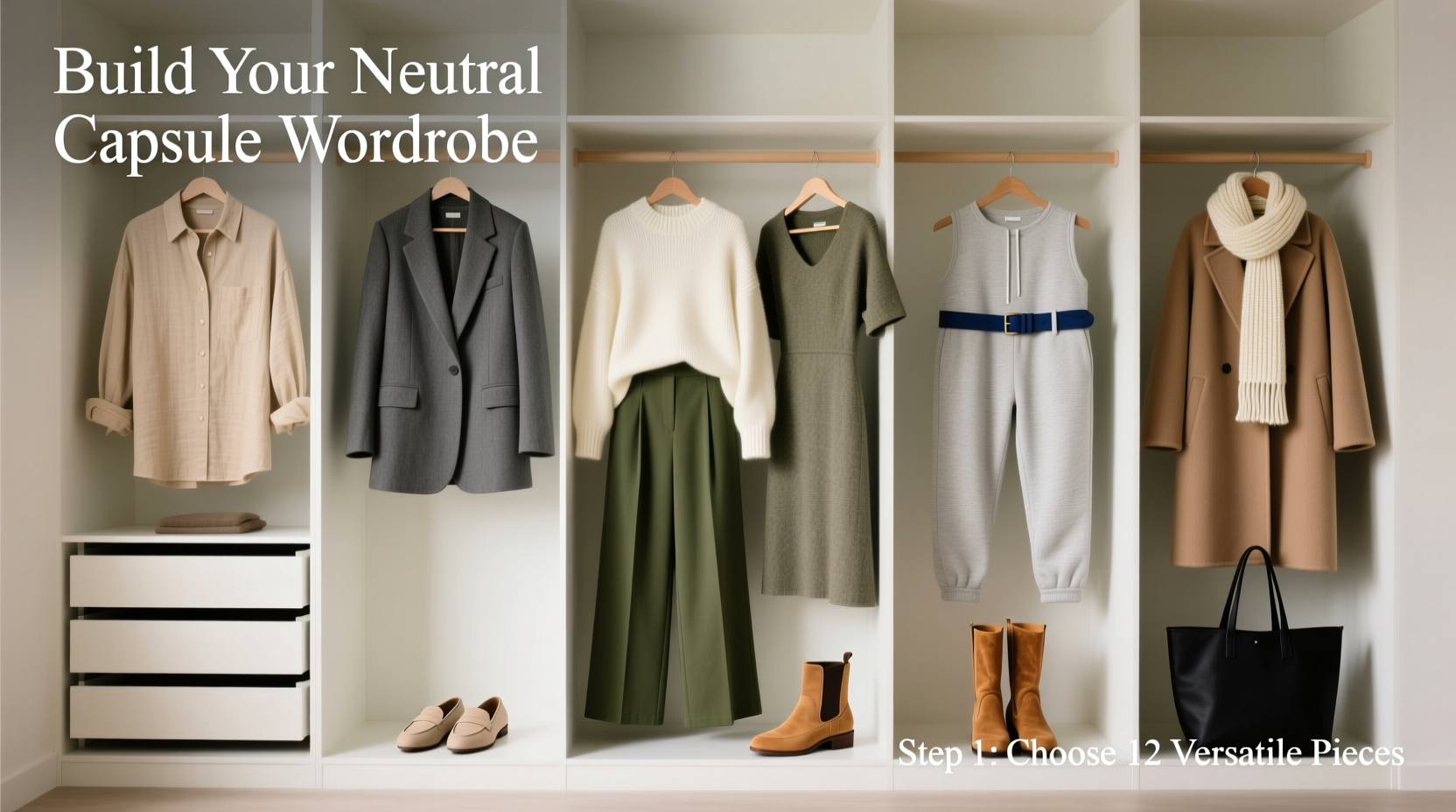
Neutral tones are the backbone of timeless style. Unlike bold hues or seasonal prints, they don’t compete for attention—they complement. By limiting your palette to neutrals, you create a wardrobe where every top pairs with every bottom, every layer works with every outerwear piece, and transitions between seasons feel effortless.
Designer and stylist Anya Richards explains:
“Neutrals aren’t boring—they’re foundational. They allow accessories and personal expression to shine while keeping the base of your look consistently refined.” — Anya Richards, Sustainable Style Consultant
The psychological benefit is equally compelling. A monochromatic or tonal wardrobe reduces visual clutter, which in turn calms decision-making. You’re no longer asking, “Does this clash?” but rather, “How can I layer this beautifully?”
Step-by-Step Guide to Building Your Neutral Capsule Wardrobe
Creating a capsule isn’t about discarding everything and starting over—it’s about curating with purpose. Follow this seven-step process to build a functional, flattering collection of neutral pieces.
- Define your lifestyle needs. Are you mostly working from home, attending meetings, parenting full-time, or traveling frequently? Your daily activities dictate the types of garments you’ll need most.
- Select your neutral palette. Choose 3–5 shades that suit your skin tone and climate. For example: cream, taupe, charcoal, black, and navy. Avoid including too many variations of the same tone (e.g., multiple grays).
- Declutter your current wardrobe. Remove anything stained, ill-fitting, or rarely worn. Keep only items in your chosen neutral range that are in good condition.
- Identify essential categories. Focus on tops, bottoms, dresses, outerwear, knitwear, and footwear. Aim for balance across these groups.
- Set quantity limits. A typical capsule contains 30–40 items, including clothing and shoes—but exclude undergarments, sleepwear, and workout clothes.
- Purchase missing staples mindfully. Invest in high-quality basics from sustainable brands. Prioritize natural fabrics like wool, cotton, linen, and silk.
- Test and refine. Wear your capsule for two weeks. Note any gaps or redundancies. Adjust accordingly before finalizing.
Core Wardrobe Checklist
Use this checklist to ensure your neutral capsule covers all essential functions and silhouettes. Each item should be in one of your selected neutral tones and coordinate with at least three other pieces.
- 2–3 versatile blouses (silk, cotton, or fine knit)
- 1 tailored button-down shirt (crisp white or oat)
- 2–3 knit sweaters (crewneck, turtleneck, cardigan)
- 1 cashmere or merino wool coat
- 1 trench coat or mid-length jacket
- 2 pairs of trousers (straight-leg and wide-leg)
- 1 pair of well-fitted jeans (black or dark gray)
- 1 midi skirt (wool or ponte knit)
- 1 little black dress or neutral sheath dress
- 1 jumpsuit or wrap dress for easy dressing
- 2–3 tees or tank tops (for layering)
- 1 structured handbag (black or tan)
- 2 pairs of shoes: loafers and ankle boots
- 1 pair of neutral pumps or ballet flats
- 1 pair of walking-friendly sneakers (white or gray)
- Belt (matching dominant shoe tone)
- Scarf (lightweight wool or silk blend)
Do’s and Don’ts of a Neutral-Only Capsule
Maintaining cohesion in a neutral-only wardrobe requires discipline. Use this table to avoid common pitfalls and reinforce best practices.
| Do | Don’t |
|---|---|
| Choose fabrics with subtle texture (ribbed knits, herringbone wool) to add depth | Rely solely on flat black or gray—this can appear flat and lifeless |
| Mix warm and cool neutrals intentionally (e.g., camel with charcoal) | Combine too many undertones without testing (e.g., peachy beige with blue-gray) |
| Invest in excellent tailoring—even simple pieces look elevated when fit perfectly | Keep poorly fitting items “just in case” |
| Add interest through layering: turtleneck under shirt, vest over blouse | Over-accessorize with clashing metals or bright jewelry |
| Rotate seasonal layers (linen in summer, wool in winter) | Store off-season pieces in vacuum-sealed bags—natural fibers need to breathe |
A Real-Life Example: Emma’s 38-Piece Neutral Capsule
Emma, a 34-year-old project manager in Chicago, wanted to simplify her morning routine and reduce shopping stress. She worked in a hybrid office environment and often attended client meetings. After evaluating her lifestyle, she chose five core neutrals: ivory, oat, charcoal, black, and deep navy.
She began by removing 70% of her closet—mostly colorful tops, patterned blouses, and trendy items she hadn’t worn in months. From what remained, she kept only pieces in her chosen palette that fit well and were made of quality fabric.
She then purchased a few key items: a double-breasted wool coat in charcoal, a silk camisole in ivory, and a pair of wide-leg crepe trousers in oat. Her final capsule included 38 items: 16 tops, 8 bottoms, 5 dresses, 4 outerwear pieces, and 5 pairs of shoes.
Within two weeks, Emma reported saving nearly an hour per week on outfit decisions. She also noticed that clients commented on her “polished, put-together” appearance. Most importantly, she stopped impulse-buying because every new item had to align with her strict neutral framework.
“I used to think neutrals were dull. Now I see them as my canvas. My personality shows through how I style things—not the color of my shirt.” — Emma Chen, Marketing Director
Seasonal Adaptation Without Color
One common concern about neutral-only wardrobes is monotony across seasons. However, temperature-appropriate layering and fabric shifts keep your look fresh year-round.
In spring and summer, emphasize lightweight materials: cotton poplin, linen blends, and silk. Opt for sleeveless tops, cropped pants, and flowy midi skirts. Add dimension with open-weave knits or sheer overlays.
In fall and winter, transition to heavier textures: boiled wool, flannel, cable knits, and felted coats. Layer a turtleneck under a slip dress, or wear a longline cardigan over tailored trousers. A camel coat or charcoal overcoat instantly elevates any cold-weather ensemble.
Frequently Asked Questions
Can a neutral-only wardrobe still feel expressive?
Absolutely. Expression comes from silhouette, texture, proportion, and styling—not just color. Try pairing a voluminous oat coat with sleek black trousers, or adding a leather belt to define your waist. Your accessories, hair, and confidence become the focal points.
What if I love wearing color? Is this approach too restrictive?
If you enjoy vibrant hues, consider keeping your capsule neutral but allowing one or two colorful accessories—like a red bag or emerald scarf. Alternatively, reserve color for special occasions while relying on neutrals for daily wear. The goal is ease, not deprivation.
How do I choose which neutrals suit me best?
Pay attention to your skin’s undertones. If you look better in silver jewelry, you likely have cool undertones—opt for grays, navy, and stark white. If gold complements you, you’re probably warm-toned—choose camel, cream, and brown-based blacks. Test swatches of fabric near your face in natural light to see what enhances your complexion.
Maintaining Long-Term Success
A capsule wardrobe is not a one-time project. It requires periodic review and mindful consumption. Set a quarterly reminder to assess your wardrobe: remove worn items, check for fit changes, and evaluate whether your current pieces still reflect your lifestyle.
When shopping, adopt a “one in, one out” rule. Every new addition must earn its place by serving a clear function and matching at least three existing items. Avoid sales-driven purchases—even a 70% discount isn’t a bargain if the piece doesn’t integrate seamlessly.
Finally, embrace the rhythm of repetition. Wearing the same core pieces in different combinations isn’t boring—it’s intentional. Think of iconic figures like Phoebe Philo, Carolyn Bessette-Kennedy, or Steve Jobs: their power came from consistency, not variety.
Conclusion: Build With Purpose, Dress With Confidence
A capsule wardrobe built entirely of neutral tones is more than a fashion choice—it’s a commitment to clarity, sustainability, and self-awareness. It strips away excess and focuses on what truly matters: fit, fabric, and function. By investing in fewer, better pieces, you cultivate a wardrobe that serves you—not one that overwhelms you.
You don’t need dozens of outfits to feel confident. You need a handful of thoughtfully chosen garments that work together, reflect your values, and adapt to your life. Start small. Edit ruthlessly. Build slowly. And when you open your closet each morning, let simplicity be your strength.




 浙公网安备
33010002000092号
浙公网安备
33010002000092号 浙B2-20120091-4
Comments
No comments yet. Why don't you start the discussion?