
Anxiety doesn’t discriminate—it can show up during a work meeting, on a crowded subway, or in the quiet of your bedroom late at night. When it does, having a plan helps. But even better? Having a tangible tool you can reach for: a self care kit designed specifically for anxious moments. Unlike generic wellness boxes, this isn’t about luxury or aesthetics. It’s about accessibility, simplicity, and function. A well-curated self care kit gives you immediate access to tools that ground your nervous system, redirect your thoughts, and offer comfort when you need it most. The best part? You don’t need expensive items or hours of preparation. With just a few thoughtful essentials, you can build a portable sanctuary that fits in a drawer, bag, or coat pocket.
Why a Self Care Kit Works During Anxiety
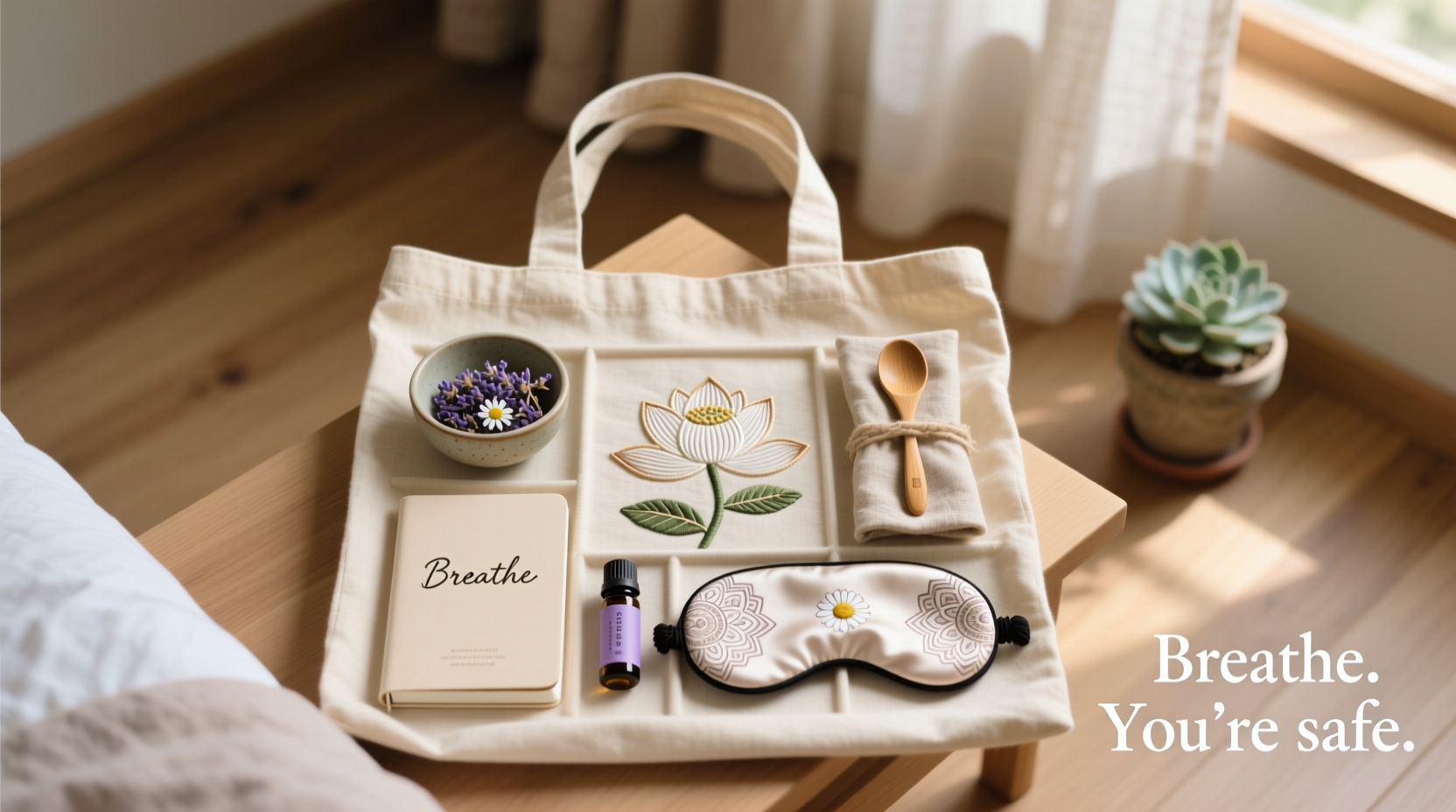
Anxiety often hijacks rational thought. In those moments, decision-making becomes difficult, and even small choices—like what to do first—can feel overwhelming. A self care kit removes that burden. It’s pre-assembled with intention, so you don’t have to think when anxiety strikes. Instead, you act. This shift from cognitive processing to sensory engagement is key. Tools that stimulate the senses—touch, smell, sound—activate the parasympathetic nervous system, which helps the body transition out of fight-or-flight mode.
Research supports the use of sensory-based interventions for acute anxiety. According to Dr. Judson Brewer, neuroscientist and author of The Craving Mind, “When we anchor attention in the physical present—through breath, touch, or scent—we disrupt the feedback loop of anxious thinking.” A self care kit makes these anchors readily available.
“Anxiety shrinks your world down to a single point of fear. A self care kit offers multiple exits back to safety.” — Dr. Lena Patel, Clinical Psychologist
Step-by-Step: Building Your Kit in 5 Simple Stages
Creating an effective self care kit doesn’t require perfection. It requires awareness of what calms *you*. Follow this timeline to assemble a personalized, functional kit in under an hour.
- Assess Your Triggers (10 minutes)
Reflect on recent anxious episodes. What set them off? Was it social pressure, racing thoughts, physical tension, or sensory overload? Identifying patterns helps you choose relevant tools. - Select a Container (5 minutes)
Pick something portable: a small pouch, pencil case, or fabric drawstring bag. It should fit in a backpack or coat pocket. Avoid anything bulky or noisy. - Choose 3–5 Core Items (20 minutes)
Focus on sensory tools that engage touch, smell, or sound. Prioritize items you already own to keep costs low. - Add a Personal Anchor (5 minutes)
Include one meaningful item—a note, photo, or object—that reminds you of strength, love, or safety. - Test and Refine (10 minutes)
Simulate a stressful moment. Use each item. Does it help? Remove what doesn’t work and replace it later.
Essential Components: What to Include and Why
Your kit should be lean. Too many items create clutter, not clarity. Focus on tools that serve one of three purposes: grounding, soothing, or distracting. Below is a breakdown of proven essentials.
1. Grounding Tools (For Presence)
- Tactile Object: A smooth stone, worry bead, or textured fabric swatch. Touch provides instant sensory input.
- Grounding Card: A laminated index card with the 5-4-3-2-1 technique written clearly: Name 5 things you see, 4 you feel, 3 you hear, 2 you smell, 1 you taste.
2. Soothing Elements (For Calm)
- Calming Scent: A travel-sized essential oil roller (lavender, chamomile, or bergamot) or a scented hand lotion. Smell directly links to the limbic system, which regulates emotion.
- Warmth Source: Hand warmers (disposable or reusable). Heat relaxes muscles and signals safety to the brain.
3. Distraction Aids (For Mental Shift)
- Pocket Puzzle: A mini Rubik’s cube, fidget spinner, or magnetic puzzle. These occupy the mind without requiring focus.
- Music Access: A QR code linking to a calming playlist or a tiny USB drive with nature sounds. Noise-canceling earbuds can be kept separately.
4. Emotional Anchors (For Connection)
- Encouragement Note: A handwritten message from yourself or a loved one: “You’ve gotten through this before. You will again.”
- Photo Token: A small printed image of a pet, family member, or peaceful place. Visual reminders of safety reduce isolation.
Do’s and Don’ts: Common Pitfalls to Avoid
Even well-intentioned kits can miss the mark. The goal is usability, not completeness. Refer to this table to avoid common mistakes.
| Do | Don’t |
|---|---|
| Keep it lightweight and portable | Overfill it with decorative but unused items |
| Use items that engage the senses directly | Rely solely on digital tools (phone may not always be accessible) |
| Personalize with meaningful objects | Include anything triggering (e.g., a gift from a toxic person) |
| Label items if helpful (e.g., “Breathe here” on a stress ball) | Make it so complex you hesitate to open it |
| Reassess monthly for effectiveness | Forget to replace used items like hand warmers or tissues |
A Real-Life Example: Maria’s Commute Kit
Maria, a 34-year-old project manager, experienced panic attacks during her daily train commute. Crowds, noise, and lack of control triggered dizziness and shortness of breath. Her therapist suggested a self care kit. She started simple:
- A lavender-scented rollerball she applied to her wrists
- A folded card with her daughter’s drawing and the words “I love you”
- A small velvet pouch with a cold marble stone (she kept it in the fridge overnight)
- A pair of noise-reducing foam earplugs
Within two weeks, Maria reported a 70% reduction in panic severity. “The marble shocked my system,” she said. “It pulled me out of my head and into my body. And touching my daughter’s drawing reminded me I wasn’t alone.” She now keeps a second kit at her desk for high-pressure meetings.
“When anxiety feels like drowning, sensory tools are life rafts. They don’t end the storm, but they keep you afloat.” — Dr. Arjun Mehta, Anxiety Specialist
Checklist: Build Your Kit in One Sitting
Use this checklist to assemble your self care kit efficiently. Tick each box as you go.
- ☐ Choose a compact, durable container (pouch, tin, or small box)
- ☐ Add one tactile item (stone, fabric, fidget tool)
- ☐ Include a scent-based soother (oil, lotion, tea sachet)
- ☐ Insert a grounding aid (5-4-3-2-1 card or breathing guide)
- ☐ Pack a distraction (puzzle, doodle pad, word game)
- ☐ Place a personal anchor (note, photo, small token)
- ☐ Optional: Add tissues, lip balm, or a hydration reminder tag
- ☐ Test each item for ease of access and effect
- ☐ Store the kit where you’ll need it—bag, car, bedside table
- ☐ Review and refresh contents monthly
Frequently Asked Questions
Can I make a digital self care kit instead?
Yes, but with limitations. A phone app with calming music, breathing timers, or guided meditations can be helpful. However, during severe anxiety, screen use may increase mental load. A physical kit reduces cognitive demand. For best results, combine both: use the physical kit first, then the digital tools if needed.
What if I don’t have money to buy new items?
Your kit doesn’t need to cost anything. Use what you already have: a favorite pen, a teabag from your kitchen, a photo from your phone printed at a library, or a smooth seashell from a past trip. Effectiveness comes from intention, not price. One client used a rubber band from a broccoli bunch as a fidget tool—simple, free, and surprisingly effective.
How often should I use the kit?
Use it whenever you feel anxiety rising, even slightly. Early intervention prevents escalation. You can also practice with it during calm moments to build familiarity. Think of it like fire drill training: the more you rehearse, the more automatic the response becomes when real stress hits.
Final Thoughts: Your Kit, Your Lifeline
A self care kit isn’t a cure for anxiety. It’s a practical ally. It won’t erase stress, but it can shorten its grip and soften its impact. The power lies not in the objects themselves, but in the ritual of reaching for them—a small act of self-kindness in the midst of chaos. Over time, using your kit reinforces a crucial message: you are worth caring for, even when you don’t feel it.
Start today. Open a drawer. Find five things that bring you even a flicker of calm. Put them together. Label it if you want. Then, carry it with you—not as a sign of weakness, but as proof of your resilience. Because the truth is, surviving anxious days isn’t about being fearless. It’s about having tools that remind you: this moment will pass, and you have everything you need to get through it.




 浙公网安备
33010002000092号
浙公网安备
33010002000092号 浙B2-20120091-4
Comments
No comments yet. Why don't you start the discussion?