
Throw pillows are one of the most accessible and impactful tools in interior design. They add comfort, color, texture, and personality to any room. But not all throw pillows are created equal—especially when budget is a concern. Many people assume that high-end style comes with a high price tag, but that’s far from true. With thoughtful styling, strategic choices, and a few clever techniques, even the most affordable throw pillows can appear designer-quality.
The key isn’t just about what you buy—it’s how you use it. A $12 pillow from a discount store can rival a $100 boutique version when styled correctly. The illusion of luxury lies in proportion, fabric coordination, layering, and attention to detail. This guide breaks down exactly how to elevate inexpensive throw pillows using practical, proven methods that interior designers rely on every day.
Choose the Right Pillow Size and Proportion
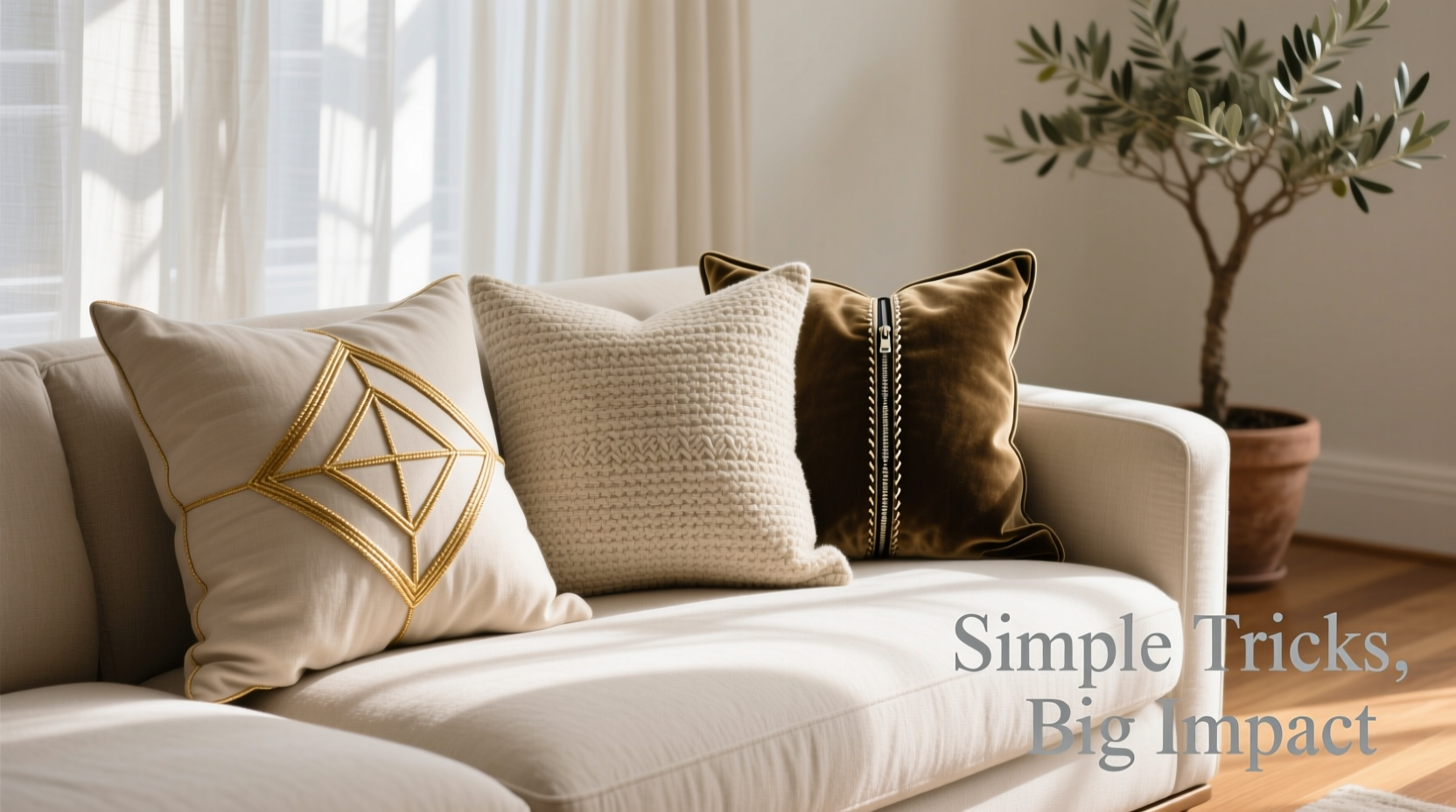
One of the most overlooked aspects of pillow styling is size. Cheap pillows often come in standard 18x18 inch sizes, which can look generic and mass-produced. Upscale interiors typically feature a mix of sizes for visual interest and balance.
Consider investing in at least one oversized pillow (20x20 or 22x22 inches) as an anchor piece. Larger pillows command attention and give the impression of custom craftsmanship. Pair them with smaller lumbar or bolster pillows (12x20 or 14x20 inches) to create depth and contrast.
A common mistake is overcrowding a sofa with too many same-sized pillows. Instead, aim for a layered arrangement where each pillow has room to breathe. For example, on a three-cushion sofa, try two large square pillows at the ends and one long lumbar in the center. This creates rhythm without clutter.
Elevate Fabric Quality with Strategic Pairing
You don’t need 100% linen or silk-blend covers to achieve a luxe aesthetic. What matters more is how fabrics interact. Designers often mix textures to create richness—even when individual pieces aren’t high-end.
Start with one “hero” pillow in a textured fabric like velvet, bouclé, or waffle weave. These materials catch light differently and suggest craftsmanship. Then, pair it with flat-weave solids in neutral tones. Even if those are polyester, the contrast makes them feel deliberate rather than cheap.
Avoid shiny or overly smooth synthetic fabrics—they tend to look plasticky under indoor lighting. Matte finishes always appear more refined. If you’re shopping online, zoom in on product images to check for subtle texture. Look for words like “slub,” “crushed,” “brushed,” or “pebbled”—these indicate dimensionality.
“Luxury isn’t defined by price; it’s defined by contrast. Mix rough with smooth, matte with soft, and simplicity with detail.” — Lena Torres, Interior Stylist & Home Editor, *Design Living Journal*
Fabric Mixing Guide for Budget-Friendly Elegance
| Budget Fabric | Pair With | Avoid Pairing With |
|---|---|---|
| Polyester twill | Linen-look cotton, washed canvas | Glossy satin, vinyl |
| Knit jersey | Wool blend, faux fur | Thin microfiber |
| Cotton sateen | Linen, burlap, hemp | Plastic-coated textiles |
| Faux suede | Velvet, wool, raw silk lookalikes | High-gloss prints |
Add Hidden Upgrades Inside and Out
What’s inside your pillow matters as much as the cover. Most inexpensive pillows come stuffed with flat, compressed polyester fiberfill that sags quickly. This causes them to lose shape and look deflated—a dead giveaway of low quality.
Upgrade the insert. Purchase premium feather-down blend inserts or high-loft hypoallergenic poly fills. These plump up beautifully, hold their shape, and mimic the sink-in comfort of high-end bedding. A full, slightly overstuffed pillow looks intentional and well-maintained.
Also consider modifying the cover itself. If you have basic pillow forms, customize them with trim. Piping, fringe, tassels, or even iron-on ribbon along the edges instantly elevate plain squares. You can sew these on by hand in under 20 minutes per pillow.
Another trick: reverse the cover. Some inexpensive pillows have hidden back panels made of better fabric—like solid cotton instead of printed polyester. Simply turn it inside out so the nicer side faces outward. It won’t match the front print, but in a mixed arrangement, this adds eclectic charm.
Step-by-Step: Upgrade a $10 Pillow in Under 30 Minutes
- Purchase a new insert: Buy a high-loft poly or feather-blend insert one size up from your cover.
- Remove old fill: Unzip and discard the flat inner pillow.
- Insert upgraded core: Gently stuff the new insert into the cover. Fluff evenly.
- Add trim (optional): Sew or glue grosgrain ribbon or pom-pom fringe along the edge.
- Style strategically: Place the pillow at the back or center, where details will be noticed.
Create a Cohesive Color Palette That Feels Intentional
Luxurious spaces don’t rely on bold patterns alone—they build harmony through color. A room full of random, clashing pillows screams “thrown together.” To avoid this, adopt a designer approach: limit your palette to 3–4 colors max, with varying shades and intensities.
For example, instead of pairing a bright turquoise pillow with a neon pink and lime green one, choose navy, cream, and rust with a touch of gold. These deeper, earthier tones feel grounded and sophisticated. Even if the materials are modest, the restraint in color suggests thoughtfulness.
Use the 60-30-10 rule: 60% dominant color (e.g., sofa), 30% secondary (e.g., curtains or rug), 10% accent (e.g., pillows). Let your throw pillows carry the accent role. This keeps them eye-catching without overwhelming the space.
If your existing pillows are too loud, tone them down with a neutral shams or pillow covers. Slipcovers in ivory, beige, or charcoal gray act like filters, softening garish prints and tying mismatched pieces together.
Mini Case Study: From Dorm Room to Designer Vibe
Sarah, a recent college grad, moved into her first apartment with a handful of leftover dorm pillows—bright colors, thin fabric, flat stuffing. Her living room felt chaotic. After reading about color theory and layering, she reorganized her pillows around a new scheme: charcoal gray sofa, oatmeal-colored knit throw, and three new pillows in slate blue, sand, and terracotta.
She kept one vibrant teal pillow but covered it with a linen-blend slipcover in warm white. She replaced the insides with plush inserts and added a tassel trim to one corner. Arranged in a trio with the other two, the formerly cheap pillow now looked like part of a curated set. Friends commented that her space looked “magazine-worthy.” Total cost: under $40.
Final Touches That Signal Luxury
Details separate amateur styling from professional results. In high-end homes, you’ll rarely see perfectly aligned, hospital-cornered pillows. Instead, they’re slightly askew, inviting and lived-in—but never messy.
Fluff and rotate your pillows daily. Give them a quick shake and reshape them by squeezing the corners. This maintains volume and prevents permanent creasing. Every few weeks, unzip and redistribute the filling evenly, especially if using lower-quality inserts.
Position pillows with intention. Angle them slightly inward toward the seating area. Tuck one behind a plant or stack two vertically in a chair corner. These placements suggest careful curation, not haphazard decoration.
Finally, keep surfaces clean. Wipe down removable covers monthly. Spot-clean stains immediately. Dust accumulates quickly on textured fabrics and dulls their appearance. A well-maintained pillow always looks more valuable than a neglected one—even if it’s the opposite in reality.
Checklist: Make Cheap Pillows Look Expensive
- ✅ Use a mix of pillow sizes (include at least one oversized)
- ✅ Replace flat inserts with high-loft or feather-blend fills
- ✅ Combine textures: pair matte with soft, woven with nubby
- ✅ Stick to a cohesive 3–4 color palette
- ✅ Add piping, fringe, or trim for instant upgrade
- ✅ Rotate and fluff pillows regularly to maintain shape
- ✅ Style in odd numbers with intentional spacing
- ✅ Use neutral slipcovers to unify mismatched pillows
Frequently Asked Questions
Can I make polyester pillows look luxurious?
Yes—especially if you focus on texture and styling. Choose polyester in matte, structured weaves like bouclé or herringbone. Avoid shiny finishes. Layer them with natural-fiber throws and real wood or metal accents to ground the look.
How do I prevent my cheap pillows from looking flat?
Upgrade the insert and choose covers one size smaller than the fill. A tight, slightly overstuffed pillow holds its shape better. Also, avoid compressing them under books or heavy objects when not in use.
Is it worth buying expensive pillow covers?
Not necessarily. Even high-end brands use synthetic blends. Focus on construction—double stitching, hidden zippers, and lined backs—rather than material origin. Many affordable retailers now offer well-made options that mimic designer quality.
Conclusion: Small Changes, Big Impact
Transforming inexpensive throw pillows into high-end decor isn’t about spending more—it’s about seeing differently. Luxury is not solely in the label; it’s in the composition, care, and confidence with which you present your space. By upgrading inserts, mixing textures, refining color schemes, and adding thoughtful details, you shift perception.
You don’t need a designer budget to create a designer feeling. You need observation, patience, and a willingness to experiment. Start with one pillow. Try a new insert, a splash of trim, or a fresh arrangement. Notice how it changes the energy of the room. Then build from there.




 浙公网安备
33010002000092号
浙公网安备
33010002000092号 浙B2-20120091-4
Comments
No comments yet. Why don't you start the discussion?