
Cheap wine doesn’t have to mean bad wine—especially if you know how to bring out its best qualities. While premium bottles benefit from careful aging and expert blending, budget-friendly wines often suffer from tight tannins, sharp acidity, or muted aromas. The good news? You don’t need fancy tools, artificial enhancers, or cocktail mixers to improve their flavor. With a few smart, accessible techniques rooted in chemistry and sensory science, you can elevate an inexpensive bottle into something smooth, balanced, and genuinely enjoyable.
This guide explores practical, additive-free methods that work with the wine’s natural structure—no sugar, soda, or fruit juice required. Whether you're hosting a casual dinner or simply enjoying a quiet evening, these strategies will help you get more pleasure from every pour.
1. Aerate the Wine: Unlock Hidden Aromas
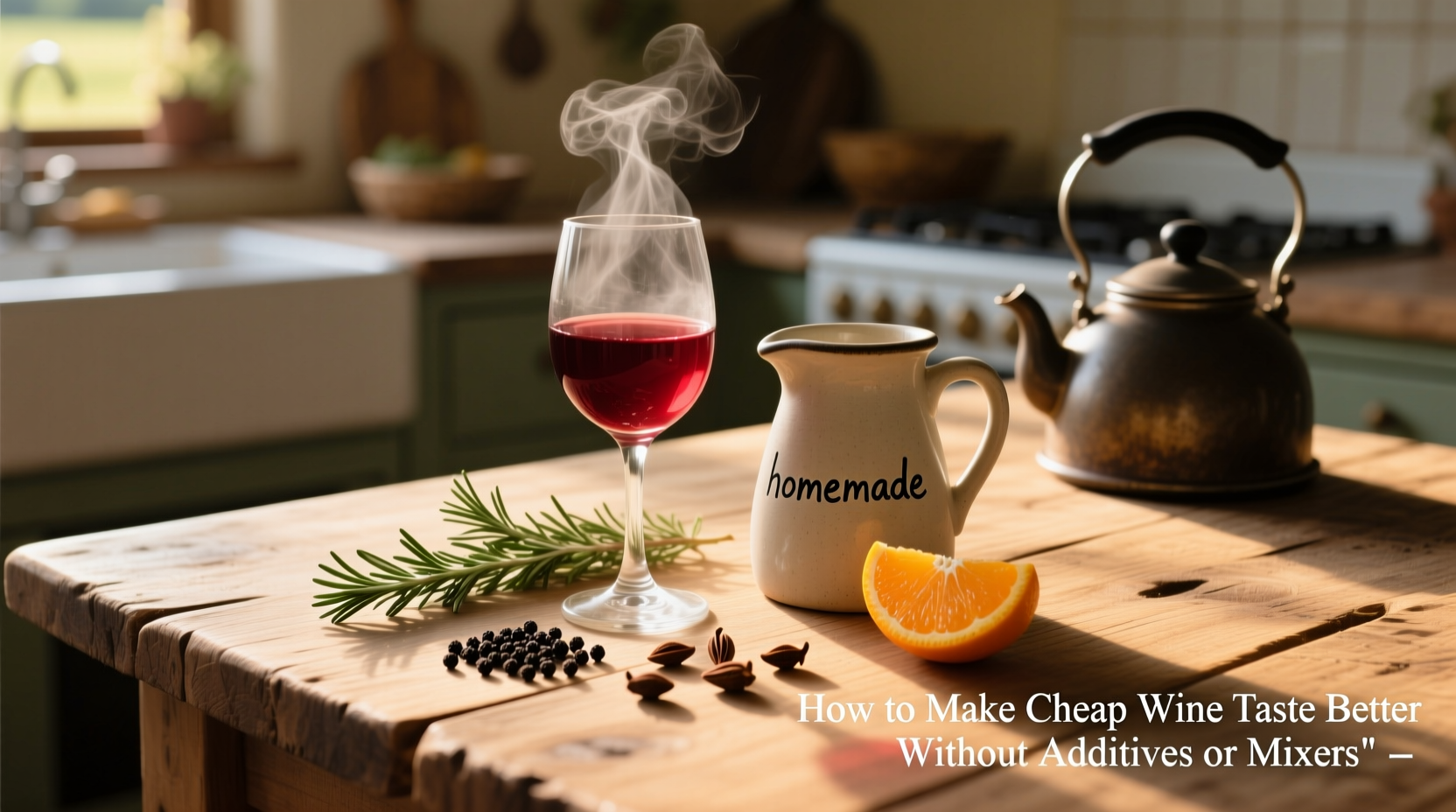
Aeration is one of the most effective ways to improve cheap wine. When wine is exposed to oxygen, volatile compounds evaporate, harsh tannins soften, and aromatic notes become more expressive. Many inexpensive reds are bottled young and tightly wound, meaning they haven’t had time to develop complexity. A little air can mimic years of aging in minutes.
Pouring wine directly into a glass provides minimal aeration. For better results, decant it or swirl vigorously. Even better: use a blender.
According to Master Sommelier Andrea Robinson, “Aeration changes the perception of bitterness and astringency. It doesn’t alter the wine chemically in a harmful way—it just accelerates evolution.” Cheap wines often contain higher levels of reductive sulfur compounds (like the smell of burnt match or boiled egg), which dissipate quickly with oxygen exposure.
Step-by-Step Aeration Methods
- Decanting: Pour the entire bottle into a wide-bottomed decanter. Let sit for 20–45 minutes depending on body. Full-bodied reds benefit from longer exposure.
- Swirling: In the glass, swirl gently but firmly for 30 seconds before each sip. Repeat throughout the tasting.
- Double-Pour Method: Transfer wine between two clean pitchers four to five times. Increases surface area contact with air.
- Blender Technique: Safe for room-temperature wine only. Blend for 20–30 seconds. Taste immediately—you’ll notice a dramatic softening.
White wines also benefit from mild aeration, especially fuller styles like Chardonnay or Viognier. Avoid over-aerating delicate whites like Pinot Grigio, as they can oxidize and lose freshness quickly.
2. Serve at the Right Temperature
Serving temperature dramatically affects flavor balance. Too cold, and aromas remain locked; too warm, and alcohol dominates. Cheap wines are especially sensitive because they lack the structural harmony of higher-end counterparts.
Many people serve red wine at “room temperature,” but modern homes are warmer than historic European cellars. Today’s ideal red serving range is 60–68°F (15–20°C), not 72°F+.
| Wine Type | Optimal Serving Temp | Effect of Incorrect Temp |
|---|---|---|
| Budget Red (e.g., Merlot, Cabernet Sauvignon) | 60–65°F (15–18°C) | Too warm → boozy, bitter; Too cold → dull, tannic |
| Budget White (e.g., Sauvignon Blanc, Pinot Grigio) | 45–50°F (7–10°C) | Too cold → flat, acidic; Too warm → flabby, sour |
| Rosé | 50–55°F (10–13°C) | Loses crispness when too warm; fruit vanishes when over-chilled |
| Dessert / Sweet Wines | 40–45°F (4–7°C) | Excess sweetness overwhelms if served too warm |
To chill reds properly, refrigerate for 20–30 minutes before serving. Whites should be pulled from the fridge 10 minutes before pouring to avoid numbing the palate.
3. Use the Right Glassware
Glass shape influences how wine reaches your nose and tongue. A proper glass concentrates aromas and directs flow to the optimal part of the mouth. While any glass works in a pinch, upgrading improves perception—even for inexpensive wine.
Look for glasses with the following features:
- Bowl size: Large enough to allow swirling without spilling.
- Tapered rim: Channels aromas toward the nose.
- Thin lip: Ensures smooth delivery across the palate.
You don’t need crystal. Affordable ISO tasting glasses ($10–$15/set) are designed to showcase wine accurately. Alternatively, standard universal wine glasses work well for both red and white.
“Glassware isn’t about luxury—it’s about function. A good vessel reveals what’s already in the wine.” — Jordan Mackay, James Beard Award-winning wine writer
4. Pair with Food Strategically
No technique transforms cheap wine faster than food pairing. Culinary flavors interact with wine components—fat softens tannin, salt reduces bitterness, acid balances richness. A $10 bottle can taste refined when matched correctly.
Here’s how common pairings affect perception:
Red Wine Pairing Guide
- Fatty meats (brisket, sausage): Melt tannins and highlight fruit.
- Mushrooms or umami sauces: Enhance earthy depth in Pinot Noir or Syrah.
- Hard cheeses (aged cheddar, Parmesan): Counteract bitterness; amplify savory notes.
White Wine Pairing Guide
- Creamy pasta or risotto: Softens acidity; makes lean whites feel rounder.
- Seafood with lemon butter: Matches bright whites like Sauvignon Blanc; lifts flat flavors.
- Spicy dishes (Thai, Indian): Choose off-dry whites; heat amplifies alcohol burn in dry wines.
Mini Case Study: The Tuesday Night Pasta Test
Carlos, a home cook in Portland, regularly buys $8–$12 bottles for weeknight dinners. He once opened a particularly harsh Cabernet Sauvignon that tasted overly alcoholic and green. After letting it breathe for 20 minutes with no improvement, he cooked a tomato-based pasta with garlic, olive oil, and Parmesan. Midway through the meal, he revisited the wine—and was surprised. Paired with food, the same wine felt balanced, with softened tannins and enhanced red fruit character. “It wasn’t that the wine changed,” he said. “It was that the food gave it context.”
5. Let It Rest: Time Can Be Your Ally
Some wines improve simply by sitting open. While most cheap wines are meant for immediate consumption, leaving them uncorked overnight (or even for 24 hours) can yield surprising results. Oxygen continues to mellow harsh edges, and volatile acids dissipate.
This works best with structured reds. Store the open bottle at room temperature with a stopper or plastic wrap. Retaste the next day.
In a blind test conducted by *Wine Enthusiast*, 60% of panelists preferred a $12 Malbec after 18 hours of controlled oxidation versus the same wine tasted fresh. Judges noted reduced astringency and greater aromatic lift.
Do’s and Don’ts of Aging Cheap Wine
| Action | Do | Don't |
|---|---|---|
| Leaving open overnight | Yes – for bold reds only | No – for light whites or rosés |
| Refrigerating after opening | Yes – slows oxidation in whites | No – halts development in reds |
| Using a vacuum pump | No – removes aroma compounds | Don’t rely on it for quality preservation |
| Storing long-term | No – most cheap wines degrade after 3–6 months | Don’t cellar expecting improvement |
If you’re curious, try this experiment: Open two identical bottles of a tannic red. Drink one night one, leave the second open (but covered) for 12–24 hours. Compare side by side. You may discover a more harmonious profile after rest.
Checklist: How to Improve Cheap Wine in 5 Steps
Follow this sequence before serving your next budget bottle:
- ✔️ Chill reds slightly (20–30 min in fridge); cool whites just below 50°F.
- ✔️ Decant or blend for rapid aeration—especially for full-bodied reds.
- ✔️ Use a quality wine glass with a tapered rim.
- ✔️ Swirl frequently during tasting to maintain oxygen exposure.
- ✔️ Pair with complementary food: fat, salt, or umami-rich dishes.
FAQ
Can I freeze cheap wine to improve it?
No. Freezing damages texture and causes sediment formation. Thawed wine often tastes dull and disjointed. However, frozen wine can be used for cooking—just don’t drink it straight.
Does chilling red wine ruin it?
Not if done moderately. Over-chilling masks flavor, but bringing a warm red down to 60–65°F enhances balance. Avoid ice buckets unless serving within 15 minutes.
Why does my cheap wine taste metallic or bitter?
Metallic notes often come from reductive winemaking (lack of oxygen during production). Bitterness usually stems from immature tannins or excess oak extract. Both diminish significantly with aeration and food pairing.
Conclusion
Improving cheap wine isn’t about deception—it’s about understanding how sensory elements interact. Oxygen, temperature, glassware, time, and food all play roles in shaping flavor. By leveraging these factors, you’re not changing the wine; you’re revealing its hidden potential.
You don’t need expensive gear or secret ingredients. Just attention, patience, and a willingness to experiment. Next time you open a modest bottle, try one or more of these techniques. You might be surprised at how much more enjoyable it becomes.




 浙公网安备
33010002000092号
浙公网安备
33010002000092号 浙B2-20120091-4
Comments
No comments yet. Why don't you start the discussion?