
Chicken soup made from a whole chicken in a slow cooker delivers unmatched depth of flavor, silky texture, and nourishing satisfaction with minimal effort. Unlike soups built from pre-cut parts or store-bought broth, this method extracts every nuance of taste from the entire bird—meat, bones, skin, and connective tissues—simmered slowly to produce a golden, collagen-rich liquid that forms the foundation of a truly restorative meal. The slow cooker simplifies the process, allowing hands-off cooking that transforms humble ingredients into something profoundly comforting. This approach is favored by both home cooks and professional kitchens for its efficiency, economy, and superior results.
Definition & Overview
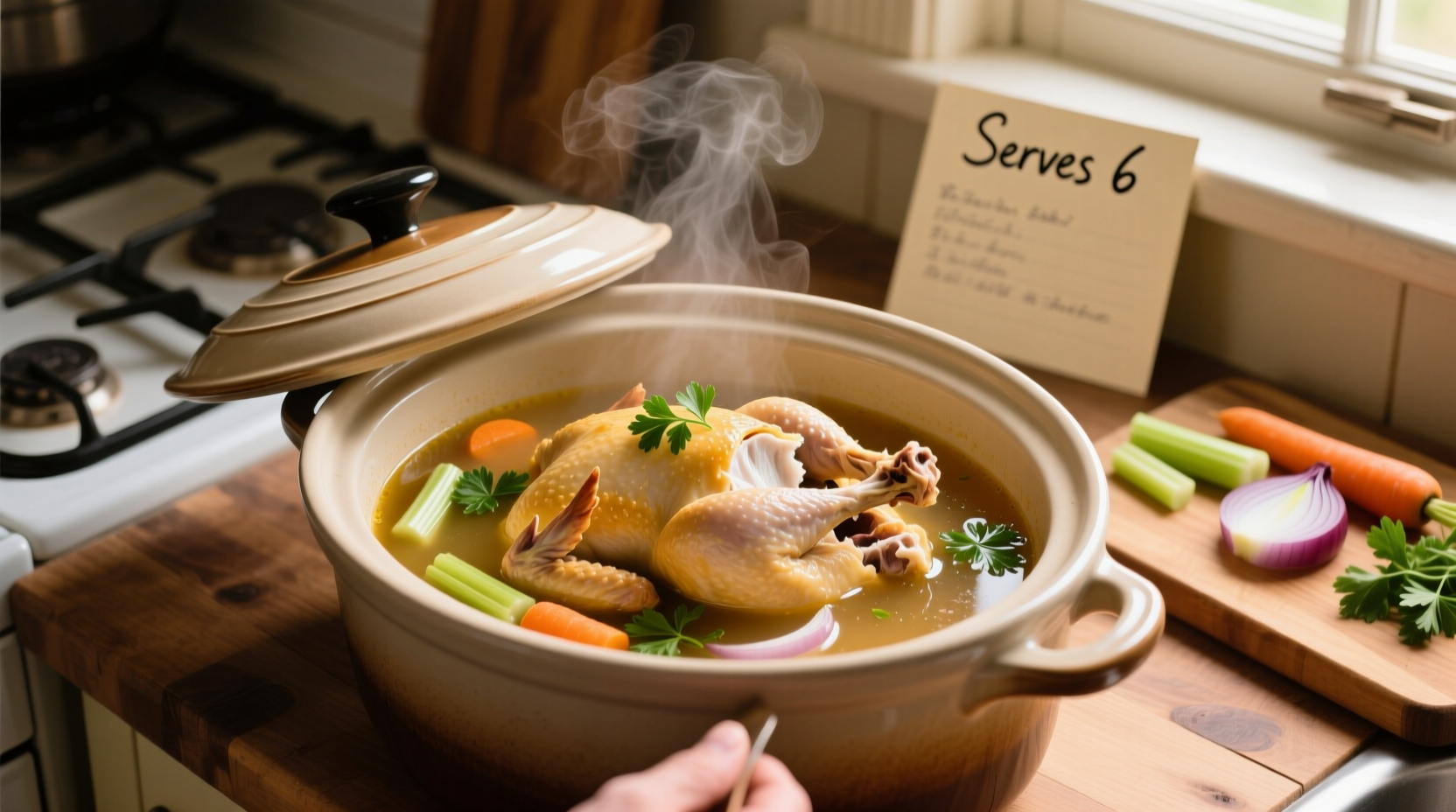
Slow-cooker chicken soup made with a whole chicken is a classic preparation in which an intact bird is simmered for several hours with aromatic vegetables, herbs, and water to create a complete soup and reusable stock in one step. The technique leverages low, consistent heat to gently break down collagen in bones and joints, yielding a broth with body and mouthfeel that cannot be replicated with bouillon cubes or store-bought alternatives. Once cooked, the chicken meat is tender enough to shred effortlessly, while the resulting broth becomes the base for the soup itself, eliminating waste and maximizing flavor.
This dish belongs to the broader category of bone broth–style soups, found in culinary traditions worldwide—from Jewish penicillin-style matzo ball soup to Filipino arroz caldo and Chinese medicinal congees. What sets the slow-cooker version apart is its accessibility: it requires no stovetop monitoring, skimming, or high heat management. Instead, it offers a \"set it and forget it\" experience while still delivering restaurant-quality depth and clarity.
Key Characteristics
- Flavor: Rich, savory, deeply umami with subtle sweetness from mirepoix (carrots, celery, onion)
- Aroma: Warm, herbal (from bay leaf, thyme, parsley), slightly earthy from long-simmered bones
- Color: Pale gold to amber, depending on vegetable content and cooking time
- Texture: Broth ranges from light to velvety; meat is fall-apart tender
- Culinary Function: Serves as both soup and homemade stock; ideal base for future dishes
- Shelf Life: Up to 5 days refrigerated; up to 6 months frozen
- Nutritional Profile: High in protein, collagen, gelatin, and minerals like calcium and magnesium when bones are included
Practical Usage: Step-by-Step Guide
Creating chicken soup from a whole chicken in a slow cooker is straightforward but benefits from attention to detail. Follow this comprehensive method to ensure optimal flavor, texture, and safety.
- Select the chicken: Use a fresh or fully thawed whole chicken weighing 3–4 pounds. Avoid pre-brined or kosher birds if possible, as they can make the broth overly salty. A pasture-raised or organic bird will yield better flavor and color.
- Prepare aromatics: Roughly chop 1 large yellow onion, 3 carrots, and 3 celery stalks. No need to peel—scrub well. Include garlic (4–6 cloves, smashed) for depth.
- Season the cavity: Place a few sprigs of fresh thyme, 1–2 bay leaves, and a handful of parsley stems inside the chicken’s cavity. This infuses the interior as it cooks.
- Load the slow cooker: Place chopped vegetables in the bottom of a 6- to 8-quart slow cooker. Set the chicken on top, breast-side up. Add 10–12 cups of cold water until the chicken is just covered. Do not overfill—leave at least 1 inch of headspace.
- Add seasonings: Include 1 tablespoon black peppercorns, 1 teaspoon sea salt (adjust later), and optional parsley stems. Avoid excessive salt initially—you’ll adjust seasoning after cooking.
- Cook: Cover and cook on LOW for 7–9 hours or HIGH for 4–5 hours. The chicken is done when the internal temperature reaches 165°F (74°C) and the meat pulls away easily from the bone.
- Remove chicken: Carefully transfer the bird to a large cutting board using tongs and spoons. Let cool slightly before handling.
- Strain and clarify (optional): Pour the broth through a fine-mesh sieve into a large bowl or pot. Discard solids unless you plan to reuse vegetables (they’re spent flavor-wise).
- Shred the meat: Remove skin and bones. Shred white and dark meat separately using two forks. Discard skin, cartilage, and bones (or save for additional stock).
- Return meat to broth: Add desired amount of shredded chicken back to the strained broth. For soup, return all meat. For stock, reserve meat for another use.
- Final seasoning: Taste and adjust salt and pepper. Add fresh herbs like dill or parsley just before serving.
- Serve or store: Serve hot with noodles, rice, or dumplings. Alternatively, cool quickly and refrigerate or freeze.
Pro Tip: Chill the broth overnight. Skim the solidified fat layer from the surface for a cleaner-tasting, less greasy soup. The fat can be reserved and used to sauté vegetables for future batches—adds incredible flavor.
Variants & Types
While the basic method remains consistent, regional and dietary variations allow customization based on preference or tradition.
Classic American Chicken Noodle Soup
Add 2 cups of egg noodles during the last 30 minutes of cooking or cook separately and add to bowls. Enhance with extra parsley and a splash of lemon juice.
Chicken and Rice Soup
Stir in ½ cup of uncooked long-grain white rice at the beginning. It will absorb flavors and thicken the soup naturally. For quicker results, use brown rice and extend cook time by 1–2 hours on LOW.
Low-Carb / Keto Version
Omit starchy vegetables like carrots and replace with celery, leeks, and fennel. Skip noodles and grains. Boost fat content with a tablespoon of ghee or olive oil stirred in at the end.
Asian-Inspired Chicken Broth
Replace thyme and bay leaf with ginger (3-inch sliced knob), star anise (1–2 pieces), and scallion whites. After cooking, season with tamari or coconut aminos instead of salt. Serve with bok choy and shiitake mushrooms added in the final hour.
Mexican Chicken Soup (Sopa de Pollo)
Add cumin (1 tsp), oregano (1 tsp), and a chopped poblano pepper at the start. Finish with cilantro, lime wedges, and serve over cooked quinoa or with tortilla strips on top.
| Variation | Key Ingredients | Cooking Adjustments | Serving Suggestions |
|---|---|---|---|
| Classic Noodle | Egg noodles, parsley, thyme | Add noodles in last 30 min | Breadsticks, grated Parmesan |
| Chicken & Rice | White or brown rice | Start with rice; extend time if needed | Lime wedge, green onions |
| Asian Fusion | Ginger, star anise, scallions | Use tamari at end | Bok choy, ramen-style toppings |
| Keto/Low-Carb | Fennel, zucchini, cauliflower | No starchy additions | Avocado slices, chili oil |
Comparison with Similar Methods
Using a whole chicken in a slow cooker differs significantly from other common approaches to chicken soup. Understanding these distinctions helps choose the best method for your needs.
| Factor | Slow Cooker | Stovetop | Instant Pot |
|---|---|---|---|
| Time Required | 7–9 hours (LOW) | 3–4 hours (simmer) | 1–1.5 hours (pressure cook) |
| Hands-On Time | Minimal (mostly prep) | Moderate (skimming, stirring) | Low (sealing, release) |
| Broth Clarity | Good (if not disturbed) | Best (controlled simmer) | Fair (can be cloudy) |
| Gelatin Content | High (long extraction) | High | Moderate to high |
| Safety Monitoring | Low risk (sealed unit) | Requires attention | Automated, but pressure risks |
| Energy Efficiency | High (low wattage over time) | Lower (constant flame) | High (short burst) |
The slow cooker excels in convenience and consistent, gentle extraction. While stovetop methods offer more control over reduction and clarity, they demand active supervision. The Instant Pot is faster but may compromise texture due to rapid pressurization, which can emulsify fat and cloud the broth. For those prioritizing ease and depth without constant oversight, the slow cooker is ideal.
Practical Tips & FAQs
Can I leave the chicken in the slow cooker overnight?
Yes, but only if cooking on LOW for up to 9 hours. Do not exceed manufacturer guidelines. Once done, switch to “Keep Warm” for no more than 1–2 hours. Prolonged warming can degrade texture and increase food safety risks.
Should I brown the chicken first?
Not necessary, but optional. Browning adds a deeper Maillard flavor. To do so, sear the whole chicken in a skillet with oil over medium-high heat until golden, then transfer to the slow cooker. This step enhances complexity but isn’t required for excellent results.
Why did my broth turn out greasy?
Fat naturally renders during long cooking. To reduce greasiness, chill the broth and skim the solidified fat layer. Alternatively, use a fat separator when straining hot liquid.
Can I reuse the bones for second stock?
Possible, but not recommended. Most collagen and flavor extract in the first cook. A second batch will be very weak. Compost or discard bones after first use.
How do I prevent overcooking the meat?
Stick to recommended times. On LOW, 8 hours is optimal. Beyond 9–10 hours, meat may become dry or disintegrate. If adding vegetables later (like peas or spinach), do so in the final 30–60 minutes to preserve texture.
Is it safe to put a frozen chicken in the slow cooker?
No. Starting with a frozen chicken increases the time the meat spends in the danger zone (40°F–140°F), raising bacterial risk. Always thaw completely in the refrigerator before use.
Can I add potatoes or tomatoes?
Yes, but with caution. Potatoes hold up well but may absorb too much salt. Add in the last 2–3 hours. Tomatoes add acidity, which can slightly toughen proteins—use sparingly or add at the end.
Storage Tip: Freeze broth in 2-cup or 4-cup portions using silicone molds or freezer-safe jars (leave 1-inch headspace). Once frozen, transfer to labeled bags. Shredded chicken freezes well for up to 3 months—ideal for quick meals.
\"The slow cooker is the unsung hero of home broth-making. It democratizes access to deep, nourishing stocks that were once the domain of all-day kitchen labor.\" — Chef Elena Ruiz, Culinary Instructor, National Soup Guild
Summary & Key Takeaways
Preparing chicken soup from a whole chicken in a slow cooker is one of the most efficient, flavorful, and economical ways to make a foundational kitchen staple. The process yields tender meat, a nutrient-dense broth, and zero waste—all with minimal daily effort. By leveraging time instead of attention, home cooks achieve results comparable to professional techniques.
Key advantages include maximal flavor extraction, natural gelatin development, and adaptability across cuisines. Whether you're making classic comfort soup, a low-carb version, or building a base for future meals, this method offers unmatched versatility.
To succeed: use a non-brined chicken, avoid over-salting early, chill to defat, and customize with global spices or grains. Store properly for future use, and consider this soup a cornerstone of healthy, scratch-based cooking.
Call to Action: Try this recipe this week and save the leftover broth for risottos, sauces, or grain pilafs. Once you taste homemade slow-cooked chicken soup, store-bought will never suffice.




 浙公网安备
33010002000092号
浙公网安备
33010002000092号 浙B2-20120091-4
Comments
No comments yet. Why don't you start the discussion?