
In a world of fast fashion and overflowing closets, the idea of limiting yourself to just ten hangers might seem extreme. Yet, this constraint is not a limitation—it’s a liberation. By reducing your hanging wardrobe to a fixed number, you’re forced to make deliberate choices about what stays, what serves you, and what truly reflects your personal style. This minimalist fashion hack isn’t about deprivation; it’s about clarity, functionality, and cultivating a wardrobe that works effortlessly every day.
The ten-hanger rule challenges conventional organization methods by flipping the script: instead of finding space for everything, you curate only what deserves space. It’s a system embraced by capsule wardrobe advocates, sustainability experts, and those seeking simplicity in their daily routines. When done right, this approach reduces decision fatigue, streamlines mornings, and transforms your closet into a curated collection rather than a storage unit for forgotten trends.
The Philosophy Behind the Ten-Hanger Rule
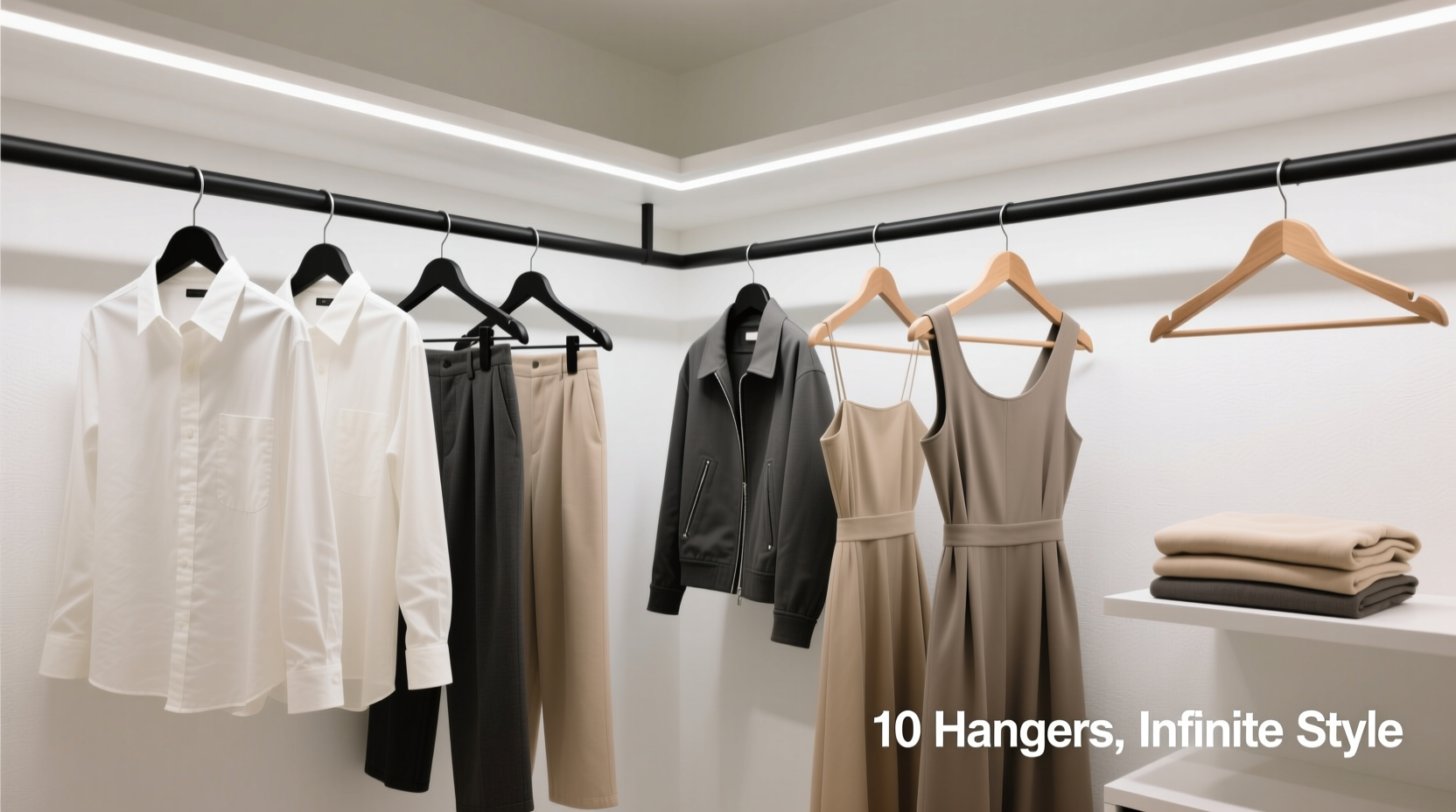
Minimalism in fashion isn’t about wearing less for the sake of austerity. It’s about intentionality. The ten-hanger method, popularized by decluttering experts and slow-fashion influencers, operates on a simple premise: if you can only hang ten garments, each piece must earn its place. This forces an audit of utility, fit, frequency of wear, and emotional value.
Marie Kondo’s “spark joy” principle aligns closely with this practice. But beyond emotion, the ten-hanger rule introduces a practical filter: versatility. A single well-chosen blazer, for example, can transition from office meetings to dinner dates when paired correctly. A classic trench coat may replace three seasonal jackets. Each hanger becomes a slot reserved for maximum impact.
“Limitations breed creativity. When you reduce choice, you increase clarity.” — Courtney Carver, founder of Project 333
This mindset shift—from accumulation to curation—is what makes the ten-hanger challenge transformative. It’s not just about organizing a closet; it’s about redefining your relationship with clothing.
Step-by-Step: How to Implement the Ten-Hanger System
Starting with ten hangers requires more than just removing clothes. It demands a structured process to ensure the final selection supports your lifestyle, climate, and aesthetic preferences. Follow this timeline to build a functional, minimalist wardrobe.
- Empty your closet completely. Remove every item from hanging rods and shelves. Lay them out where you can see everything at once—bed, floor, or table.
- Sort by category: Group items into tops, bottoms, dresses, outerwear, and specialty garments (e.g., work uniforms, formalwear).
- Apply the 90-Day Test: Ask, “Have I worn this in the past 90 days?” If not, set it aside unless it’s seasonally appropriate (e.g., winter coat in summer).
- Evaluate fit and condition: Try on questionable pieces. Does it fit well? Is it stained, pilled, or missing buttons? If not wearable, donate or recycle.
- Select your ten: Choose the most versatile, frequently worn, and best-fitting items. Prioritize mix-and-match potential.
- Assign hangers: Use uniform hangers (wooden or velvet) for visual cohesion and garment protection.
- Store remaining essentials off-hanger: Fold knits, t-shirts, jeans, and loungewear in drawers or bins.
What Counts Toward Your Ten Hangers?
A common point of confusion is determining which garments qualify as “hanger-worthy.” Not all clothing should be hung—some fabrics degrade when suspended. Here’s a guide to help you decide what earns a spot:
| Garment Type | Should It Use a Hanger? | Why / Alternative Storage |
|---|---|---|
| Dresses (silk, satin, structured) | Yes | Premium fabrics wrinkle easily; hanging preserves shape. |
| Blazers & Suits | Yes | Shoulder structure collapses if folded; use padded hangers. |
| Cotton Shirts & Blouses | Yes | Hanging prevents wrinkles; ideal for workwear rotation. |
| Sweaters & Knits | No | Folding prevents stretching; store flat in drawers or bins. |
| Jeans & Denim Pants | No | Denim holds shape well when folded; saves hanger space. |
| T-Shirts & Casual Tops | No | Fold vertically for visibility and easy access. |
| Coats & Outerwear | Yes (if worn weekly) | Bulky but necessary; rotate seasonally if limited space. |
This framework ensures that only garments that benefit from hanging occupy your precious ten slots. The rest are stored efficiently elsewhere, maintaining a balanced, accessible system.
Real-Life Example: Sarah’s Closet Reset
Sarah, a 34-year-old marketing consultant in Portland, struggled with morning indecision despite owning over 70 tops and 20 pairs of pants. Her closet was full, yet she felt like she had nothing to wear. After reading about Project 333—a 3-month minimalist wardrobe challenge—she decided to test the ten-hanger rule.
She began by removing everything and sorting by category. Through the 90-day test, she realized she hadn’t worn 60% of her blouses. Many were trendy pieces bought during sales but never integrated into her routine. She kept only five blouses: two silk shells, a crisp white button-down, a striped linen shirt, and a black turtleneck—all highly versatile.
Her ten hangers now hold: the white button-down, black turtleneck, linen shirt, navy blazer, black wool coat, charcoal gray dress, floral wrap dress, denim jacket, trench coat, and a tailored jumpsuit. Everything else—jeans, tees, sweaters, pajamas—is folded in labeled bins beneath a low dresser.
The result? Mornings take half the time. She feels more confident because each outfit combination has been tested and approved. And surprisingly, colleagues have complimented her “new style,” unaware she’s wearing fewer pieces than ever.
Do’s and Don’ts of Minimalist Closet Organization
To ensure long-term success with the ten-hanger method, avoid common pitfalls. The following table outlines key behaviors to adopt and avoid:
| Do | Don’t |
|---|---|
| Choose neutral bases with one or two statement pieces | Fill hangers with trendy items you rarely wear |
| Mix textures (e.g., silk, cotton, wool) for visual interest | Hang delicate knits or heavy sweaters |
| Use slim, non-slip hangers to maximize rod space | Keep broken or ill-fitting items “just in case” |
| Label storage bins for folded categories | Allow off-hanger clothes to pile up on chairs or floors |
| Reassess every 3 months based on weather and lifestyle changes | Ignore seasonal needs—rotate outerwear strategically |
Consistency is key. The ten-hanger system only works if supported by disciplined habits and honest self-assessment.
FAQ: Common Questions About the Ten-Hanger Method
Can I really live with only ten hanging items?
Yes—especially when combined with folded storage. Most people wear 20–30 core items regularly. By reserving hangers for wrinkle-prone or structured garments, you preserve function while minimizing visual clutter. Rotating seasonally expands effective variety without breaking the rule.
What if I need to wear a suit for work?
A suit counts as one or two hangers (jacket + matching pants). Since suits are often worn together, this is efficient. If you own multiple suits, keep only the most versatile (e.g., navy or gray) in your ten. Store others folded or in garment bags for special occasions.
Does this work for families or shared closets?
Absolutely—but apply the rule per person. Shared spaces benefit even more from clear boundaries. Assign each individual their own ten-hanger zone, color-coded hangers, or labeled sections to prevent overlap and confusion.
Final Checklist: Launch Your Ten-Hanger Wardrobe
- Empty entire closet and lay out all clothing
- Sort into categories: tops, bottoms, dresses, outerwear
- Discard or donate anything unworn in 90 days (except seasonal)
- Try on borderline items to assess fit and comfort
- Select ten garments that are versatile, well-fitting, and frequently worn
- Use uniform hangers for a clean, cohesive look
- Fold and organize remaining clothes in accessible storage
- Create 5 go-to outfits using your ten pieces
- Schedule a quarterly review to refresh your selection
“The things you own end up owning you.” — Chuck Palahniuk, author of *Fight Club*
This quote resonates deeply with the essence of the ten-hanger challenge. When we release excess, we reclaim time, energy, and focus. A minimalist closet isn’t incomplete—it’s complete enough.
Conclusion: Start Small, Think Big
Organizing a closet with only ten hangers is more than a space-saving trick—it’s a declaration of values. It says you prioritize quality over quantity, function over fashion noise, and peace over pressure. You don’t need hundreds of options to feel stylish or prepared. You need a few excellent ones.
Begin today. Empty your closet. Make hard choices. Hang only what matters. Let the simplicity of ten hangers redefine not just your wardrobe, but your relationship with consumption, identity, and daily ease.




 浙公网安备
33010002000092号
浙公网安备
33010002000092号 浙B2-20120091-4
Comments
No comments yet. Why don't you start the discussion?