
Updating your kitchen doesn’t require a full remodel. One of the most impactful and budget-friendly improvements you can make is repainting your cabinets. Traditionally, this process involves hours of sanding to create a surface that accepts paint. But what if you could skip that step? With the right preparation and the use of liquid deglosser—also known as “wash primer” or “de-glossing solution”—you can achieve a professional-quality finish without touching sandpaper.
This method is ideal for homeowners short on time, lacking tools, or dealing with intricate cabinet doors that make sanding tedious. When done correctly, painting over existing finishes with deglosser delivers results that last for years. The key lies in understanding the chemistry of adhesion, choosing the right products, and following a precise sequence of steps.
Why Skip Sanding? The Case for Deglosser
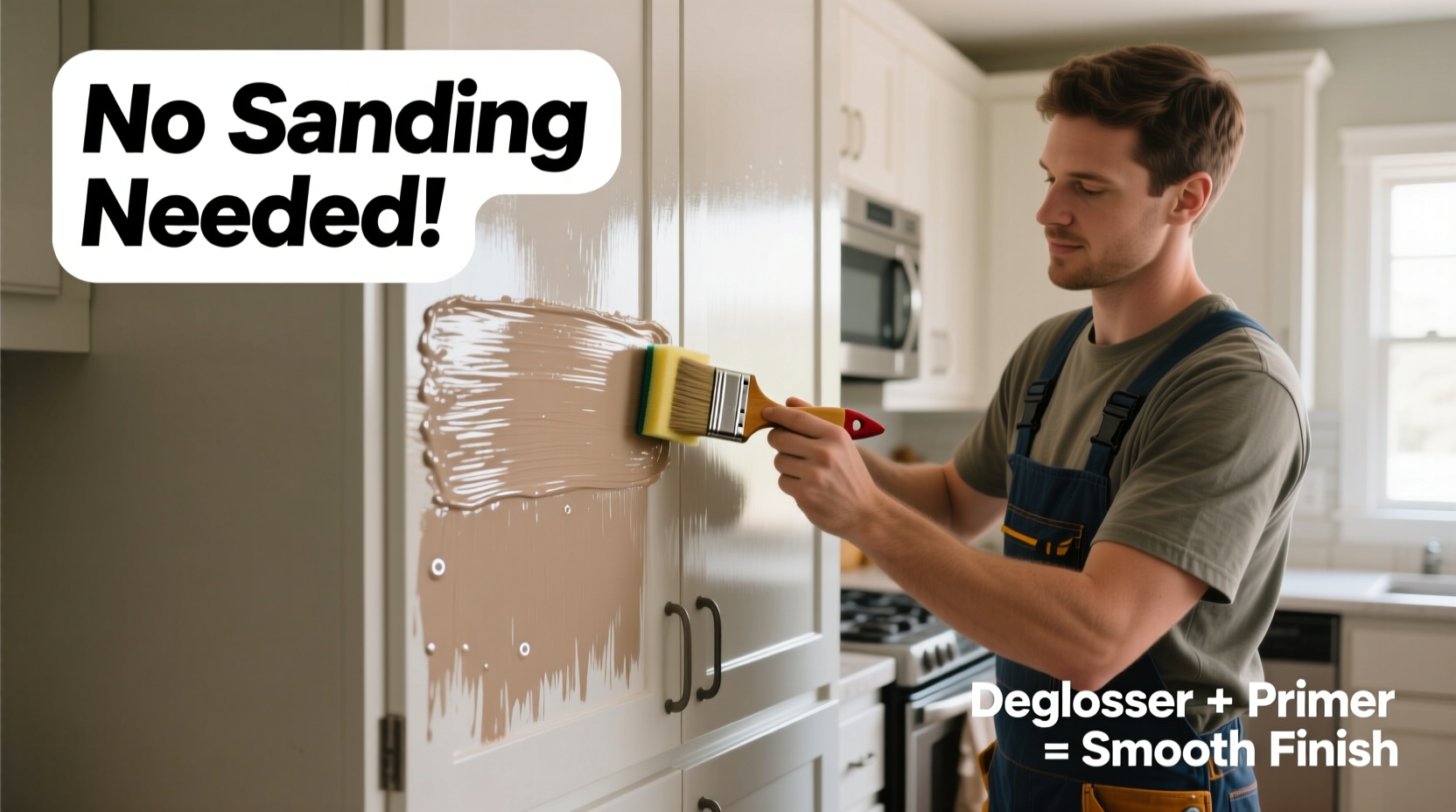
Sanding serves one primary purpose: to remove the glossy top layer of varnish or polyurethane so paint can bond to the surface. However, mechanical sanding produces dust, requires physical effort, and risks damaging delicate woodwork. Liquid deglosser offers a chemical alternative. It works by breaking down the surface tension of glossy finishes, etching microscopic texture into the coating so new paint adheres securely.
Deglossers typically contain solvents like methylene chloride or toluene, along with abrasives such as pumice. These ingredients dull the shine and promote mechanical grip without altering the underlying structure of the cabinet. This makes it especially useful for laminate, thermofoil, or veneer surfaces where aggressive sanding could peel or gouge.
“Deglosser isn’t a shortcut—it’s a smart alternative when used properly. It saves labor while still preparing the surface for lasting paint adhesion.” — Marcus Bell, Residential Painting Contractor with 18 Years’ Experience
The Step-by-Step Process: Paint Cabinets Without Sanding
Success hinges on meticulous execution. Follow this timeline to ensure durability and a flawless appearance.
- Remove Cabinet Doors and Hardware
Take off all doors, drawers, and hinges. Label each piece with painter’s tape and a number corresponding to its location. This prevents confusion during reassembly and allows for even, unobstructed application. - Clean Thoroughly with TSP Substitute
Mix a solution of trisodium phosphate (TSP) or a green alternative (like Krud Kutter) in warm water. Use a non-abrasive sponge to scrub every surface, removing grease, grime, and cooking residue. Rinse with clean water and let dry completely—this can take 4–6 hours. - Apply Liquid Deglosser
Pour a small amount onto a lint-free cloth (microfiber works best). Wipe the deglosser evenly across the surface using firm pressure and follow the grain. Work in sections no larger than 2 square feet at a time. Allow it to sit for 5–10 minutes as directed on the label, then wipe off the residue with a clean, dry cloth. The surface should feel matte, not slick. - Inspect and Repeat if Necessary
If any areas remain shiny, repeat the deglosser application. Pay special attention to edges and corners where oils accumulate. Let the entire surface dry for at least 2 hours before priming. - Prime with Bonding Primer
Use a high-adhesion bonding primer such as Zinsser BIN (shellac-based) or INSL-X STIX. These are formulated to grip difficult surfaces. Apply with a high-density foam roller for flat panels and an angled brush for recessed areas. Two thin coats are better than one thick one—allow 2–3 hours between coats. - Paint with Durable Finish
Choose 100% acrylic enamel or alkyd-modified paint for maximum hardness and washability. Brands like Benjamin Moore Advance, Sherwin-Williams ProClassic, or Farrow & Ball Full Gloss work exceptionally well. Apply two coats, waiting 6–8 hours between them. Maintain a wet edge to avoid lap marks. - Reinstall After Full Cure
Wait at least 72 hours before rehanging doors. While paint may feel dry to the touch in 24 hours, full chemical cure takes longer. Reattach hardware and enjoy your refreshed kitchen.
Choosing the Right Products: What Works Best
Not all deglossers or paints deliver equal results. Using subpar materials can lead to peeling, bubbling, or poor coverage. Below is a comparison of recommended products based on performance, availability, and user feedback.
| Product Type | Recommended Brand | Key Benefit | Avoid If… |
|---|---|---|---|
| Liquid Deglosser | Krud Kutter Deglosser | Low odor, biodegradable, effective on most finishes | You're working on waxed surfaces |
| Bonding Primer | Zinsser BIN Shellac-Based Primer | Seals stains, blocks tannins, excellent adhesion | Sensitive to alcohol fumes (ventilate well) |
| Cabinet Paint | Benjamin Moore Advance Waterborne Alkyd | Self-leveling, low VOC, dries to a hard enamel | Need fast recoat time (requires 16-hour wait) |
| Cleaning Solution | TSP-PF (Phosphate-Free) | Eco-friendly, cuts through grease without scrubbing | Using on aluminum or certain metals |
Common Mistakes That Lead to Failure
Even with deglosser, many DIYers end up with flaking paint because they overlook critical details. Avoid these pitfalls:
- Inadequate Cleaning – Grease is the enemy of adhesion. No amount of deglosser will compensate for a dirty surface.
- Rushing the Drying Time – Applying primer too soon after deglossing traps solvents, causing bubbles or poor bonding.
- Skipping Primer – Never paint directly over deglossed surfaces. Primer creates the bridge between old finish and new paint.
- Using Low-Quality Paint – Cabinet paint must withstand daily wear. Cheap latex from big-box stores often lacks durability.
- Overloading the Roller – Too much paint leads to drips, especially on vertical surfaces. Load the roller lightly and spread evenly.
Real-World Example: A Busy Homeowner’s Success Story
Jamie R., a mother of three in Portland, OR, wanted to update her 1990s oak kitchen but didn’t have weekends to spare for sanding. She opted for the deglosser method after researching online forums and consulting a local paint specialist.
She began by removing all doors and cleaning them with TSP-PF. After drying, she applied Krud Kutter Deglosser with microfiber cloths, wiping each door systematically. She primed with Zinsser BIN using a Purdy XL roller and finished with two coats of Benjamin Moore Advance in Simply White.
“I was skeptical,” Jamie admitted. “But the finish has held up for over 18 months—even with kids slamming cabinets and frequent wiping. I saved nearly 10 hours by skipping sanding, and honestly, you can’t tell the difference.”
Her total project cost: under $300. Time invested: two long days. Result: a bright, modern kitchen that feels brand new.
Expert Tips for Flawless Results
To maximize success, consider these advanced techniques used by professionals:
- Work in a dust-free environment. Close windows and turn off HVAC systems during painting.
- For recessed panel doors, use a small 1.5-inch angled brush to cut in first, then roll the flat center for smoothness.
- Add a paint conditioner like Penetrol (for oil-based) or Floetrol (for water-based) to improve flow and reduce brush marks.
- Hang doors on temporary wires in a garage or basement to spray or roll both sides evenly without distortion.
Frequently Asked Questions
Can I use deglosser on laminate or thermofoil cabinets?
Yes, deglosser is particularly effective on non-porous surfaces like laminate and thermofoil, which resist traditional paint. Combined with a bonding primer, it creates sufficient tooth for adhesion. Just ensure the surface is clean and fully deglossed before priming.
How long do I have to wait before using the cabinets after painting?
Wait at least 72 hours before reinstalling hardware and using the cabinets normally. Full cure takes 7–10 days, during which time you should handle doors gently and avoid heavy loads.
Is liquid deglosser safe for indoor use?
Most deglossers emit strong fumes and require ventilation. Open windows, use fans, and wear a respirator with organic vapor cartridges. Consider low-odor options like Citristrip Green Deglosser for safer indoor application.
Final Checklist Before You Begin
Before purchasing supplies, run through this essential checklist to ensure you’re fully prepared:
- ✅ Remove all cabinet doors, drawers, and hardware
- ✅ Clean surfaces with TSP or degreasing solution
- ✅ Dry cabinets completely (overnight is safest)
- ✅ Test deglosser on a hidden area
- ✅ Apply deglosser with lint-free cloths, wipe residue
- ✅ Allow 2+ hours drying time before priming
- ✅ Prime with high-adhesion bonding primer (2 thin coats)
- ✅ Paint with durable cabinet-grade enamel (2 coats)
- ✅ Cure for 72+ hours before reassembly
- ✅ Reinstall hardware and enjoy your new kitchen!
Conclusion: Transform Your Kitchen Efficiently and Effectively
Painting kitchen cabinets without sanding is not just possible—it’s practical. By leveraging liquid deglosser and high-performance primers and paints, you can achieve a renovation-worthy result with significantly less effort. The secret isn’t skipping steps; it’s replacing outdated methods with smarter, science-backed alternatives.
This approach respects your time, preserves cabinet integrity, and delivers lasting beauty. Whether you’re refreshing tired oak, covering dark cherry, or modernizing builder-grade boxes, the deglosser method empowers homeowners to take control of their space without the dust, noise, and fatigue of sanding.




 浙公网安备
33010002000092号
浙公网安备
33010002000092号 浙B2-20120091-4
Comments
No comments yet. Why don't you start the discussion?