
Well-shaped eyebrows frame the face, enhance your natural features, and can subtly balance facial proportions—all without a single stroke of makeup. While many rely on brow pencils or powders to define their arches, the foundation of great brows starts with choosing a shape that complements your bone structure and face shape. The good news? You don’t need cosmetics or professional help to determine which brow style suits you best. With a few tools, some basic measurements, and an understanding of facial geometry, you can identify your ideal eyebrow shape at home—naturally and confidently.
Understanding Face Shapes and Brow Harmony
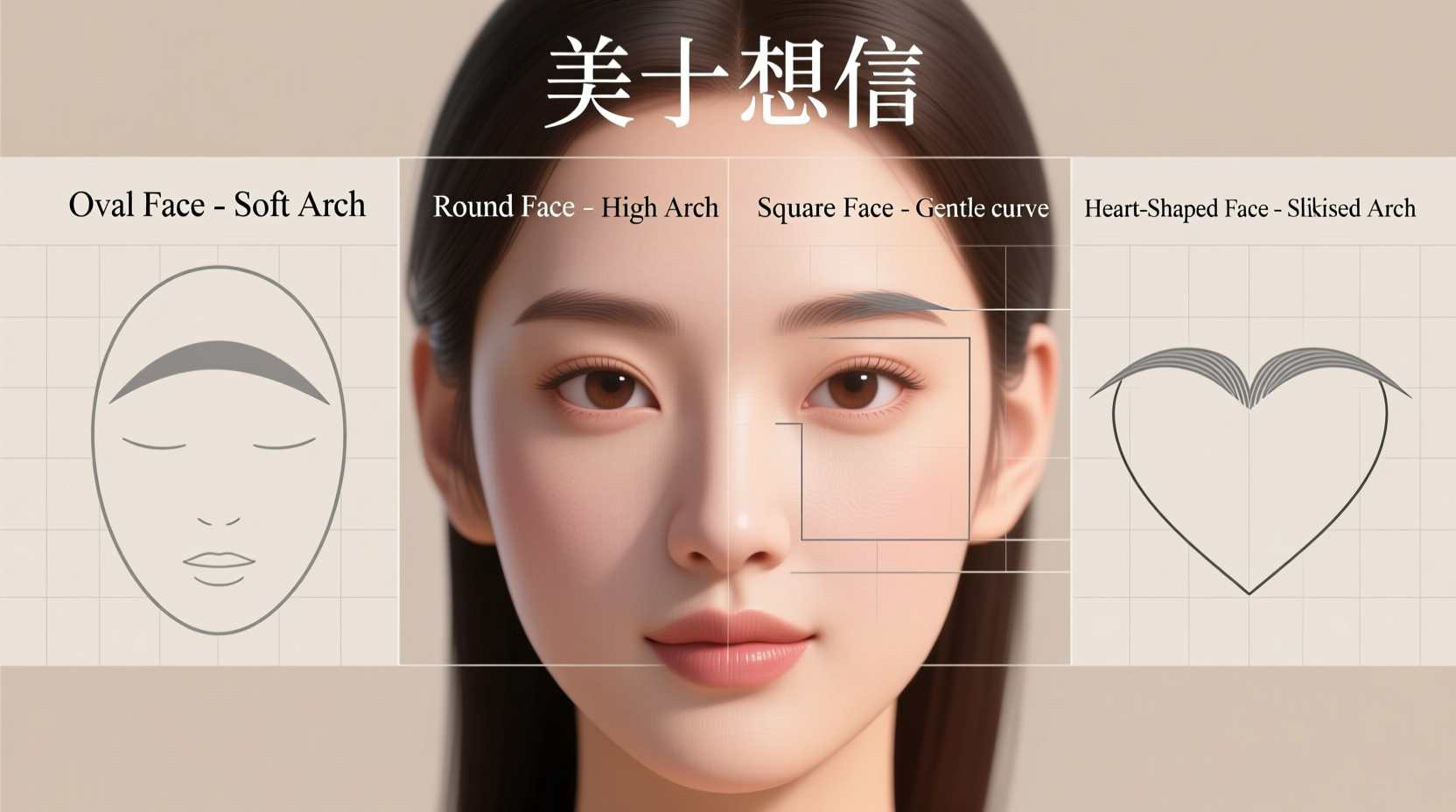
Your face shape plays a pivotal role in determining which eyebrow shape will appear most balanced and flattering. Eyebrows act as horizontal lines that interact with the vertical and horizontal dimensions of your face. A well-chosen arch can soften angles, elongate a round face, or add definition to softer features.
The five primary face shapes are:
- Oval – Balanced proportions, slightly longer than wide
- Round – Equal width and length, full cheeks, soft jawline
- Square – Strong jaw, broad forehead, angular features
- Heart – Wider forehead, narrow chin, often with high cheekbones
- Diamond – Narrow forehead and jaw, wide cheekbones
Each of these benefits from a different brow shape to create visual harmony. For example, high arches can exaggerate a long face, while flat brows may make a round face appear wider. The goal is not to follow trends blindly but to select a brow that enhances your natural symmetry.
A Step-by-Step Guide to Finding Your Ideal Brow Shape
You don’t need makeup or tweezers to begin. Follow this practical, no-makeup method to determine your ideal eyebrow shape using only a pencil or brush and a mirror.
- Determine your face shape. Use a flexible measuring tape or simply observe your reflection. Note the width of your forehead, cheekbones, jawline, and the overall length of your face.
- Find your brow starting point. Hold a straight object (like a makeup brush or pencil) vertically against the side of your nose. Where it aligns with your brow is the ideal start point.
- Locate the arch. Angle the same tool from the outer edge of your nostril through the center of your iris. The point where it intersects your brow marks the peak of your arch.
- Define the end of your brow. Align the tool from your nostril to the outer corner of your eye. This shows where your brow should naturally taper off.
- Assess your natural brow line. Without filling them in, examine where your current brows fall in relation to these guide points. Are they too short? Too arched? Do they start too far inward?
This method, known as the “Golden Rule of Brows,” is widely used by estheticians and dermatologists to establish proportion. It relies on anatomical landmarks rather than trends, making it a reliable way to assess your brows objectively.
Choosing the Right Arch Based on Face Shape
Once you’ve mapped your brows, match your face shape to the most complementary arch style:
| Face Shape | Recommended Brow Shape | Why It Works |
|---|---|---|
| Oval | Soft, medium arch | Maintains natural balance; avoids over-emphasizing already harmonious proportions |
| Round | High, defined arch | Adds vertical lift, elongating the face and drawing attention upward |
| Square | Slightly curved or soft arch | Softens strong jawlines and angular foreheads |
| Heart | Flat or gently sloped brow | Counters a wide forehead; balances a narrow chin |
| Diamond | Soft, rounded arch | Highlights cheekbones without adding width; frames narrow forehead and jaw |
For instance, if you have a square face, sharp, overly dramatic arches can intensify angularity. Instead, a softly curved brow creates a more approachable, balanced look. Conversely, those with round faces benefit from higher arches that visually stretch the face and add structure.
“The eyebrow’s arch should complement the face’s architecture, not compete with it. Natural alignment beats trend-driven extremes every time.” — Dr. Lena Patel, Facial Aesthetics Specialist
Common Mistakes to Avoid When Shaping Eyebrows Naturally
Even with the best intentions, it’s easy to misjudge your brows—especially when relying on mirrors and self-assessment. Here are frequent errors people make when trying to shape their brows without makeup guidance:
- Over-plucking the inner brow – Thinning the start of the brow can make eyes appear closer together and age the face.
- Creating a one-size-fits-all arch – Not all high arches suit all faces. Mimicking celebrity brows without considering your bone structure leads to imbalance.
- Ignoring brow thickness – Thin brows on a strong-featured face can look out of proportion. Fuller brows often age better and provide better framing.
- Following outdated rules – The idea that “thin brows are elegant” or “bold brows are youthful” ignores individual facial dynamics.
- Trimming hairs incorrectly – Cutting too much from the top can flatten the brow and remove its natural curve.
Real Example: How Sarah Found Her Natural Brow Shape
Sarah, a 34-year-old teacher, had spent years shaping her brows into thin, high arches because they were popular in magazines. She noticed, however, that her face looked tense and her forehead appeared wider. After learning about face shape analysis, she assessed her features: heart-shaped face, wide forehead, narrow chin.
Using the pencil method, she discovered her natural brows started too far inward and were over-plucked at the tails. She stopped tweezing aggressively and began grooming her brows to follow a flatter, fuller line that started directly above her tear duct and followed a gentle downward slope.
Within weeks, her friends commented that she looked more relaxed and “well-rested.” The softer brow shape balanced her facial proportions, reducing the visual weight of her forehead and creating symmetry. She never used makeup to fill them in—just brushed them daily with a spoolie and let her natural growth guide the shape.
Checklist: How to Maintain Your Ideal Brow Shape Without Makeup
Once you’ve identified your ideal brow shape, maintain it with these natural care practices:
- ✅ Assess your face shape and brow alignment monthly in natural light
- ✅ Use the pencil method to check start, arch, and endpoint regularly
- ✅ Pluck only stray hairs outside your natural outline—never reshape drastically
- ✅ Brush brows daily with a clean spoolie to train hair direction
- ✓ Trim long hairs that extend beyond the brow line using small scissors
- ✅ Avoid waxing or threading frequently—overuse thins brows permanently
- ✅ Support healthy growth with a balanced diet rich in biotin, protein, and vitamins
Remember: your brows are part of your identity. The goal isn’t perfection but enhancement. A slightly asymmetrical natural brow often looks more authentic and expressive than a perfectly sculpted one.
Frequently Asked Questions
Can I find my ideal brow shape if my brows are very sparse?
Absolutely. Even with minimal hair, you can use the pencil method to determine where your brows should ideally grow. Focus on encouraging growth within that natural framework using gentle care and avoiding over-plucking. Over time, consistent grooming can help train existing hairs to follow the desired shape.
Do men need to consider eyebrow shape too?
Yes. Men also benefit from well-groomed, naturally shaped brows. The principles of face shape and proportion apply regardless of gender. Most men achieve balance with fuller, straighter brows, but the ideal shape still depends on individual facial structure—not stereotypes.
How often should I reassess my brow shape?
Every 3–6 months is ideal, especially if you’re actively growing them out or adjusting your grooming routine. Changes in weight, aging, or even hairstyle can subtly shift facial proportions, so periodic reassessment ensures your brows stay in harmony with your overall look.
Final Thoughts: Embrace Your Natural Frame
Choosing the right eyebrow shape isn’t about chasing trends or achieving Instagram-worthy perfection. It’s about understanding your face, honoring your natural anatomy, and enhancing what you already have. With no makeup required, you can use simple tools and observation to create brows that highlight your best features, express your personality, and require minimal maintenance.
Your eyebrows are more than cosmetic—they’re a key part of your facial language. When shaped in alignment with your face, they convey confidence, openness, and balance. Start today by looking in the mirror with intention. Measure, observe, and respect your natural lines. Over time, you’ll develop an instinct for what works—and what doesn’t—without needing a single pencil stroke.




 浙公网安备
33010002000092号
浙公网安备
33010002000092号 浙B2-20120091-4
Comments
No comments yet. Why don't you start the discussion?