
Every holiday season begins the same way: unboxing last year’s Christmas lights only to find them knotted beyond recognition. The frustration of untangling wires not only eats up time but can damage delicate bulbs and wiring over time. For those embracing a more intentional, clutter-free lifestyle, the solution isn’t just about organization—it’s about prevention through smart, minimalist storage.
Contrary to popular belief, preventing tangles doesn’t require expensive containers or complex systems. With thoughtful techniques and a few clever tricks, you can store your lights efficiently, protect their lifespan, and reclaim valuable storage space. This guide focuses on proven, low-effort methods that prioritize simplicity, durability, and long-term ease.
Why Tangled Lights Happen (And How to Stop It)
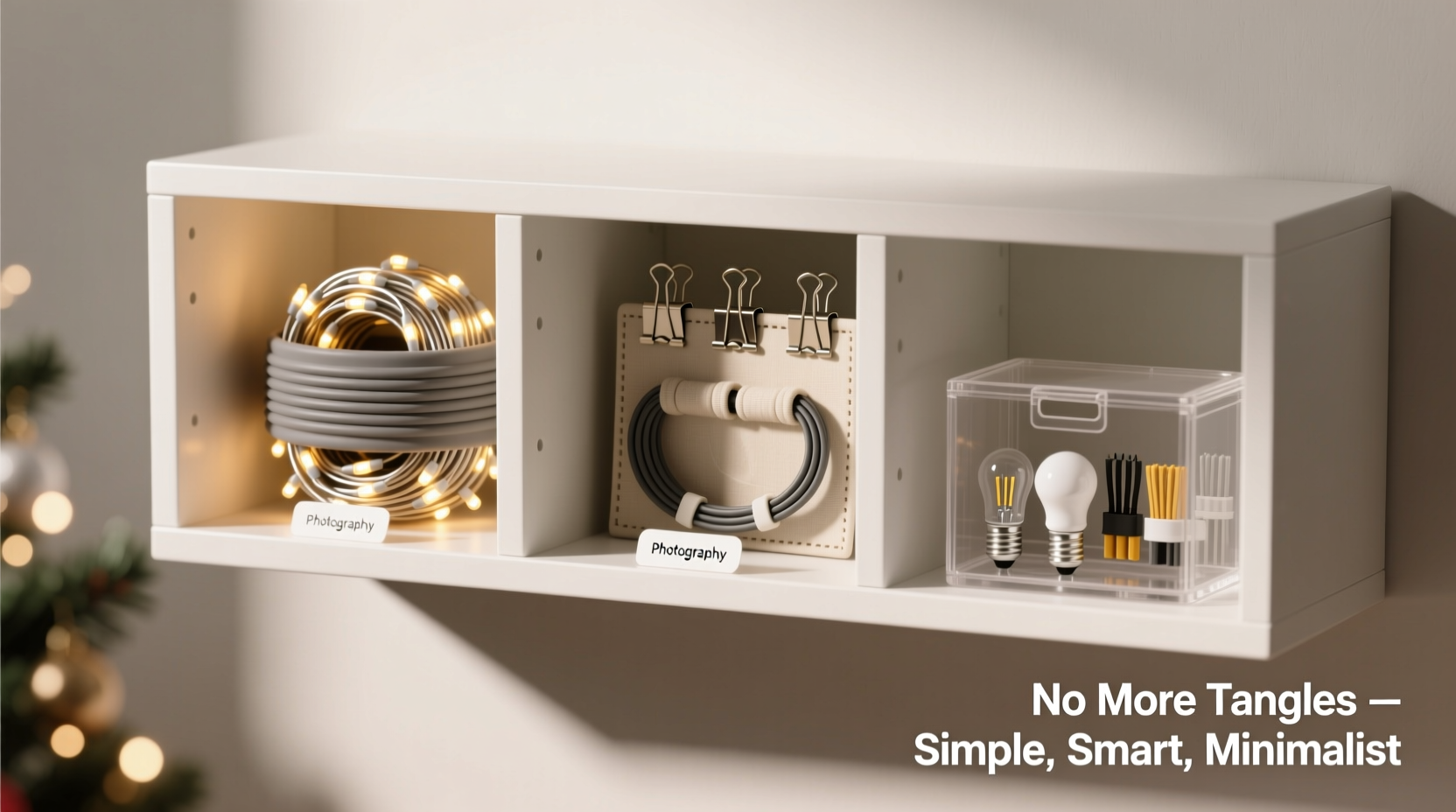
Tangles form when lights are haphazardly stuffed into boxes or wrapped too tightly. As strands shift during storage, loose ends catch on loops, creating knots that tighten over time. Heat, moisture, and pressure from stacked items further degrade wire insulation and increase brittleness, making future unraveling even harder.
The key is controlling how the cord moves during storage. A methodical wrapping technique combined with stable, breathable housing prevents movement and friction. Minimalist storage emphasizes using what you already have, avoiding bulk, and designing routines that stick—even after the holidays end.
“Most light damage occurs not during use, but in storage. Proper coiling and containment can extend strand life by three to five years.” — Daniel Reeves, Electrical Systems Technician and Holiday Lighting Consultant
Step-by-Step: The Wrap-and-Anchor Method
This technique ensures lights stay looped securely without internal twisting—a leading cause of tangles. It works for both incandescent and LED strands, regardless of length.
- Start at the plug end: Always begin wrapping from the plug, not the outlet end. This keeps the heaviest part (the plug) anchored and accessible for next season.
- Use your hand as a guide: Hold the plug between your thumb and forefinger. Wrap the cord around your four fingers, moving down toward the last bulb. Keep tension even—don’t pull tight enough to kink the wire.
- Stop before the final bulb: Leave the last 4–6 inches unwrapped. This dangling section will act as a lock.
- Create a locking loop: Bend the loose end into a small U-shape and tuck it under the last wrap on your hand. Gently slide the entire coil off.
- Secure with a twist tie or velcro strap: Fasten the bundle loosely—just enough to maintain shape. Avoid rubber bands; they degrade and snap over time.
Minimalist Storage Hacks That Actually Work
Minimalism isn’t about owning less for the sake of aesthetics—it’s about reducing friction in daily life. These storage solutions eliminate excess while maximizing protection and accessibility.
1. Toilet Paper & Paper Towel Tubes
Cardboard tubes are free, biodegradable, and perfectly sized for light strands. Slide your wrapped coil inside to prevent unspooling. Seal both ends with masking tape labeled by use or color.
- No additional tools required
- Stackable and lightweight
- Can be stored vertically in a bin or horizontally on a shelf
2. Over-the-Door Shoe Organizer
Hang a clear shoe organizer on the back of a closet door. Each pocket holds one strand, keeping lights visible and separated. Ideal for small apartments or shared storage spaces.
3. Repurposed Coffee Cans
Metal or sturdy plastic coffee cans serve as durable, rodent-resistant containers. Drill a small hole in the lid, thread the plug through, then spool the lights inside. The rigid walls prevent crushing, and the opaque surface shields LEDs from UV exposure.
4. DIY PVC Reel System
For heavy-duty outdoor displays, build a simple reel from 4-inch PVC pipe and end caps. Cut slots near the rim to secure the plug, then wind lights evenly around the cylinder. Cap both ends and stack horizontally.
| Hack | Best For | Space Required | Cost |
|---|---|---|---|
| Toilet Paper Tube | Indoor mini-lights | Low (stackable) | Free |
| Shoe Organizer | Multiple short strands | Vertical wall space | $10–$15 |
| Coffee Can | Medium outdoor sets | Medium shelf space | Free (repurposed) |
| PVC Reel | Long outdoor runs | High (floor storage) | $8–$12 per unit |
A Real Example: From Chaos to Calm in One Season
Sarah, a teacher in Portland, Oregon, used to spend nearly two full days untangling her family’s holiday lights. She had seven strands ranging from 25 to 100 feet, all dumped into a single plastic tote. After reading about minimalist wrapping techniques, she tried the hand-wrap method and stored each coil in a labeled toilet paper tube.
That December, she retrieved the box and pulled out the first tube. With a flick of her wrist, the strand unfurled cleanly—no snags, no knots. The entire setup took 12 minutes, compared to the usual 45 minutes of untangling. “It felt like magic,” she said. “I didn’t realize such a small change could save me so much stress.”
The following spring, she upgraded to a hanging shoe organizer in her hall closet. Now, her children can help decorate by selecting lights visually, without rummaging through a jumbled bin.
Checklist: Prepare Your Lights for Tangle-Free Storage
Follow this checklist annually before packing away your lights:
- ✅ Test each strand for burnt-out bulbs or frayed wires
- ✅ Clean gently with a dry microfiber cloth (avoid water on electrical components)
- ✅ Use the hand-wrap method starting from the plug end
- ✅ Secure with a reusable velcro tie or fabric strip
- ✅ Store in a designated container (tube, can, or pocket)
- ✅ Label clearly by location, color, or function
- ✅ Keep in a cool, dry place away from pests and temperature swings
Common Mistakes That Lead to Tangles
Even with good intentions, small oversights undo careful efforts. Avoid these frequent errors:
- Overfilling containers: Crowding causes pressure points and shifting. One strand per tube or pocket is ideal.
- Using twist ties too tightly: Metal ties can cut into insulation. Opt for soft velcro or fabric strips.
- Wrapping around sharp edges: Never wrap lights around boxes with jagged corners or metal brackets.
- Storing while damp: Moisture accelerates corrosion and mold growth. Always dry lights completely before storage.
- Ignoring manufacturer instructions: Some LED strings specify no coiling—check labels for guidance.
“People treat holiday lights like any other decoration. But electrically, they’re more like tools. Treat them with care, and they’ll perform reliably for years.” — Lena Park, Home Safety Inspector and Energy Efficiency Advisor
Frequently Asked Questions
Can I use ziplock bags for storing Christmas lights?
Not recommended. While convenient, plastic bags trap moisture and encourage condensation, especially in basements or garages. They also create static that attracts dust. If you must use bags, choose breathable cotton drawstring pouches or include desiccant packs.
How do I store net lights without tangling?
Net lights are trickier due to their grid layout. Lay them flat on a clean sheet, fold in thirds like a letter, then roll tightly from one end. Store in a rigid container to prevent creasing. Alternatively, lay them between two pieces of cardboard and bind with twine.
Should I keep lights plugged in during storage to test them?
No. Never store lights while powered. Testing should happen before storage (to identify issues) and again before reuse. Leaving them plugged poses fire risks, especially if covered or compressed.
Conclusion: Make Next Year Easier—Today
Preventing tangled Christmas lights isn’t about finding the perfect product—it’s about adopting a consistent, mindful approach. The most effective solutions are often the simplest: a cardboard tube, a well-wrapped coil, and a labeled system that makes sense to you. By investing just a few extra minutes at the end of each season, you save hours of frustration later and extend the life of your decorations.
Minimalist storage isn’t austerity—it’s clarity. When your holiday setup flows smoothly, the season feels lighter, more joyful, and truly focused on what matters. Start small this year. Wrap one strand properly. Try one hack. Build the habit. You won’t just avoid tangles—you’ll transform a dreaded chore into a quiet act of care.




 浙公网安备
33010002000092号
浙公网安备
33010002000092号 浙B2-20120091-4
Comments
No comments yet. Why don't you start the discussion?