
When summer heat turns your bedroom or living space into an oven, air conditioning may not always be available—or affordable to run. Yet comfort doesn’t have to depend on a central cooling system. With strategic airflow management, thermal physics, and everyday household items, you can lower the temperature in a room significantly within minutes. These proven, low-cost methods leverage natural convection, evaporation, insulation, and behavioral adjustments to create immediate relief from oppressive indoor heat.
The key isn't just reacting to heat—it's outsmarting it. By understanding how heat accumulates and circulates indoors, you can apply targeted interventions that deliver real results. Whether you're dealing with a sun-baked apartment, a poorly ventilated attic room, or rolling blackouts during a heatwave, these techniques offer practical solutions grounded in science and real-world effectiveness.
Use Cross-Ventilation Strategically
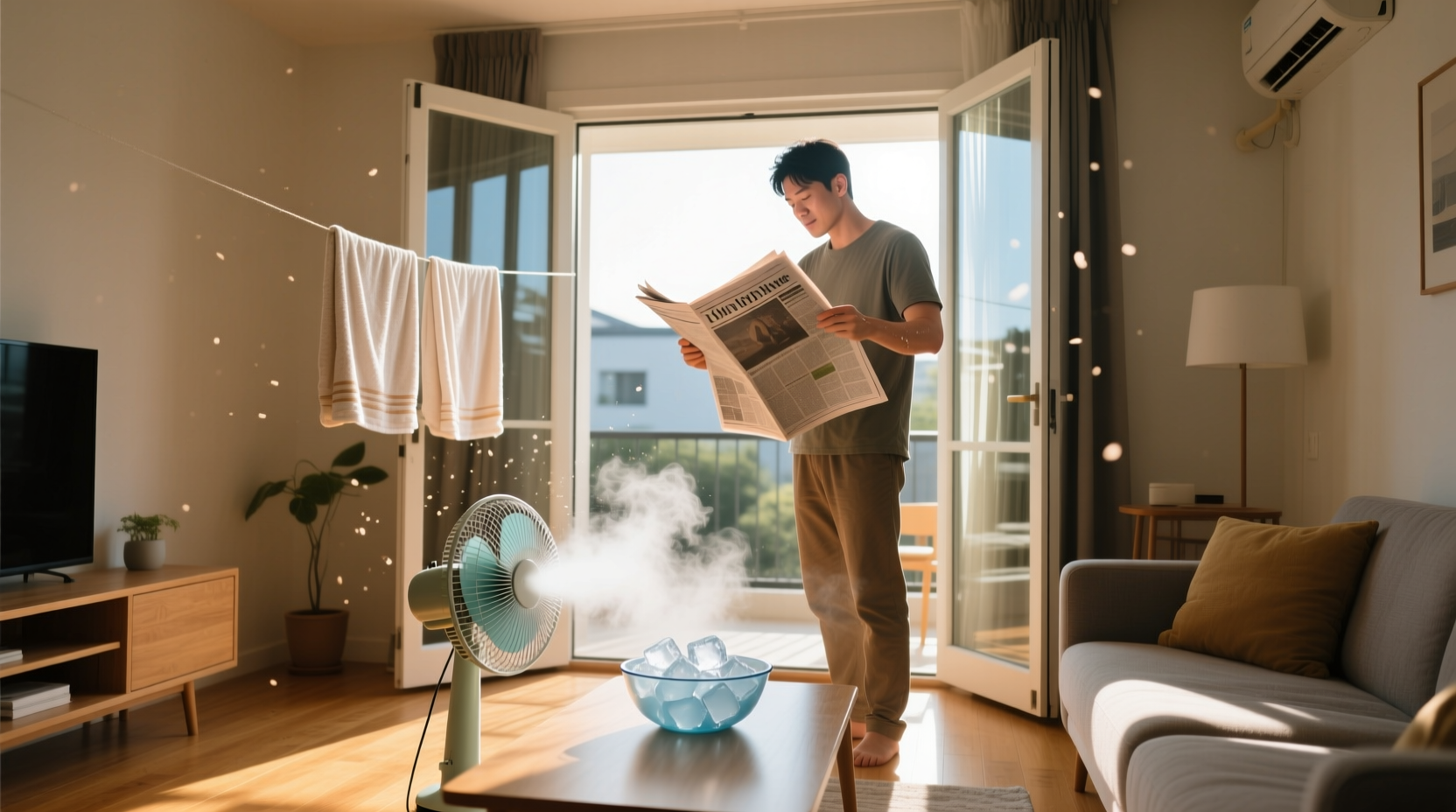
One of the most powerful ways to cool a room quickly is to encourage cross-ventilation—creating a flow of air through opposing windows or doors. Hot air rises and stagnant air traps heat, but moving air carries thermal energy away from your body and helps evaporate sweat, which naturally cools you down.
To maximize this effect, open windows on opposite sides of the room (or building) at different heights. Cooler air enters through lower openings while warmer air escapes through higher ones—a principle known as the stack effect. If possible, open a window on the shaded side of your home and another upstairs or on the sunny side to draw hot air out.
A fan placed near an intake window can pull in cooler air, while another positioned near an exhaust point pushes hot air out. This creates a wind tunnel effect that rapidly replaces warm indoor air with fresher, cooler air from outside.
Create a DIY Evaporative Cooler
In dry climates, evaporation is a powerful ally. As water changes from liquid to vapor, it absorbs heat from the surrounding air—this is the same mechanism behind sweating. You can harness this process using common household items to make a simple, effective evaporative cooler.
- Place a large bowl or pan of ice in front of a standard desk or box fan.
- Position a wet towel over the bowl, allowing one end to drape into the water for continuous wicking.
- Turn on the fan so it blows across the ice and wet fabric.
The fan pulls air through the moist surface, cooling it via evaporation. In arid conditions, this method can reduce perceived room temperature by 5–10°F (3–6°C). While less effective in humid environments, combining ice with airflow still provides a noticeable chill right where you need it.
| Method | Cooling Potential | Best For | Limitations |
|---|---|---|---|
| Ice + Fan Setup | Immediate localized cooling | Small rooms, personal use | Limited area coverage; needs replenishing |
| Cross-Ventilation | 1–5°F drop in ambient temp | Well-ventilated homes | Ineffective if outside air is hotter |
| Wet Sheet Over Window | Moderate cooling via evaporation | Dry climates, nighttime use | Increases humidity; requires maintenance |
| Thermal Blocking (Blinds/Curtains) | Prevents 20–30% heat gain | Sunny rooms, daytime | No active cooling; preventive only |
“Evaporative cooling works best in low-humidity areas, but even in moderate humidity, the breeze from a fan blowing over ice creates a psychologically and physically cooler environment.” — Dr. Linda Chen, Environmental Health Scientist
Block Heat Before It Enters
Prevention beats correction. The fastest way to cool a room is to stop it from heating up in the first place. Up to 76% of sunlight that hits standard windows can turn into heat inside your home. By blocking solar radiation before it penetrates your space, you maintain a cooler baseline temperature.
- Closed blinds or curtains: Use white or reflective-backed shades on sun-facing windows. Dark curtains absorb heat and radiate it inward; lighter materials reflect sunlight.
- Tinted window film: Affordable adhesive films reduce UV and infrared transmission without blocking visibility.
- Exterior shading: Awnings, shutters, or even temporary cardboard cutouts taped outside windows dramatically reduce indoor heat buildup.
- Seal gaps: Check for drafts around windows and doors. While sealing is typically associated with winter, unsealed gaps allow hot air infiltration during summer too.
A study by the Lawrence Berkeley National Laboratory found that closing light-colored blinds during the day reduced solar heat gain by up to 45%. Combine this with turning off unnecessary lights and appliances (which emit heat), and you can keep a room several degrees cooler than ambient outdoor highs.
Optimize Fan Placement and Direction
Fans don’t lower room temperature—they enhance personal comfort by increasing evaporation from your skin. But placement makes all the difference between ineffective spinning and meaningful cooling.
Single Fan Strategy
If you have only one fan, position it facing outward in a window during cooler parts of the day (early morning or evening). This expels trapped hot air and pulls in fresh air from other open windows or doors. During the hottest hours, reverse the direction: aim the fan inward to blow directly on you while you’re seated or sleeping.
Two-Fan Crossflow System
- Place one fan facing **outward** in a window on the warmer side of the room (typically sun-exposed).
- Place a second fan facing **inward** in a window on the cooler, shaded side.
- Open both windows fully and close interior doors to focus airflow.
This setup creates directional airflow that mimics natural breezes. The inward fan brings in cooler air; the outward fan extracts rising hot air. The result is a steady current that lowers perceived temperature and prevents stuffiness.
Ceiling Fan Tip
If you have a ceiling fan, set it to rotate counterclockwise (when viewed from below) during summer. This pushes air downward, creating a wind-chill effect. Run it only when people are in the room—fans cool bodies, not spaces.
Real-World Example: Cooling a Third-Floor Apartment in July
Maria lives in a third-floor walk-up in Phoenix, Arizona, where afternoon temperatures regularly exceed 105°F (40°C). Her apartment faces west and receives direct sun from 3 PM onward. Without central AC, she relied on a single window unit until it broke mid-heatwave.
Using a combination of low-tech solutions, Maria cooled her bedroom by nearly 12°F overnight:
- At 6 AM, she opened north- and south-facing windows and placed a box fan in the south window, blowing **outward** to expel overnight-stored heat.
- By 8 AM, she closed all windows and drew white thermal curtains over sun-facing glass.
- During the day, she minimized appliance use and stayed in the coolest corner of the room.
- At 8 PM, after outdoor temps dropped below 90°F, she reopened windows and used two fans: one pulling cool air in from the north, another exhausting hot air south.
- She hung a damp cotton sheet in the north window and placed a bowl of ice in front of a pedestal fan aimed at her bed.
Within 45 minutes, the room felt noticeably cooler. Overnight, the combination kept her bedroom around 82°F despite the exterior being above 100°F earlier that day. “I thought I’d never sleep,” she said. “But by midnight, I was comfortable enough to turn off the fan and just use the breeze.”
Essential Cooling Checklist
Follow this step-by-step checklist to cool down any room quickly and efficiently:
- ✅ Close windows and blinds on sun-facing sides by 9 AM.
- ✅ Turn off non-essential electronics and lights to reduce internal heat.
- ✅ Open windows on shaded/cool sides during early morning or late evening.
- ✅ Place fans to create cross-ventilation: one intake, one exhaust.
- ✅ Use ice + fan combos for immediate personal cooling.
- ✅ Hang damp towels or sheets in airflow paths for evaporative cooling.
- ✅ Sleep with a cold washcloth on wrists or neck—major blood vessels here respond quickly to cooling.
- ✅ Avoid cooking indoors; use microwaves or eat cold meals to minimize heat generation.
Frequently Asked Questions
Can I cool a room without electricity?
Yes. Passive methods like closing blinds during the day, opening windows at night, using thermal mass (like cool tile floors), and hanging wet fabrics rely solely on design and behavior. Strategic building orientation and insulation also play long-term roles in minimizing heat gain.
Why does my room stay hot even at night?
Urban environments retain heat in concrete, asphalt, and buildings—a phenomenon called the urban heat island effect. Additionally, upper floors absorb heat from roofs, and poor ventilation traps warm air. To counter this, ventilate aggressively during the coolest hours (usually 4–6 AM) and use evaporative tactics like damp cloths or misting sprays.
Do plants help cool a room?
Indirectly, yes. Plants release moisture through transpiration, which can slightly cool the air. More importantly, placing potted plants outside sun-facing windows creates shade and reduces solar absorption. Indoor plants improve air quality and humidity balance but should not be relied upon for significant cooling.
Final Thoughts: Stay Cool, Stay Smart
Cooling a room without air conditioning isn’t about enduring discomfort—it’s about working with physics, not against it. Simple actions like timing your ventilation, leveraging evaporation, and managing solar exposure can transform a sweltering space into a livable retreat. These methods cost little or nothing, require minimal equipment, and can be deployed immediately during power outages or budget constraints.
The most effective cooling strategy combines prevention (blocking heat entry), circulation (moving air intelligently), and personal relief (targeted cooling where it matters). When applied together, they create a compound effect far greater than any single hack alone.




 浙公网安备
33010002000092号
浙公网安备
33010002000092号 浙B2-20120091-4
Comments
No comments yet. Why don't you start the discussion?