
Red wine spills on a white couch are every homeowner’s nightmare. The deep crimson pigment sets quickly, threatening to permanently mar the fabric. But before you resign yourself to replacing the furniture, there’s a powerful, eco-friendly solution already in your kitchen: baking soda and vinegar. This dynamic duo not only lifts tough organic stains but also deodorizes and refreshes upholstery without harsh chemicals. When used correctly, they can restore your white couch to near-original condition — often within an hour.
This guide walks through the science behind the method, provides a detailed action plan, and shares expert-backed tips to prevent future mishaps. Whether the spill just happened or has been sitting for hours, the approach outlined here maximizes stain removal while protecting delicate fabrics.
The Science Behind Baking Soda and Vinegar for Stain Removal
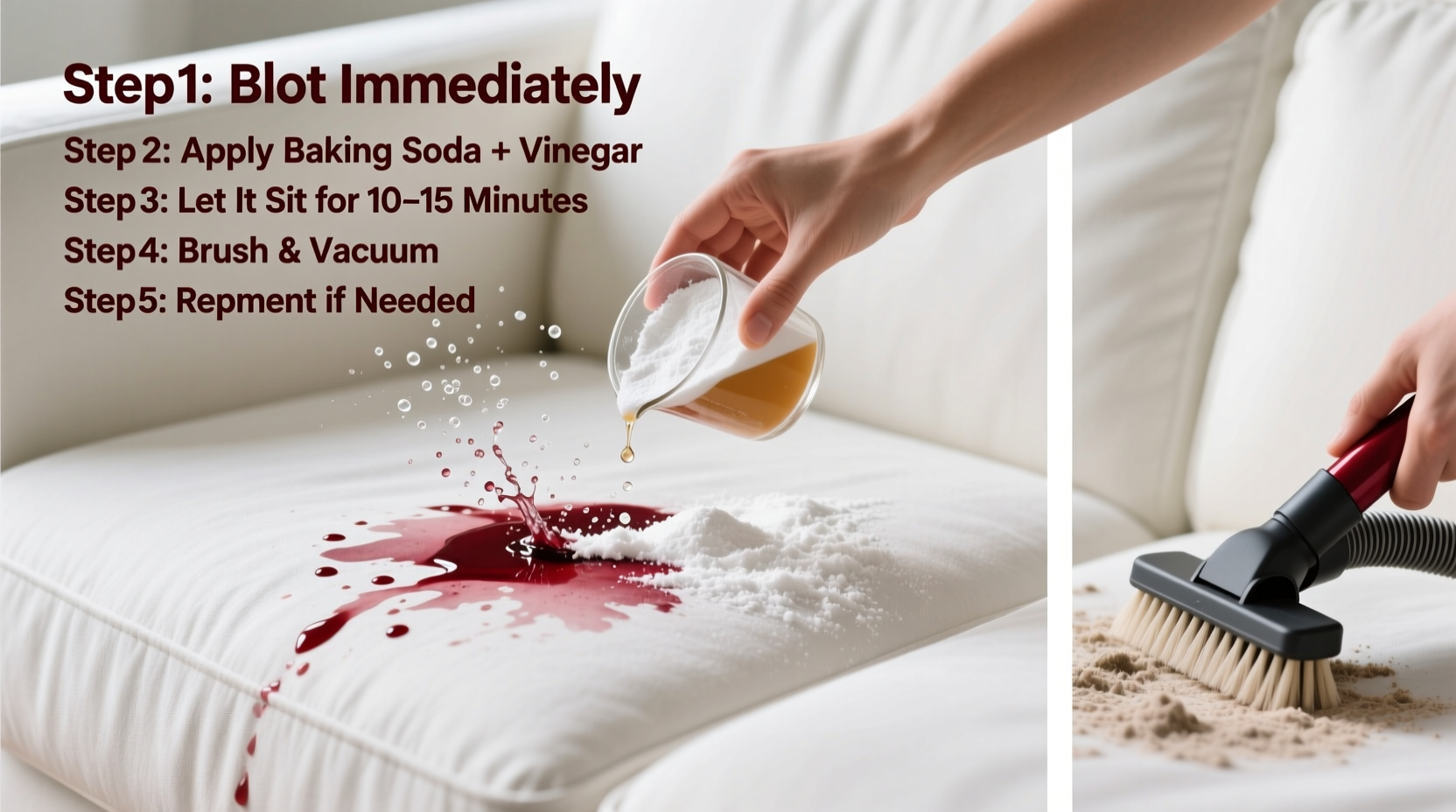
Baking soda (sodium bicarbonate) and white vinegar (acetic acid) form a well-known cleaning combination due to their chemical reactivity. When combined, they produce carbon dioxide gas, creating a bubbling action that helps lift embedded particles from porous surfaces like fabric fibers. But beyond the fizz, each ingredient plays a distinct role:
- Baking soda acts as a mild abrasive and absorbent. It draws out moisture and pigments from the stain while gently scrubbing without damaging most upholstery.
- Vinegar breaks down organic compounds, including tannins found in red wine, which are responsible for the stubborn coloration.
Together, they create a synergistic effect: vinegar loosens the stain, and baking soda absorbs it. Unlike commercial cleaners that may leave residue or bleach sensitive materials, this natural solution is safe for most fabric types when used properly.
“Natural cleaning agents like baking soda and vinegar are excellent for fresh organic stains. Their dual action of lifting and absorbing makes them ideal for fabric care.” — Dr. Lena Patel, Textile Chemist & Home Cleaning Researcher
Step-by-Step Guide to Removing Red Wine Stains
Timing is critical. The sooner you act, the higher your chances of complete removal. Follow this timeline-based method for optimal results:
- Blot Immediately (0–5 minutes after spill)
Use a clean, dry microfiber cloth or paper towel to absorb as much liquid as possible. Press down firmly—don’t rub, as this spreads the stain. - Sprinkle Baking Soda (Within 10 minutes)
Cover the entire stained area with a thick layer of baking soda. It will begin absorbing residual wine immediately. - Apply White Vinegar (After 5–10 minutes)
Pour distilled white vinegar slowly over the baking soda. You’ll see a fizzing reaction—this is the cleaning process starting. Use enough to saturate the area but avoid soaking through to the cushion foam underneath. - Let It Sit (15–30 minutes)
Allow the mixture to work. The bubbles penetrate deep into the fibers, breaking down tannins and lifting color. - Gently Scrub (After waiting)
Using a soft-bristle brush or toothbrush, lightly agitate the area in circular motions. Focus on the center of the stain, working outward to prevent spreading. - Blot Again
Press with a clean, damp cloth to remove the paste and dissolved wine residue. Repeat if necessary. - Rinse and Dry
Dampen a new cloth with cold water and blot the area to neutralize any remaining vinegar. Then, use a dry towel to absorb moisture. Allow the couch to air-dry completely—avoid direct heat or sunlight, which can set residual stains.
Do’s and Don’ts: Table of Best Practices
| Do’s | Don’ts |
|---|---|
| Act quickly — treat spills within 10 minutes | Delay treatment — dried wine is harder to remove |
| Blot, don’t rub the stain | Rub vigorously — this grinds wine deeper into fibers |
| Use distilled white vinegar (not apple cider or red vinegar) | Use colored vinegars — they may stain further |
| Perform a patch test on inconspicuous fabric | Apply full treatment without testing |
| Air-dry naturally after cleaning | Use a hairdryer or heater — heat sets stains |
| Use cold water for rinsing | Use hot water — it can cook the protein in wine into the fabric |
Real Example: A Dinner Party Rescue
Sarah hosted a small gathering when a guest knocked over a glass of Cabernet Sauvignon directly onto her ivory linen sectional. Panic set in—she had invested heavily in that couch. Remembering a tip from a friend, she grabbed baking soda and white vinegar from her pantry.
She blotted the excess with napkins, sprinkled a generous amount of baking soda, then drizzled vinegar. After the fizzing subsided, she let it sit for 20 minutes. Using an old toothbrush, she gently scrubbed the area and wiped it clean with a damp cloth. Two rounds later, the stain was nearly invisible. Within three hours, the spot was dry and undetectable unless you knew where to look.
Sarah later commented, “I thought I’d have to live with that stain forever. This method saved hundreds in replacement costs.” Her experience underscores how accessible ingredients, applied correctly, can solve what seems like a disaster.
Enhancing Results: Additional Tips and Variations
While baking soda and vinegar form the core of this method, a few enhancements can improve effectiveness, especially for older or larger stains.
- Add hydrogen peroxide (for colorfast fabrics): After the initial vinegar-baking soda treatment, apply a 3% hydrogen peroxide solution to further break down pigments. Test first—peroxide can lighten some fabrics.
- Use salt as a preliminary step: If vinegar isn’t available, cover the wet stain with table salt to absorb liquid and slow spreading until you can treat it properly.
- Incorporate dish soap: A single drop of mild dish detergent mixed with cold water can be dabbed on before the baking soda step to emulsify wine oils.
- Steam clean for deep restoration: Once the stain is gone, use a fabric steamer to refresh the entire section, removing odors and restoring fiber texture.
For microfiber or synthetic blends, which are tightly woven and stain-resistant, the same method works but may require less vinegar to avoid oversaturation. Natural fabrics like cotton or linen respond exceptionally well but may need extra drying time.
Frequently Asked Questions
Can baking soda and vinegar damage my white couch?
Generally, no—if used correctly. Both are gentle on most fabrics. However, always perform a patch test first. Avoid using on silk or velvet unless specified by the manufacturer, as these materials are more delicate and prone to water spotting.
What if the stain comes back after drying?
Residual moisture trapped beneath the surface can wick back up, making the stain reappear. Ensure thorough drying with fans or open windows. If the stain returns, repeat the treatment and extend drying time. Consider using a dry towel pressed over the area overnight to draw out hidden moisture.
Is this method safe for all types of white couch fabric?
It works best on cotton, polyester, linen, and microfiber. Check the care label: codes like “W” mean water-based cleaners are safe; “S” indicates solvent-only cleaners, so avoid vinegar. For “WS,” this method is typically acceptable. When in doubt, consult the manufacturer or use professional cleaning services.
Prevention Checklist: Keep Your White Couch Stain-Free
Proactive habits reduce the risk of future accidents. Follow this checklist to protect your investment:
- ✅ Use spill-proof wine glasses or acrylic tumblers indoors
- ✅ Place washable throws or slipcovers over high-use sections
- ✅ Keep a cleaning kit (baking soda, vinegar, cloths, brush) in a nearby closet
- ✅ Establish a “no drinks on furniture” rule during large gatherings
- ✅ Rotate cushions regularly to even out wear and exposure
- ✅ Vacuum weekly to prevent dirt buildup that traps stains
- ✅ Schedule professional deep cleaning every 6–12 months
“The best stain removal strategy is prevention paired with immediate response. Having supplies ready means you’re never caught off guard.” — Marcus Reed, Upholstery Care Technician
Conclusion: Restore Confidence in Your Living Space
A spilled glass of red wine doesn’t have to mean the end of your white couch’s elegance. With baking soda and vinegar—two inexpensive, non-toxic staples—you can tackle one of the most feared household accidents effectively and safely. The method combines chemical intelligence with practical simplicity, offering real results without relying on synthetic products.
Whether you’re dealing with a fresh spill or a lingering mark from last weekend’s dinner, the steps outlined here provide a clear, reliable path to restoration. More importantly, they empower you to maintain your home with confidence, knowing that accidents don’t have to become permanent fixtures.




 浙公网安备
33010002000092号
浙公网安备
33010002000092号 浙B2-20120091-4
Comments
No comments yet. Why don't you start the discussion?