
Skincare routines are only as effective as the integrity of the products used. Once a bottle or jar is opened, its contents become vulnerable to bacteria, mold, oxidation, and environmental degradation. Contaminated skincare can lead to breakouts, irritation, infections, and diminished results. Yet, many people overlook proper storage after opening—placing serums in humid bathrooms, leaving jars uncovered, or using unclean hands to scoop creams. Understanding how to store opened skincare correctly isn't just about preserving texture or scent; it's about protecting your skin’s health.
The average bathroom, while convenient, is one of the worst places for skincare storage due to fluctuating humidity, temperature changes, and exposure to airborne contaminants from flushing toilets. A 2023 study published in *Dermatology Practical & Conceptual* found that over 70% of used skincare containers showed microbial growth within six months of opening—especially those stored in damp environments. The good news: with informed habits, you can significantly reduce contamination risks and get more value from every product.
Understanding Skincare Product Vulnerability After Opening
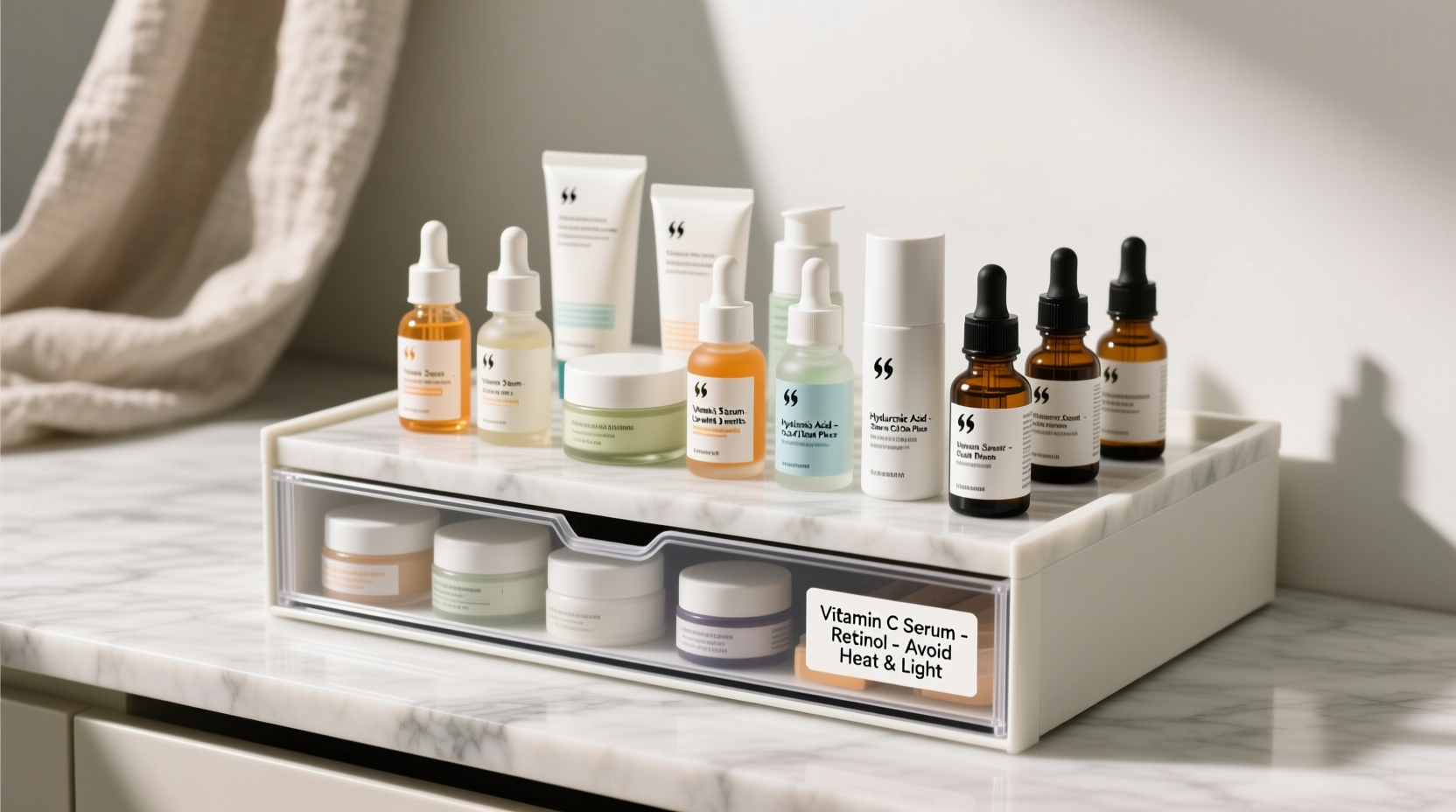
When a skincare product is sealed, it exists in a controlled environment designed by formulators to preserve stability and sterility. Once opened, that protection ends. Exposure to air introduces oxygen, which degrades active ingredients like vitamin C, retinol, and peptides. Moisture fosters bacterial and fungal growth, particularly in water-based formulas such as toners, moisturizers, and serums. Physical contact—like dipping fingers into a jar—transfers skin oils, dead cells, and microbes directly into the product.
Packaging plays a crucial role in post-opening safety. Products in jars with wide openings are at higher risk than those with airless pumps, droppers, or tube dispensers. According to Dr. Lindsey Zubritsky, a board-certified dermatologist based in Chicago, “Jars may feel luxurious, but they’re microbiological minefields. Every time you dip your fingers in, you’re seeding the product with whatever is on your hands—even if they’re freshly washed.”
Preservatives help inhibit microbial growth, but their effectiveness diminishes over time. Most preservative systems are calibrated for a specific \"period after opening\" (PAO), usually indicated by an open jar symbol on the packaging with a number like “6M” or “12M,” meaning six or twelve months. Exceeding this window increases contamination risk, especially if stored improperly.
“Once a product is opened, its lifespan isn’t just about expiration dates—it’s about how you handle and store it daily.” — Dr. Alicia Kim, Cosmetic Formulation Scientist
Best Practices for Storing Opened Skincare Products
Effective storage begins with understanding each product’s formulation and sensitivity. Not all skincare items should be treated the same. Here’s how to protect common categories:
1. Keep Water-Based Products Away from Humidity
Toners, essences, and liquid exfoliants often contain water, making them breeding grounds for bacteria and yeast. Store these in a cool, dry cabinet outside the bathroom, preferably in a bedroom or dressing area. Avoid placing them near sinks or showers where steam accumulates.
2. Protect Actives from Light and Air
Vitamin C serums, retinoids, and antioxidant blends degrade rapidly when exposed to UV light and oxygen. Always close caps tightly and store in opaque containers or dark drawers. Amber or cobalt glass bottles offer better protection than clear plastic or glass.
3. Refrigerate Select Products for Extended Freshness
Certain formulations benefit from cold storage. These include:
- Probiotic serums
- Unpreserved or minimally preserved products
- Peptide-rich ampoules
- Products with unstable actives like pure L-ascorbic acid
4. Use Clean Hands or Tools
If your product comes in a jar, never apply it with bare fingers. Instead, use a clean spatula or disposable cotton pad. Wash and dry the spatula after each use. For dropper bottles, avoid letting the tip touch your skin or countertop to prevent cross-contamination.
Do’s and Don’ts of Skincare Storage
| Do’s | Don’ts |
|---|---|
| Store products in a cool, dark drawer or cabinet | Leave products in the bathroom near the shower |
| Wash hands before application or use a clean tool | Dip fingers directly into jars |
| Keep caps tightly closed when not in use | Leave lids off for extended periods |
| Label products with opening date | Ignore the PAO symbol on packaging |
| Refrigerate sensitive serums and probiotics | Store all products in the fridge (can alter texture) |
Step-by-Step Guide to Organizing Your Skincare Storage System
Creating a safe, contamination-free skincare routine requires intentional organization. Follow this five-step process to optimize your storage setup:
- Inventory Your Products: Gather all opened skincare items. Check for expiration dates and PAO symbols. Discard anything past its recommended use period or showing signs of spoilage (off smell, separation, discoloration).
- Categorize by Sensitivity: Group products by storage needs:
- Refrigerate: Probiotics, unstable actives, high-water-content serums
- Cool/dark storage: Retinols, vitamin C, oils, sunscreens
- Room temperature: Cleansers, balms, powders
- Designate Storage Zones: Assign locations based on category:
- A small refrigerator (beauty fridge or food fridge) for refrigerated items
- A lined drawer or box in a bedroom or closet for light-sensitive products
- A dry shelf for cleansers and tools
- Implement Hygiene Protocols: Place a clean spatula next to jarred products. Keep alcohol wipes nearby to sanitize dropper tips and pump nozzles weekly.
- Label Everything: Use waterproof labels or a marker to write the opening date on each product. This makes it easy to track usage and dispose of items on time.
Real-World Example: How One User Reduced Breakouts by Changing Storage Habits
Sophie, a 32-year-old graphic designer from Portland, struggled with recurring chin acne despite using gentle, non-comedogenic products. She visited a dermatologist who asked about her skincare habits. Sophie mentioned she kept all her products—including her hydrating serum and moisturizer—in a glass tray on her bathroom counter, right next to the shower.
The dermatologist suggested she move her products to a bedroom drawer and switch from her open-jar moisturizer to a pump version. She also began using a silicone spatula for her night cream. Within four weeks, her breakouts decreased significantly. A lab test later revealed that her old moisturizer jar had high levels of *Staphylococcus epidermidis* and mold spores—likely introduced through repeated hand contact and steam exposure.
“I never thought my bathroom was the problem,” Sophie said. “Now I keep everything dry and closed, and my skin has never been clearer.”
Essential Checklist for Safe Skincare Storage
- ✅ Check the PAO symbol and write the opening date on every product
- ✅ Move water-based and active-rich products out of the bathroom
- ✅ Use clean tools (spatulas, cotton pads) for jarred products
- ✅ Store vitamin C, retinol, and probiotics in a cool, dark place—or the fridge
- ✅ Sanitize pump heads and droppers weekly with rubbing alcohol
- ✅ Replace sponges, brushes, and applicators monthly
- ✅ Discard any product that changes color, smell, or texture
- ✅ Avoid sharing skincare products with others
Frequently Asked Questions
Can I store all my skincare in the fridge?
No, not all products benefit from refrigeration. While some serums and probiotics thrive in cooler temperatures, others—like oil-based cleansers or thick creams—may separate or harden. Only refrigerate products specifically recommended for cold storage or those with unstable ingredients.
How do I know if my skincare product is contaminated?
Signs include an off or sour smell, visible mold, unusual texture changes (graininess, curdling), or unexpected skin reactions like redness or breakouts after consistent use. When in doubt, discard the product.
Is it safe to use a product past its PAO date if it looks fine?
No. The PAO date reflects both microbial safety and ingredient stability. Even if a product appears unchanged, its preservative system may have weakened, increasing infection risk. Always follow the manufacturer’s guidelines.
Final Thoughts: Make Storage Part of Your Skincare Ritual
Protecting your skincare investment goes beyond choosing high-quality formulas. It extends to how you handle, dispense, and store each product after opening. Simple changes—like relocating your routine out of the steamy bathroom, labeling opening dates, and using sterile tools—can dramatically reduce contamination risks and enhance results.
Your skin deserves more than just active ingredients; it deserves products delivered in their most stable, uncontaminated form. By treating skincare storage as a critical part of your regimen, you're not just preventing breakouts—you're supporting long-term skin health, clarity, and resilience.




 浙公网安备
33010002000092号
浙公网安备
33010002000092号 浙B2-20120091-4
Comments
No comments yet. Why don't you start the discussion?