
Selecting the right Apple Watch band isn’t just about matching your outfit—it’s a decision that impacts daily comfort, long-term durability, and even skin health. With dozens of materials available—from silicone to leather, stainless steel to nylon—choosing the ideal one requires balancing personal needs with practical performance. The wrong choice can lead to irritation, premature wear, or a look that feels out of place. The right one enhances both function and fashion, making your wearable feel like a natural extension of your lifestyle.
Understanding Your Daily Needs and Lifestyle
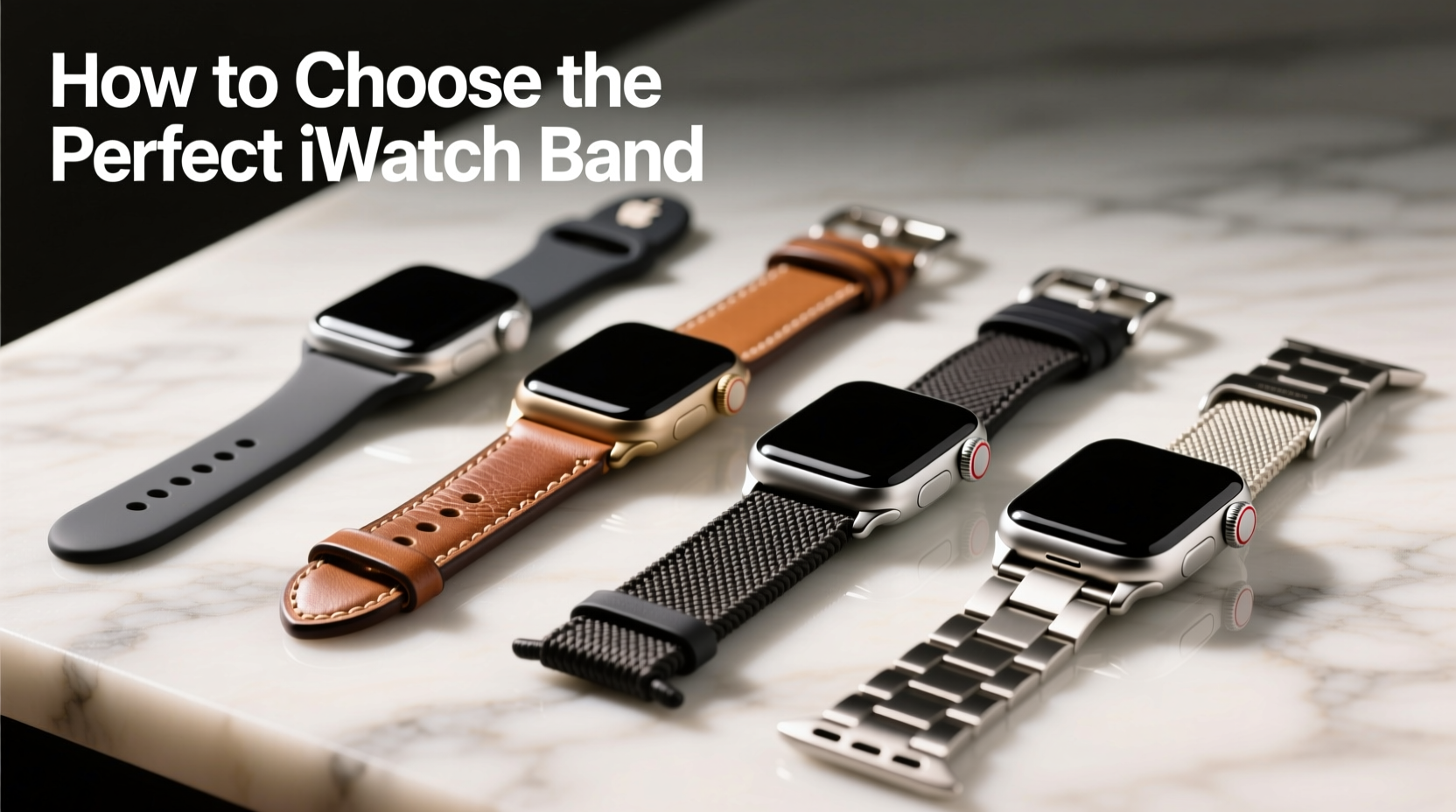
Your daily routine should be the starting point when evaluating band materials. A construction worker, office professional, yoga instructor, and marathon runner all have vastly different demands from their watch bands. Sweat resistance matters for athletes; scratch resistance is key for industrial environments; breathability helps during long workdays.
Ask yourself: How many hours a day will you wear the watch? Will it be exposed to water, heat, or friction? Do you tend to sweat heavily? Are you sensitive to certain materials? Answering these honestly shapes your ideal material profile.
Top iWatch Band Materials Compared
Each material offers distinct advantages and trade-offs. Below is a detailed comparison of the most common options based on comfort, style, and durability.
| Material | Comfort | Style Flexibility | Durability | Best For |
|---|---|---|---|---|
| Silicone / Fluoroelastomer (Sport Band) | High – lightweight, flexible, sweat-resistant | Moderate – sporty, casual | High – resists cracks, UV, and moisture | Athletes, active users, hot climates |
| Leather | Moderate – molds to wrist but stiff at first | High – elegant, professional, customizable | Low-Moderate – ages well but stains easily | Office settings, formal events, cooler weather |
| Stainless Steel | Low-Moderate – heavy, can pinch hairs | High – luxurious, timeless | Very High – resistant to scratches and impact | Dress occasions, durable everyday use (if weight tolerated) |
| Nylon (Sport Loop) | Very High – soft, breathable, no-slip | Moderate – casual, colorful | Moderate – fades over time, absorbs odors | All-day wear, sensitive skin, sleep tracking |
| Titanium | High – lighter than steel, smooth finish | High – modern, premium | Very High – corrosion and scratch-resistant | Long-term investment, allergy-prone users |
| Fabric (Modern Buckle, Fine Woven) | Moderate – stylish but less breathable | Very High – designer appeal | Low – delicate, not water-resistant | Special occasions, fashion-forward users |
“Material selection is often overlooked, but it directly affects user retention. A band that causes discomfort leads to reduced usage—even with top-tier smartwatch features.” — Dr. Lena Torres, Wearable Ergonomics Researcher, MIT Media Lab
Step-by-Step Guide to Choosing Your Ideal Band
Follow this logical process to narrow down your best option without guesswork.
- Assess your primary use case: Is it fitness tracking, business meetings, travel, or mixed use?
- Evaluate environmental exposure: Will you swim, shower, or sweat regularly with it on?
- Check for allergies: Nickel in metal bands or dyes in leather may cause reactions. Opt for hypoallergenic options if needed.
- Consider climate: Hot, humid areas favor breathable fabrics; cold climates may make metal uncomfortable.
- Match to wardrobe: Choose neutral tones (black, silver, beige) for versatility or bold colors for statement pieces.
- Test weight preference: Try on steel vs. titanium vs. nylon to feel the difference. Long-term comfort hinges on this.
- Budget for longevity: Invest more in high-durability materials if you want fewer replacements.
Real-World Example: Sarah’s Smart Switch
Sarah, a project manager and triathlete, initially chose a leather band for her Apple Watch because it looked sharp in client meetings. But after a few weeks, she noticed redness on her wrist after morning runs. The leather absorbed sweat and didn’t dry quickly, leading to chafing. She switched to a fluoroelastomer band for training and kept the leather for Fridays. Later, she added a titanium link bracelet for evening events. By segmenting her usage, she improved comfort, prevented skin irritation, and extended the lifespan of each band. Her solution wasn’t one perfect band—but three purpose-built ones.
Expert Tips for Maximizing Band Performance
- Clean regularly: Rinse silicone and nylon bands weekly with mild soap and water. Dry thoroughly.
- Avoid prolonged sun exposure: UV rays degrade elastomers and fade fabric over time.
- Loosen at night: Even comfortable bands can restrict circulation during sleep if too tight.
- Replace worn pins: Metal band links rely on tiny pins. Check annually for looseness or corrosion.
- Use genuine or MFi-certified bands: Third-party bands may lack precise fit or fail safety standards.
Frequently Asked Questions
Can I wear a leather band while exercising?
It’s not recommended. Leather absorbs moisture, which can lead to odor, staining, and deterioration. It also doesn’t stretch, increasing friction and discomfort during movement. Save leather for low-sweat scenarios.
Are stainless steel bands worth the extra cost?
Yes, if durability and aesthetics are priorities. Stainless steel resists scratches, holds polish, and gives a premium feel. However, it’s heavier and may irritate fine arm hair. Consider titanium as a lighter, hypoallergenic alternative.
How often should I replace my iWatch band?
Every 6–18 months depending on use and material. Silicone lasts 12–18 months with regular cleaning; nylon degrades faster (6–12 months); metal bands can last 3+ years with care. Replace immediately if you notice cracks, fraying, or allergic reactions.
Final Checklist Before Buying
- ✅ Comfort Tested
- Have you considered weight, texture, and airflow?
- ✅ Allergy-Safe
- No nickel, latex, or synthetic dyes if you’re sensitive?
- ✅ Weather-Appropriate
- Suitable for humidity, rain, or temperature extremes?
- ✅ Style-Matched
- Does it align with your most common outfits?
- ✅ Easy to Maintain
- Can you clean it easily and frequently?
- ✅ Secure Fit
- Latch or clasp mechanism feels reliable and easy to use?
Conclusion: Make the Choice That Works for You—Not Just for Instagram
The perfect iWatch band isn’t the shiniest or most expensive—it’s the one that disappears on your wrist because it fits so naturally into your life. Whether you prioritize the featherlight breathability of a Sport Loop, the rugged elegance of titanium, or the classic charm of leather, your choice should reflect real-world use, not just trends. Take the time to assess your habits, test materials when possible, and don’t hesitate to own multiple bands for different roles. After all, your Apple Watch is designed to adapt. So should its band.




 浙公网安备
33010002000092号
浙公网安备
33010002000092号 浙B2-20120091-4
Comments
No comments yet. Why don't you start the discussion?