
A well-curated anime shelf can be more than just storage—it can become a personal gallery that reflects your taste, passion, and aesthetic discipline. In recent years, minimalist design has gained traction among collectors who want their displays to feel intentional rather than overwhelming. A minimalist anime shelf isn’t about owning less for the sake of minimalism; it’s about choosing what matters most and presenting it with clarity and impact. Done right, such a display draws attention not because of quantity, but because of quality, composition, and thoughtful detail.
This guide walks through the principles, practical steps, and creative strategies behind crafting a standout minimalist anime shelf. Whether you're starting fresh or reorganizing an overstuffed collection, these insights will help you build a display that feels both serene and expressive.
Select with Intention: The Foundation of Minimalism
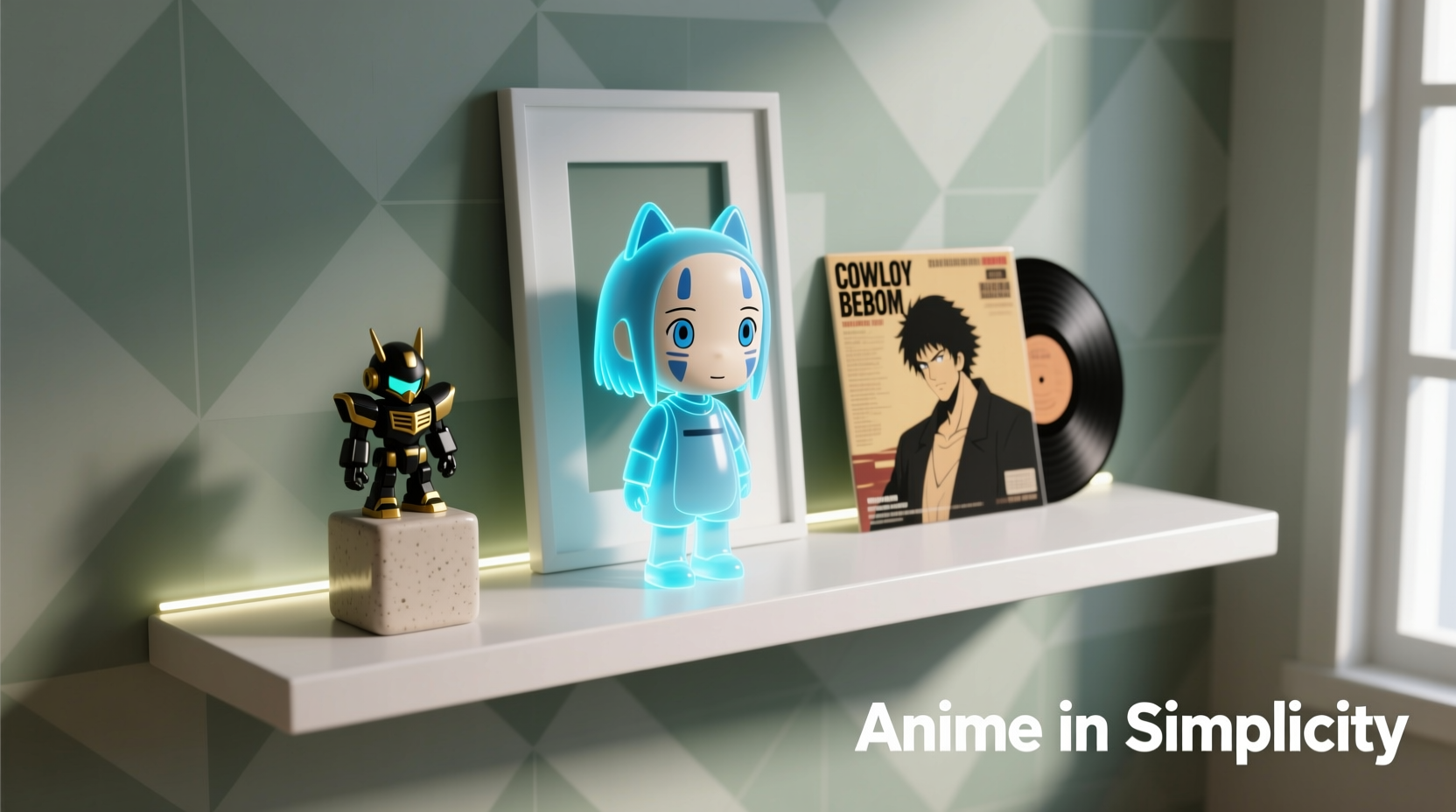
Minimalism begins long before arranging items on a shelf—it starts with selection. The core principle is curation: choosing only those pieces that hold significant emotional, aesthetic, or narrative value. This doesn't mean discarding everything except one figurine. It means asking why each item deserves space.
Begin by laying out your entire collection. Then, evaluate each piece using three criteria:
- Emotional resonance: Does this character or series hold deep personal meaning?
- Visual impact: Is the craftsmanship high? Does it command attention when viewed?
- Compositional fit: Can it work within a cohesive theme or color palette?
Be ruthless. Keep only what passes at least two of these tests. You may find that 30% of your collection meets this standard—that’s ideal. Less clutter allows each chosen piece to breathe and shine.
Create a Visual Hierarchy with Strategic Placement
Even a small number of figures can appear chaotic if placed randomly. To make your display stand out, apply the principles of visual hierarchy—guiding the viewer’s eye through deliberate arrangement.
Start by identifying a focal point. This should be your most impressive or meaningful piece: perhaps a large-scale statue, a limited edition release, or a figure from your favorite series. Position it slightly off-center (following the rule of thirds) at eye level. Everything else should support this centerpiece, not compete with it.
Use height variation to add depth. Place taller items toward the back and shorter ones in front, ensuring all are visible. Avoid stacking unless using risers designed for display—uneven stacks look messy, not artistic.
Spacing is critical. Leave at least 1–2 inches between items to prevent visual crowding. Negative space isn’t empty—it’s part of the design. It gives the brain time to rest and focus on individual details.
“Minimalist design isn’t about emptiness. It’s about giving importance to what remains.” — Naoki Tanaka, Interior Designer & Anime Collector
Choose a Cohesive Theme or Narrative Arc
A standout shelf tells a story. Without one, even beautifully arranged items can feel random. Establish a unifying concept to tie your display together.
Themes can be broad or specific:
- Studio-based: Focus on works from Studio Ghibli or Kyoto Animation.
- Character-driven: Showcase protagonists who represent growth or resilience (e.g., Eren Yeager, Shinji Ikari).
- Color palette: Use only white, black, and gold figures for a monochrome elegance.
- Era-specific: Highlight early 2000s classics like InuYasha or Fullmetal Alchemist.
One collector in Osaka built a shelf around the theme of “solitude in adolescence,” featuring characters like Misato from Neon Genesis Evangelion, Hachikuji from Monogatari, and Yukako from JoJo’s Bizarre Adventure. Despite having fewer than ten items, the display won praise online for its emotional coherence.
Mini Case Study: The Tokyo Apartment Shelf
Mika S., a graphic designer living in Shibuya, transformed her cramped bookshelf into a celebrated minimalist anime display. With only 12 square feet of wall space, she began by removing 17 duplicate figures and repurposing storage bins for backups. She selected six premium figures—all from Attack on Titan—arranged chronologically by character arc. Using warm LED backlighting and a matte gray backdrop panel, she created depth. The result was featured in Shelf Culture Japan’s “Small Space, Big Impact” series. Visitors often assume it's professionally styled, but Mika credits the success to editing and intentionality.
Design Elements That Elevate Simplicity
Minimalism thrives on subtle enhancements. These design choices amplify presence without adding clutter:
- Lighting: Install discreet LED strips behind or beneath shelves. Warm white light enhances skin tones and fabric textures; cool white highlights metallic finishes.
- Backdrop: Paint the rear panel a muted tone (charcoal, navy, or deep green) to make figures pop. For ultra-minimal setups, use mirrored acrylic to create illusion of depth.
- Base materials: Opt for wood, frosted glass, or matte metal shelves. Avoid glossy finishes that reflect ambient light and distract.
- Rotation system: Use turntables for centerpiece figures. Even slow rotation adds dynamism without extra items.
Avoid decorative clutter like fake plants, plushies, or non-anime memorabilia unless they directly support your theme. Every object must earn its place.
| Design Element | Do | Avoid |
|---|---|---|
| Lighting | Warm LEDs, indirect glow | Bright RGB strips, blinking modes |
| Spacing | 1–2 inches between items | Cramming figures side-by-side |
| Backdrop | Matte paint or textured panel | Busy wallpaper or posters |
| Shelving | Solid wood or tempered glass | Plastic brackets, see-through mesh |
Step-by-Step Guide: Building Your Minimalist Shelf
- Define your space: Measure shelf dimensions and lighting conditions. Note natural vs. artificial light sources.
- Curate your collection: Pull out all anime-related items. Keep only those that meet your emotional, visual, and thematic criteria.
- Choose a central theme: Decide on a narrative, color scheme, or studio focus to unify the display.
- Select a focal point: Identify one dominant piece to anchor the arrangement.
- Arrange mock layout: Use cardboard cutouts or photos to test positioning before placing actual figures.
- Install lighting and backdrop: Add LED strips and paint or mount a background panel.
- Place items with spacing: Start with the focal point, then add supporting pieces with consistent gaps.
- Review from multiple angles: View the shelf from standing height, seated position, and across the room.
- Document and refine: Take photos and revisit after 48 hours. Adjust any imbalances.
- Maintain monthly: Dust regularly and reassess quarterly for relevance and wear.
Frequently Asked Questions
Can I include non-figure items like manga or Blu-rays in a minimalist display?
Yes, but sparingly. A single spine-out volume in matching color can enhance cohesion. Avoid full sets unless stored behind closed doors. If including media, limit to one or two symbolic releases—like the first manga volume of a beloved series.
How do I keep dust off without ruining the look?
Closeable display cases offer the best protection while preserving visibility. Alternatively, use anti-static cloths weekly and consider a small air purifier nearby to reduce airborne particles. Avoid aerosol sprays near delicate paintwork.
Is minimalism suitable for large collections?
Absolutely—but it requires segmentation. Instead of trying to minimize everything into one shelf, designate one area as your “featured display” and store the rest thoughtfully elsewhere. Rotate quarterly. This approach honors your full collection while maintaining visual calm.
Essential Checklist for a Standout Minimalist Shelf
- ✅ Defined a clear theme or emotional narrative
- ✅ Selected no more than 5–7 key pieces for display
- ✅ Identified a strong focal point
- ✅ Measured spacing (minimum 1 inch between items)
- ✅ Installed subtle, warm-toned lighting
- ✅ Applied a neutral or contrasting backdrop
- ✅ Used stable, high-quality shelving material
- ✅ Removed all non-essential decorations
- ✅ Photographed final setup for future reference
- ✅ Scheduled next review/rotation date
Conclusion: Let Meaning Speak Louder Than Quantity
A minimalist anime shelf isn’t defined by how little you own, but by how clearly you express what matters. When every item is chosen with purpose, every angle considered with care, the result transcends fandom—it becomes art. In a world saturated with visual noise, restraint is radical. A quiet shelf invites closer inspection. It rewards patience. It turns casual glances into moments of connection.
Start small. Edit fearlessly. Design intentionally. Your shelf doesn’t need to shout to be heard.




 浙公网安备
33010002000092号
浙公网安备
33010002000092号 浙B2-20120091-4
Comments
No comments yet. Why don't you start the discussion?