
In today’s digital age, tablets are a common part of family life—especially for children using them to play games, watch videos, or complete schoolwork. The Amazon Fire tablet is an affordable, user-friendly device popular among families. However, without proper supervision, unrestricted access can expose kids to inappropriate content, excessive screen time, or unintended purchases. The good news? Amazon has built-in tools that allow parents to create a secure environment quickly and efficiently. With just five minutes of focused setup, you can establish strong parental controls that protect your child while giving them freedom to explore safely.
Why Parental Controls Matter on Fire Tablets
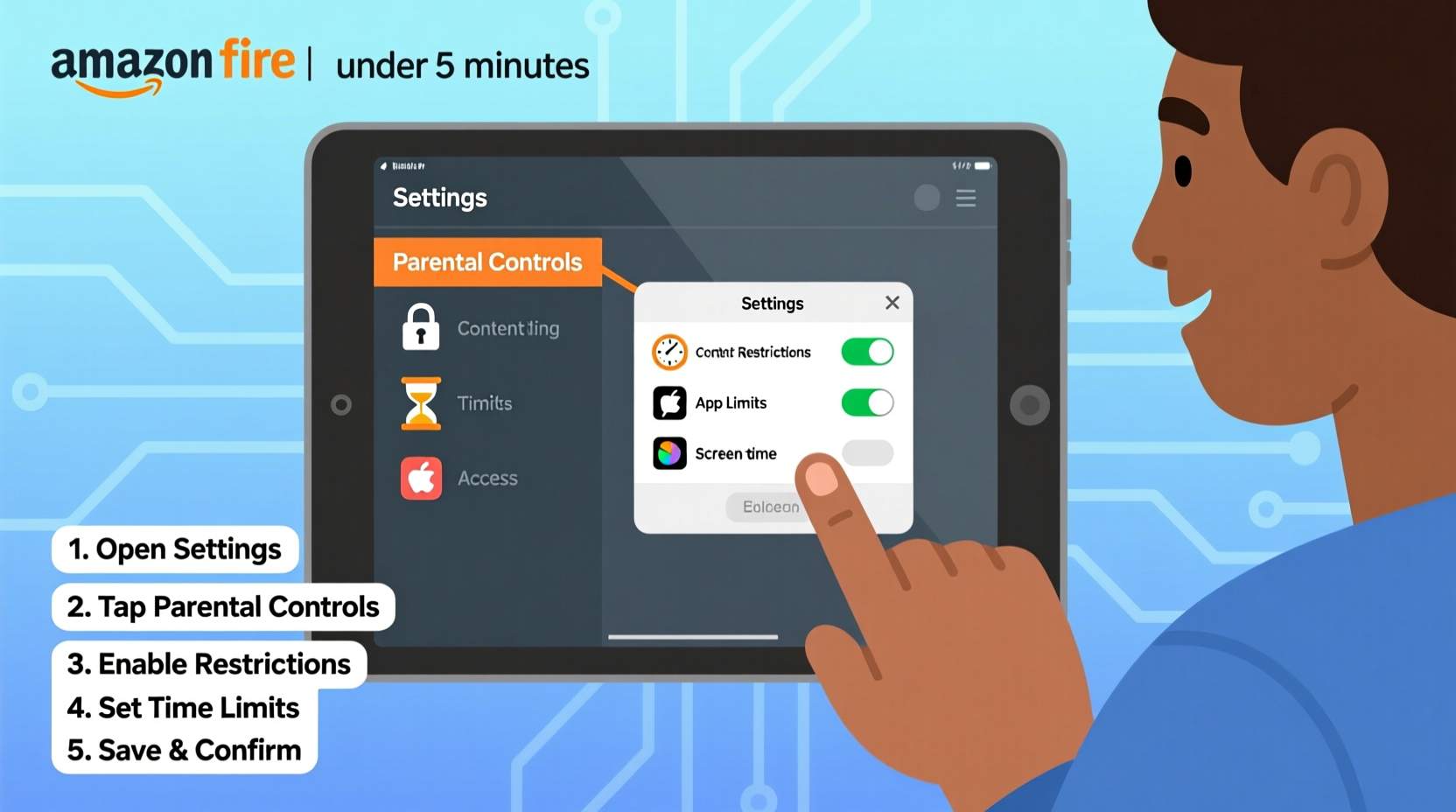
Amazon Fire tablets run on a customized version of Android designed specifically for ease of use and integration with Amazon services. While this makes the device intuitive, it also means default settings often favor convenience over safety. Out of the box, a Fire tablet allows open browsing, app downloads, and even in-app purchases—features that aren’t ideal for young users.
Setting up parental controls transforms the device from an open gateway into a curated experience. You gain control over what apps and websites your child can access, how long they can use the tablet each day, and whether they can make purchases. These features not only promote safer online habits but also help prevent conflicts over screen time limits.
“Digital safety starts at home. A few minutes spent configuring parental settings can prevent hours of regret later.” — Dr. Lena Patel, Child Online Safety Researcher, FamilyTech Institute
Step-by-Step: Setting Up Parental Controls in 5 Minutes
The process of setting up parental controls on a Fire tablet is straightforward and doesn’t require technical expertise. Follow these steps carefully to ensure full protection within five minutes.
- Open Settings: Tap the gear icon in the top-right corner of the home screen.
- Select “Family Library”: Scroll down and tap “Family Library” under the “Accounts” section.
- Set Up a FreeTime Profile: Choose “FreeTime” and select “Get Started.” If prompted, sign in with your Amazon account.
- Add Your Child: Enter your child’s name and birth date. This helps Amazon recommend age-appropriate content.
- Customize Daily Time Limits: Set a daily usage limit (e.g., 2 hours). You can also schedule when the tablet can be used (like after homework or before bedtime).
- Filter Content by Age: Choose appropriate age ranges for books, games, videos, and apps. For example, select “Ages 3–7” to block mature content.
- Approve or Block Specific Apps and Websites: Under “Content & Privacy,” manually allow or restrict individual apps and websites.
- Enable Purchase Approval: Toggle on “Require Approval for Purchases” so no accidental spending occurs.
- Finalize Setup: Review your settings and tap “Finish.” The profile will now appear on the lock screen for your child to select.
Key Features of FreeTime Mode Explained
Amazon’s FreeTime is the cornerstone of its parental control system. It offers both FreeTime Unlimited (a subscription-based content library) and FreeTime Standard (free parental management tools). Even without a subscription, FreeTime Standard provides robust oversight capabilities. Here's what each feature does:
| Feature | Description | Benefit |
|---|---|---|
| Daily Time Limits | Set total screen time per day (up to 8 hours). | Prevents overuse and encourages balanced routines. |
| Scheduled Usage | Define allowed hours (e.g., 4 PM to 7 PM). | Aligns tablet use with family rules like homework first. |
| Content Filtering | Restrict access based on age ratings or specific titles. | Blocks violent, sexual, or otherwise inappropriate material. |
| App & Website Approval | Whitelist or blacklist apps and websites individually. | Ensures only trusted platforms are accessible. |
| Purchase Approvals | All in-app and store purchases require parent approval. | Eliminates surprise charges on your Amazon bill. |
These tools work together seamlessly, allowing you to tailor the experience precisely to your child’s needs. For instance, you might allow educational apps all day but restrict YouTube to 30 minutes during weekends. Or block social media entirely until your child reaches a certain age.
Real-World Example: The Thompson Family’s Experience
The Thompsons, a family of four in Portland, recently gave their 8-year-old daughter her first Fire tablet for reading and learning games. At first, she was excited—but soon started watching random cartoons late into the night and accidentally downloaded several paid apps. Her parents were frustrated and concerned about uncontrolled exposure.
One evening, they spent five minutes following the FreeTime setup guide. They created a profile named “Emma’s Space,” set a 1.5-hour daily limit, restricted usage to between 3 PM and 7 PM, and blocked all third-party browsers and app stores. They approved only Kindle Kids Edition books, ABCmouse, and PBS Kids apps.
Within days, Emma adapted to the new routine. She knew exactly how much time she had and used it more thoughtfully. Her parents received email notifications whenever she requested a new app or reached her time limit. After a month, they reported improved sleep patterns and fewer arguments about screen time.
Essential Checklist for Secure Setup
To ensure nothing is missed during configuration, follow this concise checklist every time you set up a new child profile:
- ✅ Create a separate FreeTime profile for each child
- ✅ Enter accurate birth dates for proper content filtering
- ✅ Set daily time limits aligned with household rules
- ✅ Define active usage hours (e.g., after school, before bedtime)
- ✅ Enable purchase approval to avoid accidental spending
- ✅ Manually review and approve/disallow specific apps and websites
- ✅ Test the profile by logging in as the child to verify restrictions
- ✅ Keep your adult profile password/PIN secure and private
This checklist ensures comprehensive coverage across time, content, and financial safety. Revisit it periodically—especially as your child grows or receives new privileges.
Troubleshooting Common Issues
Even with careful setup, some issues may arise. Here are frequent concerns and how to resolve them quickly:
- Child bypassing time limits: Ensure FreeTime is enabled and not just relying on basic screen timeouts. Also, disable guest mode in Settings > Device Options > Guest Mode.
- Approved apps not appearing: Restart the tablet after adding apps to the whitelist. Sometimes updates take a moment to sync.
- Can’t change settings despite being logged in: Confirm you’re in the correct adult profile. Parental changes must be made outside the child’s FreeTime session.
- YouTube still accessible: Even if blocked in FreeTime, some versions of YouTube Kids may allow external links. Consider uninstalling the app or using third-party blockers via Silk Browser filters.
“Many parents think one-time setup is enough. But digital environments evolve—so should your controls.” — Mark Rivera, Tech Consultant at SafeHome.org
Frequently Asked Questions
Can I monitor my child’s activity after setup?
Yes. In your Amazon account under “Parent Dashboard,” you can view detailed reports showing which apps were used, how long the tablet was active, and any purchase requests. Reports are updated daily and can be accessed via web browser or the FreeTime app.
Do I need a subscription to use parental controls?
No. FreeTime Standard, which includes time limits, content filters, and app approvals, is completely free. FreeTime Unlimited ($4.99/month) adds unlimited access to thousands of kid-friendly books, videos, and games—but it’s optional.
Can I temporarily extend screen time?
Absolutely. From the Parent Dashboard or the tablet itself (when logged into your adult profile), you can grant one-time extensions—such as adding 30 extra minutes for a movie night. These overrides don’t affect regular schedules.
Maximizing Long-Term Effectiveness
While initial setup takes just five minutes, maintaining effective parental controls requires occasional attention. Children grow, interests change, and new apps emerge. Schedule a monthly check-in—perhaps during a weekend family meeting—to review usage reports and adjust settings accordingly.
Involve your child in the conversation. Ask questions like, “Are there any educational apps you’d like to try?” or “Is the current time limit working for you?” Open dialogue fosters trust and teaches responsible digital behavior. When kids understand why limits exist, they’re more likely to respect them.
Also consider layering additional safeguards. While FreeTime is powerful, pairing it with network-level filtering (like router-based parental controls or DNS services such as OpenDNS Family Shield) adds another barrier against inappropriate content, especially if the tablet connects to Wi-Fi outside your home.
Conclusion: Take Control Today
Setting up parental controls on an Amazon Fire tablet isn’t just a technical task—it’s an act of care. In less time than it takes to brew a cup of coffee, you can create a safer, more structured digital environment for your child. The tools are already built in; all they need is your attention.
Whether you're preparing for a birthday gift, managing remote learning, or simply introducing more balance at home, taking these five minutes now can save countless headaches later. Your child deserves a digital experience that supports growth, creativity, and safety—all within boundaries you define.




 浙公网安备
33010002000092号
浙公网安备
33010002000092号 浙B2-20120091-4
Comments
No comments yet. Why don't you start the discussion?