
Cats have a curious nature that often leads them to explore elevated surfaces. While this behavior is natural, it frequently results in broken vases, spilled coffee, and knocked-over electronics. Many cat owners respond with scolding or punishment, but these methods are ineffective and can damage the trust between pet and owner. A more sustainable and compassionate solution lies in positive reinforcement—a training approach grounded in rewarding desired behaviors rather than punishing unwanted ones. By understanding why cats knock objects down and redirecting their instincts through encouragement and consistency, you can preserve your belongings while nurturing a happier, more confident feline companion.
Why Cats Knock Things Off Tables
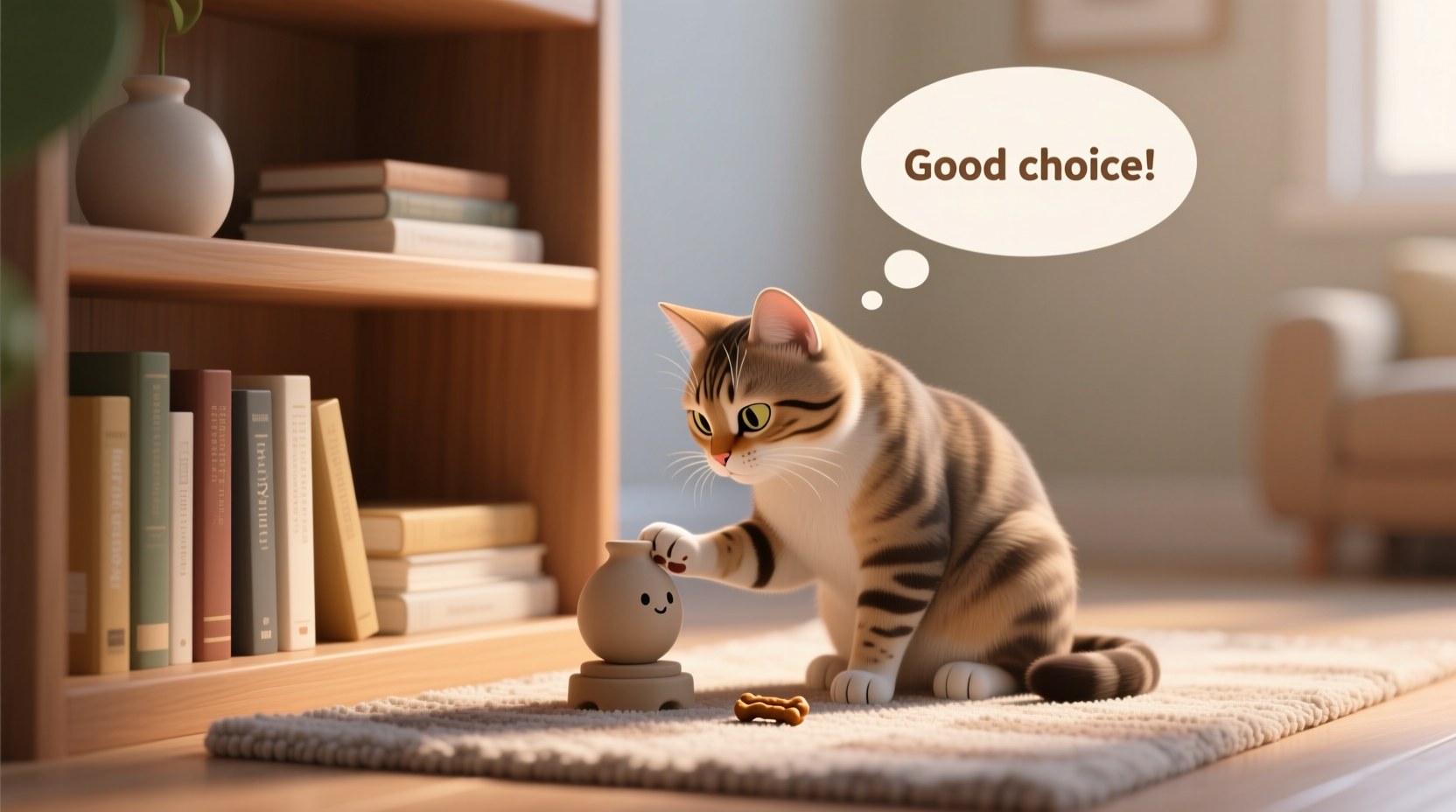
Cats don’t knock items off surfaces out of malice. Their actions stem from instinctual drives shaped by evolution and domestication. Several key motivations explain this common behavior:
- Hunting simulation: Swatting at dangling or movable objects mimics capturing prey. The motion and sound trigger predatory instincts.
- Exploration: Cats use their paws to investigate textures, weight, and movement. An object on a table edge becomes a puzzle to solve.
- Attention-seeking: If knocking something over consistently gets a reaction—even a negative one—the cat learns it’s an effective way to engage with humans.
- Play stimulation: Motionless objects gain interest when they fall or roll. The unpredictability makes them more appealing than static toys.
Understanding these motivations is essential because it shifts the focus from correcting “bad” behavior to managing environmental triggers and reinforcing better alternatives.
The Science Behind Positive Reinforcement
Positive reinforcement works by increasing the likelihood of a desired behavior through rewards. When a cat performs a behavior that leads to something pleasurable—such as treats, praise, or playtime—they are more likely to repeat it. In contrast, punishment creates fear and confusion, weakening the human-animal bond without addressing the root cause of the behavior.
Dr. Karen Overall, a leading veterinary behaviorist, explains:
“Cats learn best through association and consequence. If we want them to make good choices, we must reward those choices consistently. Punishment doesn't teach what *to* do—it only teaches what *not* to do, and often not even that.” — Dr. Karen Overall, Veterinary Behavior Expert
In practical terms, positive reinforcement means catching your cat engaging in acceptable behaviors—like sitting calmly near a table or interacting with designated toys—and immediately rewarding them. Over time, this builds a strong association between self-control and positive outcomes.
Step-by-Step Guide to Redirecting Table-Knocking Behavior
Stopping table-knocking isn’t about eliminating curiosity; it’s about guiding it toward appropriate outlets. Follow this timeline-based approach to create lasting change.
- Week 1: Environmental Management + Observation
Remove tempting objects from table edges. Replace them with safe, interactive toys like hanging feather wands or rolling balls. Observe when and where your cat tends to swipe at items. Note patterns—e.g., after meals, during evening energy bursts. - Week 2: Introduce Targeted Rewards
Place a treat-dispensing toy or favorite snack on the floor near the table. When your cat approaches the table but refrains from pawing at anything, mark the moment with a clicker or verbal cue like “Yes!” and offer a treat. Repeat multiple times daily. - Week 3: Build Self-Control Cues
Begin teaching simple commands such as “Leave it” or “Wait.” Hold a treat in a closed hand near the table. If your cat sniffs but doesn’t paw, say “Good” and open your hand to release the treat. Gradually increase the duration before rewarding. - Week 4: Simulate Temptation Safely
Place a lightweight, unbreakable object (like a plastic cup) on the edge of a table. Supervise closely. If your cat looks but doesn’t touch, reward immediately. If they reach out, gently redirect with a toy and reward engagement with the toy instead. - Ongoing: Maintain Consistency and Enrichment
Continue rewarding calm behavior around furniture. Rotate puzzle feeders, climbing shelves, and window perches to keep mental stimulation high and reduce boredom-driven mischief.
Checklist: Creating a Cat-Safe Environment with Positive Training
Use this checklist weekly to ensure your strategy remains effective and your cat stays engaged:
- ✅ Remove breakable or hazardous items from table edges
- ✅ Provide at least two interactive toys within easy reach of common jumping zones
- ✅ Schedule three short (5-minute) training sessions per day using high-value treats
- ✅ Use a consistent verbal marker (“Good,” “Yes”) or clicker to signal correct behavior
- ✅ Rotate enrichment activities every 7–10 days to prevent habituation
- ✅ Record progress in a journal—note reductions in incidents and new calm behaviors
- ✅ Involve all household members in using the same cues and rewards
Do’s and Don’ts: Managing Table-Knocking Behavior
| Do | Don't |
|---|---|
| Reward your cat for ignoring objects on tables | Yell, spray water, or clap loudly to startle them |
| Provide vertical spaces like cat trees or shelves | Cover tables with double-sided tape or aluminum foil (aversive methods) |
| Use puzzle feeders to encourage floor-level activity | Assume the behavior will stop on its own |
| Be consistent with cues and rewards across all family members | Ignore signs of stress or overstimulation |
| Gradually reintroduce neutral objects to test impulse control | Leave fragile or dangerous items within paw's reach |
Real Example: How Mia Learned to Leave the Coffee Mug Alone
Sarah adopted a playful tabby named Mia who quickly developed a habit of swiping her morning coffee mug off the kitchen counter. After nearly breaking three mugs, Sarah considered restricting Mia’s access to the room—but decided to try positive reinforcement first.
She began by replacing the mug with a small, empty plastic container during breakfast. Each time Mia looked at it but didn’t touch, Sarah said “Good girl!” and gave her a piece of cooked chicken. Within four days, Mia started sitting beside the container without pawing at it. Sarah then introduced a real (but empty) mug under supervision, continuing the same reward system.
After two weeks, Mia no longer approached the mug unless Sarah invited her to sniff it. The behavior generalized: Mia also stopped knocking pens and phones off desks elsewhere in the house. Sarah credits the success not just to training, but to providing alternative outlets—Mia now has a dedicated “cat shelf” with dangling toys and a cozy bed overlooking the garden.
“Training Mia didn’t just save my mugs—it made her more confident and attentive. Now she comes running when she hears the treat bag crinkle, not because she’s misbehaving, but because she knows good things happen when she listens.” — Sarah, cat owner
Frequently Asked Questions
Can older cats learn positive reinforcement?
Absolutely. Cats of any age can learn new behaviors, though it may take slightly longer than with kittens. Senior cats often respond well due to established routines and reduced hyperactivity. Patience and consistency are key.
What if my cat ignores the treats I offer?
If your cat isn’t motivated by standard treats, try higher-value options like freeze-dried liver, tuna juice on a spoon, or a few moments of wand toy play. Motivation varies by individual—find what excites your cat most and reserve it exclusively for training.
How long does it take to see results?
Most owners notice improvement within 2–3 weeks of consistent daily training. Complete elimination of table-knocking typically takes 4–8 weeks, depending on the cat’s temperament, environment, and frequency of practice.
Conclusion: Building Trust Through Positive Change
Stopping your cat from knocking things off tables isn’t about control—it’s about communication. Positive reinforcement transforms problem behaviors into opportunities for connection, learning, and mutual respect. Instead of reacting to accidents with frustration, you begin noticing moments of restraint and focus, rewarding the very behaviors you want to see more of.
This method doesn’t just protect your belongings; it enriches your cat’s life by providing mental challenges, clear expectations, and emotional security. Over time, your cat learns that calmness and self-control lead to good outcomes, making them less likely to act impulsively—even when unsupervised.




 浙公网安备
33010002000092号
浙公网安备
33010002000092号 浙B2-20120091-4
Comments
No comments yet. Why don't you start the discussion?