
Squeaky shoes on tile floors are more than just annoying—they can be embarrassing in quiet offices, libraries, or homes. The sharp, high-pitched sound often follows every step, drawing attention at the worst moments. While it might seem like a minor issue, the root cause is usually mechanical: friction, trapped moisture, or loose components within the shoe. The good news? Most squeaks can be eliminated quickly with simple household items and a few minutes of effort. This guide breaks down the science behind the noise and delivers tested, immediate solutions that work across different shoe types—from dress shoes to sneakers.
Why Shoes Squeak on Tile Floors
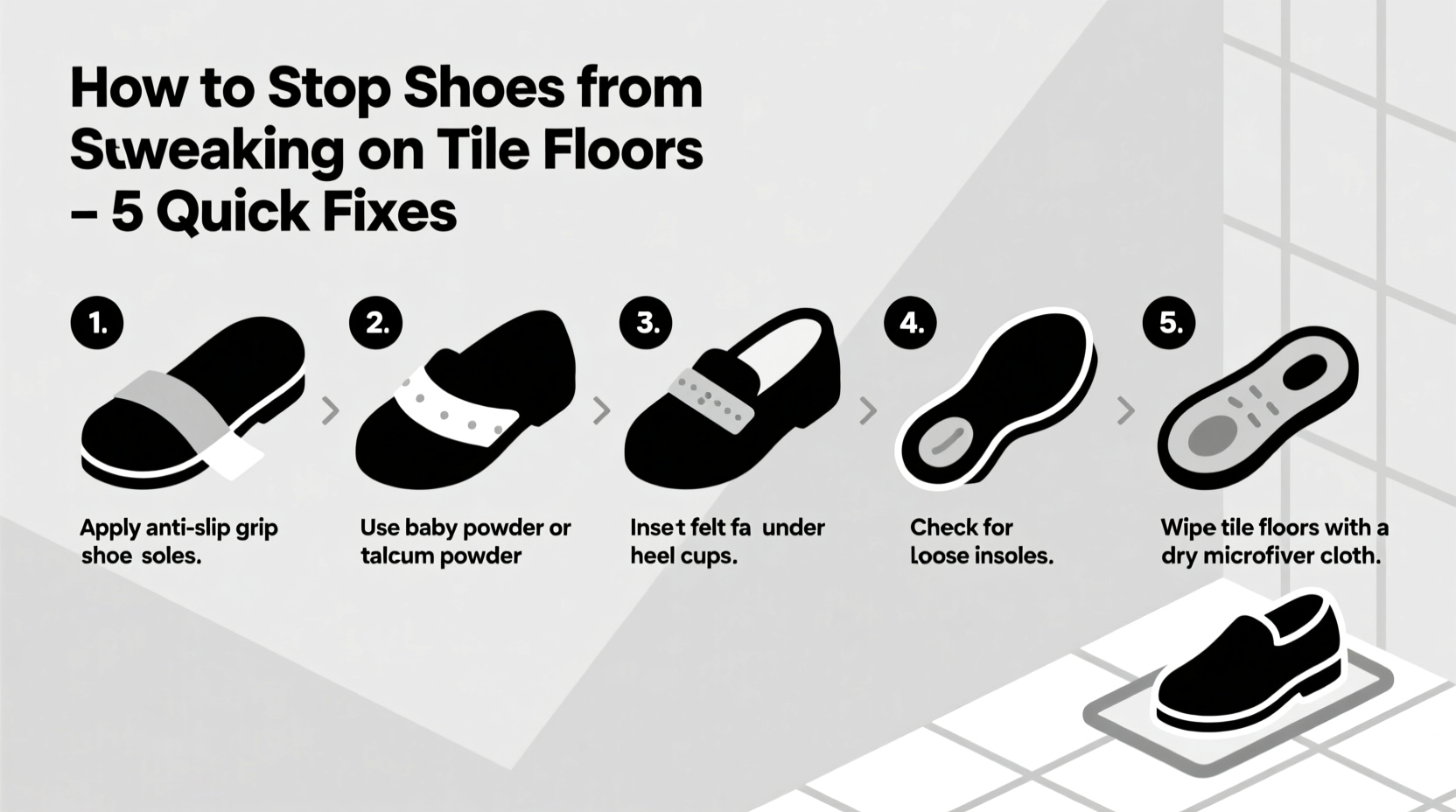
Tiles offer a smooth, hard surface that amplifies any internal movement or friction within a shoe. Unlike carpeted floors that absorb sound and cushion motion, tiles act like a sounding board for squeaks. The most common causes include:
- Moisture trapped between insoles and midsoles: Sweat or damp conditions can create a vacuum-like effect that releases with each step, producing a squeak.
- Friction between shoe layers: When the insole rubs against the midsole or outsole, especially in new or poorly constructed shoes, it generates noise.
- Loose heel counters or shanks: Structural components inside the shoe may shift slightly, causing creaking under pressure.
- Worn or uneven outsoles: Cracks or separation in rubber soles can trap air and release it audibly when compressed.
- Dry materials: Leather or synthetic uppers that have dried out may produce squeaks due to stiffness and lack of flexibility.
Understanding the source is half the battle. Once you identify whether the issue stems from moisture, material friction, or structural looseness, you can apply the right fix efficiently.
Step-by-Step Guide to Silence Squeaky Shoes
Follow this systematic approach to diagnose and eliminate shoe squeaks on tile floors. Most solutions require no special tools and can be completed in under 15 minutes.
- Identify the Source of the Squeak
Put on the shoes and walk slowly on tile. Try to isolate where the noise comes from—heel, ball of the foot, or side. Press down manually on different areas while listening. This helps determine whether the issue is in the sole, insole, or upper. - Remove the Insole (if possible)
Use your fingers or a spoon to gently pry out the insole. Many squeaks originate from the space between the insole and midsole, especially if moisture has seeped in. - Dry All Components Thoroughly
Wipe the insole and interior of the shoe with a dry microfiber cloth. Place both parts near a fan or in a well-ventilated area for 30–60 minutes. Avoid direct heat (like radiators), which can warp materials. - Apply Talcum Powder or Baby Powder
Sprinkle a light layer of powder into the shoe bed and on the underside of the insole. Replace the insole and walk around briefly. The powder reduces friction between layers, often eliminating the squeak instantly. - Test Walk on Tile
Walk naturally on a hard floor. If the squeak persists, proceed to targeted solutions based on the suspected cause. - Address Specific Problem Areas
Use one of the following methods depending on your diagnosis:- For leather squeaks: Condition the upper with leather oil.
- For sole separation: Apply a small amount of shoe glue.
- For heel noise: Insert a heel liner or pad.
Effective Home Remedies for Different Shoe Types
Not all shoes respond to the same fix. Materials and construction vary widely, so tailor your approach accordingly.
| Shoe Type | Best Fix | Avoid |
|---|---|---|
| Dress Shoes (Leather) | Condition leather; use cornstarch inside | Water-based cleaners, excessive powder |
| Sneakers (Rubber Soles) | Check for sole separation; apply rubber cement | Over-tightening laces to \"compress\" the shoe |
| Fashion Flats | Add adhesive heel pads; sprinkle baby powder | Ignoring insole movement |
| Work Boots | Inspect shank integrity; use silicone spray sparingly | Submerging in water |
| Slip-Ons | Reinforce heel grip; check for internal debris | Stretching aggressively without conditioning |
For example, leather dress shoes often squeak due to dryness in the upper or friction between stiff components. A small amount of mink oil or saddle soap applied to the exterior can restore flexibility and silence the noise. Conversely, athletic shoes may develop squeaks from air pockets forming between separated sole layers—requiring adhesive reinforcement rather than lubrication.
Expert Insight: What Professionals Recommend
Podiatrists and cobblers alike emphasize that persistent squeaking isn’t just an annoyance—it can indicate underlying wear that affects comfort and support.
“Squeaks are often early warnings of structural fatigue. Address them promptly before they lead to compromised arch support or uneven wear.” — Carlos Mendez, Master Canner & Footwear Technician, Boston Shoe Repair Co.
Experts also caution against over-lubricating shoes, especially with oily substances like petroleum jelly. While it may silence the noise temporarily, it can degrade adhesives and foam padding over time, shortening the shoe’s lifespan.
Mini Case Study: Office Worker Solves Daily Embarrassment
Sarah, a paralegal at a downtown law firm, dreaded her morning walk from the elevator to her desk. Her favorite pair of black pumps emitted a loud squeak with every step on the marble lobby floor. Colleagues began joking about “the squeaky heel,” and she started altering her gait to minimize noise, leading to foot pain.
She tried tightening the heel strap and switching socks, but nothing worked. After reading about insole friction, she removed the insoles and found them slightly warped from moisture. She dried them overnight, sprinkled talcum powder inside, and reinserted them. The squeak vanished the next day. Sarah now keeps a travel-sized powder bottle in her desk drawer for quick touch-ups during humid months.
This real-world case illustrates how a simple, overlooked factor—moisture-induced friction—can create a persistent problem easily fixed with basic care.
Do’s and Don’ts: Quick Reference Table
| Action | Do | Don’t |
|---|---|---|
| Lubrication | Use baby powder, cornstarch, or silica gel | Use oil, WD-40, or cooking spray |
| Drying | Air-dry with newspaper inside | Use hairdryers or ovens |
| Insole Care | Clean and dry monthly | Wash in machine unless labeled safe |
| Structural Fixes | Use shoe-specific glue for sole repair | Ignore visible cracks or lifting |
| Prevention | Rotate shoes; use moisture-wicking insoles | Wear the same pair daily without rest |
Preventive Checklist: Keep Shoes Squeak-Free Long-Term
Eliminating a current squeak is important, but preventing future ones ensures lasting comfort and confidence. Follow this checklist weekly or biweekly:
- ✅ Remove insoles and wipe down the shoe interior with a dry cloth
- ✅ Sprinkle a pinch of baby powder or cornstarch inside each shoe
- ✅ Inspect soles for signs of separation or cracking
- ✅ Condition leather uppers every 4–6 weeks
- ✅ Allow wet or sweaty shoes to air dry completely before reuse
- ✅ Store shoes in a cool, dry place with good airflow
- ✅ Replace worn insoles or heel pads proactively
By incorporating these habits, you reduce the risk of moisture buildup and material fatigue—the two biggest contributors to squeaking.
FAQ: Common Questions About Squeaky Shoes
Can I use baking soda instead of talcum powder?
Yes, baking soda works similarly to absorb moisture and reduce friction. However, it’s slightly more abrasive, so use it sparingly and avoid repeated use on delicate linings. It’s best for canvas or athletic shoes rather than leather or suede.
Why do brand-new shoes squeak?
New shoes often squeak due to tight manufacturing tolerances. Layers of material may rub together until they break in. Additionally, factory-applied adhesives or protective films can create temporary noise. Most new-shoe squeaks resolve within a week of normal wear. If not, apply powder or condition as needed.
Is it safe to use hairspray to stop squeaks?
No. While some suggest hairspray as a quick adhesive fix for loose insoles, it contains alcohol and resins that can stain fabrics and degrade foam. Over time, it may make the problem worse by gumming up surfaces or reducing breathability. Stick to proper shoe care products instead.
Conclusion: Silence Starts Today
Squeaky shoes don’t have to be a permanent nuisance. With a clear understanding of the causes and access to simple household remedies, you can eliminate the noise in minutes. Whether it’s a splash of moisture, rubbing materials, or slight structural wear, the solution is usually straightforward and cost-free. The key is acting early—before minor friction turns into major discomfort or damage.
Take a moment today to inspect your most-used pairs. Dry them out, add a little powder, and test them on a hard surface. You’ll likely be surprised at how quickly peace returns to your steps. And once you’ve silenced the squeak, maintain the fix with regular care to keep your shoes quiet, comfortable, and durable for months to come.




 浙公网安备
33010002000092号
浙公网安备
33010002000092号 浙B2-20120091-4
Comments
No comments yet. Why don't you start the discussion?