
Bread is a staple in most households, but few things are more frustrating than reaching for a loaf only to find it hard as a brick or covered in fuzzy spots. Whether you bake your own sourdough, buy artisan loaves from the bakery, or rely on supermarket sliced bread, improper storage can ruin even the finest loaf in days. The battle against staleness and mold isn’t just about convenience—it’s also about reducing food waste and preserving flavor, texture, and nutrition. The good news? With the right techniques, you can keep bread fresh for significantly longer. This guide breaks down the science behind bread spoilage and provides actionable, tested strategies to extend shelf life while maintaining quality.
The Science Behind Staling and Mold Growth
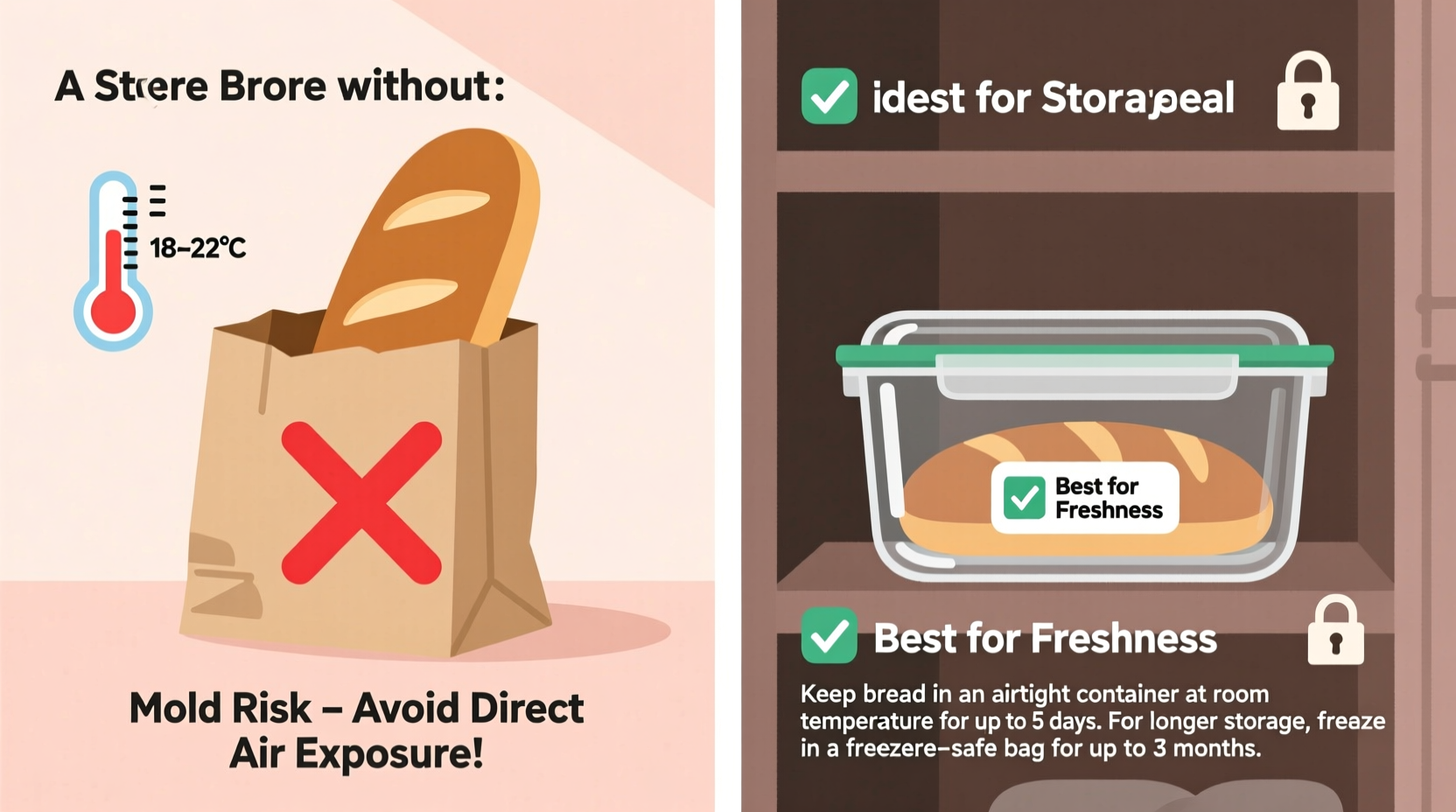
Understanding why bread goes bad is the first step toward preventing it. Two main processes degrade bread: staling (retrogradation) and microbial spoilage (mold).
Staling occurs when starch molecules in bread recrystallize after baking, drawing moisture away from the crumb and causing it to firm up. This process accelerates at temperatures just above freezing—ironically, the very range of most refrigerators. That’s why refrigerated bread often turns dry and tough within hours, even if it remains mold-free.
Mold, on the other hand, thrives in warm, humid environments with access to oxygen. Common molds like *Penicillium* and *Aspergillus* spores float in the air and settle on bread surfaces. Once they land, they germinate quickly under favorable conditions—especially in moist, room-temperature settings. Whole grain and homemade breads, which lack preservatives, are particularly vulnerable.
The key to long-lasting freshness lies in managing moisture, temperature, and exposure to air. Each storage method affects these factors differently.
Best Storage Methods by Bread Type
Not all breads respond the same way to storage. A crusty baguette has different needs than a soft sandwich loaf. Choosing the right method depends on ingredients, structure, and intended use.
| Bread Type | Recommended Storage | Expected Freshness | Avoid |
|---|---|---|---|
| Sliced white (commercial) | Cool, dark pantry in original plastic | 5–7 days | Refrigeration |
| Artisan sourdough or crusty loaf | Paper bag + cloth cover at room temp | 3–4 days (best texture) | Plastic wrap |
| Whole grain or seeded bread | Freezer (sliced, in portions) | Up to 3 months | Room temp beyond 2 days |
| Homemade bread (no preservatives) | Freeze immediately or consume within 2 days | 2 days fresh, 3 months frozen | Prolonged room temp storage |
| Buns and rolls | Freeze in sealed bags | 2–3 months | Countertop beyond 1 day |
For example, commercial sandwich bread contains dough conditioners and preservatives like calcium propionate that inhibit mold. These allow safe room-temperature storage for over a week. In contrast, a naturally leavened sourdough lacks such additives and benefits from breathable wrapping to preserve its crisp crust while delaying internal moisture buildup.
Step-by-Step Guide to Long-Term Bread Storage
If you want to enjoy fresh bread over an extended period, follow this proven sequence:
- Assess the bread type. Determine whether it’s preservative-free, whole grain, or commercially produced. This dictates your best storage path.
- Slice before freezing (if applicable). For homemade or bakery loaves, slice the bread immediately after cooling. This allows you to toast or thaw only what you need.
- Wrap tightly in freezer-safe material. Use a double layer: first, wrap the loaf or slices in parchment or wax paper, then place in a resealable freezer bag. Squeeze out excess air to prevent freezer burn.
- Label and date the package. Include the bread type and freezing date. Most bread lasts 2–3 months in the freezer before quality declines.
- Thaw mindfully. To preserve texture, thaw slices directly in a toaster or oven at low heat (300°F for 5–8 minutes). Avoid microwaving whole loaves, which creates uneven moisture and sogginess.
This approach works exceptionally well for bakers who make large batches weekly. One San Francisco-based home baker, Maria T., shared her experience: “I used to throw out half my sourdough because it went stale or moldy by day three. Now I slice and freeze everything after day one. I pull out two slices each morning, toast them, and they taste fresh-baked.”
Do’s and Don’ts of Bread Storage
To reinforce best practices, here’s a clear summary of what to do—and what not to do—when storing bread.
| ✅ Do | ❌ Don’t |
|---|---|
| Store preservative-free bread in a linen-lined bread bin | Keep bread in airtight plastic if you want a crispy crust |
| Freeze surplus loaves immediately | Refrigerate any bread unless in high-humidity climates |
| Use a terra cotta bread crock for crusty loaves | Place bread near fruits that emit ethylene gas (bananas, apples) |
| Refresh stale bread with a quick oven bake (5 min at 350°F) | Leave cut sides exposed to open air overnight |
| Rotate stock using the “first in, first out” rule | Store bread in damp cabinets or near dishwashers |
“Temperature fluctuation and humidity are the enemies of bread quality. Consistent, cool, dry storage is ideal—but when in doubt, freeze it.” — Dr. Lena Reyes, Food Scientist at UC Davis
Real-World Example: A Bakery’s Daily Routine
At The Crusty Loaf, a small artisan bakery in Portland, Oregon, minimizing waste is critical. They produce 300 loaves daily, mostly sourdough and rye, with no preservatives. Owner James Lin explains their strategy: “We sell most bread the same day, but we’ve trained customers to freeze leftovers. We provide free wax-paper wraps and instructions. For unsold loaves, we slice and freeze them by noon the next day. Then we repurpose them into croutons or bread pudding. We’ve cut waste by 68% in two years.”
Their takeaway? Even delicate, preservative-free bread can last much longer with proper handling. The trick is acting early—before staleness or mold sets in.
FAQ: Common Bread Storage Questions
Can I store bread in the refrigerator?
Generally, no. Refrigeration speeds up staling due to accelerated starch retrogradation. While it slows mold growth, the trade-off in texture is usually not worth it. The exception is in extremely humid climates (like tropical regions), where mold develops within 24 hours. In those cases, refrigeration may be a necessary compromise—but plan to toast or refresh the bread before eating.
Is a bread box better than plastic bags?
Yes—for certain types. Bread boxes made of wood or ceramic regulate airflow and absorb excess moisture, making them ideal for crusty loaves. They maintain a slight humidity buffer while allowing ventilation. However, for soft sandwich bread, the original plastic bag is often superior because it retains moisture. Just ensure the box is clean and located in a cool area away from sunlight.
How can I tell if bread is moldy but not visibly spoiled?
Mold isn’t always obvious. If bread smells musty, sour, or off, discard it—even if you don’t see spots. Also, never pick off a moldy piece and eat the rest. Mold sends invisible filaments deep into the crumb, and some produce harmful mycotoxins. When in doubt, throw it out.
Checklist: Optimal Bread Storage at a Glance
- ✔️ Cool, dark location (68–72°F ideal)
- ✔️ Away from heat sources and sunlight
- ✔️ Sliced bread stored cut-side down on a cutting board or wrapped loosely
- ✔️ Freeze surplus loaves within 24–48 hours of baking
- ✔️ Use breathable containers for crusty bread (paper, cloth, bread box)
- ✔️ Label and date frozen bread
- ✔️ Thaw frozen bread in toaster or oven—not at room temperature for hours
- ✔️ Clean storage containers weekly to prevent mold spore buildup
Conclusion: Freshness Is a Habit, Not Luck
Keeping bread from going moldy or stale doesn’t require special equipment or gourmet knowledge—it requires consistency and awareness. By aligning your storage method with the type of bread you’re using, you can dramatically extend its prime condition. Freezing remains the single most effective tool for long-term preservation, especially for preservative-free loaves. Meanwhile, smart room-temperature storage protects texture and flavor for short-term consumption.
Every loaf saved is a small victory against waste and a step toward smarter kitchen habits. Start today: evaluate your current method, adjust based on bread type, and implement one new practice—whether it’s slicing before freezing or switching to a bread crock. Your future self will open the freezer or pantry to find perfectly preserved bread, ready to enjoy just as nature (and the baker) intended.




 浙公网安备
33010002000092号
浙公网安备
33010002000092号 浙B2-20120091-4
Comments
No comments yet. Why don't you start the discussion?